
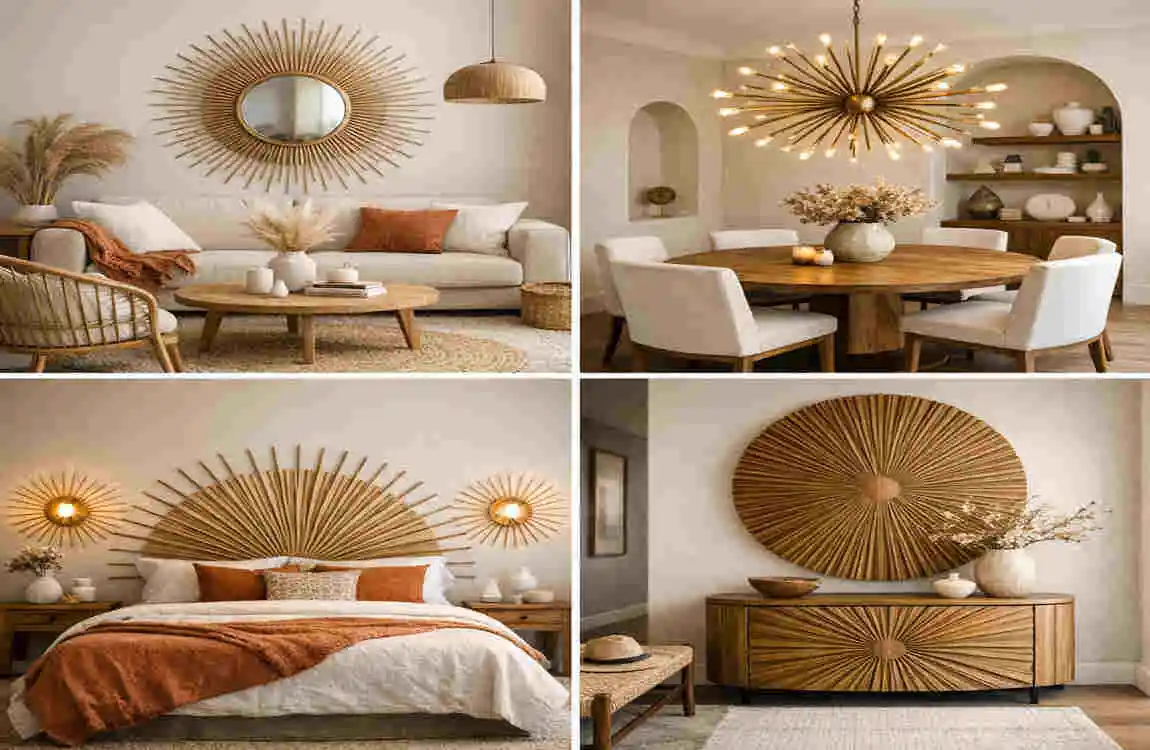
If you have ever walked into a room and immediately felt everything flow from one point, you were likely seeing rhythm in interior design at work. Rhythm helps guide the eye, keeps a room from feeling flat, and makes the space feel more complete.
One of the most interesting types of rhythm is radiation rhythm. It is a simple idea, but it can make a big difference in how a room looks and feels. If you are wondering what radiation rhythm in interior design is, the easiest answer is this: it is when design elements spread outward from a central focal point.
That focal point can be a chandelier, a round table, a mirror, a rug, or even a fireplace. The eye naturally moves outward from the center, which creates a feeling of balance, movement, and order.
What Is Radiation Rhythm in Interior Design?
Definition of Radiation Rhythm
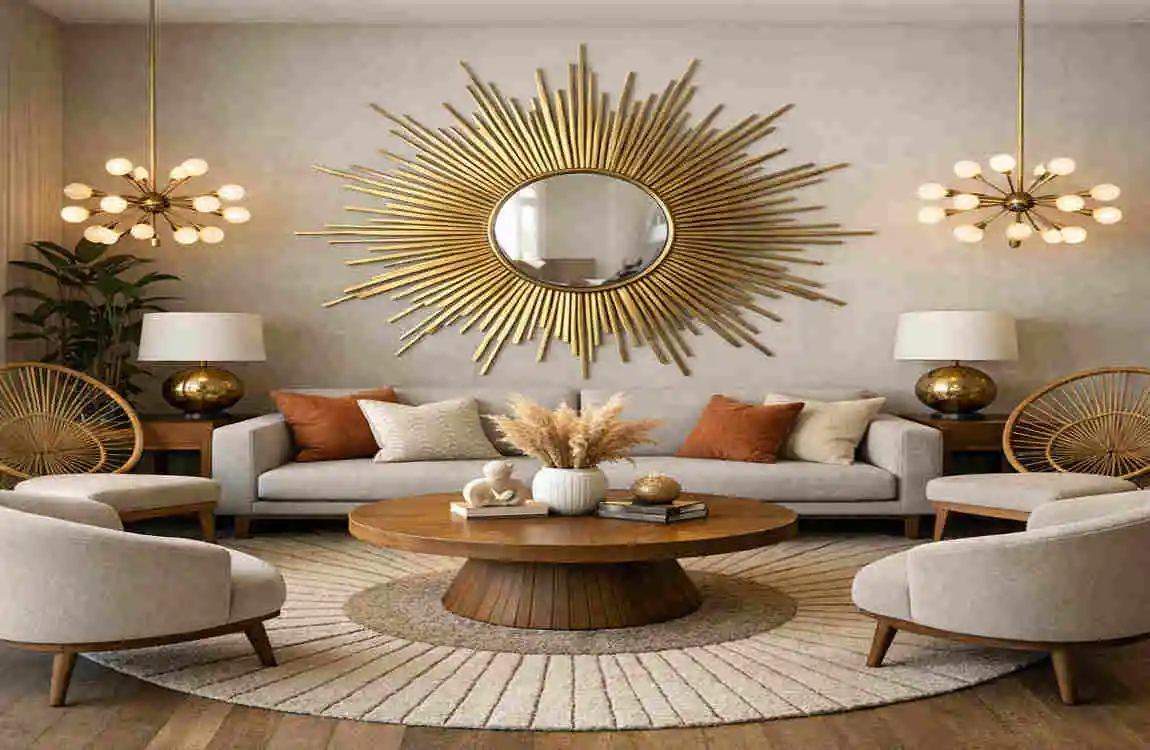
Radiation rhythm is a interior design pattern in which objects, shapes, or lines seem to move outward from a central point. The center becomes the anchor, and everything around it supports that point.
Think of it like ripples in water or the lines of a sunburst. The design starts in the middle and spreads out. This creates movement without chaos.
How It Works
Radiation rhythm usually depends on a few simple ideas:
- A central focal point
- Repeated lines, shapes, or objects
- A sense of outward movement
- Balanced spacing around the center
- Similar colors, materials, or patterns
When these parts work together, the room feels organized and visually connected.
Why It Matters
Radial rhythm is useful because it helps a room feel:
- Balanced
- Connected
- More interesting
- Less cluttered
- Easier to focus on
It also helps highlight special features in the room, such as a decorative ceiling light, a beautiful table, or a statement piece of art.
Key Elements That Create Radiation Rhythm
Central Focal Point
Every radiation rhythm design needs a clear center. Without that center, the room can feel scattered.
Some common focal points include:
- A chandelier
- A round dining table
- A fireplace
- A large mirror
- A rug
- A piece of artwork
The center should feel strong enough to hold attention, but not so large that it overwhelms the room.
Radial Lines and Shapes
The next part is the design’s shape or direction. Circular, curved, or sun-like shapes work especially well.
For example, a round mirror above a console table creates a soft visual center. A circular rug under a seating area can also pull the eye inward. Even furniture placed in a gentle curve can create this effect.
Repetition and Spacing
Repetition matters too. When similar objects are placed around a focal point with even spacing, the design feels calm and steady.
For example, placing matching chairs around a round table makes the room feel more organized. If the spacing is uneven or crowded, the rhythm breaks.
Color and Material
You can also create a radiating rhythm by repeating colors and materials.
For example, you might use:
- Wood in the table and shelves
- Metal in the lighting and chair legs
- Fabric in cushions and curtains
- Glass in mirrors or décor
This kind of repetition helps the room feel connected without looking too busy.
Scale and Proportion
The size of each item matters. A large chandelier needs enough space beneath it. A tiny mirror above a huge fireplace may look lost.
Good radiation rhythm depends on balance. The center should match the room’s size, and the surrounding items should support it rather than compete with it.
Easy Radiation Rhythm Design Ideas for Every Room
Living Room Ideas
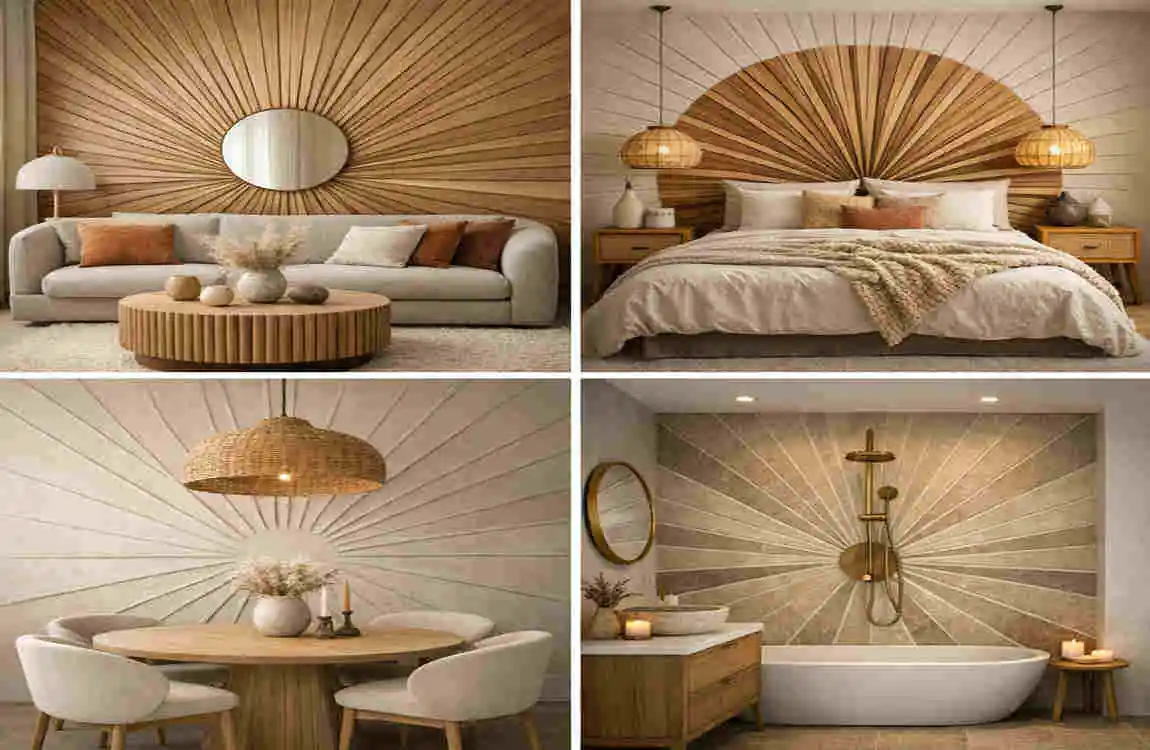
The living room is one of the easiest places to use radiation rhythm.
You can try:
- Arranging seating around a central coffee table
- Using a round rug to define the space
- Hanging a bold ceiling light above the center
- Adding curved furniture for a softer look
- Placing artwork so it supports the main focal point
This creates a natural flow and makes the room feel inviting.
Dining Room Ideas
Radial rhythm works especially well in dining rooms because the table is already a strong center.
A simple setup might include:
- A round dining table
- Chairs evenly placed around it
- A chandelier directly above the table
- A circular rug underneath
- Small décor items repeated around the space
This makes the room feel elegant, balanced, and easy to use.
Bedroom Ideas
In a bedroom, radiation rhythm should feel calm and restful.
You can create it with:
- A centered bed
- Matching bedside tables
- A pendant light above the bed
- A round mirror or wall décor
- Bedding that reinforces the center
The goal is to keep the room peaceful while still giving it structure.
Entryway Ideas
The entryway is a great place to make a strong first impression.
You can use:
- A round console table
- A circular mirror
- A centered light fixture
- Small décor pieces placed around the focal point
Since entryways are usually small, keep the design simple and uncluttered.
Kitchen and Home Office Ideas
In kitchens and home offices, function matters most. Still, you can add radial rhythm subtly.
For example:
- Hang pendant lights over a kitchen island
- Place stools evenly around the island
- Use a patterned backsplash with radial lines
- Arrange office décor around a central desk lamp or wall feature
This keeps the space practical while still adding visual flow.
Quick Room Guide
Room Best Focal PointEasy Radiation Rhythm Idea
Living Room Coffee table or rug Arrange seating in a circle or curve
Dining Room Round table Center a chandelier above it
Bedroom Bed Use matching lamps and centered décor
Entryway Mirror or console table Keep accessories balanced around the center.
Kitchen Island or pendant light Repeat shapes and lighting evenly
Home Office Desk or wall feature Use centered décor and clean lines
How to Use Radiation Rhythm Without Overdesigning
Start With One Strong Focal Point
Do not try to make every item the star of the room. Pick one main feature and let everything else support it.
A simple focal point can be:
- A light fixture
- A mirror
- A rug
- A table
- A piece of art
This keeps the room clear and easy to understand.
Use Simple Repetition
Repetition should feel gentle, not forced. Repeat shapes, colors, or textures in a few places, but do not overdo it.
Too many patterns can make the room feel busy and confusing.
Balance Curves and Straight Lines
Radial rhythm often uses circles or curves, but most rooms also have straight lines from walls, windows, and furniture.
That mix is helpful. Curves add softness, while straight lines add structure. Together, they create harmony.
Choose the Right Lighting
Lighting is one of the easiest ways to add radial rhythm. A chandelier, pendant light, or circular ceiling fixture can instantly create a center point.
When the light is placed well, the whole room starts to feel more focused.
Common Mistakes to Avoid
Here are a few mistakes that can weaken the effect:
- Too many focal points
- Crowded spacing
- Too much pattern
- Poorly sized décor
- No clear center
- Ignoring how the room is used
A room should look good, but it should also feel practical and comfortable.
Rhythm in Modern Interior Design
Modern and Minimalist Spaces
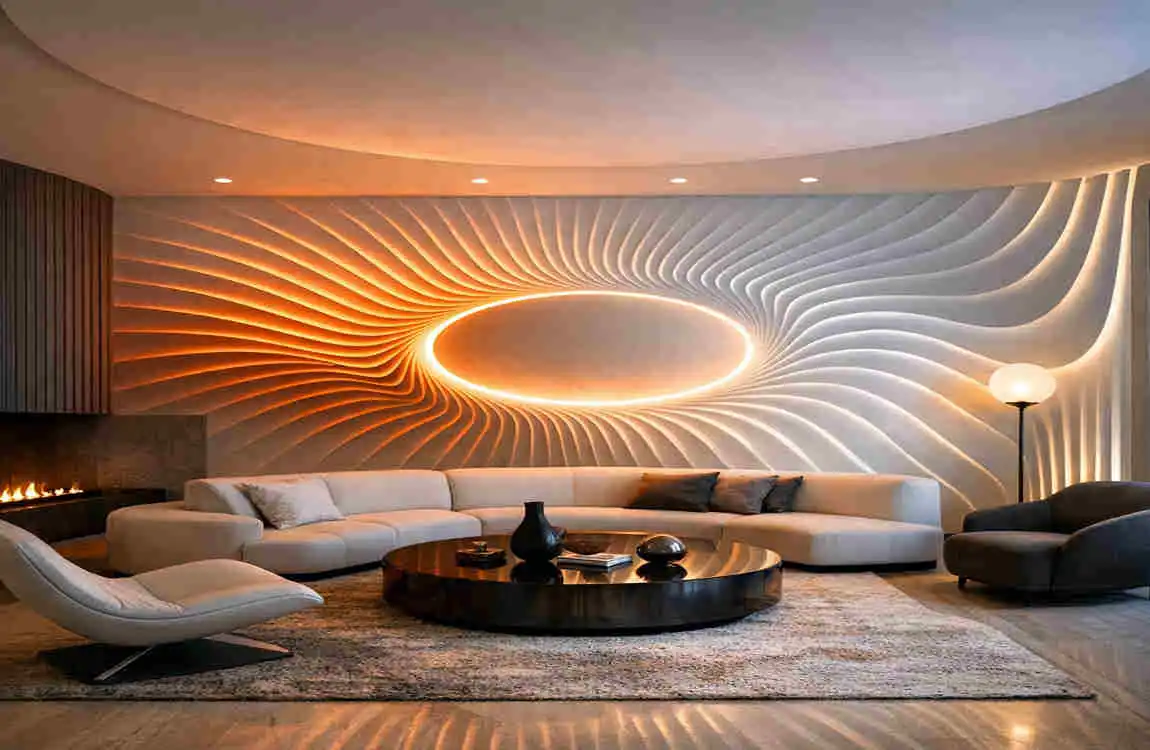
In modern rooms, less is usually better. A simple round table, a smooth light fixture, or a clean circular mirror can create rhythm without adding clutter.
Neutral colors work well here because they let the shape and structure stand out.
Traditional and Classic Spaces
Traditional interiors can use more decorative elements. Patterned rugs, detailed mirrors, and elegant ceiling lights all work well.
The key is still balance. Even in a classic room, the center should feel clear and calm.
Small Rooms
A radial rhythm can actually help small rooms feel better. One strong focal point gives the eye a place to rest, which can make the room feel more organized.
Just keep it simple. Do not fill a small room with too many pieces.
FAQ About Radiation Rhythm in Interior Design
What is radiation rhythm in interior design?
It is a design style where elements spread outward from a central focal point, creating movement, balance, and visual flow.
What is an example of radiation rhythm?
A chandelier hanging over a round dining table is a common example. A sunburst mirror is another simple example.
What is the difference between repetition and radiation rhythm?
Repetition uses repeated elements throughout a space. Radiation rhythm uses repeated elements that seem to spread from a central point.
How can I create radiation rhythm in a living room?
Use a central coffee table, arrange seating around it, and add a round rug or light fixture to strengthen the center.
Is radiation rhythm good for small spaces?
Yes. A single focal point can make a small room feel more organized and open.
| Design Element | Radiation Rhythm Idea | Easy Design Example |
|---|---|---|
| Lighting | Arrange lights from a central point | Use a chandelier with lights spreading outward |
| Furniture | Place furniture around a focal point | Arrange chairs around a round coffee table |
| Ceiling Design | Create lines radiating from the center | Add wooden beams spreading outward |
| Flooring | Use patterns that move outward | Install tiles in a sunburst pattern |
| Wall Décor | Repeat décor around a central feature | Place mirrors or artwork around a large centerpiece |
| Rugs | Choose circular or radial patterns | Use a round rug with lines extending outward |
| Color | Spread colors from one main focal point | Use a bold center color with softer surrounding shades |
