
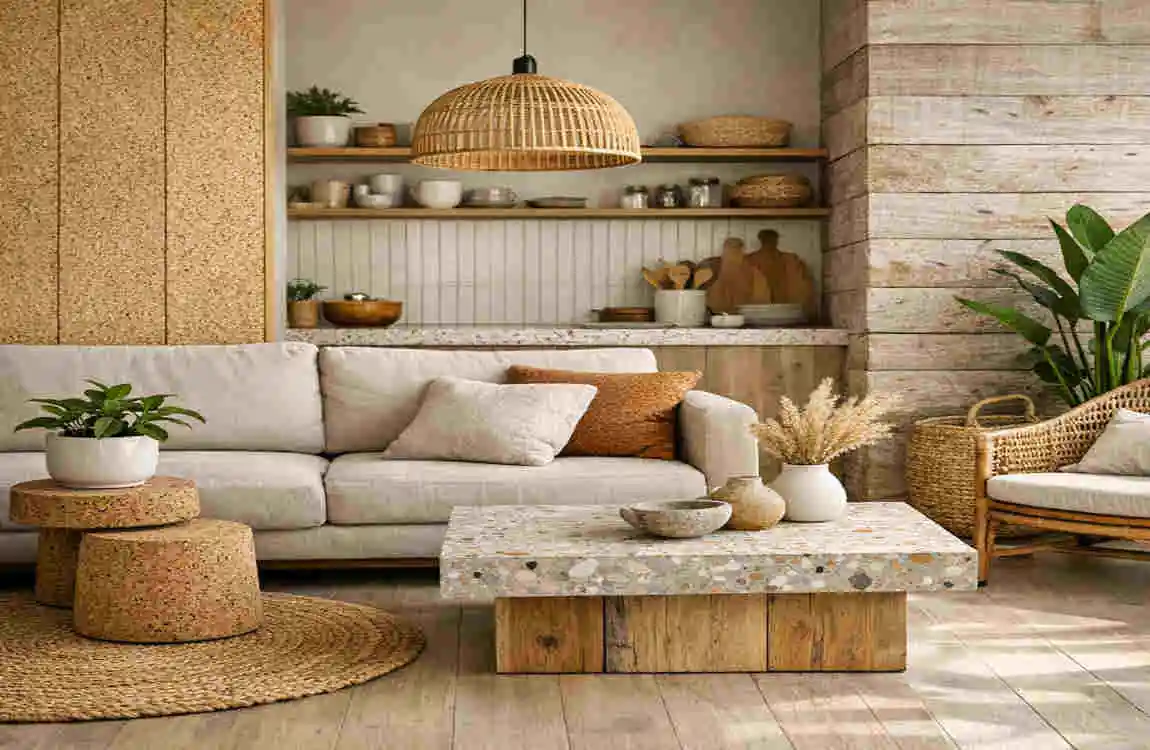
If you are asking what sustainable materials in interior design are, the simple answer is this: they are materials that help create beautiful rooms without wasting resources or harming the environment more than necessary. They are often durable, responsibly sourced, low in harmful chemicals, and made to last.
For modern homes, this matters. Your material choices affect how your home looks, how healthy it feels, how long it lasts, and how much waste it creates over time. A smart choice can support both style and sustainability.
What Are Sustainable Materials in Interior Design?
A clear definition
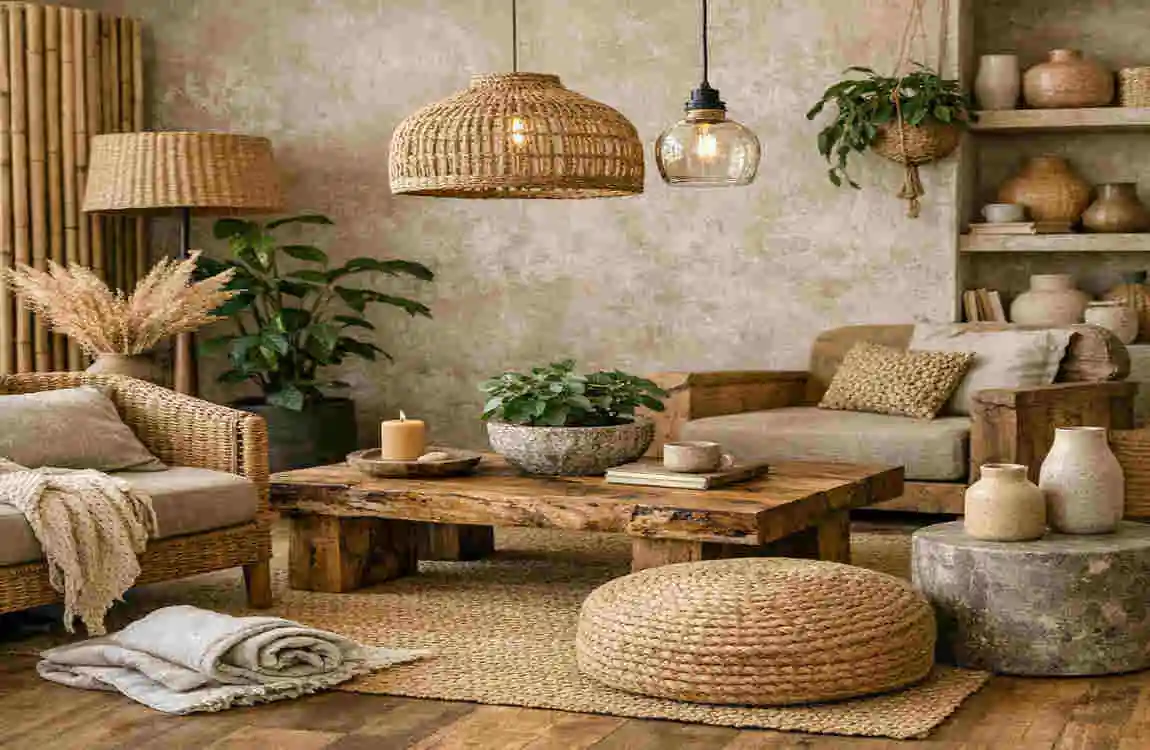
Sustainable interior materials are products used inside the home that are made, sourced, and used with less environmental harm. They often last longer, need fewer replacements, and may improve indoor air quality.
Main qualities to look for
A strong sustainable material usually has a few of these traits:
- Renewable or responsibly sourced
- Recycled or reclaimed content
- Low-VOC or low-emission
- Durable and long-lasting
- Locally sourced when possible
- Easy to maintain
- Made with less waste
Why certifications and labels matter
Product labels help you understand whether a material is truly eco-conscious or just marketed that way. Certifications can give you a better sense of sourcing, emissions, and quality.
If you are not sure, always read the product details carefully.
Common examples
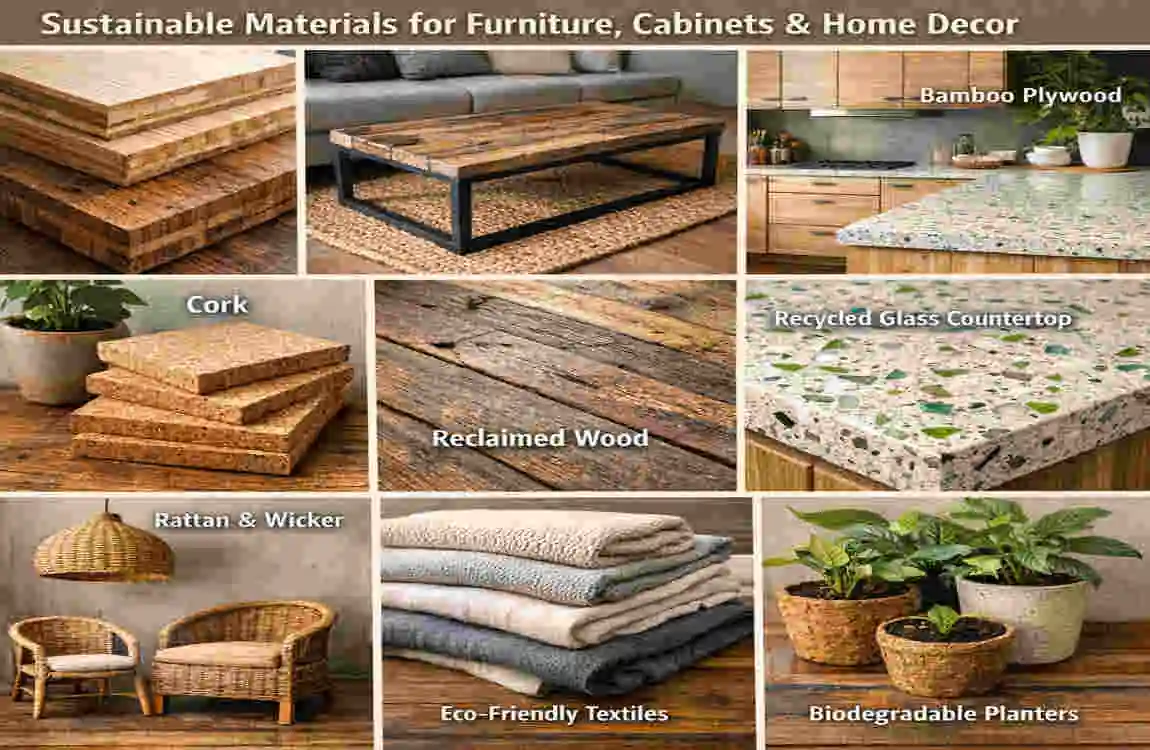
Some common sustainable materials include bamboo, cork, reclaimed wood, recycled glass, linoleum, natural stone, clay plaster, organic fabrics, and recycled metal.
Best Sustainable Materials for Floors, Walls, and Ceilings
Bamboo flooring
Bamboo is popular because it grows quickly and works well in sleek, modern interiors. It gives a clean look and works well in many rooms.
Still, bamboo quality can vary. The way it is processed and glued matters, so check the source and finish.
Cork flooring
Cork is soft, comfortable, and naturally insulating. It helps with sound and feels good underfoot, which makes it a great choice for bedrooms, playrooms, or quiet living spaces.
Reclaimed wood
Reclaimed wood adds warmth and character. It is wood that has already been used before, so it helps reduce the need for new lumber.
It works beautifully for floors, accent walls, and ceiling details.
Recycled glass surfaces
Recycled glass can be used in countertops, tile, or decorative wall finishes. It often brings colour and texture while keeping waste out of landfills.
Natural stone
Stone can be a strong long-term option if it is sourced responsibly. It lasts a long time and can create a timeless look.
The main concern is sourcing, transportation, and whether the stone comes from a responsible supplier.
Linoleum
Real linoleum is made from natural ingredients like linseed oil and cork dust. It is not the same as vinyl.
It is durable, low-maintenance, and a good fit for busy rooms.
Clay and natural plaster finishes
Clay and lime-based finishes offer a soft, natural look. They can help walls feel warm and breathable.
These are especially nice when you want a calm, organic feel.
Quick material comparison
MaterialBest ForMain BenefitWatch For
Bamboo Floors Fast-growing and modern Quality and sourcing
Cork Floors, walls Soft and insulating Moisture sensitivity
Reclaimed wood Floors, walls, ceilings Reuse and character Condition and finish
Recycled glass Countertops, tiles Decorative and recycled Cost and weight
Natural stone Floors, counters Long-lasting beauty Transport and sourcing
Linoleum Floors Natural and durable Must be real linoleum
Clay plaster Walls Natural finish Not for every room
Sustainable Materials for Furniture, Cabinets, and Home Decor
Reclaimed and certified wood
Furniture made from reclaimed or certified wood can reduce waste and protect forests. It also gives your home a warm, timeless feel.
Recycled metal and composite materials
Recycled metal works well in furniture frames, lighting, and decor. It is strong, reusable, and often stylish in modern spaces.
Natural fabrics
For sofas, curtains, bedding, and chairs, natural fabrics such as organic cotton, linen, hemp, and wool are excellent options. They often feel better and age well.
Eco-friendly kitchen cabinets
Kitchen cabinets should be durable because kitchens get heavy use. Look for responsibly sourced wood, low-emission finishes, and quality construction.
Secondhand and vintage pieces
A used chair, table, or cabinet can be one of the most sustainable choices you make. Reusing furniture saves materials and often adds personality.
Why durability matters
A long-lasting piece reduces waste because you do not need to replace it as often. That is one of the simplest ways to design more sustainably.
How to Choose Sustainable Interior Materials for Your Home
Start with the room’s purpose.
A bathroom, bedroom, and kitchen all need different materials. A good choice in one room may fail in another.
Ask yourself: Will this room get wet, dirty, warm, or heavy use? That answer will guide your choice.
Check sourcing and manufacturing.
Not all “green” materials are equally good. Some may be natural but still travel far or use a lot of energy to make.
Choose products with clear sourcing information and responsible production methods.
Look for low emissions.
If you care about indoor air quality, choose low-VOC finishes, paints, adhesives, and sealants. This can make your home feel fresher and healthier.
Think about life cycle, not just price.
A cheaper material that wears out quickly is often less sustainable over time. A more durable product may cost more upfront but save money and waste later.
Common mistakes to avoid
- Buying something only because it is labelled “eco-friendly”
- Ignoring durability
- Choosing style over function
- Forgetting maintenance needs
- Overlooking shipping and transport impact
Sustainable Interior Design Ideas for Modern Homes
Living room ideas
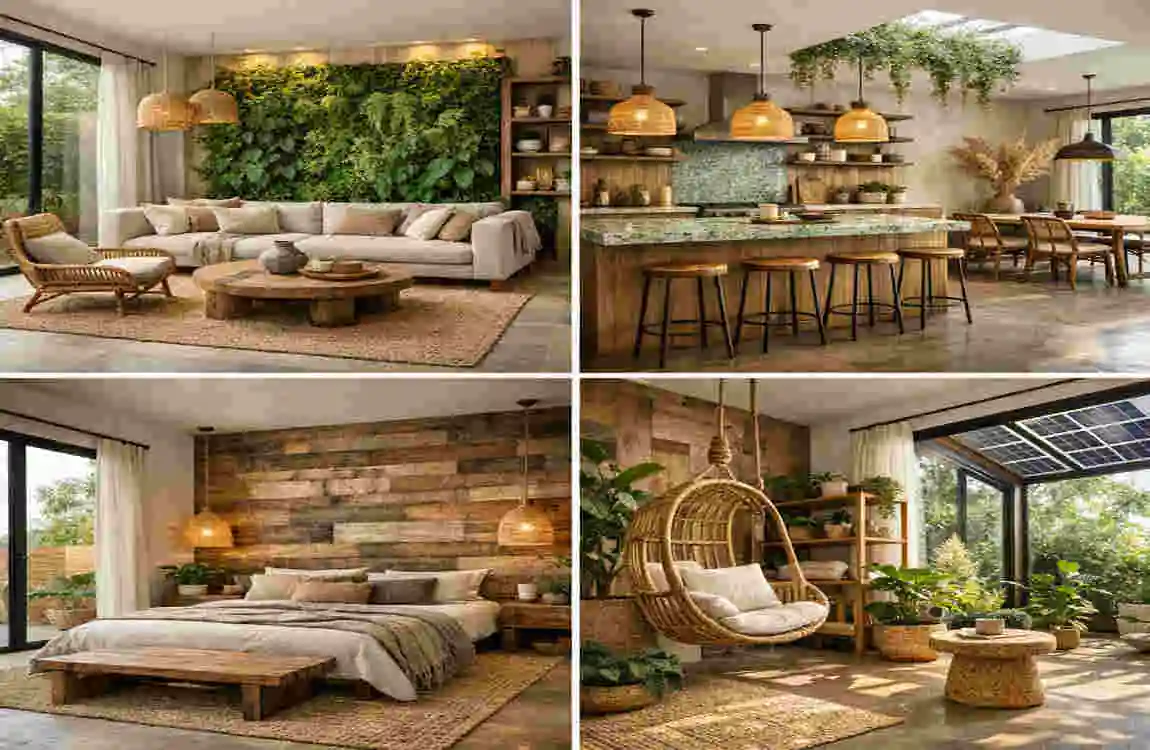
Use reclaimed wood tables, natural fabric sofas, and low-VOC paint. Add plants, but keep the room simple and uncluttered.
Bedroom ideas
Choose cork or bamboo flooring, organic cotton bedding, and natural window coverings. Soft textures work well here.
Kitchen ideas
Use durable cabinets, recycled glass details, and responsibly sourced countertops. In a kitchen, easy cleaning and long life matter a lot.
Bathroom ideas
Pick water-resistant, low-maintenance materials that also support indoor air quality. Clay finishes and some stone surfaces can work well if you choose them carefully.
Modern style and sustainability
Sustainable materials can fit many looks, including modern, Scandinavian, rustic, and contemporary styles. Natural wood, clean lines, and soft colours often work especially well.
FAQ About Sustainable Materials in Interior Design
What are sustainable materials in interior design?
They are materials chosen for lower environmental impact, durability, responsible sourcing, and healthier indoor use. Examples include bamboo, cork, reclaimed wood, recycled glass, and low-VOC finishes.
What is the most sustainable material for interior design?
There is no single best material. The answer depends on how it is sourced, how long it lasts, how it is made, and where it is used.
Is bamboo a sustainable interior material?
Yes, bamboo can be a sustainable choice because it grows quickly. But the manufacturing process and sourcing still matter.
What are the most eco-friendly flooring materials?
Bamboo, cork, reclaimed wood, and real linoleum are all strong options. The best one depends on room use and moisture levels.
Are sustainable interior materials more expensive?
Sometimes upfront, yes. But they can save money over time because they often last longer and need less replacement.
How can I make my home interior more sustainable?
Choose durable materials, buy reclaimed or secondhand pieces, pick low-VOC products, and avoid unnecessary replacements.
What should I look for when buying sustainable materials?
Check for source information, recycled content, certifications, durability, emissions, and expected lifespan.
Can sustainable materials look modern and stylish?
Absolutely. Sustainable materials can look clean, warm, and upscale when used thoughtfully.
| Material | Best For | Main Benefit | Sustainability Feature |
|---|---|---|---|
| Bamboo | Flooring, cabinets | Strong and stylish | Fast-growing renewable resource |
| Reclaimed Wood | Walls, furniture, flooring | Natural character | Reuses existing timber |
| Cork | Flooring, wall panels | Soft and comfortable | Renewable and recyclable |
| Recycled Glass | Countertops, tiles | Modern appearance | Uses recycled glass waste |
| Natural Stone | Floors, countertops | Durable and timeless | Long-lasting material |
| Recycled Metal | Fixtures, furniture | Modern industrial look | Can be recycled repeatedly |
| Wool | Rugs, carpets | Warm and comfortable | Natural and biodegradable |
| Low-VOC Paint | Walls and ceilings | Better indoor air quality | Reduces harmful emissions |
