
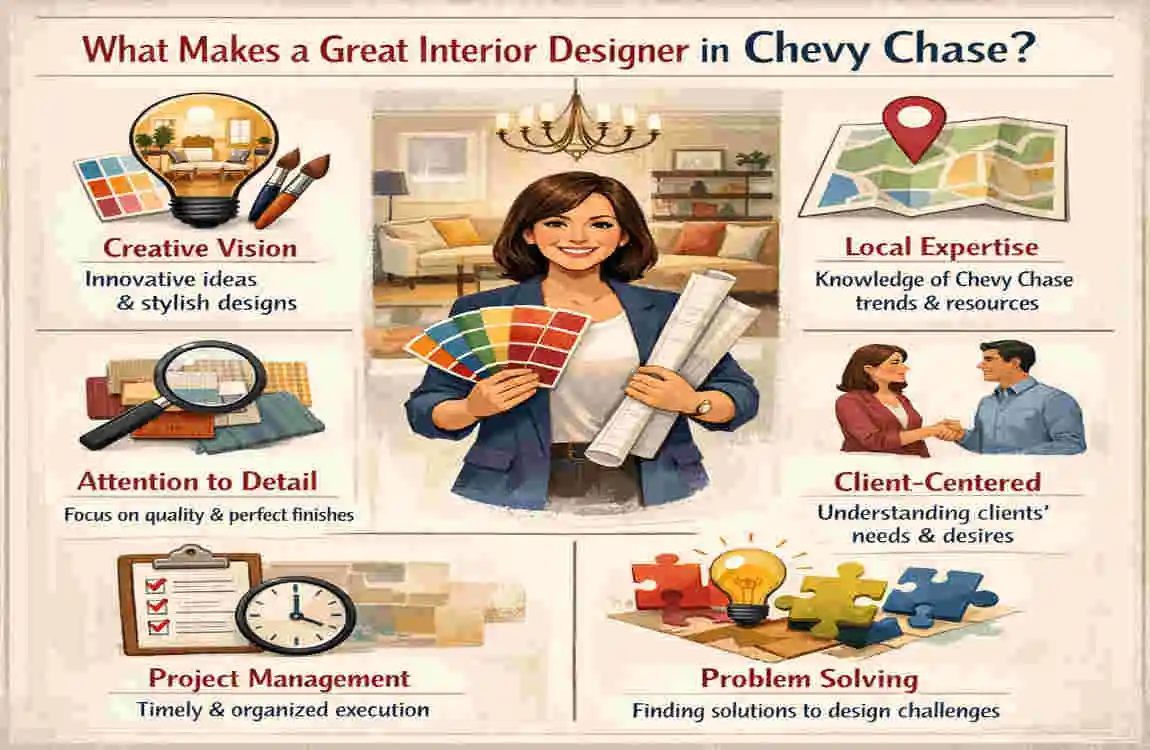
A great interior designer does more than make a home look nice. They shape how a space feels, works, and supports daily life in a place like Chevy Chase, which matters even more because homes often need a balance of style, comfort, and practical use.
If you have ever wondered what an interior designer in Chevy Chase is, the answer is simple: a design professional who helps homeowners and businesses plan, improve, and style interiors in a way that fits the local area and the client’s needs.
A good designer helps with layout, colours, furniture, lighting, materials, and overall flow. A great one also understands the local home styles in Chevy Chase, the expectations of nearby homeowners, and how to create spaces that feel timeless, not just trendy.
What Is an Interior Designer in Chevy Chase?

Definition of an Interior Designer
An interior designer plans and improves indoor spaces so they look better and work better. This is different from a decorator, who mostly focuses on finishes and styling.
Designers often work with:
- space planning
- room layout
- color choices
- lighting
- furniture placement
- material selection
They also think about how people move through a room and how the space supports everyday living.
What Services Does a Chevy Chase Interior Designer Provide?
A local interior designer can help with many parts of a project. Common services include:
- Space planning for better room flow
- Colour and material selection for a polished look
- Furniture and lighting recommendations
- Custom cabinetry and built-ins
- Flooring, wall finishes, and window treatments
- Kitchen and bathroom design
- Project coordination with contractors and vendors
This helps keep the project organised and reduces stress for you.
Why Hire a Local Interior Designer?
A designer who knows Chevy Chase often brings an extra advantage. They understand the area’s home styles, client expectations, and local design trends.
That local knowledge can help with:
- matching older homes with modern updates
- choosing designs that fit the neighbourhood
- finding local suppliers and skilled tradespeople
- keeping communication and scheduling smoother
Qualities That Make a Great Interior Designer in Chevy Chase
Strong Design Experience
Experience matters because every home is different. A strong designer should be able to work on both traditional and modern interiors, and they should know how to handle rooms of different sizes and uses.
When you review their work, look for:
- clear, polished finished spaces
- variety in project types
- consistent quality
- designs that feel both attractive and practical
Excellent Communication Skills
A great designer listens first. They should understand what you want, what you need, and what your budget allows.
Good communication means they:
- explain ideas clearly
- give updates during the project
- respond well to feedback
- keep the process calm and organised
This is important because design projects can change as they move along.
Creativity and Attention to Detail
The best designers do not just copy what is popular. They create rooms that feel personal and balanced.
They pay attention to:
- color harmony
- texture
- pattern
- furniture scale
- small finishing details
These small choices often make the biggest difference in the final result.
Understanding of Functionality
Beautiful spaces should also be easy to use. A great designer thinks about storage, movement, lighting, and comfort.
This is especially useful in busy homes where every room needs to serve a purpose.
How a Great Interior Designer Creates a Personalised Home

Understanding the Client’s Lifestyle
A designer should begin by learning how you live. Do you have children? Do you work from home? Do you host guests often?
These details affect:
- room layout
- furniture choices
- storage needs
- material durability
- overall design style
A home should support your daily life, not work against it.
Choosing the Right Interior Design Style
No single style works for everyone. A great designer helps you choose one that fits your taste and home.
Common styles include:
- Modern
- Traditional
- Transitional
- Contemporary
- Minimalist
- Luxury design
The best designer will not force a look on you. Instead, they will shape the design around your personality and routine.
Balancing Beauty and Practicality
A room can look beautiful, but if it is hard to clean or uncomfortable to use, it will quickly become frustrating.
Great designers choose:
- durable surfaces
- comfortable seating
- smart storage solutions
- easy-to-maintain finishes
That balance is what makes a space feel complete.
Creating a Consistent Design Throughout the Home
A strong design room should flow from room to room. Colours, textures, and materials should feel connected, even if each room serves a different purpose.
This helps the home feel:
- cohesive
- calm
- intentional
- well planned
Interior Design Considerations for Chevy Chase Homes
Working With Existing Architecture
Many homes in Chevy Chase have character. A skilled designer respects that character instead of fighting against it.
They may preserve:
- original trim
- architectural details
- moldings
- classic room proportions
Then they add modern comfort in a way that feels natural.
Space Planning for Different Home Sizes
Not every home has large open rooms. Some need careful planning to make small spaces feel bigger and more useful.
Good space planning can help with:
- traffic flow
- storage
- seating arrangements
- flexible room use
This is one of a great designer’s biggest strengths.
Lighting and Natural Light
Lighting changes everything. A good designer uses a mix of lighting types to make the home feel warm and functional.
That may include:
- ambient lighting for general brightness
- task lighting for focused work
- accent lighting for mood and detail
They also make the most of natural light whenever possible.
Materials, Colours, and Finishes
The right materials should match your lifestyle and the home’s style. For example, a busy family may need tougher surfaces, while a more formal home may focus on refined finishes.
A great designer knows how to combine:
- textures
- tones
- finishes
- durability
This creates a home that feels both elegant and livable.
How to Choose the Right Interior Designer in Chevy Chase
Review Their Portfolio
A portfolio shows you what a designer can really do. Look for quality, consistency, and variety.
Ask yourself:
- Do their projects feel polished?
- Do they match your taste?
- Do they show strong attention to detail?
Check Experience and Credentials
Not every designer has the same training or background. Look for relevant experience, education, and professional knowledge.
You want someone who understands:
- design principles
- construction basics
- project coordination
- material selection
Read Reviews and Client Feedback
Reviews can tell you a lot about how a designer works with people. Look for feedback about communication, reliability, and final results.
A good designer should be praised for being:
- organized
- responsive
- creative
- easy to work with
Discuss Budget and Project Scope
Before starting, be clear about budget and goals. This avoids confusion later.
A good designer should explain:
- their fees
- material costs
- furniture costs
- what services are included
Ask the Right Questions Before Hiring
Here are a few smart questions to ask:
- What is your design process?
- How do you handle budget changes?
- How often will we communicate?
- Do you work with contractors?
- How long will the project take?
These questions help you understand if the designer is the right fit.
Interior Design Process, Costs, and Common Mistakes to Avoid
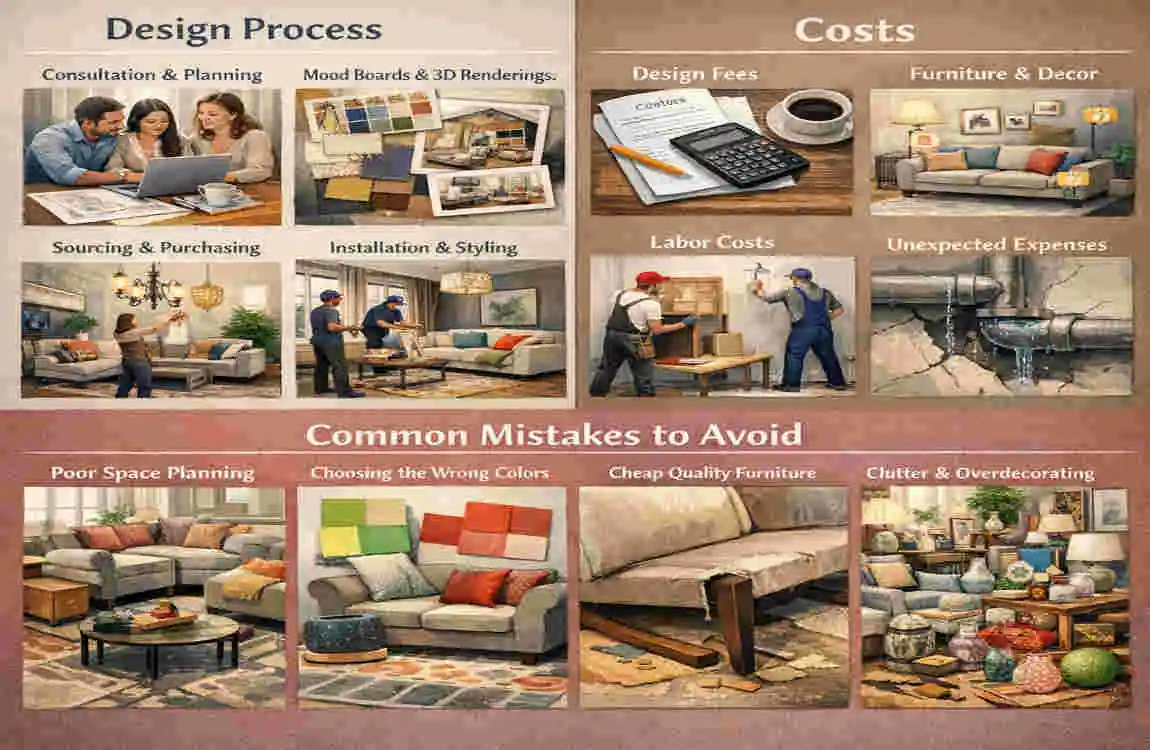
Typical Interior Design Process
Most projects follow a step-by-step process:
- initial consultation
- concept development
- space planning
- material selection
- furniture and lighting choices
- purchasing and installation
- final styling
This process helps keep the work organised and efficient.
Factors That Affect Interior Design Costs
Costs vary depending on several things:
- home size
- number of rooms
- design complexity
- custom pieces
- materials and finishes
- designer experience
That is why it is better to discuss budget early rather than guess later.
Common Mistakes Homeowners Make
Some homeowners make the process harder than it needs to be. Common mistakes include:
- choosing a designer only by price
- ignoring function
- starting without a clear budget
- buying furniture too early
- changing direction too often
Tips for Better Results
To get the best outcome, try to:
- prepare inspiration images
- know your priorities
- be honest about your budget
- stay open to expert advice
FAQ: What Is an Interior Designer in Chevy Chase?
What Is an Interior Designer in Chevy Chase?
An interior designer is a professional who plans and designs interiors for homes and businesses in Chevy Chase, with both style and function in mind.
What does an interior designer do for a home?
They help with room layout, materials, furniture, lighting, and project coordination.
Is an interior designer different from an interior decorator?
Yes. A designer focuses more on planning and function, while a decorator focuses more on appearance and styling.
Can an interior designer help with a small room?
Yes. They can make it feel larger through smart layout, storage, lighting, and furniture choices.
Can an interior designer increase a home’s appeal and value?
Yes. A thoughtful design can improve comfort, visual appeal, and overall buyer interest.
| Quality | Why It Matters |
|---|---|
| Local Experience | Understands Chevy Chase homes, layouts, and design preferences. |
| Strong Design Skills | Creates attractive, practical, and balanced interiors. |
| Good Communication | Clearly discusses ideas, budgets, timelines, and changes. |
| Budget Management | Helps control costs while maintaining design quality. |
| Space Planning | Uses available space efficiently and comfortably. |
| Material Knowledge | Selects suitable flooring, lighting, furniture, fabrics, and finishes. |
| Custom Design | Creates interiors that match the homeowner’s lifestyle and personality. |
| Attention to Detail | Ensures colors, textures, furniture, and accessories work together. |
| Project Management | Coordinates designers, contractors, suppliers, and installation. |
