
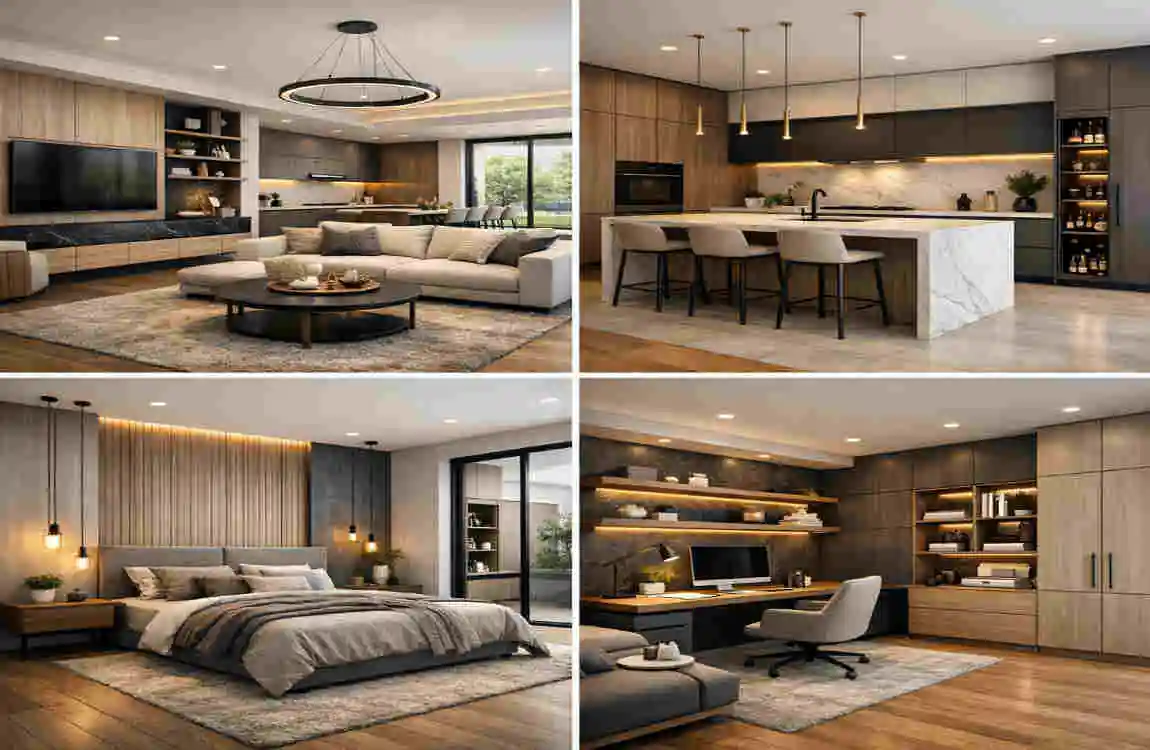
High-quality modular interiors are a smart way to make a home look modern, feel organized, and work better for everyday life. They are built with planning, precision, and useful storage in mind. Instead of filling a room with random furniture, modular interiors use well-designed parts that fit together neatly and make the best use of space.
More and more homeowners are choosing this style because it combines functionality, beauty, and flexibility. It works especially well in modern homes where people want cleaner layouts, easier maintenance, and spaces that match their lifestyle.
What Are High-Quality Modular Interiors?
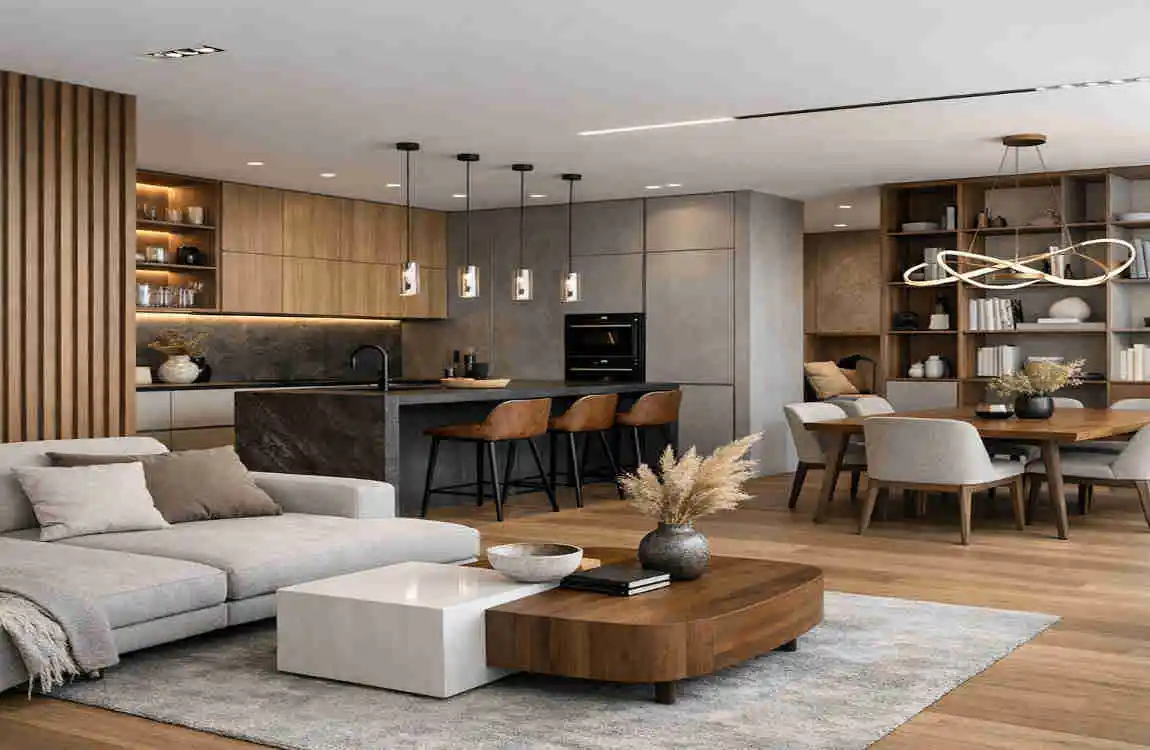
Understanding Modular Interior Design
Modular interior design means building a room with separate units or modules that fit together in a planned way. These units may include cabinets, shelves, wardrobes, drawers, desks, and storage sections.
The big difference between modular and traditional interiors is how they are made. Traditional interiors are often built on-site from scratch. In contrast, modular interiors are usually prepared in sections and then installed in the home. This makes the process more organized and often faster.
The idea is simple. You get a design that is made to fit your space, your habits, and your storage needs. That is why modular interiors are so popular in modern homes.
Key Features of High-Quality Modular Interiors
Not all modular interiors are the same. High-quality modular interiors stand out because they are made with care and built to last.
Some of the most important features include:
- Strong and durable materials
- Precise measurements
- Clean finishing
- Smart storage use
- Modern colors and textures
- Customization for different room sizes
Together, these features make the home feel more polished and easier to use.
Why Quality Matters
Quality is what separates a short-term design from a long-term solution. A low-cost setup may look good at first, but it can wear out quickly, swell with moisture, or lose its finish.
High-quality modular interiors give you better durability, easier maintenance, and a more finished look. They can also add value to the home by improving both appearance and usability.
Best Modular Interior Ideas for Modern Homes
Modular Kitchen Interiors
The kitchen is one of the best places to use modular design. It needs storage, easy movement, and a layout that supports cooking without clutter.
A modular kitchen may include:
- Base cabinets
- Wall cabinets
- Tall pantry units
- Pull-out drawers
- Corner storage systems
- Appliance spaces
A kitchen island can also be a great addition if you have enough room. It adds prep space, storage, and sometimes even seating.
When planning a modular kitchen, focus on easy access. Place the items you use most often within easy reach. This makes cooking smoother and keeps the kitchen organized.
Smart kitchen storage ideas
Try using deep drawers for pots and pans, vertical trays for cutting boards, and pull-out shelves for spices and utensils. These small details can make daily use much easier.
Countertops and backsplashes should also match the design. A clean, simple surface often works best in modern homes because it looks neat and is easier to maintain.
Modular Bedroom Interiors
A bedroom should feel calm, clean, and comfortable. Modular design helps make that happen without wasting space.
The most common modular bedroom features include:
- Built-in wardrobes
- Storage beds
- Bedside cabinets
- Dressing units
- Open shelves
- Compact study corners
If the bedroom is small, a floor-to-ceiling wardrobe can be very useful. It gives you more storage without taking up extra room.
Creating a restful bedroom feel.
Colors matter here too. Soft shades like beige, white, grey, and muted wood tones can make the bedroom feel peaceful. Good lighting is also important. Use a mix of overhead light and softer task lighting near the bed or dressing area.
A modular bedroom works best when storage feels hidden, not heavy. The room should still feel open and easy to relax in.
Modular Living Room Interiors
The living room is where style and function need to work together. It is a space for guests, family time, and everyday comfort.
Modular living room ideas may include:
- TV units
- Wall-mounted cabinets
- Display shelves
- Hidden storage
- Low consoles
- Built-in seating or side units
A good TV unit can do more than hold a screen. It can also hide cables, store media items, and add balance to the room.
Keep the living room clean and open.
Modern living rooms often look best when they feel light and simple. Instead of using too many large pieces, choose a few strong modular elements that organize the space without crowding it.
Minimalist layouts work especially well here. They make the room feel fresh and easy to move through.
Modular Home Office Interiors
A home office needs focus, comfort, and good organization. Modular design can turn even a small corner into a useful workspace.
A modular office may include:
- Built-in desks
- Storage shelves
- Cabinets for files
- Cable management systems
- Wall-mounted organizers
- Compact seating
If you work from home often, ergonomics matter too. Your chair, desk height, lighting, and monitor placement should support your body and reduce strain.
Make the workspace practical.
A clean desk and simple storage setup can help you stay focused. Keep work tools close, hide cables where possible, and use shelves to reduce clutter.
Even in a small home, a modular office can make work feel more professional and less stressful.
Materials, Finishes, and Design Elements
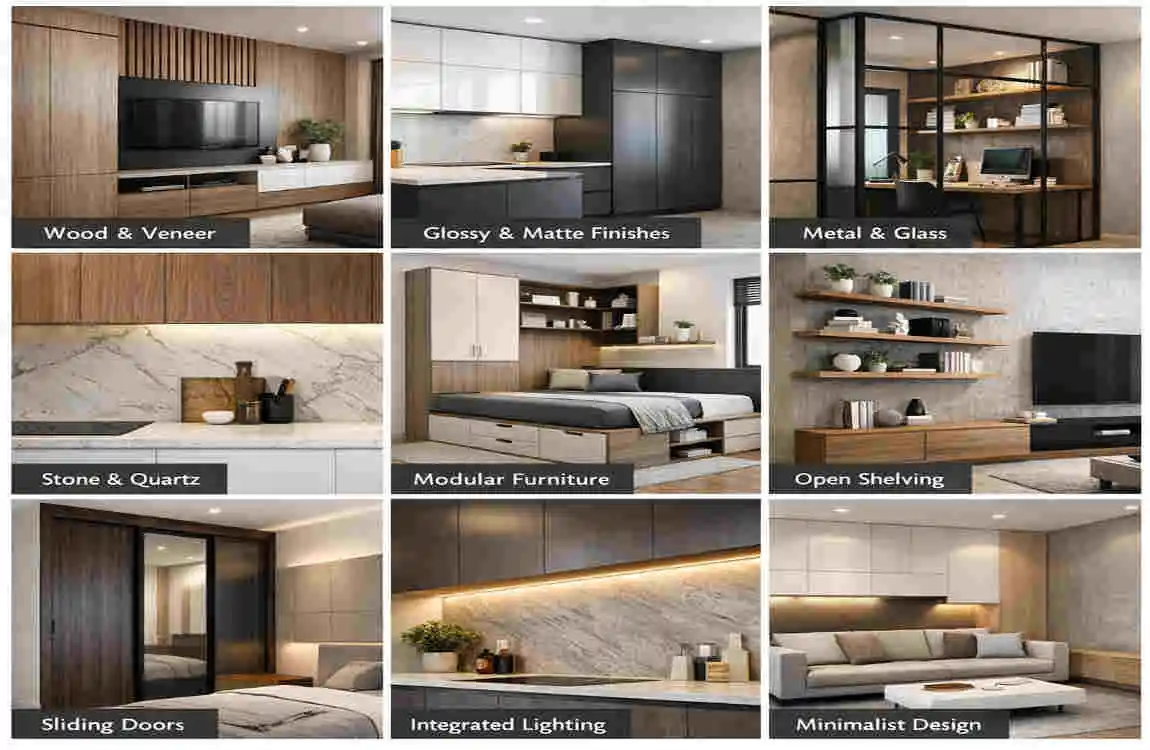
Popular Materials
The materials you choose affect the strength, style, and lifespan of your modular interiors. Some materials suit budget-friendly projects, while others offer a more premium look.
Common materials include:
- Plywood
- Engineered wood
- MDF
- Particle board
- Glass
- Metal
- Laminate
- Veneer
How these materials compare
MaterialMain StrengthBest Use
Plywood Strong and stable Cabinets, wardrobes, kitchen units
Engineered wood Good balance of cost and strength General modular furniture
MDF Smooth finish and easy shaping Decorative panels and furniture fronts
Particle board Budget-friendly Low-cost interiors with lighter use
Glass Clean and modern look Display units, doors, accents
Metal Strong and long-lasting Handles, frames, supports
Laminate Easy to clean and available in many designs Surface finishes
Veneer Natural wood appearance Premium-looking interiors
Choosing the Right Finishes
Finishes change the way a room feels. They can make a space look soft, bright, bold, warm, or sleek.
Matte vs glossy
Matte finishes give a smooth, calm, modern look. They work well in bedrooms, living rooms, and spaces where you want less shine.
Glossy finishes reflect more light and can make a room feel brighter. They are common in kitchens and smaller spaces because they create a cleaner visual effect.
Wood-look and colored finishes
Wood-look finishes bring warmth into modern homes. They make a room feel more natural and inviting.
For a bolder look, mix neutral shades with darker accents. The key is to keep the colors balanced so the room does not feel too busy.
Keep the home visually connected.
A nice trick is to repeat some finish choices across rooms. For example, using the same wood tone in the kitchen and living room can help the home feel more unified.
Hardware and Accessories
Hardware may seem small, but it plays a big role in how modular interiors work.
Good hardware includes:
- Strong hinges
- Smooth drawer channels
- Soft-close systems
- Good handles
- Pull-out storage fittings
- Functional lighting accessories
Soft-close drawers and doors are especially helpful. They reduce noise, protect the furniture, and make the home feel more refined.
Lighting accessories also matter. LED strips under cabinets or inside shelves can improve both style and function.
How to Choose High-Quality Modular Interiors
Check Material Quality
Before you choose any modular setup, check the materials carefully. Do not focus only on looks. Ask how thick the material is, how well it handles moisture, and how durable the finish is.
Look at:
- Material thickness
- Edge finishing
- Surface smoothness
- Moisture resistance
- Heat resistance
These details tell you a lot about how long the interior will last.
Focus on Design and Functionality
A beautiful design isn’t enough if it doesn’t work well in daily life. Your space should support how you actually live.
Think about:
- How much storage you need
- Which items you use most
- How much walking space you need
- Whether the layout feels easy to move through
The best modular interior looks good and also makes life simpler.
Consider Installation and Customization
High-quality modular interiors should fit your room properly. That means accurate measurements are very important.
If your home has unusual corners, sloped walls, or awkward spaces, custom modules may be the best option. They help the design fit better and look cleaner.
Professional installation also matters. Even strong materials can look poor if they are installed badly.
Compare Cost and Long-Term Value
It is tempting to choose the cheapest option, but low cost does not always mean good value. A better material or stronger fitting may cost more at first but save money later.
When comparing choices, look at:
- Initial cost
- Installation cost
- Repair needs
- Maintenance
- Expected lifespan
- Warranty or service support
A good modular interior should deliver value for years, not just the first few months.
Benefits and Maintenance of Modular Interiors
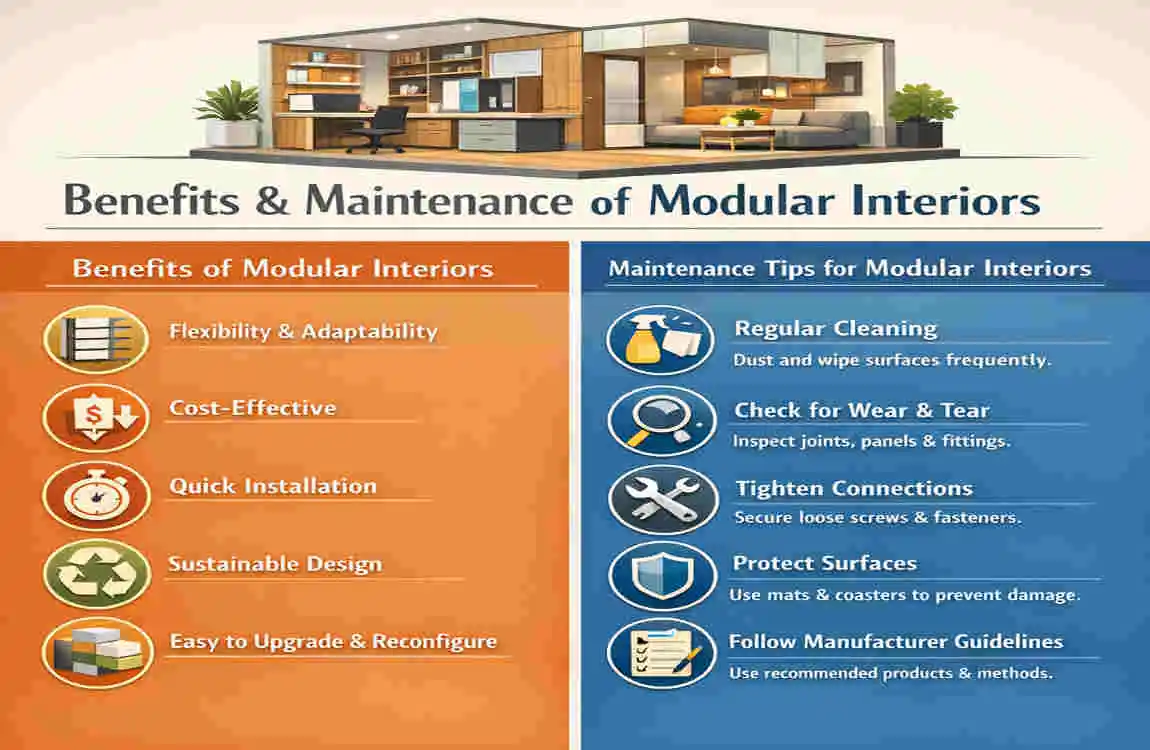
Major Benefits
One reason people love modular interiors is that they make homes easier to organize. Each part has a purpose, which makes the room feel calmer.
The main benefits include:
- Better use of space
- Clean and organized appearance
- Faster installation
- Flexible design options
- Modern style consistency
- Easier future changes or repairs
These benefits are especially useful in modern homes where space matters.
Maintenance Tips
Modular interiors are usually easy to care for, but they still need attention.
Here are a few simple habits:
- Clean surfaces based on the material type
- Keep wood-based materials away from too much moisture
- Check hinges and drawer hardware regularly
- Wipe spills quickly
- Repair small damage early
If you stay ahead of small issues, your interiors will last longer and stay attractive.
Common Mistakes to Avoid
A modular interior project can go wrong if you rush or cut corners. One of the biggest mistakes is choosing materials based only on price.
Other common mistakes include:
- Ignoring storage needs
- Measuring the space poorly
- Filling the room with too many units
- Choosing weak hardware
- Picking finishes that do not suit the room
A balanced design is always better than a crowded one.
Modular Interior Ideas by Room Type
For Small Homes
In small homes, modular interiors can make a huge difference. They help you use every inch wisely.
Choose slim storage, wall-mounted units, and multi-purpose furniture. A storage bed, for example, gives you both comfort and hidden space.
Light colors, mirrors, and clean lines can also make the home feel larger.
For Large Homes
Large homes give you more freedom, but they still need structure. Modular interiors help keep the space organized and connected.
You can use bigger wardrobes, more storage, extended kitchen layouts, and custom entertainment units. The trick is to avoid making the rooms feel empty or too scattered.
For Family Homes
Family homes need practical storage and easy access. Modular interiors are ideal because you can design them around daily routines.
Think about places for school bags, kitchen tools, cleaning items, toys, electronics, and personal items. When everything has a place, the home feels much easier to manage.
FAQ: High-Quality Modular Interiors
What are high-quality modular interiors?
They are well-designed interior setups made with durable materials, good finishing, and practical storage solutions. They look attractive and work well in daily life.
Are modular interiors suitable for small homes?
Yes, very much so. They work well in small homes because they save space and add storage without making the room feel crowded.
Which materials are best for modular interiors?
Plywood, engineered wood, laminate, veneer, and metal are common choices. The best option depends on your budget, room type, and how much wear the space gets.
How long do high-quality modular interiors last?
That depends on the materials, hardware, installation, and maintenance. With good care, they can last for many years.
Are modular interiors expensive?
They can be affordable or premium depending on the design. Cost changes based on the room size, materials, customization, and finish quality.
| Feature | Information |
|---|---|
| Kitchen | Modular cabinets, quartz countertops, smart storage |
| Living Room | Built-in TV units, sleek furniture, hidden storage |
| Bedroom | Custom wardrobes, platform beds, modern lighting |
| Materials | Quality wood, laminates, glass, metal, and stone |
| Design Style | Minimalist, contemporary, clean, and functional |
| Storage | Space-saving cabinets, drawers, shelves, and organizers |
| Benefits | Stylish appearance, efficient space use, durability, and easy maintenance |
