
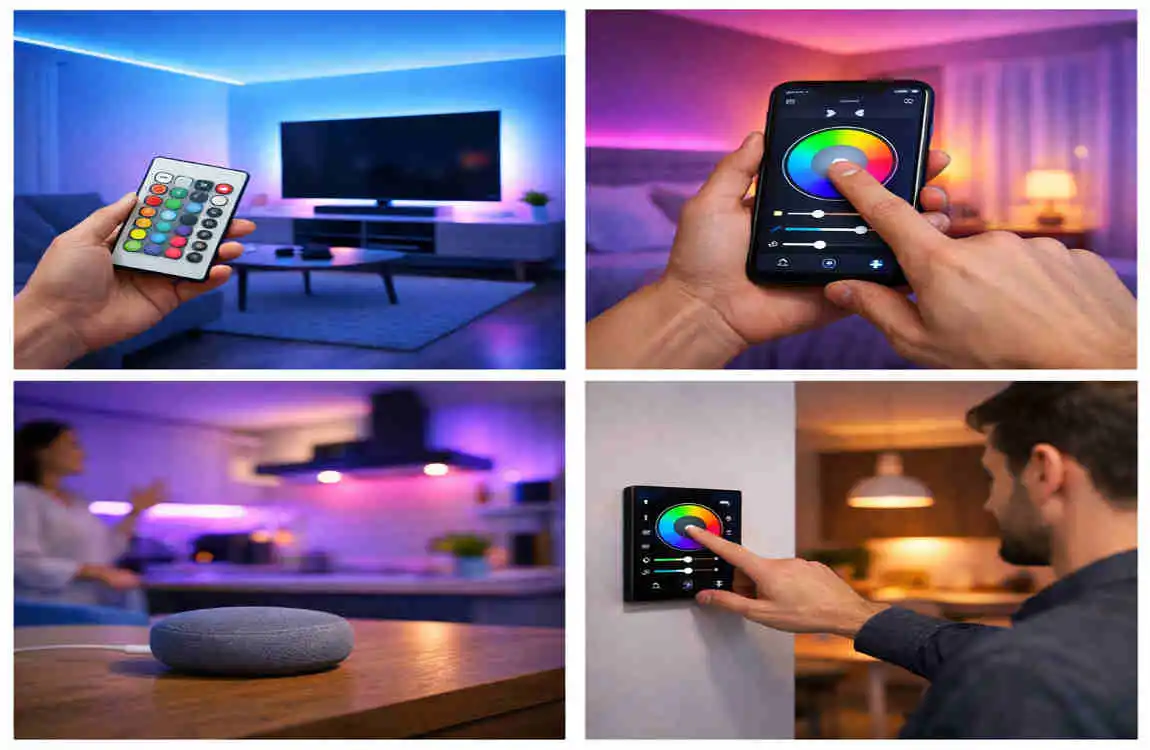
LED lights are now common in modern homes because they use less energy, last a long time, and give you many lighting choices. But many homeowners still want a simple way to turn them off, dim them, or control them more easily.
If you are wondering how to turn off room interior LED lights, the good news is that LED lights can usually be controlled in several easy ways. You can use a wall switch, a remote control, a dimmer, a smart app, or a home automation system.
LED Interior Lights and How They Work
What Are LED Interior Lights?
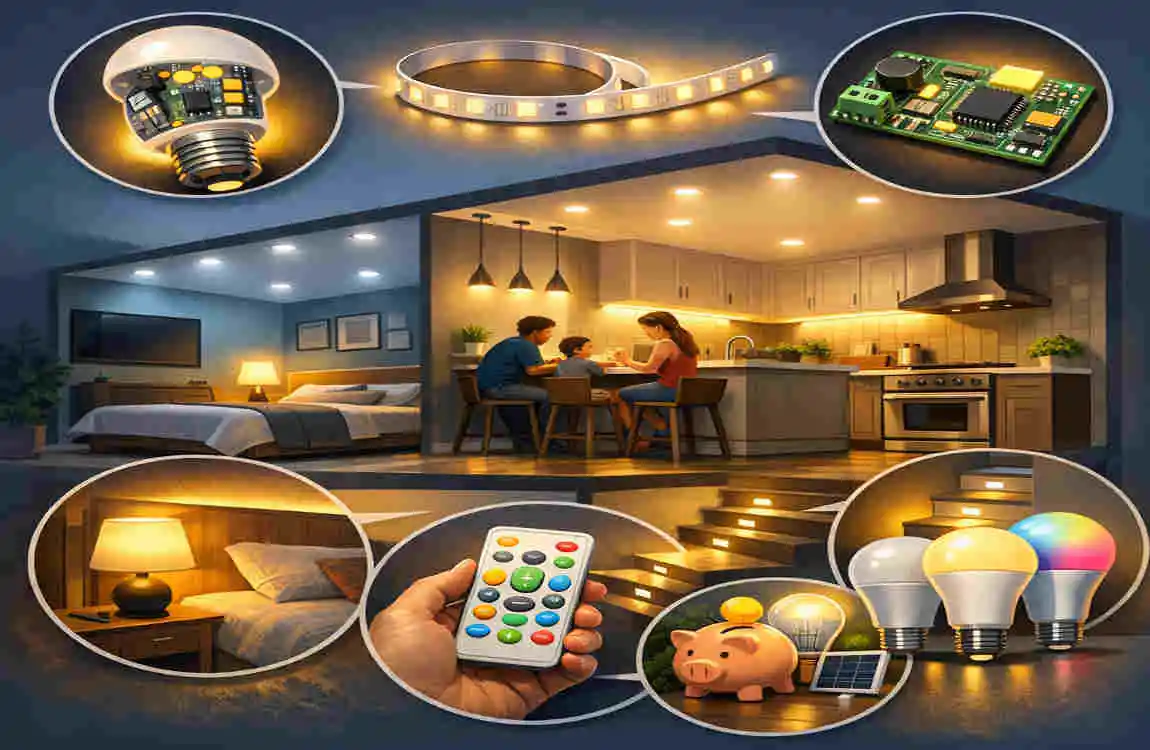
LED stands for light-emitting diode. In simple words, it is a type of light that uses less power than older bulbs.
You will find LED lights in many places around the home, including:
- Bedrooms
- Living rooms
- Kitchens
- Bathrooms
- Hallways
- Home offices
They come in many forms, like bulbs, ceiling lights, strip lights, and recessed lights.
Why Choose LED Lighting?
LED lighting is popular because it offers several benefits:
- Lower energy use
- Long life
- Less heat
- Different brightness levels
- Smart-home support
That means you save energy and get more control over how your rooms feel.
Common Types of LED Interior Lights
You may already have one or more of these at home:
LED Type Common Use Control Method
LED bulbs Lamps and ceiling fixtures Switch, dimmer, or smart control
Recessed lights Living rooms and kitchens Wall switch or smart switch
LED strip lights Under cabinets or behind TVs Remote, app, or controller
Panel lights Offices and kitchens Switch or smart control
Ceiling fixtures Bedrooms and hallways Switch or pull chain
How to Turn Off LED Room Lights
Using a Standard Wall Switch
The easiest way to turn off most LED lights is still the wall switch. If the fixture is wired normally, flipping the switch cuts power and turns the light off.
This works for most fixed ceiling lights, recessed lights, and many wall-controlled fixtures.
Using a Remote Control
Some LED fixtures come with a remote. This is common with ceiling fans, decorative lights, and strip lighting.
If your light has a remote, use the off button to shut it down. Keep the remote in a safe place so you can find it when needed.
Using a Pull Chain or Fixture Switch
Some ceiling lights have their own switch or pull chain. If your room light does not respond to the wall switch, check the fixture itself.
This is common in older homes, lamps, and some decorative lighting.
Turning Off LED Strip Lights
LED strip lights usually do not work like normal bulbs. They often connect to a controller, an inline switch, a power adapter, or an app.
To turn them off, check the control box or remote first. If the strip still stays on, unplugging the power adapter may solve the issue.
How to Control LED Lights With Dimmers
Are All LED Lights Dimmable?
No, not all LED lights can be dimmed. The bulb or fixture must say dimmable, and the dimmer must also work with LED lighting.
If the parts are not compatible, the light may flicker or fail to turn off properly.
How LED Dimmers Work
A dimmer does more than lower brightness. It changes the amount of power reaching the light.
This lets you create soft evening lighting or brighter light when you need to see clearly.
Common Problems With LED Dimmers
Some common issues include:
- Flickering
- Buzzing
- Uneven brightness
- Lights not turning fully off
If this happens, the bulb and dimmer may not work well together. A compatible LED dimmer usually fixes the problem.
Smart Ways to Control LED Interior Lights
Smart Bulbs
Smart LED bulbs connect to your phone or smart-home system. You can turn them on or off, dim them, and sometimes change color too.
This is a great option if you want easy control without changing all your wiring.
Smart Switches
Smart switches replace a standard wall switch and let you control the light via an app, a schedule, or a voice assistant.
This is useful when you want to control multiple lights in one room.
Voice Control
If your lighting system works with a voice assistant, you can turn lights on or off by speaking a command.
This is helpful when your hands are full or when you want quick control from across the room.
Scheduling and Automation
You can set lights to turn off at bedtime, when you leave home, or at a certain time each day.
This saves energy and helps you avoid accidentally leaving lights on.
Troubleshooting LED Lights That Won’t Turn Off
Check the Wall Switch
First, make sure the switch is working properly. A worn switch may not fully cut power.
If the light stays on even when switched off, the wiring may need attention.
Check for Dimmer Compatibility
A dimmer that does not match your LED bulb can cause strange behavior. The light may glow a little even when off.
If that happens, try a compatible LED dimmer.
Look at Smart Controls
Smart bulbs and smart switches sometimes remain connected to power to respond to apps or voice commands. That can make the light seem like it is still on.
Check the app, settings, and wireless connection before assuming the fixture is broken.
Check for Electrical Problems
If the light stays on, flickers oddly, or behaves in a way you cannot explain, the issue may be electrical.
In that case, it is better to call a qualified electrician than guess at the cause.
Tips for Safer and More Efficient LED Lighting
Turn Lights Off When Not Needed
The simplest way to save energy is to switch off the lights when you leave the room.
This may sound basic, but it still makes a big difference over time.
Use Timers and Motion Sensors
Timers and motion sensors are easy ways to reduce waste. Lights can turn off automatically when a room is empty.
This is especially helpful in hallways, bathrooms, and closets.
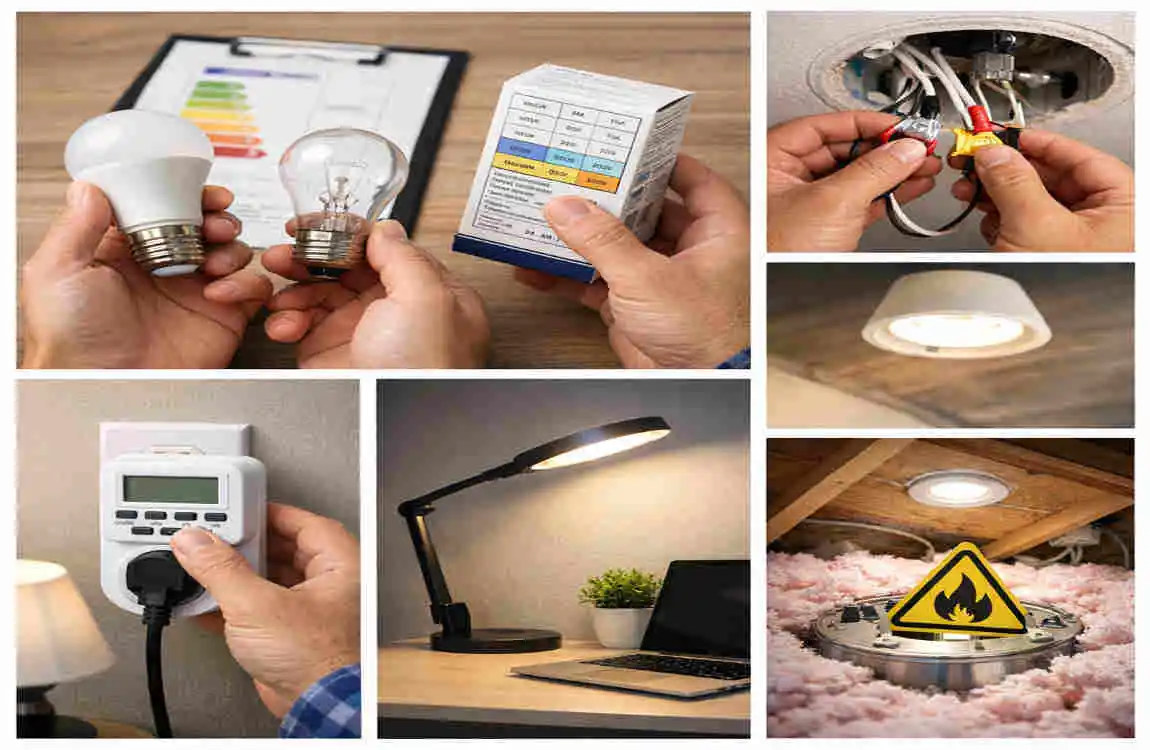
Choose Compatible LED Products
Always check:
- Voltage
- Wattage
- Dimming support
- Fixture compatibility
Choosing the right product helps prevent flickering and other problems.
Avoid Unsafe DIY Electrical Work
If you need to touch wiring, always turn off the power first. And if the issue is deeper than a simple bulb swap, call a professional.
That keeps you safe and protects your home.
FAQ About Controlling LED Interior Lights
How do I turn off the room’s interior LED lights?
Most LED room lights can be turned off with a wall switch, fixture switch, remote, smart app, or voice control system.
Why does my LED light stay on when the switch is off?
Common reasons include dimmer compatibility issues, smart switch settings, residual current, or wiring problems.
Can I control LED lights from my phone?
Yes. Smart bulbs, smart switches, and lighting controllers can often be managed through a phone app.
Can LED lights be controlled by a remote?
Yes. Many LED fixtures and strip lights come with remotes or remote-ready controllers.
Can I use a dimmer switch with LED lights?
Yes, but both the bulb and the dimmer must be compatible with LED lighting.
How can I automatically turn off LED lights at night?
Use timers, smart bulbs, smart switches, motion sensors, or automation routines.
Do LED lights use electricity when switched off?
Normal switched LED lights typically draw little power when off. Smart lights may still consume a tiny amount of power in standby mode.
| Method | How It Works | Best For |
|---|---|---|
| Wall Switch | Turns LED lights on or off manually. | Basic lighting control |
| Dimmer Switch | Adjusts the brightness of compatible LED bulbs. | Creating different moods |
| Smartphone App | Controls smart LED lights through Wi-Fi or Bluetooth. | Remote control |
| Voice Control | Uses Alexa, Google Assistant, or similar systems to control lights. | Hands-free operation |
| Motion Sensors | Automatically turns lights on when movement is detected. | Hallways and bathrooms |
| Smart Timer | Turns lights on or off at scheduled times. | Energy saving and routines |
| Smart Home Hub | Connects multiple lights for centralized control. | Whole-home lighting automation |
