
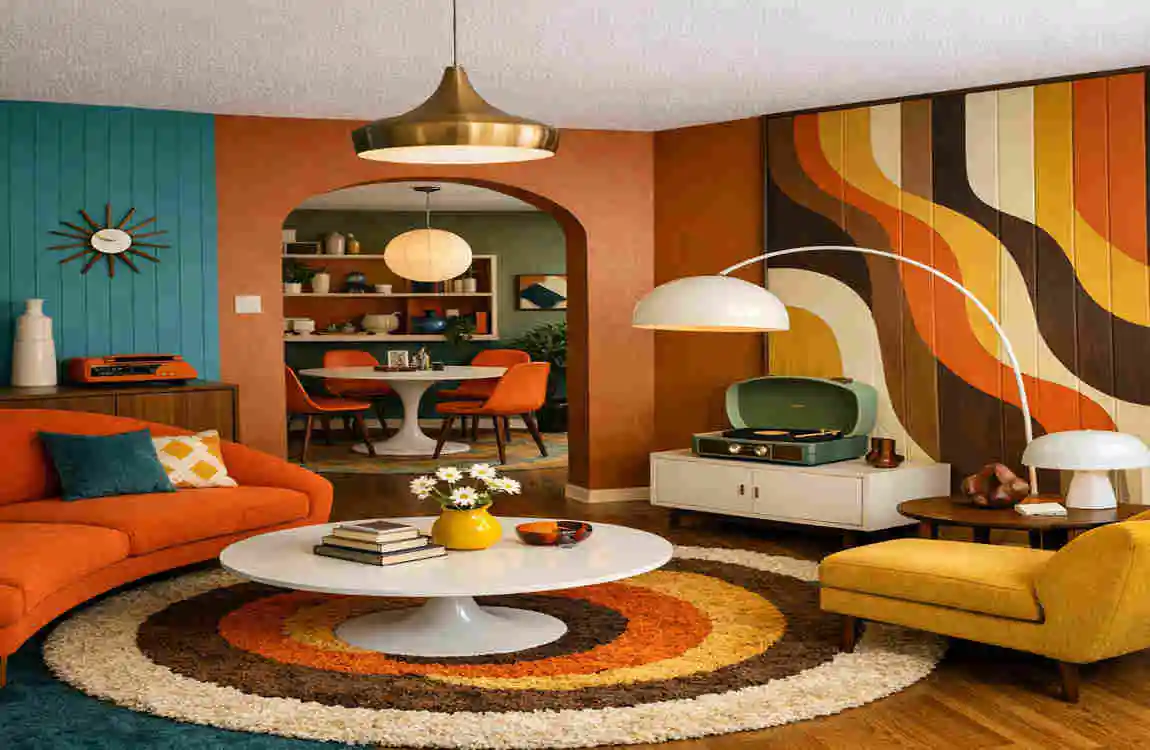
This style works because it feels warm, stylish, and easy to live with. You get the character of vintage design and the simplicity of modern design, tied together with fresh, bold color.
Vintage-modern interior design mixes old and new in a balanced way. Instead of copying one era, it combines the best parts of both.
Mod coloring adds another layer. It uses colors that feel playful, rich, or slightly retro, such as mustard, olive, rust, teal, cream, and muted pink. These shades help older furniture and newer pieces feel like they belong together.
Understanding the Vintage Meets New Interior Style
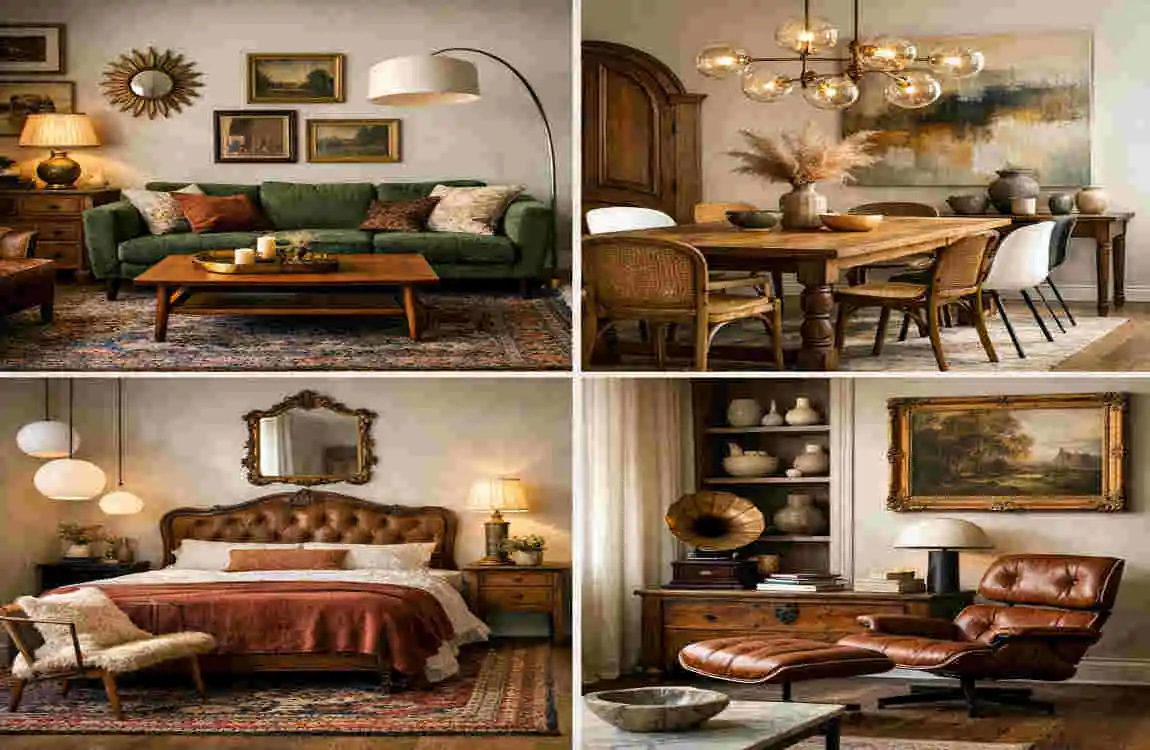
What makes a room feel vintage-modern
A vintage-modern room usually mixes clean lines, older details, and layered textures. You might see a modern sofa next to a vintage wood table or a sleek lamp beside a retro chair.
The goal is balance. The room should feel connected, not crowded.
How to keep the look balanced
Think about proportion, material, and color. If a room has too many heavy vintage pieces, it can feel old-fashioned. If it has too many modern pieces, it can lose warmth.
Try using one style as the base and the other as the accent. That helps the design feel calm and intentional.
Vintage details that work well with modern pieces
Some older elements fit beautifully with modern design:
- Wood furniture
- Patterned rugs
- Brass handles
- Retro mirrors
- Classic lighting
- Colorful ceramics
These pieces add character without taking over the room.
Choosing a Mod Color Palette for Vintage and Modern Spaces
Why color matters so much
Color is what connects the two styles. A good palette can make a simple modern chair feel warmer and can make a vintage table look more current.
Without the right color choices, the room can feel disconnected. With the right palette, everything feels intentional.
Best mod colors for this style
Some of the most useful shades for a vintage-modern home are:
- Mustard
- Olive green
- Rust
- Terracotta
- Teal
- Burnt orange
- Cream
- Muted pink
These colors have a retro feel, but they still work well in modern homes.
How to use color without overdoing it
You do not need every wall to be bold. Often, it works better to use a neutral base and add color through furniture, art, pillows, rugs, or one painted wall.
For a stronger look, choose one main accent color and repeat it in small ways around the room. That creates harmony.
Color ideas by room
- Living room: olive, cream, and rust
- Bedroom: muted pink, beige, and soft brown
- Kitchen: teal, white, and warm wood
- Dining room: mustard, black, and natural tones
Natural light also matters. Bright rooms can handle deeper colors. Darker rooms often need lighter shades to stay open and fresh.
Furniture and Decor: Mixing Vintage Character With Modern Design
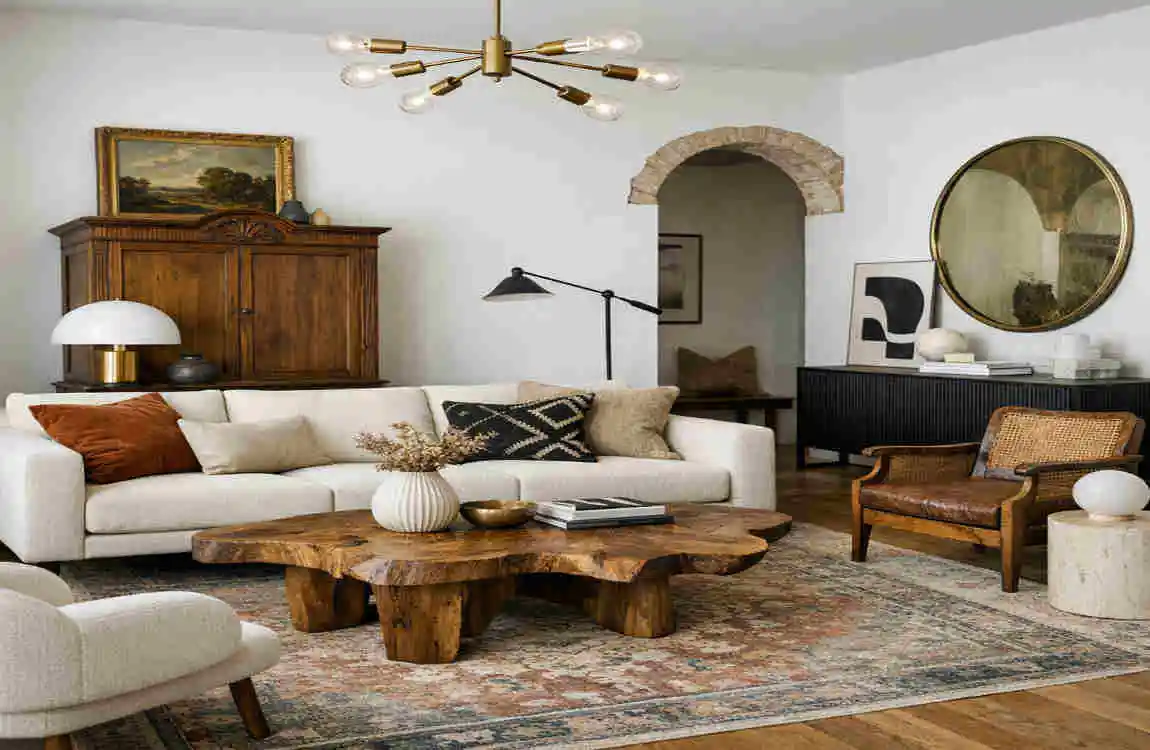
How to mix furniture well
The trick is not to use too many different styles at once. Choose a few standout pieces and let them lead the room.
For example, a modern sofa can work very well with a vintage coffee table. A clean dining table can look great with retro chairs.
Materials that work together
Mixing materials helps the room feel layered and rich.
Good combinations include:
- Wood and metal
- Glass and brass
- Leather and linen
- Velvet and natural wood
These combinations keep the room interesting without making it feel busy.
Common mistakes to avoid
Try not to fill the room with too many small vintage items. That can make the space feel cluttered.
Also, avoid mixing too many strong colors at once. A clear color plan will keep the design calm and stylish.
Room-by-Room Mod Coloring Ideas
Living room
The living room is a great place to start. You can use a modern sofa, a retro rug, a colorful chair, and vintage artwork.
A bold lamp or patterned cushion can add just enough personality without making the space feel crowded.
Bedroom
In the bedroom, softer colors usually work best. Think muted pink, warm cream, soft olive, or dusty blue.
Use modern bedding and lighting, then add one vintage touch like a wood dresser or an old-style mirror.
Kitchen
A vintage-modern kitchen can feel fresh and fun. Modern cabinets can pair well with retro-style tiles, brass handles, or colorful stools.
Even small details like ceramic jars or a patterned backsplash can change the mood.
Dining room
A simple dining table with vintage chairs can look very elegant. Add a pendant light above the table for a strong focal point.
This room is also a good place to use a deeper color like mustard or terracotta.
Entryway and home office
The entryway is perfect for a bold first impression. A colorful mirror, small console, or statement light can set the tone.
In a home office, use a vintage desk with modern storage. That keeps the space practical while still feeling stylish.
Materials, Patterns, Lighting, and Finishing Touches
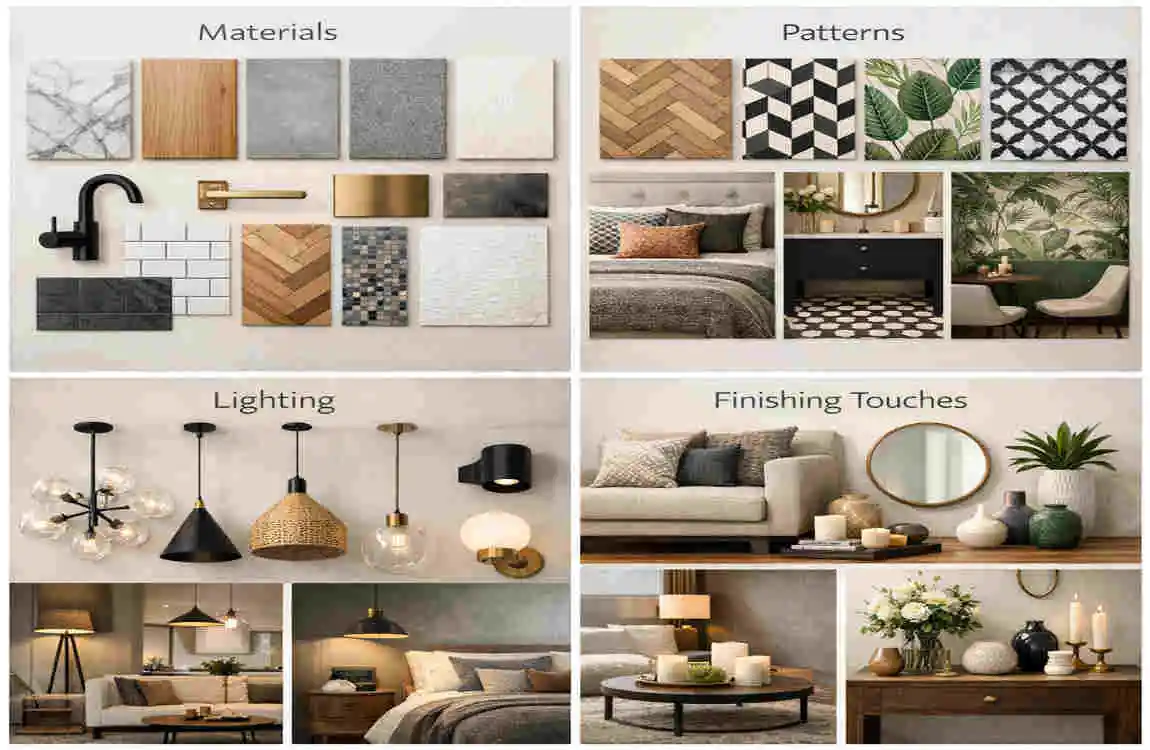
Materials that strengthen the look
Natural materials help this style feel warm and real. Wood, brass, ceramic, velvet, linen, glass, and leather all work well.
These materials add texture, which is important when mixing old and new.
Patterns that fit mod interiors
Retro patterns can add energy to the space. Good choices include:
- Geometric shapes
- Stripes
- Checks
- Soft floral prints
Use patterns with care. One or two patterned pieces are often enough.
Lighting and accessories
Lighting helps set the mood. A vintage-style pendant light, modern floor lamp, or brass wall sconce can all work beautifully.
Accessories should feel selected, not random. A few well-placed objects are better than too many small decorations.
Using plants and natural textures
Plants can soften strong colors and hard lines. They bring freshness and make the room feel relaxed.
Baskets, woven rugs, and linen curtains also help balance the boldness of mod coloring.
FAQ: Mod Coloring New and Vintage Modern Interior
What is mod coloring in interior design?
It is the use of bold, retro-inspired colors to connect vintage and modern design elements in one space.
How do you mix vintage and modern interior design?
Use one style as the base, then add pieces from the other style through furniture, color, and decor.
What colors work best with vintage-modern interiors?
Mustard, olive, rust, teal, cream, and muted pink are some of the best choices.
Can bold colors work in a modern vintage home?
Yes, but use them intentionally. One strong accent color often works better than too many at once.
Is vintage-modern interior design good for small spaces?
Yes. In small rooms, light neutrals with one or two bold accents can make the space feel stylish without feeling crowded.
| Feature | Information |
|---|---|
| Design Style | A mix of vintage character with modern, clean elements |
| Color Palette | Muted vintage shades combined with bold modern colors |
| Wall Colors | Warm beige, sage green, dusty blue, terracotta, or soft cream |
| Furniture | Vintage-inspired pieces paired with contemporary sofas, tables, or chairs |
| Materials | Wood, brass, velvet, glass, metal, and natural fabrics |
| Patterns | Retro prints, geometric shapes, floral designs, and simple modern patterns |
| Lighting | Vintage lamps or pendants mixed with sleek contemporary fixtures |
| Decor | Antique mirrors, artwork, ceramics, plants, and modern accessories |
| Flooring | Hardwood, patterned tile, or modern flooring with vintage-style rugs |
