
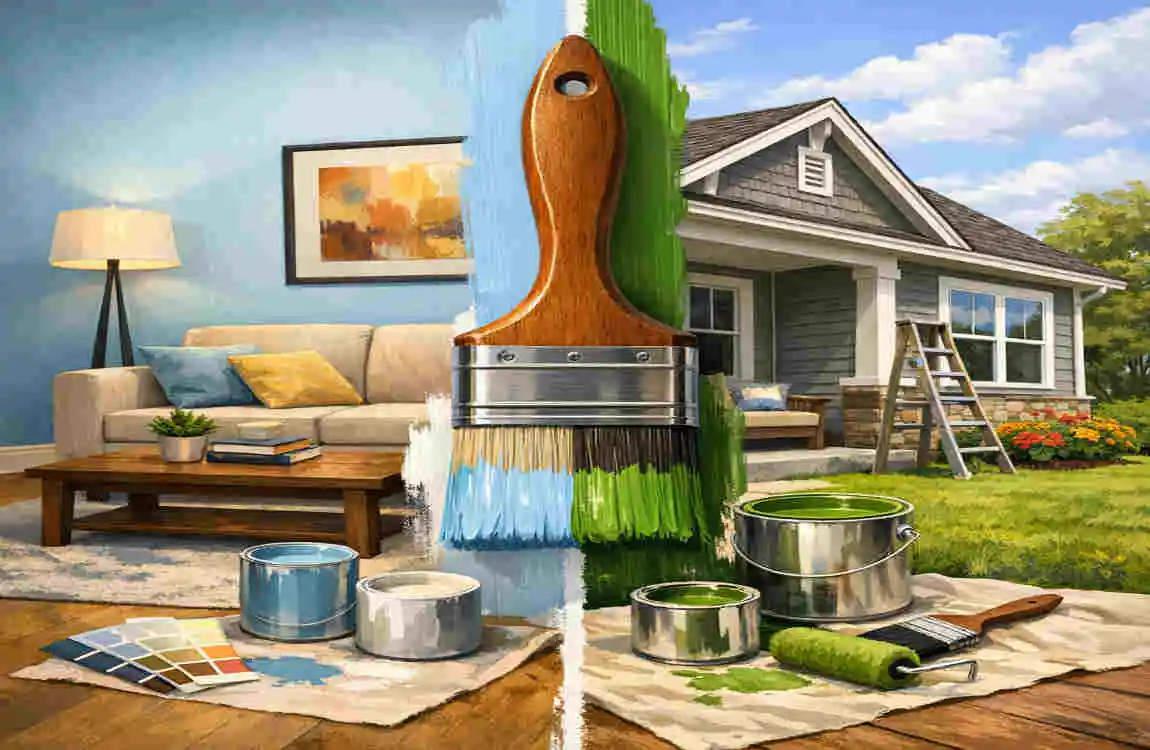
Choosing the right paint may seem simple at first, but it matters a lot for how your home looks and how well the surface holds up over time. Paint is not just about color. It also protects the surface underneath and helps create the finish you want.
If you have been wondering what the difference is between interior and exterior paint, the short answer is this: they are made for different places and different conditions. Interior paint is designed for indoor spaces, while exterior paint is designed to withstand sunlight, rain, humidity, and changing temperatures.
That difference affects everything from durability to smell to finish. So before you start your next project, it helps to know which type belongs where.
Interior vs. Exterior Paint: The Basic Difference
What Is Interior Paint?
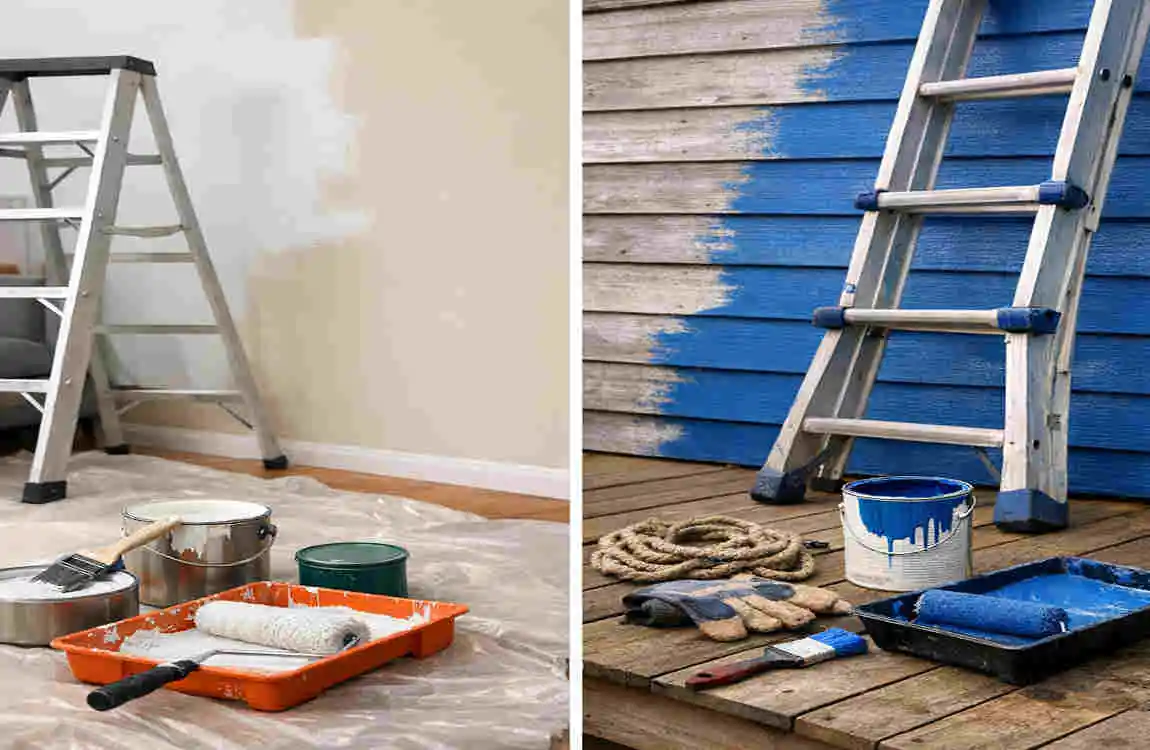
Interior paint is made for the inside of your home. You use it on walls, ceilings, bedrooms, kitchens, hallways, and other indoor areas.
Its main job is to give you a smooth, attractive finish that is also easy to clean. Because it is designed for indoor use, it prioritizes appearance, washability, and indoor air quality over weather resistance.
What Is Exterior Paint?
Exterior paint is designed for outdoor surfaces such as siding, doors, trim, and exterior walls. It has to withstand much tougher conditions than indoor paint.
That means it is built to handle:
- sunlight
- rain
- humidity
- temperature changes
- wind and moisture
Exterior paint is designed to protect surfaces while maintaining its color and finish longer when exposed to the elements.
What’s the Main Difference?
The biggest difference lies in where the paint is used and what it must withstand.
Interior paint is for comfort, appearance, and easy cleaning. Exterior paint is for protection, strength, and weather resistance. They are not interchangeable by default because each is designed for a different purpose.
Key Differences Between Interior and Exterior Paint
Durability and Weather Resistance
Exterior paint needs to be tougher because outdoor surfaces face constant stress. Sunlight can fade color. Rain can weaken coatings. Heat and cold can cause expansion and contraction.
Interior paint does not need that level of protection because indoor spaces are more stable. It is shielded from weather so that the formula can focus more on finish and cleanability.
Ingredients and Formulation
Exterior paints often contain extra additives that help them handle outdoor damage. These may improve:
- flexibility
- mildew resistance
- weather durability
- surface protection
Interior paints are usually formulated differently because they do not need to survive harsh outdoor conditions. That is why the ingredients in each type are not the same.
VOCs and Indoor Air Quality
Interior paint is designed for indoor use, so many products are formulated to reduce odors and improve indoor air quality. You will often find low-VOC or zero-VOC options for homes.
Exterior paint may have stronger odors or different additives because it is designed for outdoor exposure rather than enclosed rooms.
Flexibility and Expansion
Outdoor surfaces move. Wood, siding, and trim can expand and contract as temperatures change. Exterior paint needs to flex with that movement so it does not crack or peel too easily.
Interior surfaces usually do not move as much, so interior paint does not need as much flexibility.
Finish and Appearance
Interior paint often comes in finishes like:
- matte
- eggshell
- satin
- semi-gloss
These finishes are chosen based on how a room looks and how easy it is to clean.
Exterior paint also comes in different finishes, but the goal is often a mix of durability and curb appeal. The finish has to look good while also holding up outside.
Can You Use Interior Paint Outside?
Why It Is Usually a Bad Idea
Using interior paint outdoors is generally not a good choice. It is not built for exposure to weather so it can break down much faster.
Common Problems
If interior paint is used outside, you may run into:
- fading
- cracking
- peeling
- moisture damage
- mold or mildew issues
The paint may look fine at first, but it usually will not last. If you want a finish that stays strong outdoors, exterior-rated paint is the better choice.
Can You Use Exterior Paint Inside?
Why It Is Usually Not the Best Choice
Exterior paint can sometimes be used inside in special cases, but it is not usually the best option for indoor walls.
Possible Concerns
Exterior paint may have:
- stronger odor
- longer drying issues
- different additives
- less focus on indoor air quality
That is why it is better to use paint labeled for interior use when painting inside your home. Always check the product label before using any paint in a closed space.
How to Choose the Right Paint for Your Home

Picking paint is easier when you think about the surface, the room or area, and the conditions it will face.
Consider the Surface
Different surfaces need different paint types.
- Drywall and plaster: Usually need interior wall paint
- Wood: May need primer and a stronger finish
- Metal: Often needs paint made for adhesion and protection
- Masonry and concrete: May need special coating
- Siding: Usually requires exterior paint
Consider the Location
Where the paint goes matters just as much as what it covers.
- Bedrooms and living rooms: Usually need interior paint with a clean finish
- Kitchens and bathrooms: Need moisture-resistant paint
- Basements: May need paint that handles humidity
- Exterior walls: Need weather-resistant exterior paint
- Doors and trim: Often need tougher, more durable coatings
Consider Moisture and Traffic
Busy spaces need finishes that are easier to wipe down. Damp areas need paint that can better withstand moisture.
For example, kitchens, bathrooms, hallways, and children’s rooms may need more washable paint than a quiet bedroom.
Consider Climate
Exterior paint should be chosen with your local weather in mind. If your area has strong sun, heavy rain, or high humidity, you need a paint that can handle it.
Always follow the manufacturer’s recommendations for best results.
Common Mistakes to Avoid
Using the Wrong Paint Type
The most common mistake is using interior paint outside or exterior paint inside without checking the label.
Ignoring the Surface
Paint needs to match the material. Wood, metal, drywall, and masonry all behave differently.
Skipping Surface Prep
If the surface is dirty, rough, or damaged, the paint may not stick well.
Painting in Bad Conditions
Exterior painting should not be done in poor weather. Very hot, cold, or damp conditions can affect the result.
Forgetting Primer
Some surfaces need primer to help the paint bond well and cover evenly.
Choosing a Finish Only for Looks
The finish matters, but it should also match the room or surface. A beautiful finish is not helpful if it wears out too quickly.
Tips for Better Painting Results
Prepare the Surface
Good prep makes a big difference.
- clean off dust, grease, and dirt
- repair cracks and holes
- Sand rough areas
- remove loose paint
Use the Right Primer
Primer can improve adhesion and help the paint cover better. It is especially useful on new, stained, repaired, or porous surfaces.
Follow the Product Instructions
Every paint product has its own directions. Pay attention to:
- drying time
- temperature range
- coat spacing
- brush, roller, or sprayer recommendations
Maintain Painted Surfaces
Paint lasts longer when you care for it.
- clean interior walls when needed
- check exterior paint for cracking or peeling
- touch up damage early
- inspect for moisture problems
FAQ
Can I use interior paint on exterior walls?
Generally, no. Interior paint is not designed to withstand sunlight, rain, and changing weather conditions.
Can exterior paint be used inside a house?
It is usually better to use paint made for interior use. Check the label before using exterior paint indoors.
What’s the difference between interior and exterior paint?
The main differences are the formula and the environment for which it is designed. Exterior paint is weather-resistant, while interior paint is made for indoor conditions.
Is exterior paint more durable than interior paint?
Yes, for outdoor conditions. Exterior paint is built to resist weather and sunlight better than interior paint.
Do interior and exterior paints have different finishes?
Yes. Both can come in several finishes, but the most common choices and recommendations may differ.
Do I need primer before painting?
Sometimes yes. Primer helps with adhesion, coverage, and stain blocking on certain surfaces.
How can I make paint last longer?
Use the right paint, prepare the surface well, apply it correctly, and maintain it over time.
| Feature | Interior Paint | Exterior Paint |
|---|---|---|
| Main Use | Walls, ceilings, and indoor rooms | Outside walls, doors, siding, and trim |
| Durability | Designed for indoor wear | Made to handle weather and temperature changes |
| Moisture Resistance | Moderate | Higher moisture and mildew resistance |
| UV Protection | Usually low | Strong UV and fading resistance |
| Finish Options | Matte, eggshell, satin, semi-gloss | Flat, satin, semi-gloss, and gloss |
| Best For | Bedrooms, kitchens, living rooms | Exterior walls, fences, doors, and trim |
| Key Difference | Focuses on appearance and easy cleaning | Focuses on weather protection and long-term durability |
