
Keeping your walls clean is one of those small home tasks that makes a big difference. Dust, fingerprints, food marks, and light stains can build up over time and make a room feel dull. With the right approach, cleaning interior walls at home doesn’t have to be difficult or stressful.
Why Cleaning Interior Walls Is Important

Walls collect more dirt than many people realize. Even if a wall looks fine from a distance, it can still hold dust, grease, and small marks that affect the room’s overall look.
Removes Dust and Everyday Dirt
Dust settles on walls over time, especially in busy rooms. Hallways, kitchens, children’s rooms, and living areas often need more attention because people move through them often.
When dust stays on the wall, it can make the room feel less fresh. Regular cleaning helps the whole space feel lighter and cleaner.
Improves the Look of Your Home
Clean walls can brighten a room right away. They make paint look fresher and help the space feel more cared for.
If you are planning to decorate, rearrange furniture, or repaint, cleaning first is a smart step. It gives you a better starting point and helps you notice any areas that need repair.
Helps Protect Wall Finishes
Dirt and grime can slowly wear down wall finishes if left too long. That is why gentle cleaning is better than harsh scrubbing.
If you scrub too hard, you may damage paint or wear down the surface. A soft approach keeps your walls looking good for longer.
What You Need for Cleaning Interior Walls
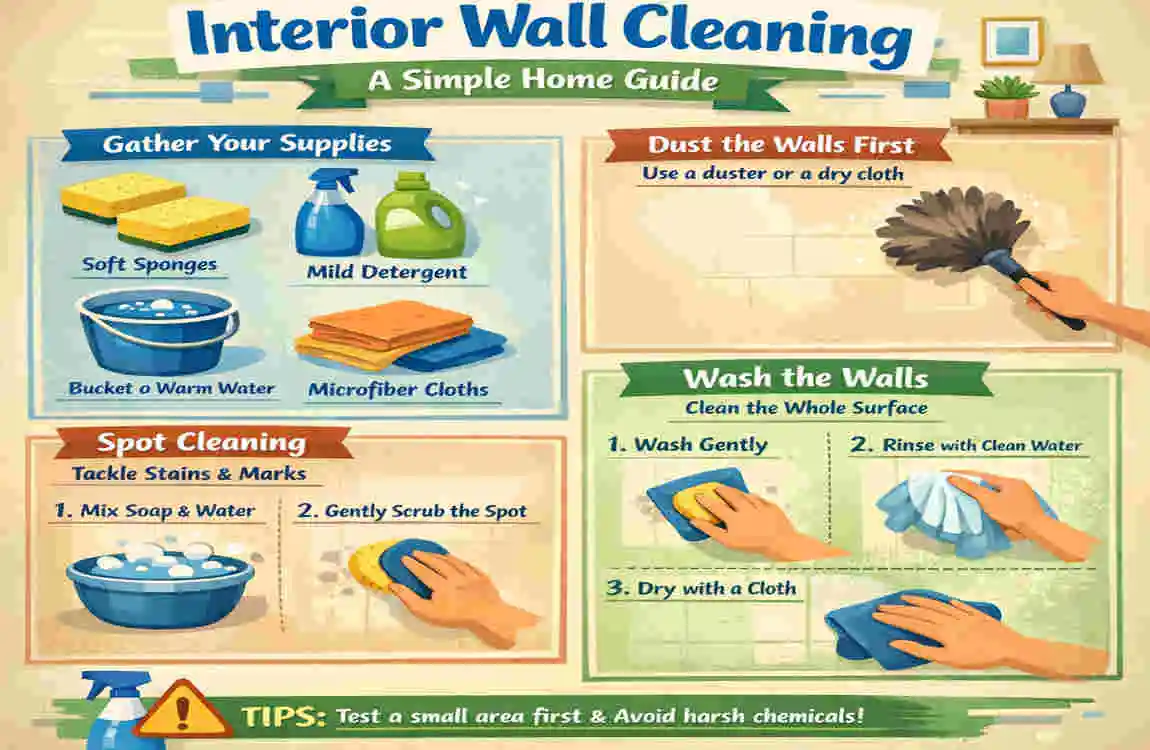
You don’t need many special tools. In most cases, a few simple items are enough.
Basic Cleaning Supplies
Keep these items ready:
- Microfiber cloths
- Soft sponge
- Bucket
- Warm water
- Mild dish soap
- Vacuum with a soft brush attachment
These tools are usually safe for most wall types when used carefully.
Supplies for Stubborn Marks
For tougher spots, you may also need:
- Baking soda for suitable washable surfaces
- Soft cleaning brush
- Clean towels for drying
How to Clean Interior Walls Step by Step
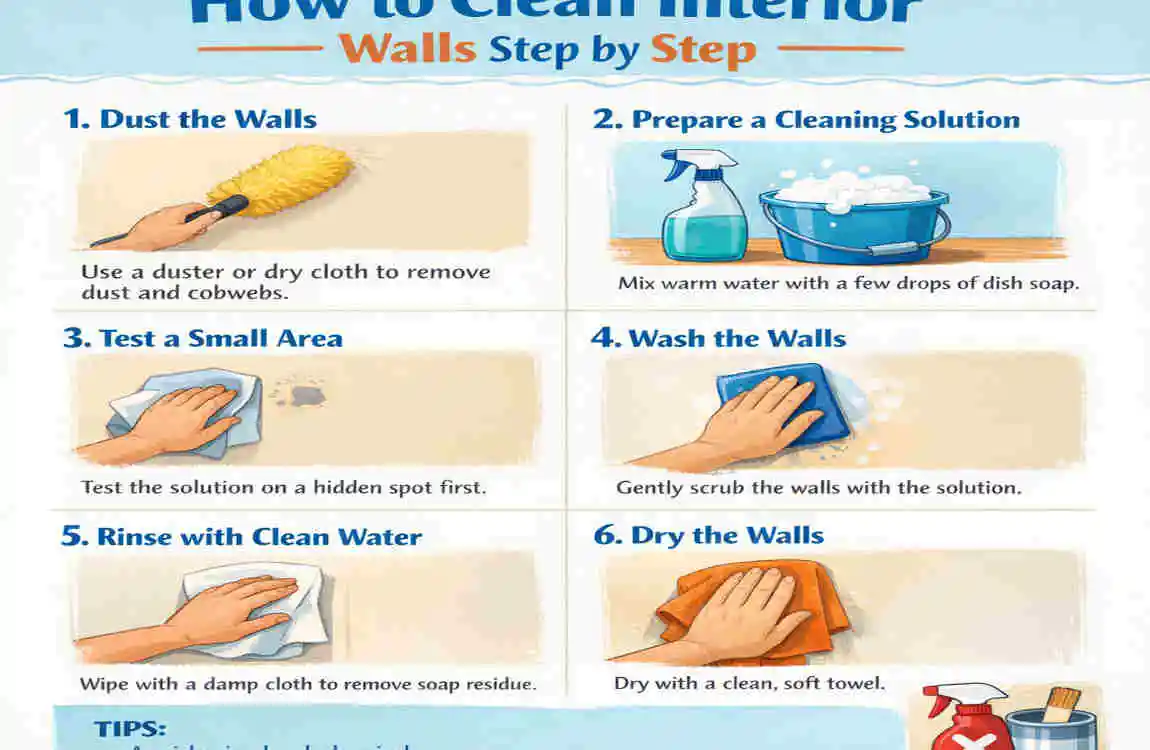
A step-by-step method helps you clean neatly and safely. It also helps you avoid streaks and spreading dirt.
Remove Dust First
Start by removing dust before using any water. Use a vacuum with a soft brush attachment or a dry microfiber cloth.
Work from top to bottom so dust falls downward as you clean. Pay attention to corners, trim, light switches, and spots behind furniture.
Prepare a Mild Cleaning Solution
Mix a small amount of mild dish soap with warm water. You only need a little soap. Too much can leave residue on the wall.
Do not soak the cloth or sponge. It should be damp, not dripping. That helps protect the surface from too much moisture.
Wash the Wall Gently
Clean wall one small section at a time. This makes the job easier and helps you spot stains more clearly.
Use light, smooth strokes instead of rough scrubbing. If a mark doesn’t come off right away, don’t force it. Try again gently or use a different method that fits the wall finish.
Rinse and Dry
After washing, wipe the area with a clean cloth dampened with plain water. This removes soap residue.
Then dry the wall with a soft towel. Good airflow also helps the wall dry faster and prevents damp spots.
How to Clean Different Types of Interior Walls
Not all walls should be cleaned in the same way. The finish matters a lot.
Painted Walls
Painted walls are common in most homes, but paint types can vary. Some are washable, while others are more delicate.
If the wall has washable paint, you can usually use mild soap and water. If the finish is matte or delicate, be extra gentle and use less moisture.
Wallpapered Walls
Wallpaper needs more care than painted walls. Some wallpaper can handle light cleaning, but too much water can damage it.
Check the manufacturer’s advice if possible. If the wallpaper isn’t meant to be washed, use only a dry or very slightly damp cloth.
Textured Walls
Textured walls can collect dust in small grooves and raised areas. A soft brush or vacuum attachment works well here.
Be careful not to press too hard, because strong scrubbing can damage the texture and leave visible marks.
Kitchen and Bathroom Walls
Kitchen and bathroom walls often need more frequent cleaning because of grease, steam, soap, and moisture.
In kitchens, focus on splashes near the stove, sink, and counters. In bathrooms, remove soap residue and keep the area well ventilated so moisture doesn’t get trapped.
Common Interior Wall Stains and How to Remove Them
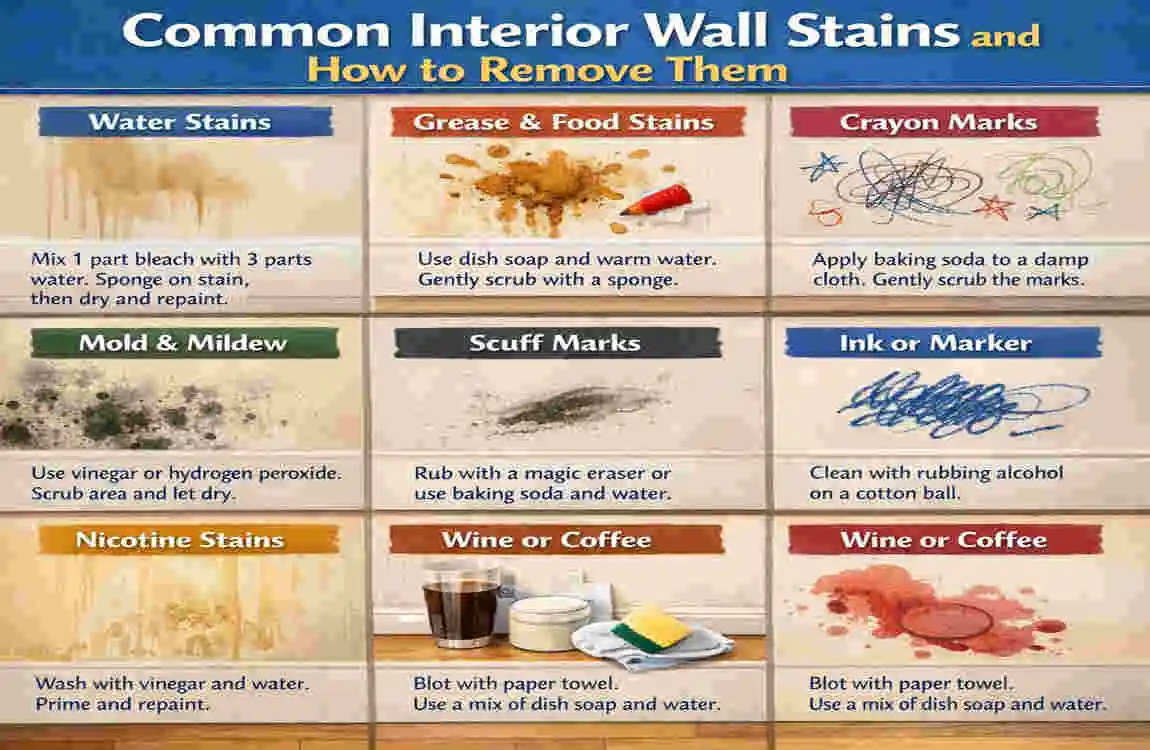
Different stains need different methods. The best rule is to start with the mildest option first.
Fingerprints and Hand Marks
Fingerprints are very common, especially near light switches, doors, and hallways.
A soft cloth with mild soapy water usually works well. Wipe gently and dry the spot right away.
Grease and Food Splashes
Grease is most common in kitchens. It can stick to walls and become harder to remove if left too long.
The sooner you clean it, the easier the job will be. A mild soap solution usually helps lift fresh grease without damaging the surface.
Crayon and Pencil Marks
If children are in the home, crayon and pencil marks may appear from time to time.
Start with a soft cloth and gentle cleaning solution. Avoid hard rubbing, as it can wear down the paint. If the wall finish is delicate, test carefully first.
Scuff Marks
Scuff marks often come from shoes, furniture, or bags brushing against the wall.
Use the mildest method first. Some marks come off easily, while others need a little more patience. Matte or flat paint needs extra care because it can show cleaning marks more easily.
Mold or Persistent Water Stains
If you see mold or repeated water stains, cleaning alone may not solve the problem.
These stains often point to a moisture issue. Fix the source first, or the stain may return even after cleaning. Don’t paint over a recurring stain without addressing the cause.
Mistakes to Avoid When Cleaning Interior Walls
A few common mistakes can make wall cleaning harder or damage the finish.
Avoid These Problems
- Using too much water
- Using strong chemicals without checking the wall finish
- Scrubbing painted surfaces too hard
- Skipping a test spot
- Cleaning from bottom to top, which can cause streaking
- Leaving walls damp after cleaning
- Using abrasive sponges on delicate finishes
FAQs About Cleaning Interior Walls at Home
What is the best way to clean interior walls at home?
The best method is simple: dust first, use warm water with a little mild soap, wipe gently, rinse with a clean, damp cloth, and dry the wall afterward.
How often should you clean interior walls?
It depends on the room. High-traffic rooms, kitchens, bathrooms, homes with pets, and homes with children usually need more frequent cleaning than quiet rooms.
Can you clean painted walls with water?
Yes, you can clean many painted walls with a small amount of water, especially if the paint is washable. Delicate finishes need less moisture and more care.
What should you use to clean dirty walls?
A microfiber cloth, a soft sponge, warm water, and mild soap are usually enough for most suitable wall surfaces.
How do you remove stubborn stains from painted walls?
Start with the gentlest method first. If the stain remains, increase the cleaning strength carefully, but only if the paint finish can handle it.
Should you clean walls before painting?
Yes. Cleaning removes dust, grease, and dirt so the new paint sticks better and looks smoother.
| Cleaning Task | Best Method | Helpful Tip |
|---|---|---|
| Dusty walls | Use a microfiber cloth or vacuum brush | Start from top to bottom |
| Light stains | Warm water + mild dish soap | Test a small area first |
| Greasy marks | Mild soapy water | Avoid soaking the wall |
| Scuff marks | Damp microfiber sponge | Rub gently to protect paint |
| Mold spots | Use an appropriate mold cleaner | Wear gloves and improve ventilation |
| Painted walls | Soft sponge + diluted cleaner | Avoid harsh chemicals |
