
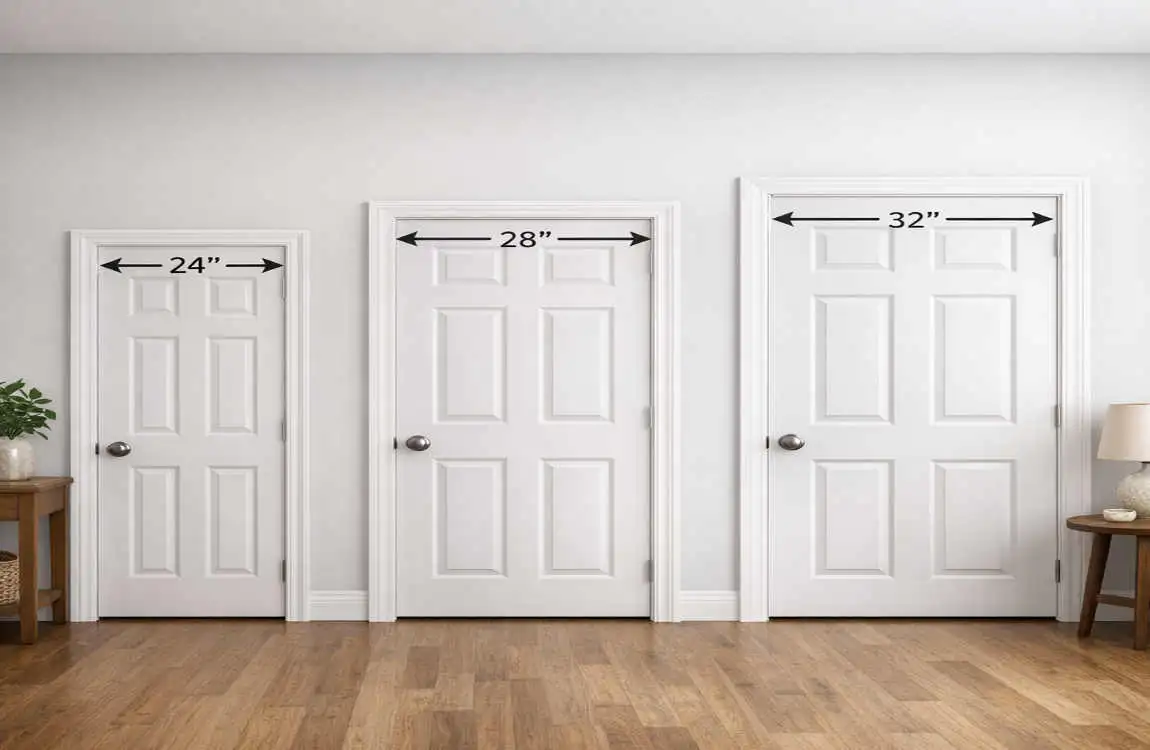
If you are planning a remodel, replacing an old door, or simply trying to understand your home better, one question comes up a lot: how wide is an interior door?
This matters more than many people think. Door width affects how easily people move through a home, how furniture fits, how comfortable a room feels, and whether a space meets practical or accessibility needs.
Most interior doors come in a few common sizes. The most often used widths are 30 inches, 32 inches, and 36 inches. Smaller doors are also used in closets and utility spaces, while older homes may have unusual measurements.
Standard Interior Door Widths
What Is the Standard Interior Door Width?
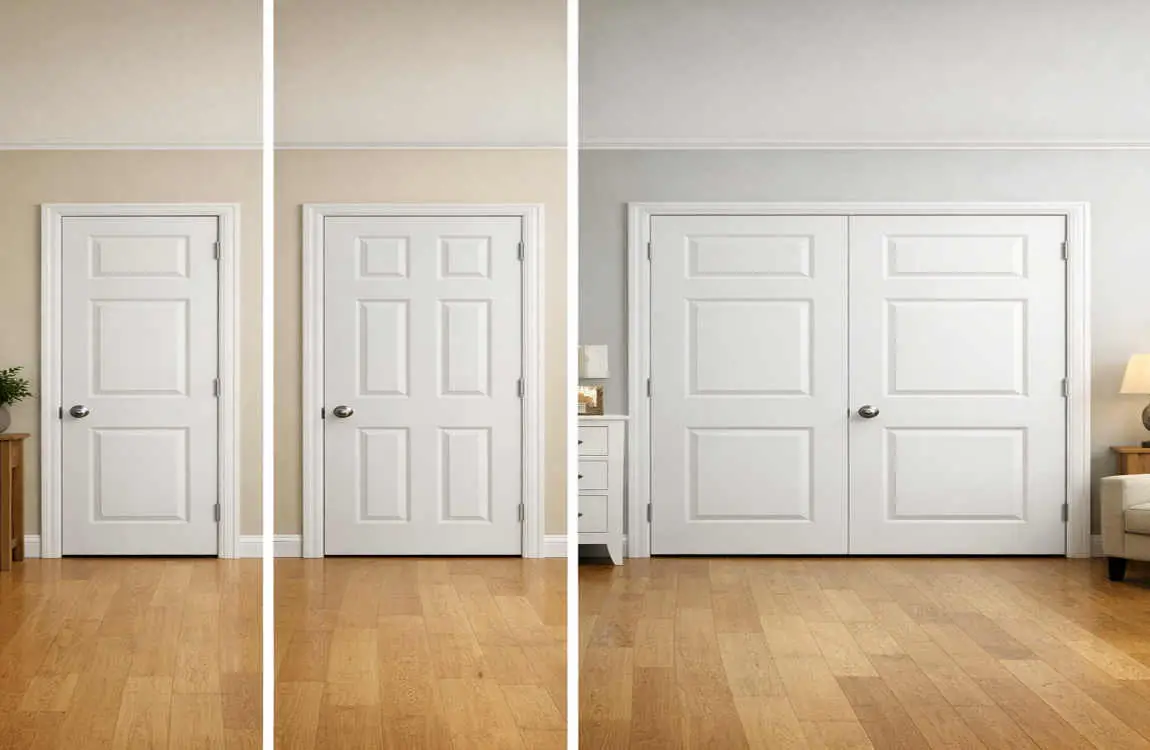
There is no single width that fits every home, but some sizes are much more common than others.
In many homes, interior doors are usually 30 inches or 32 inches wide. These sizes work well for everyday rooms and provide a comfortable passage for most people.
A 36-inch door is wider and often used where easier movement is important. You may see this size in accessibility-friendly homes, main living spaces, or wider hallways.
Smaller doors, such as 24-inch or 28-inch doors, are often used for closets, laundry rooms, or compact spaces.
Common Interior Door Sizes
Door Width Common Use
24 inches Small closets and utility spaces
28 inches Bedrooms, bathrooms, and smaller rooms
30 inches Common interior applications
32 inches Bedrooms and general living areas
36 inches Accessibility and wider openings
How Wide Is a Standard Bedroom Door?
A bedroom door is often 30 inches or 32 inches wide.
A 30-inch door works well in many homes, but a 32-inch door can feel more comfortable, especially if you need to move furniture in and out. If you have a larger bedroom or want a more open feel, a wider door can be a smart choice.
Older homes may not follow today’s common sizes. That means your existing bedroom door may be narrower or wider than expected.
How Tall and Wide Are Interior Doors?
Standard Interior Door Height
Most interior doors are 80 inches tall. This is the most common height in modern homes.
That said, some older homes may have 78-inch doors, and some modern designs may use 96-inch doors for a taller, more dramatic look.
When choosing a replacement, remember that height and width must work together. A door that fits the width but not the height will still be the wrong door.
Does Door Thickness Matter?
Yes, thickness matters too.
Most interior doors are either hollow-core or solid-core:
- Hollow-core doors are lighter and usually less expensive
- Solid-core doors are heavier, stronger, and better for noise control
The thickness matters because a replacement slab must match the existing frame and hardware. Even if the width is right, the door may not fit properly if the thickness is off.
Interior Door Rough Opening Sizes
What Is a Rough Opening?
A rough opening is the framed space in the wall where the door will go. It is larger than the actual door to allow room for the frame, shims, and installation work.
This is an important point because many homeowners measure only the visible door or frame and forget about the space needed behind the finished opening.
Door Slab vs Rough Opening
The door slab is the actual door panel. The rough opening is the bigger space inside the wall.
For example, a 30-inch door usually requires a rough opening larger than 30 inches. That extra space gives the installer room to fit the frame properly.
Do not order a new door based only on the wall opening you can see. Always check all the measurements first.
How to Measure an Interior Door Opening
To get the right size, measure carefully:
- Measure the width of the existing door
- Measure the height of the door
- Measure the frame if it is accessible
- Check the rough opening if possible
- Measure wall thickness and jamb depth
- Take measurements in more than one spot
The reason for multiple measurements is simple: openings are not always perfectly square.
Choosing the Right Interior Door Width
Best Width for Bedrooms
For bedrooms, 30- and 32-inch sizes are the most practical choices.
A 32-inch door offers a little more clearance when carrying bedding, dressers, or mattresses. It can also make the room feel less cramped.
If the bedroom is small, a 30-inch door may be enough. If the room is larger or accessibility is a concern, a 32-inch or wider door may be better.
Best Width for Bathrooms
Bathrooms often have tighter layouts, so door size matters a lot.
A 28-inch or 30-inch door may fit well in a smaller bathroom. In larger bathrooms, a 32-inch door can make movement easier.
You also want to think about privacy, clearance, and wall space. A bathroom door should open and close easily without hitting sinks, toilets, or storage units.
Best Width for Closets
Closets usually do not need a large door.
A 24-inch or 28-inch door is often enough. Some closets use sliding, bifold, or pocket doors to save space.
If your closet is narrow, a smaller or space-saving door may work better than a standard hinged door.
Best Width for Hallways and Main Interior Spaces
For busy areas, wider doors often make more sense.
A 32-inch or 36-inch door can improve movement between rooms and make the home feel more open. This is especially useful in family homes or homes with frequent foot traffic.
When Should You Choose a 36-Inch Interior Door?
Situations Where a Wider Door Helps
A 36-inch interior door is useful when you want easier passage through a room.
It can help with:
- Wheelchairs or walkers
- Large furniture
- Future accessibility needs
- Busy family movement
- Wider room transitions
Accessibility Considerations
If accessibility is important, a wider door can make a big difference. It is easier for people to move through comfortably, and it gives more room for mobility aids.
If your project involves developing rules or accessibility standards, always check local requirements before finalising the size.
Interior Door Types and Their Widths
Hinged Interior Doors
Hinged doors are the most common type. They swing open on hinges and usually come in standard widths like 28, 30, 32, or 36 inches.
These are simple, familiar, and easy to use in most homes.
Sliding Barn Doors
Sliding barn doors move along a track instead of swinging open. That means the door panel width and the opening width are not the same thing.
These doors save floor space, but you need enough wall space beside the opening for the door to slide.
Pocket Doors
Pocket doors slide into the wall itself. They are useful where space is limited.
Because they disappear into the wall, they are great for small bathrooms, closets, and tight hallways. However, the wall must be built to hold the door pocket.
Bifold Doors
Bifold doors fold in sections and are often used for closets.
Their total width depends on the opening size and the number of panels. They are a good choice when you want easy access without a swinging door taking up room.
How to Measure an Existing Interior Door
Simple Measurement Steps
If you are replacing a door, measure carefully before buying.
Use a tape measure and, if possible, a level.
Check these points:
- Width at the top, middle, and bottom
- Height on both sides
- Frame condition
- Whether the frame is square
- Wall thickness
- Jamb depth
Why Multiple Measurements Matter
A door opening may look even, but it may not be perfectly straight. Measuring in multiple places helps you catch small differences before they become a problem.
Write down every measurement before shopping. That way, you can compare the old door to the replacement more confidently.
Common Mistakes When Choosing Interior Door Width
Measuring Only the Door Slab
This is one of the biggest mistakes. The slab alone does not tell you the full story.
You also need the frame and rough opening measurements.
Confusing Door Width With Rough Opening Width
These are not the same thing. The rough opening is always larger because it must hold the frame and installation materials.
Forgetting Trim and Jamb Dimensions
Trim and jambs affect how the door fits in the wall. If you ignore them, you may end up with a door that does not install properly.
Choosing a Door That Is Too Narrow
A very narrow door can make moving furniture harder and may feel uncomfortable in everyday use.
Ignoring Accessibility Needs
If the home may need easier access in the future, a wider door is often the better long-term choice.
Assuming Older Homes Use Modern Sizes
Older homes often have non-standard dimensions. Never assume your home follows today’s common sizes.
Interior Door Width: New Construction vs Older Homes
Why Older Homes May Be Different
Older homes were not always built with today’s standard measurements. Door sizes could vary based on the era, style, and local building practices.
That is why replacement doors for older homes sometimes need custom sizing or adjustments.
When Modifying the Opening May Be Needed
Sometimes the existing opening is too small or too unusual for a standard replacement. In those cases, the wall opening may need to be changed.
This can be a bigger project, especially if structural work is involved. It is best to check before buying the new door.
Cost and Installation Considerations
Does a Wider Interior Door Cost More?
Often, yes. Door price can change based on:
- Size
- Material
- Style
- Construction
- Custom sizing
A wider door may also cost more to install if the frame or wall opening must be adjusted.
When Should You Hire a Professional?
Professional help is a good idea when:
- The opening needs to be widened
- The wall may be structural
- The size is unusual
- The door must meet accessibility needs
- The frame is damaged or out of square
A professional can help you avoid costly mistakes.
Quick Guide: What Interior Door Width Should You Choose?
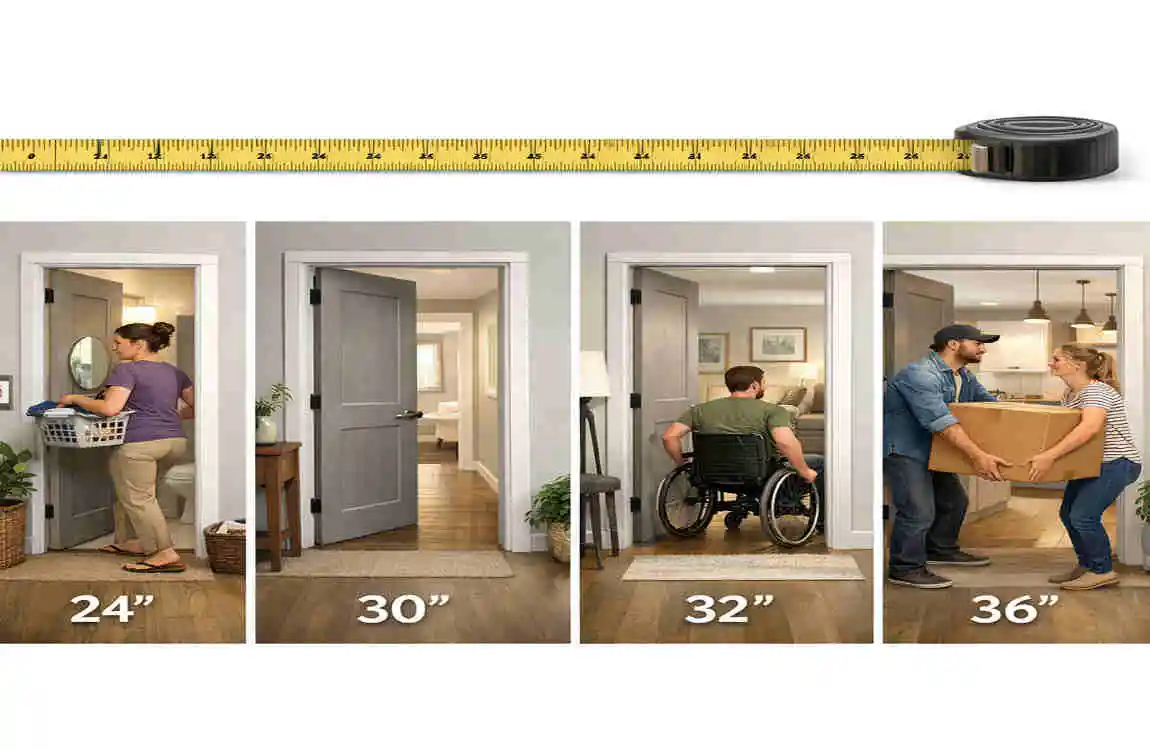
- 24–28 inches: Small closets or compact spaces
- 30 inches: Common option for many interior applications
- 32 inches: Comfortable general-purpose choice
- 36 inches: Better for accessibility, moving furniture, and wider passageways
- Custom widths: Useful for older homes or unusual openings
FAQ
How wide is an interior door?
A typical interior door is commonly 30, 32, or 36 inches wide, though smaller and larger sizes are also available.
What is the most common interior door width?
A 30-inch or 32-inch door is very common in many homes.
Is a 32-inch door wide enough for a bedroom?
Yes. A 32-inch door is a practical and comfortable choice for many bedrooms.
Are interior doors always the same width?
No. Interior doors can range from small closet doors to wider accessibility doors.
How wide should an interior door be for accessibility?
A wider door is generally better for accessibility, but exact requirements depend on the applicable standard or building rules.
What is the standard height of an interior door?
The most common height is 80 inches.
Is the rough opening the same size as the door?
No. The rough opening is larger because it must accommodate the frame and installation space.
How do I measure for a replacement interior door?
Measure the width and height of the existing door, then check the frame, jamb, and rough opening before buying.
| Interior Door Type | Standard Width | Common Use |
|---|---|---|
| Standard interior door | 30–32 inches | Bedrooms, living rooms, offices |
| Narrow interior door | 24–28 inches | Closets, small spaces |
| Wide interior door | 36 inches | Accessibility and larger rooms |
| Bathroom door | 28–32 inches | Bathrooms and powder rooms |
| Closet door | 24–36 inches | Closets and storage areas |
| Double interior doors | 48–72 inches total | Large openings and room entrances |
