
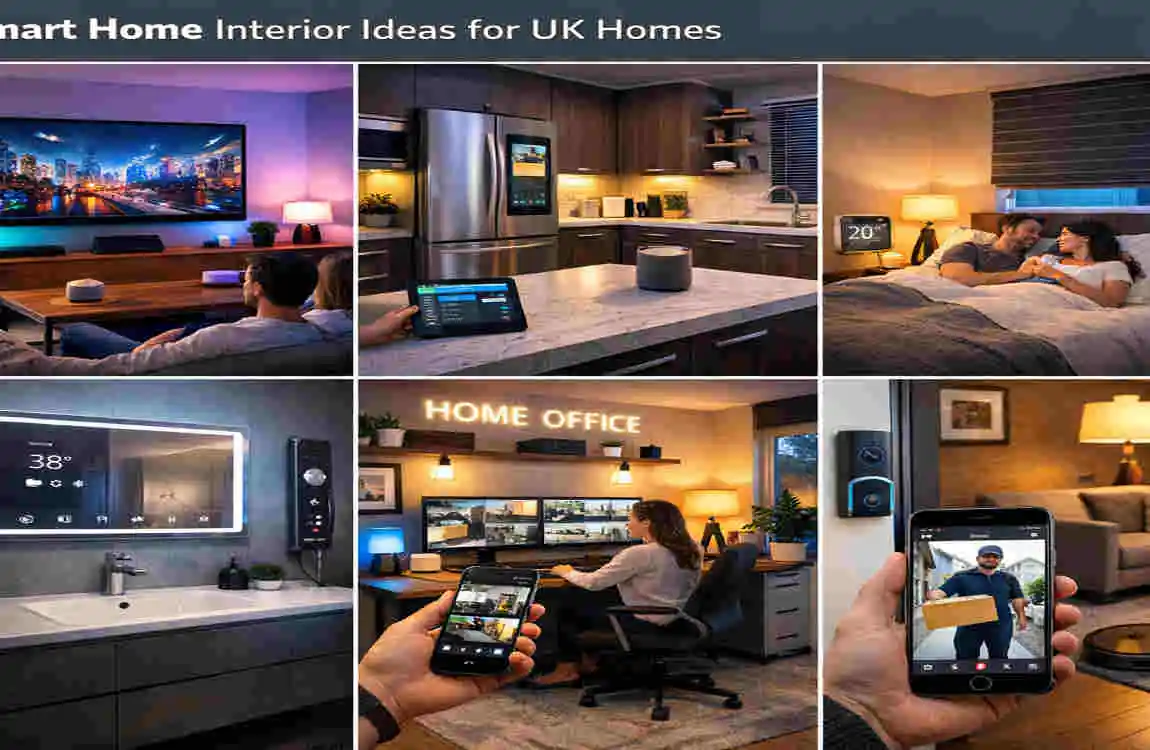
Smart home interior design means using technology to make your home easier to live in, more comfortable, and still attractive. It is not just about adding gadgets. It is about making the whole room work better for everyday life.
If you are asking what smart home interior design in the UK is, the simple answer is this: it is the thoughtful mix of technology, style, comfort, and efficiency in a British home. It should help you control lighting, heating, security, and entertainment without making the room feel cold or overly technical.
This idea works especially well in UK homes because many houses and flats have smaller rooms, older layouts, and a strong need for energy efficiency. Smart design can help you save space, reduce waste, and make daily routines smoother.
Smart Home Interior Design Basics for UK Homes
What Makes a Home “Smart”?
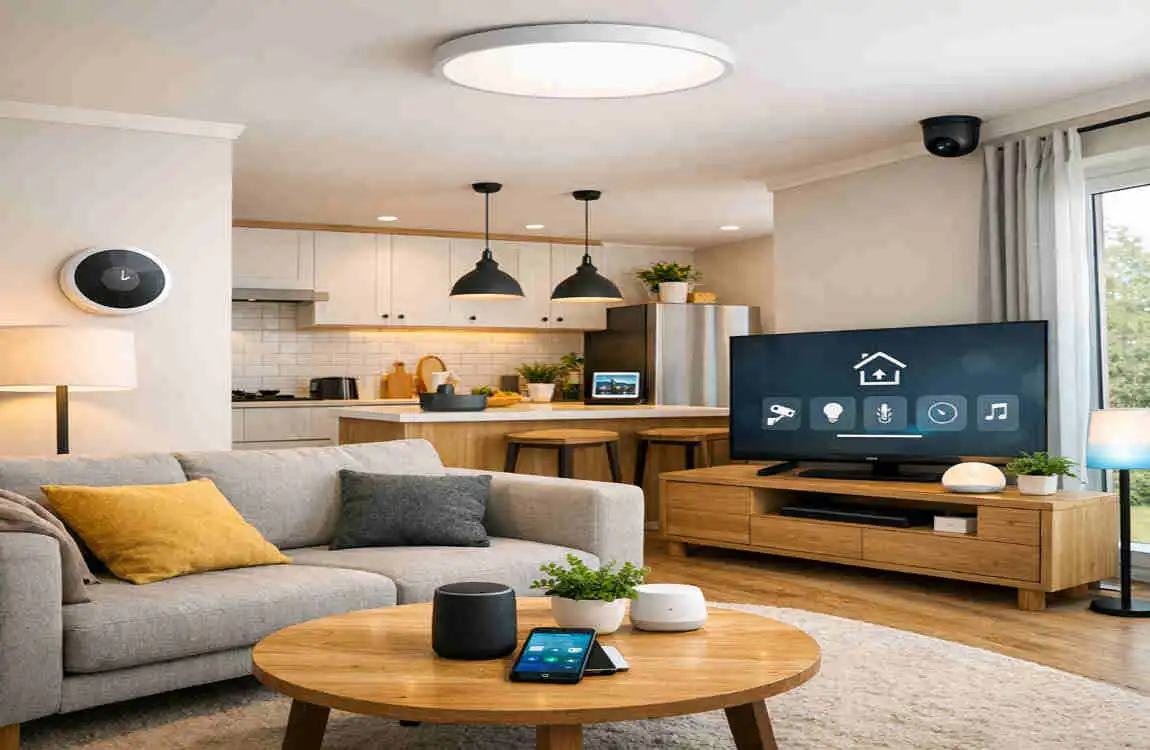
A home becomes smart when devices can connect and work together. That usually means you can control lights, heating, security, entertainment, and appliances through an app, a voice assistant, or an automated schedule.
Instead of switching everything on and off by hand, you can let the system do some of the work. This makes life feel simpler and more organized.
Smart homes often include:
- Smart lighting
- Smart thermostats
- Smart plugs
- Security cameras and doorbells
- Voice assistants
- Connected appliances
The best setups are easy to use. They help without creating more clutter.
Why Smart Interior Design Is Popular in the UK
Smart interiors suit UK homes well because they support comfort, convenience, and energy-conscious living. Heating and lighting can be expensive, so better control often means better efficiency too.
They also work well in different property types, from flats and terraced houses to detached homes and renovated older properties. That flexibility makes smart design appealing across the country.
Many homeowners like the idea of having more control without needing a complete renovation. That is a big reason why smart interiors continue to grow in popularity.
How to Balance Technology With Interior Style
Good smart design should blend into the room, not dominate it. A home can be smart and still feel calm, stylish, and personal.
Try to hide cables, chargers, and bulky equipment wherever possible. Choose discreet devices that match the room’s look. Built-in storage can also help keep technology out of sight.
The goal is simple: make the room smarter without making it look busier.
Best Smart Lighting Ideas for UK Interiors
Smart Ceiling and Pendant Lighting
Smart ceiling lights and pendant lights can change the whole mood of a room. They are useful because they can be dimmed, timed, or adjusted for different activities.
This works especially well in UK homes where one room often has to do many jobs. A dining area may also be a work zone. A living room may also be a place to relax or entertain.
Choose light fixtures that suit your interior style. Modern homes may suit simple, clean designs, while older homes may look better with subtle classic shapes.
Smart Lamps and Accent Lighting
Smart lamps are easy to add and very useful in bedrooms, living rooms, and reading corners. They let you create different lighting scenes without changing the whole room.
You can set one scene for relaxing, another for working, and another for watching TV. That flexibility makes the home feel more comfortable and adaptable.
Accent lighting is also helpful for highlighting art, shelves, or a feature wall.
Motion-Activated Lighting
Motion sensors are practical for hallways, stairs, bathrooms, and entrances. They turn on automatically when someone enters the space.
This is useful in UK homes because it adds convenience and can reduce wasted energy. It is also helpful at night when you do not want to search for a switch.
Smart Lighting for Small UK Rooms
Small rooms need careful lighting. Too much harsh light can make them feel cramped, while layered lighting can make them feel more open.
Try combining ambient, task, and accent lighting. That way, the room feels balanced and more spacious.
A simple table can help show the idea:
Lighting Type Purpose Best Use in UK Homes
Ambient lighting General room light Living rooms, bedrooms
Task lighting Focused light for activities Reading corners, kitchen counters
Accent lighting Highlights features Shelves, artwork, walls
Motion lighting Automatic convenience Hallways, stairs, entrances
Smart Heating and Energy-Efficient Interior Ideas
Smart Thermostats
Smart thermostats are one of the most useful upgrades for UK homes. They help you manage heating schedules more accurately, which is important in colder months.
You can set routines based on when you are home, asleep, or away. That means you do not have to heat the whole house all day if you are only using one part of it.
Some systems also allow zoning so that you can control different areas separately. This is especially helpful in larger homes or in homes with rooms used at different times.
Smart Radiator Controls
Smart radiator valves give you more control in each room. This is especially useful in older UK homes where different spaces may warm up at different speeds.
If one room is always too hot and another stays cool, these controls can help balance things out. They can also stop you from heating unused rooms unnecessarily.
For many households, this makes daily living more efficient and more comfortable.
Smart Heating for Bedrooms and Living Rooms
Bedrooms need a cooler and calmer feel, while living rooms often need flexible comfort during the day and evening.
Smart controls let you set different temperatures for different times. That helps your home match your routine rather than forcing a single setting for everything.
This is a simple but effective way to make the home feel more thoughtful and easier to live in.
Energy-Saving Smart Home Habits
Smart technology works best when paired with good habits—set schedules instead of leaving everything on all day. Adjust temperature settings based on the season and how the room is used.
You should also keep an eye on energy reports when available. These can show where you may be wasting heat or electricity.
Smart design works best when it supports both technology and practical home efficiency.
Smart Living Room Interior Ideas
Smart TV and Entertainment Setup
The living room is often the heart of the home, so it is a great place to start. A smart TV can be built into a media wall or fitted into furniture to keep the room tidy.
Cables, streaming devices, and accessories should be hidden as much as possible. That keeps the space looking clean and calm.
A well-planned media area can feel modern without looking cluttered.
Voice-Controlled Living Rooms
Voice assistants can control lights, music, heating, and other connected devices. That makes the living room easier to use, especially when your hands are full.
The best place for smart speakers is where they are useful but not visually annoying. You want them to be easy to reach without making them the room’s focal point.
Smart Blinds and Curtains
Automated blinds and curtains are a great addition for privacy, light control, and comfort. They can open in the morning and close in the evening on a schedule.
This is particularly useful in UK homes, where natural light varies with the seasons. Smart blinds can also help manage glare and heat.
They make the room feel more polished and responsive.
Minimalist Smart Media Walls
A smart media wall combines storage, lighting, television, and tech in one neat design. It is a strong option for modern UK living rooms.
This approach hides cables and gives the room a clean, organized look. It also helps smaller rooms feel less crowded.
Smart Bedroom Interior Ideas
Automated Bedroom Lighting
Bedrooms benefit from soft, calming lighting. Smart bulbs or dimmable lights can help you wind down before sleep and wake up more gently in the morning.
You can create a bedtime scene with lower lighting and a morning scene with gradually brighter light. This small change can make the room feel more restful.
Smart Blinds for Privacy
Bedrooms often need privacy, especially in terraced houses or flats. Smart blinds can open and close on a schedule that matches your routine.
That makes the room feel more comfortable while also keeping the space private from outside views.
Smart Sleep and Comfort Features
Some smart bedroom features are designed to improve rest. These may include temperature control, quiet fans, air-quality devices, or automated bedside lighting.
The best setup is not the one with the most gadgets. It is the one that helps you sleep better and feel calm.
Keep Technology Out of Sight
A bedroom should still feel like a bedroom. That means storing chargers neatly, hiding wires, and avoiding too many glowing screens or indicators.
Use drawers, bedside storage, and discreet charging stations to keep the room peaceful.
Smart Kitchen and Bathroom Interior Ideas
Smart Kitchen Appliances
Smart kitchens can include connected ovens, fridges, coffee machines, and other appliances. These can be useful, but only when they genuinely fit your daily routine.
Do not add tech just for the sake of it. Choose devices that save time, improve cooking, or help you stay organized.
Smart Kitchen Lighting
Under-cabinet lighting is one of the best smart upgrades for kitchens. It helps with food prep and makes the room feel more polished.
Motion sensors and dimmable task lights are also useful. You can switch from bright working light to softer evening light with ease.
Smart Bathroom Features
Bathrooms benefit from simple smart features like heated towel rails with timers, motion-activated lights, and smart ventilation controls.
These upgrades make the bathroom feel more comfortable and easier to manage. They also help with moisture control, which is important in UK homes.
Water and Energy Monitoring
Smart monitoring can help you spot unusual water or energy use. That is useful for reducing waste and keeping household bills under control.
A small amount of tracking can go a long way when it helps you notice a problem early.
Smart Security Ideas for UK Homes
Smart Doorbells
Video doorbells are popular in many UK homes because they show who is at the door and send notifications to your phone.
They are especially helpful in houses and flats where you want to know about visitors even when you are not near the entrance.
Smart Locks
Smart locks can make entry easier through keyless access or remote control. They are convenient, but they must fit the existing door properly.
Before buying one, check compatibility with your UK door type and lock setup.
Smart Cameras and Sensors
Door, window, motion, and occupancy sensors can improve security and awareness. They help you notice unusual movement or open entry points.
Just remember to place them carefully and respect privacy, especially in shared buildings or close neighborhoods.
Smart Alarms and Smoke Detection
Connected smoke and carbon-monoxide alarms add another layer of safety. They should always support, not replace, proper home safety habits.
A smart alarm is most useful when it gives you fast alerts and easy monitoring.
How to Create a Stylish Smart Home Without Overspending
Start With the Most Useful Devices
You do not need to buy everything at once. Start with the items that will help most, such as lighting, heating, or security.
That way, you get real value instead of filling the home with gadgets you do not use.
Choose Compatible Technology
Compatibility matters more than many people expect. If your devices work well together, the whole system feels easier and smoother.
Before buying multiple products, think about the smart-home ecosystem you want to use. That will save you frustration later.
Hide Wires and Equipment
Cables can quickly ruin a clean room. Use furniture, cable covers, concealed sockets, and wall-mounted solutions to keep things neat.
A smart home should feel organized, not technical.
Upgrade Room by Room
The easiest way to build a smart home is to do it slowly. Start with one room, test the setup, and then expand if it works well.
This approach keeps costs under control and helps you learn what you actually need.
Smart Home Interior Design Trends for UK Homes
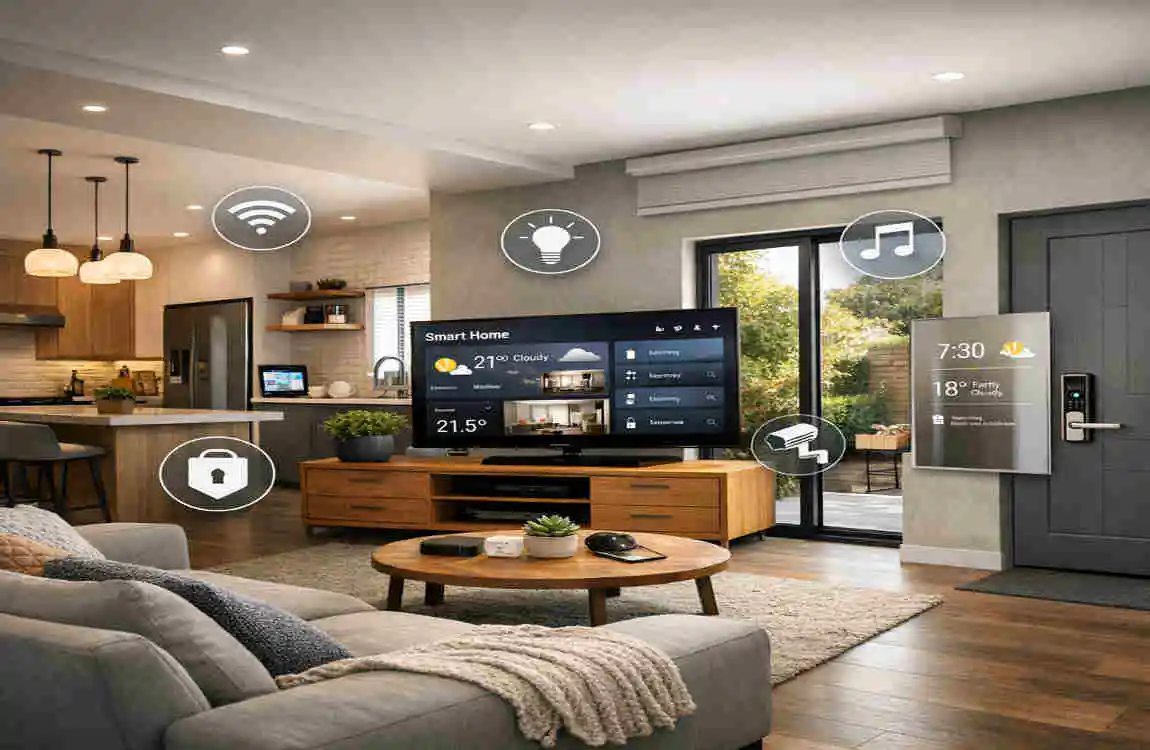
Smart home design keeps changing, but some trends are especially strong right now.
- Minimalist technology integration
- Automated lighting scenes
- Energy-conscious heating
- Smart blinds and curtains
- Multi-functional furniture with charging features
- Discreet security technology
- Voice and app-controlled systems
- Smart features blended into traditional interiors
These trends are popular because they make homes more practical without losing style.
Common Mistakes to Avoid
Many smart home projects go wrong because people buy too much too quickly.
Avoid these mistakes:
- Installing too many devices
- Ignoring compatibility
- Leaving cables visible
- Choosing tech over comfort
- Forgetting Wi-Fi coverage
- Ignoring privacy settings
- Skipping future upgrade planning
- Spending too much on features with little value
The best smart home is the one that makes daily life easier, not more complicated.
Frequently Asked Questions
What is smart home interior design in the UK?
It means blending smart technology into a home’s interior to improve comfort, convenience, security, lighting, heating, and energy use.
Is smart home technology suitable for older UK houses?
Yes, it often is. Many smart devices can be added without major renovation, though compatibility and electrical setup should be checked first.
How can I make my UK home look smart without making it look too technical?
Hide cables, use discreet devices, choose matching finishes, and keep technology integrated into the décor instead of letting it stand out too much.
What are the best smart home devices for beginners?
Smart bulbs, smart thermostats, smart plugs, smart speakers, and basic security devices are good starting points.
Does smart home technology save energy?
It can help reduce waste if it is set up well and used consistently, especially for heating and lighting.
Can smart home technology work in a small UK flat?
Yes. Smart lighting, heating control, compact security devices, and automated blinds can work very well in smaller homes.
Is smart home interior design expensive?
It can be, but it does not have to be. Many homeowners start with a few affordable devices and expand over time.
How do I plan a smart home interior?
Start with your household needs, choose a room-by-room plan, check compatibility, think about Wi-Fi coverage, manage cables, and set a realistic budget.
| Smart Home Idea | Best Benefit for UK Homes |
|---|---|
| Smart Lighting | Adjust brightness and ambiance with apps or voice control. |
| Smart Thermostat | Helps manage heating efficiently and reduce energy waste. |
| Smart Blinds | Automate curtains or blinds based on time, light, or temperature. |
| Voice Assistants | Control lights, heating, music, and other devices hands-free. |
| Smart Security | Use cameras, doorbells, and smart locks for added protection. |
| Smart Plugs | Turn ordinary appliances into controllable smart devices. |
| Smart Speakers | Combine entertainment with convenient home controls. |
