

Interior design is the art and science of creating a space that is both beautiful and functional. If you have ever walked into a room and felt calm, comfortable, or impressed right away, good interior design was likely part of the reason.
At its core, what is interior design? It is the process of arranging a room so that it works well for the people who use it. That means thinking about space, comfort, lighting, color, furniture, and style together. It is not only about decoration. It is also about how a space feels and functions in daily life.
Interior design matters in homes, offices, hotels, restaurants, shops, and many other places. A well-designed room can make tasks easier, improve comfort, and create a stronger first impression. As you read on, you will see how interior design shapes the way people live, work, and enjoy a space.
What Is Interior Designing?
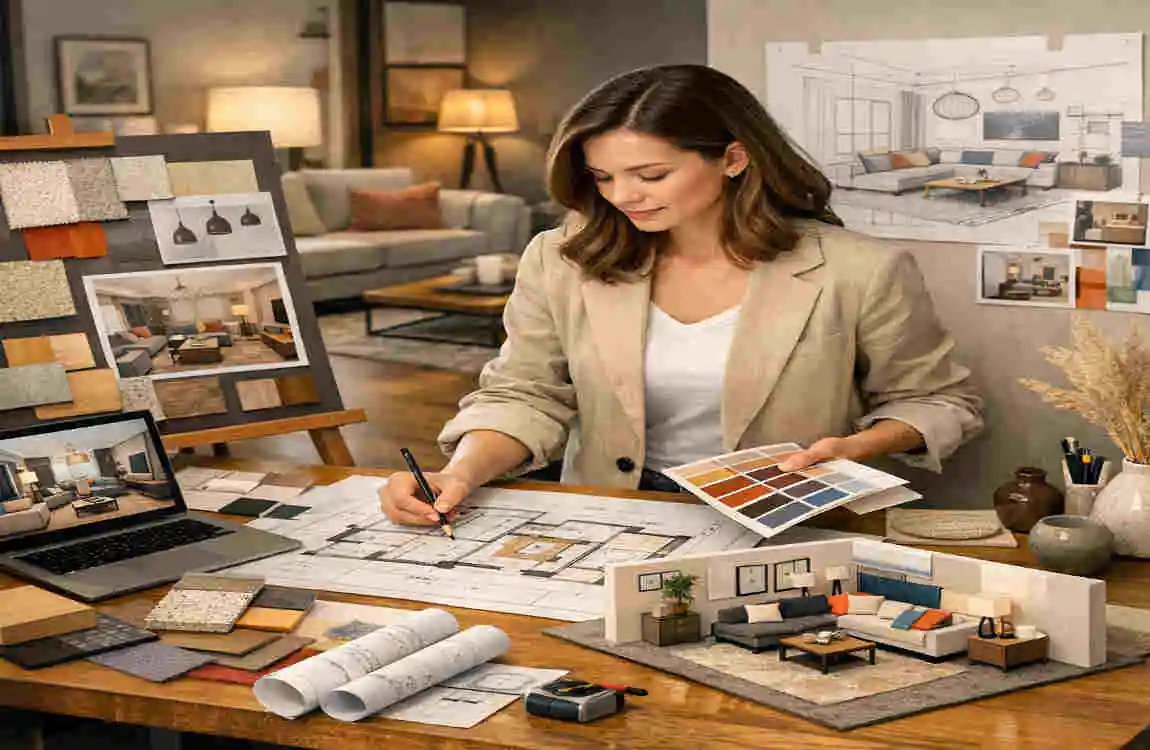
Interior design means planning and improving the interior of a building to make it more practical, comfortable, and attractive. In simple words, it is about making a space work better for the people who use it.
Interior designing meaning in everyday language
The meaning of interior design is easier to understand when you think of a room as more than just walls and furniture. A designer looks at the whole picture and asks:
- How will people move in this space?
- What will they use it for?
- How can it feel more comfortable?
- How can it look better without losing function?
That is what the interior design definition is all about: combining function, comfort, beauty, and smart space planning.
Interior designing vs. interior decorating
Many people use these terms as if they mean the same thing, but they do not.
- Interior designing focuses on planning the space, layout, structure, materials, and overall function.
- Interior decorating focuses more on the visual side, such as colors, accessories, artwork, and soft furnishings.
So, if you are asking what interior design means, think beyond style. It is about how the space works from the inside out.
Why interior designing matters
Interior design is important because it changes how people experience a space. A room can feel open or crowded, warm or cold, peaceful or busy. Design decisions shape these feelings.
A good interior designer helps create spaces that are:
- Easier to use
- More comfortable
- More attractive
- Better organized
- More suitable for the people living or working there
Main Elements of Interior Designing
Interior design is built from a few key parts. When these parts work together, the room feels complete and balanced.
Space planning
Space planning is one of the most important parts of interior design. It is about organizing the room so people can move easily and use it well.
For example, furniture should not block walkways. A dining table should fit the room without making it feel cramped. A living room should allow people to sit, talk, and move around comfortably.
Color and lighting
Color has a strong effect on mood. Light colors can make a room feel bigger and brighter. Dark colors can make it feel warm and cozy when used well.
Lighting is just as important. A room usually needs a mix of:
- Natural light from windows
- Artificial light from lamps, ceiling lights, or wall lights
Good lighting makes a room easier to use and more pleasant to be in.
Furniture and materials
Furniture should match the size and purpose of the room. Large furniture can overwhelm a small room, while tiny furniture may look lost in a large space.
Materials also matter. Designers may use:
- Wood
- Glass
- Metal
- Fabric
- Stone
- Tile
These choices affect both the look and the durability of the room.
Balance, texture, and proportion
A well-designed room feels balanced. That means no single part looks too heavy, too empty, or too out of place.
Texture adds depth. For example, a soft rug, smooth table, and woven chair can make a room feel more interesting. Proportion helps everything look right relative to the room’s size.
Popular Types of Interior Designing
There are many interior design styles, each creating a different mood.
Modern interior design
Modern design uses clean lines, simple shapes, and practical furniture. It avoids too much decoration and focuses on a neat, fresh look.
Contemporary interior design
Contemporary design changes with current trends. It is flexible and often uses new materials, open layouts, and simple forms.
Traditional interior design
Traditional interiors feel classic and elegant. They often use detailed furniture, rich colors, and timeless decorative pieces.
Minimalist interior design
Minimalist design keeps things simple and uncluttered. It focuses on only what is needed, which makes the space feel calm and clean.
Industrial interior design
Industrial style often includes exposed brick, concrete, metal, and raw finishes. It feels practical, bold, and slightly unfinished in a stylish way.
Scandinavian interior design
Scandinavian design uses light colors, natural materials, and simple furniture. It aims for comfort, warmth, and a sense of peace.
Other popular styles
Other common interior design styles include:
- Farmhouse
- Bohemian
- Coastal
- Mid-century modern
- Luxury interior design
Interior Design Ideas for Different Rooms
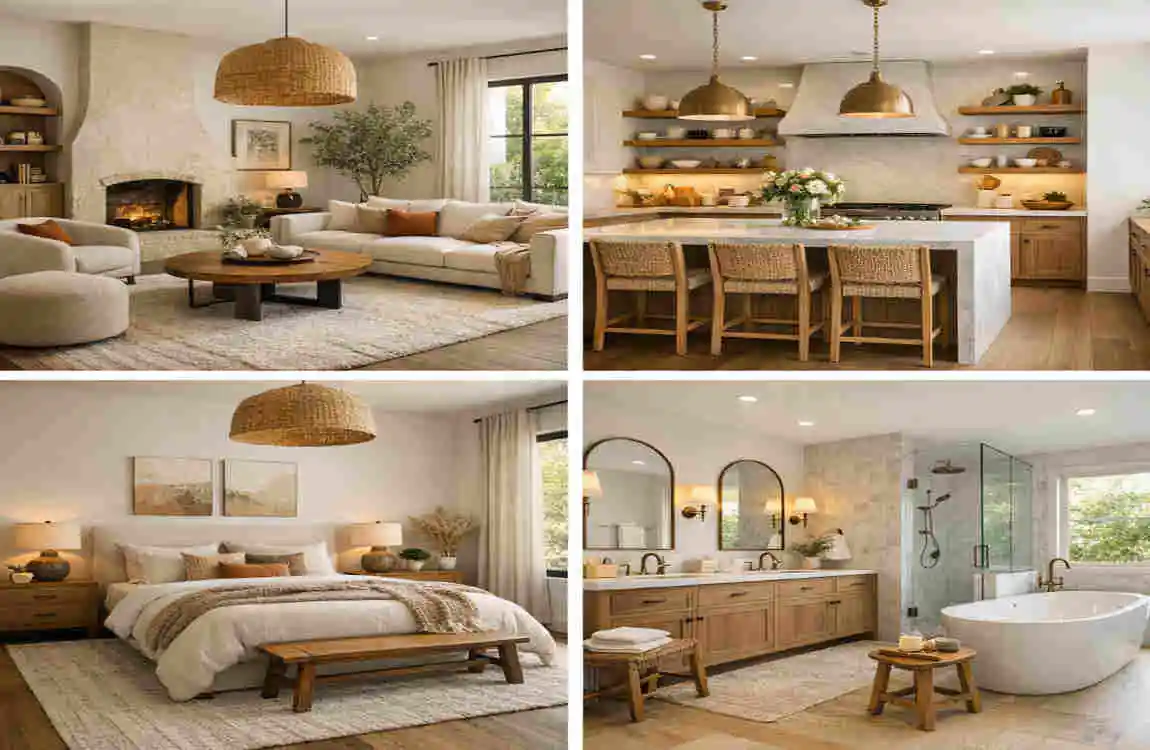
Every room has a different purpose, so design choices should match the way the room is used.
Living room ideas
The living room should feel inviting and easy to use. Try to create a layout where people can talk comfortably and move around without obstacles.
A strong focal point can help the room feel organized. This could be artwork, a TV wall, a fireplace, or a bold light fixture. Add storage too, so the room stays tidy.
Bedroom ideas
A bedroom should support rest. Soft colors, gentle lighting, and comfortable bedding all help create a calm feeling.
Keep furniture balanced with the size of the room. Add personal touches like framed photos, a reading lamp, or textured cushions to make the space feel yours.
Kitchen ideas
A kitchen should be practical first. Think about workflow, storage, and easy cleaning. Durable surfaces and good lighting are very important.
Cabinets, counters, and islands should be arranged so cooking and movement feel smooth and natural.
Bathroom ideas
Bathrooms need materials that handle moisture well. Choose finishes that are easy to clean and do not wear out quickly.
Good lighting and smart storage make the room more useful every day.
Small-space ideas
Small spaces can still feel stylish and comfortable when designed well. Use:
- Multifunctional furniture
- Vertical storage
- Mirrors
- Light colors
- Good lighting
These simple choices help a room feel larger and more open.
Benefits of Interior Designing
Interior design is more than decoration. It offers real value in daily life.
Improves functionality
A good design uses space wisely. That means the room works better for the activities that happen there.
Enhances comfort
When furniture, lighting, and layout are planned well, the space becomes easier and more pleasant to use.
Improves visual appeal
A well-designed room feels coordinated. Colors, furniture, and finishes work together instead of looking random.
Supports organization
Interior design often includes smart storage ideas. This helps reduce clutter and keeps the room neat.
Reflects personal style
Your home should feel like you. Interior design allows you to express your taste in practical ways.
Can increase property appeal
A well-planned interior may make a home more attractive to buyers or renters. While results vary, good design often leaves a stronger impression.
How to Choose the Right Interior Design Style
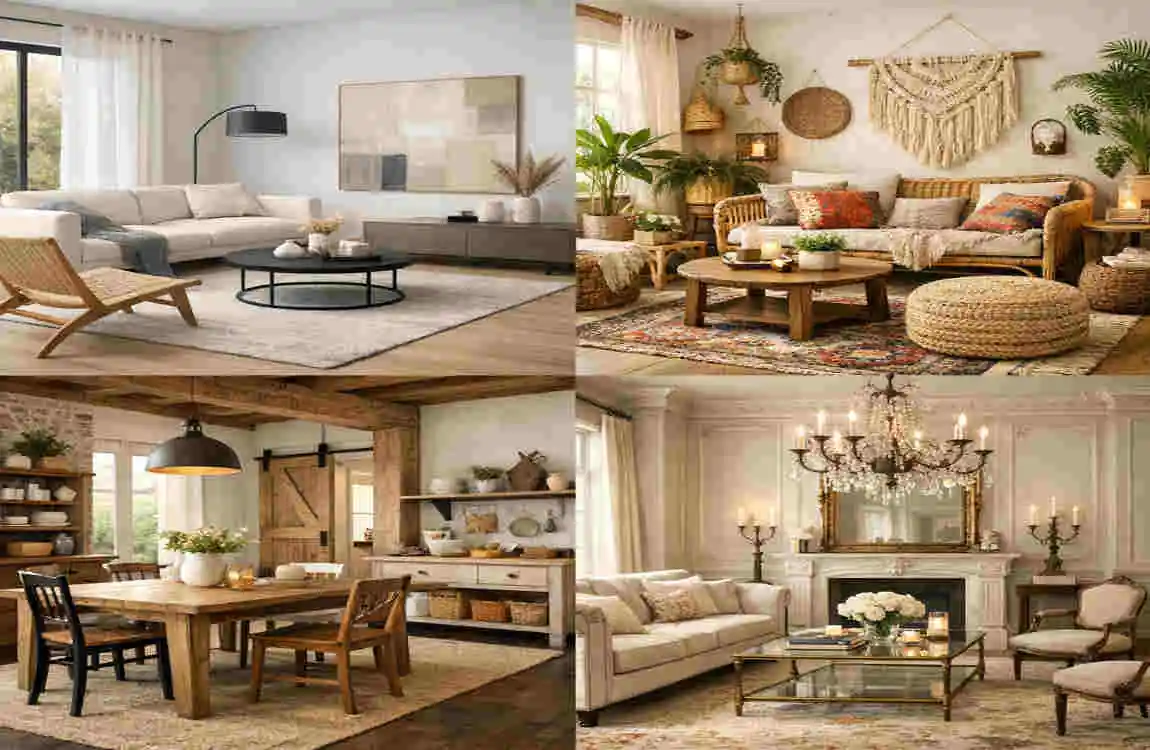
Choosing the right style becomes easier when you focus on how you live, not just how a room looks.
Think about your space and lifestyle.
Ask yourself how the room will be used. A busy family home needs different choices than a quiet apartment or office.
Set a realistic budget.
A clear budget helps you make better decisions. It also keeps the project manageable.
Choose colors and materials carefully.
Pick colors that match the mood you want. Also think about how easy the materials will be to clean and maintain.
Mix style with function
Do not follow trends unthinkingly. A room should look good, but it should also work well for everyday life.
Create a mood board.
Before buying large items, collect colors, images, and material samples. This helps you see whether your ideas work together.
If you feel unsure, hiring a professional interior designer can save time and help avoid expensive mistakes.
Frequently Asked Questions About Interior Designing
What is interior designing in simple words?
Interior designing is the process of making indoor spaces more useful, comfortable, and attractive.
What is the difference between interior designing and decorating?
Interior designing covers layout, function, materials, and planning. Decorating mainly focuses on the visual look of a room.
What are the main types of interior designing?
Some popular types are modern, contemporary, traditional, minimalist, industrial, and Scandinavian.
Why is interior designing important?
It improves comfort, organization, appearance, and the overall use of a space.
How do I choose an interior design style for my home?
Think about your lifestyle, budget, room size, maintenance needs, and personal taste.
Is interior designing only for large homes?
No. It is often very useful in small homes because it helps make the most of limited space.
Can interior designing increase the value of a home?
Yes, a well-designed and well-maintained interior can make a property more appealing to buyers or renters.
| Aspect | Quick Information |
|---|---|
| Interior Designing | Planning and decorating indoor spaces to make them functional, comfortable, and attractive. |
| Main Ideas | Choose suitable colors, furniture, lighting, flooring, textures, and décor. |
| Popular Types | Modern, minimalist, traditional, contemporary, industrial, Scandinavian, and bohemian. |
| Key Elements | Space planning, color schemes, lighting, furniture, materials, and accessories. |
| Benefits | Improves comfort, functionality, visual appeal, organization, and property value. |
