
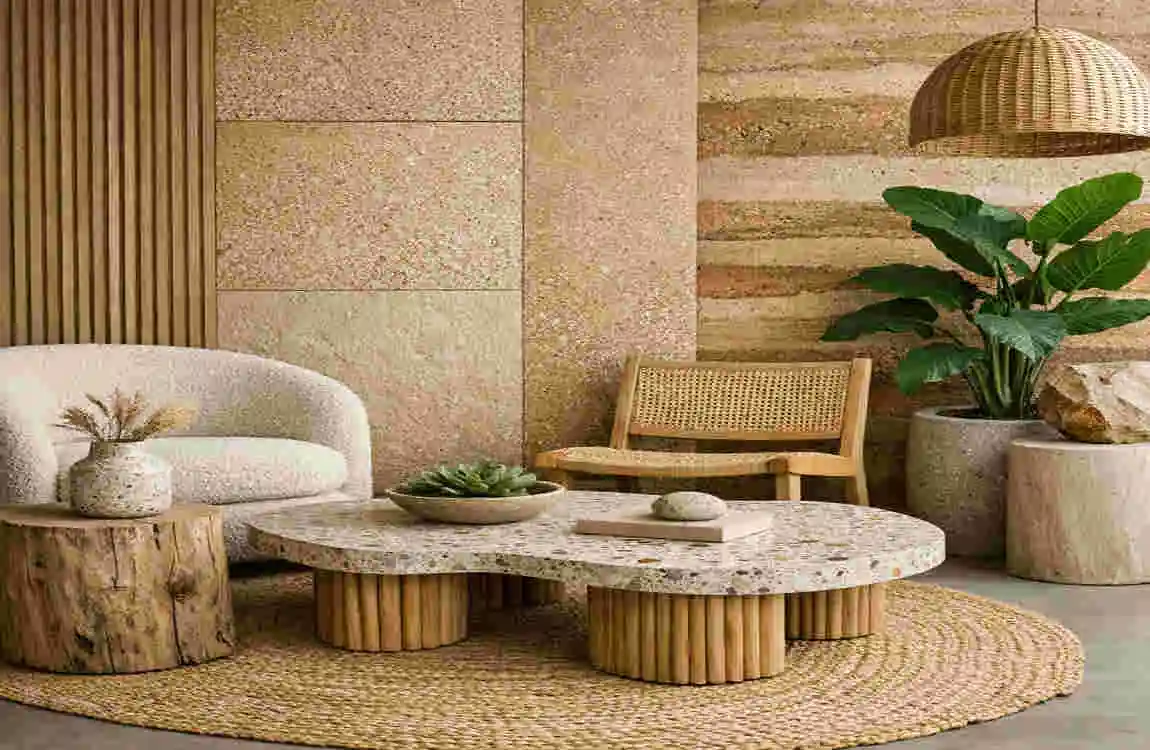
Choosing sustainable materials used in interior design is no longer just a trend. It is becoming a smart, practical, and stylish way to shape homes that feel good to live in.
People want interiors that look beautiful, last longer, and create less waste. They also want materials that are safer for their families and kinder to the planet. That is why eco-friendly design is moving into the spotlight.
What Are Sustainable Materials Used in Interior Design?
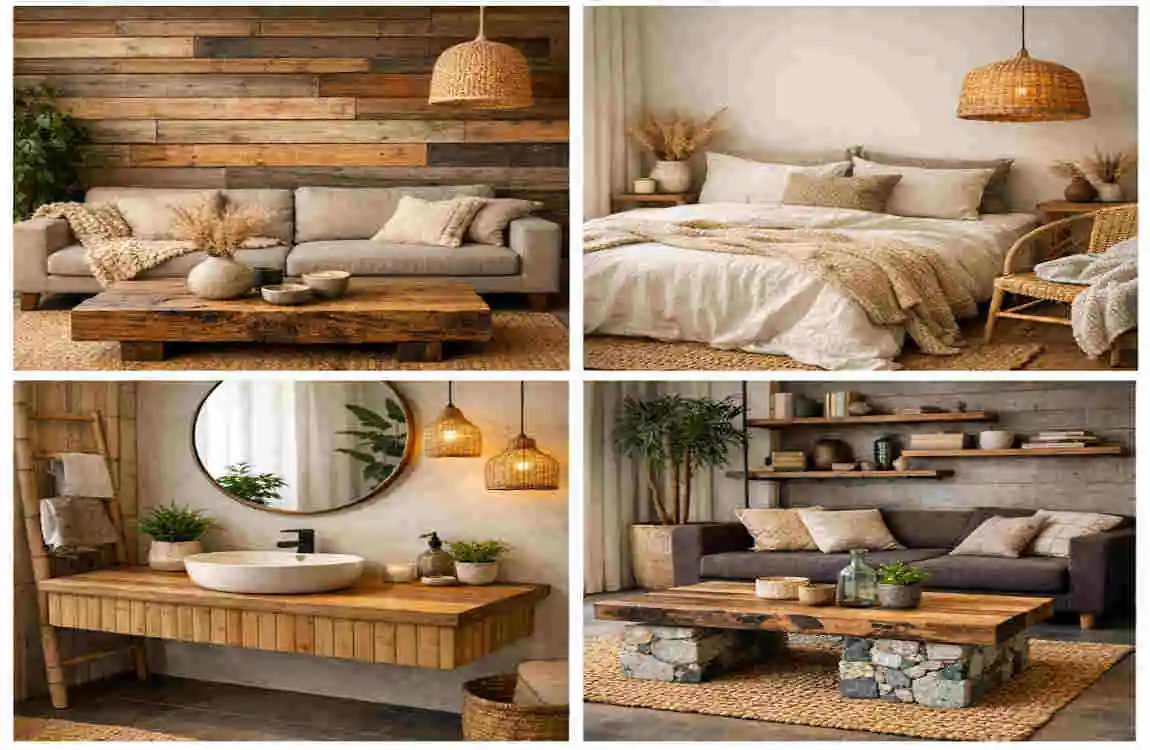
Sustainable interior materials are products made, sourced, used, or reused in ways that reduce harm to the environment. That can mean using renewable resources, recycled content, responsibly harvested materials, or products that last a long time.
It also means choosing items that support healthier indoor air and create less waste during production and installation.
Why these materials are becoming so popular
More homeowners and designers want materials that do more than look nice. They want products that support better living.
That includes materials that are durable, low-toxin, renewable, recycled, or reclaimed. These choices help reduce the strain on natural resources while still allowing for beautiful design.
Benefits for homes, health, and the environment
Sustainable materials bring several clear benefits.
They can improve indoor air quality. They can lower waste. They can reduce the need for constant replacement. They can also add a natural, timeless feel to a room.
For you, that means a home that is both attractive and practical.
Sustainability is not just about “natural” materials.
This is an important point. A material being natural does not always make it sustainable.
For example, a natural material can still be poorly sourced, overharvested, or treated with harmful chemicals. True sustainability depends on how the material is made, where it comes from, how long it lasts, and what happens to it at the end of its life.
Trending Sustainable Wood and Bamboo Materials
Reclaimed wood for walls, floors, and furniture
Reclaimed wood is wood that has already been used before. It may come from old barns, factories, warehouses, or other buildings.
This makes it a favourite for people who want charm and history in their space. Each piece often has its own marks, grain, and colour shifts, giving a room a rich, lived-in feel.
You can use reclaimed wood for:
- Feature walls
- Flooring
- Shelves
- Dining tables
- Cabinets
- Accent beams
It is one of the easiest ways to bring warmth and personality into a room.
FSC-certified wood and responsible sourcing
If you want new wood products, look for FSC-certified wood. FSC stands for Forest Stewardship Council, and this certification shows the wood comes from responsibly managed forests.
That matters because not all wood is harvested in the same way. Responsible sourcing helps protect forests, wildlife, and long-term supply.
For interiors, this gives you a cleaner choice without sacrificing wood’s natural beauty.
Bamboo as a fast-growing alternative
Bamboo has become a favourite in modern homes for a good reason. It grows fast, looks clean and fresh, and works well in many design styles.
People often use it for flooring, panels, furniture, and decorative pieces. Bamboo has a light, modern look, but it can also fit into warm or natural spaces.
Still, quality matters. Not all bamboo products are made the same, so it is wise to check how the bamboo was processed and whether it uses low-toxin adhesives.
Cork for flooring and wall applications
Cork is another strong sustainable choice. It comes from the bark of cork oak trees, and the trees are not cut down to harvest it.
That makes it a renewable material with a soft, comfortable feel. Cork works well for flooring because it is slightly cushioned, warm underfoot, and naturally quiet.
It also works in wall panels and other decorative applications. If you want a softer, more organic look, cork is worth considering.
Tips for choosing durable wood products
If you are buying wood products, think about more than appearance. A beautiful piece that wears out quickly is not truly sustainable.
Look for products that are:
- Long-lasting
- Well-finished
- Responsibly sourced
- Easy to maintain
- Made with low-toxin finishes
Durable materials usually create less waste over time.
Eco-Friendly Flooring Materials for Modern Interiors
Recycled and reclaimed flooring
Recycled flooring uses reused content from previous products or materials. Reclaimed flooring reuses wood, tile, or other materials from older buildings.
These options can give your home a unique style while reducing the need for new raw materials. They are especially useful if you want a floor with character.
Every reclaimed floor tells a story. That gives the room a deeper sense of texture and history.
Natural cork flooring
Cork flooring is comfortable, quiet, and renewable. It is also a good option for rooms where you spend a lot of time standing, such as kitchens or home offices.
Its soft surface feels pleasant underfoot. It can also help soften sound, which is a big plus in busy homes.
Bamboo flooring
Bamboo flooring is popular because it combines style with performance. It can look sleek and modern, but it also works in natural or minimalist spaces.
Depending on how it’s made, the surface can be strong and easy to care for. Just make sure the product uses safer adhesives and finishes.
Linoleum is made from renewable materials.
Linoleum is often confused with vinyl, but it is different. Traditional linoleum is made from renewable materials like linseed oil, wood flour, and natural resins.
That makes it a more eco-friendly flooring choice. It is also durable and comes in many colours and patterns, which helps it fit modern homes.
Recycled tile and other low-impact options
Recycled tile can be made from glass, ceramic, or other reused materials. It is a smart way to add texture and colour while reducing waste.
These tiles can work in kitchens, bathrooms, and entryways. They are practical and stylish at the same time.
Choosing flooring based on use
The best flooring depends on the room. A bedroom may benefit from soft cork, while a kitchen may need tougher tile or linoleum.
Here is a simple guide:
Flooring MaterialBest ForMain Benefit
Reclaimed wood Living rooms, feature walls Warmth and character
FSC-certified wood General interior use Responsible sourcing
Bamboo Bedrooms, living spaces Fast-growing and stylish
Cork Quiet rooms, home offices Soft, warm, renewable
Linoleum Kitchens, hallways Durable and renewable
Recycled tile Bathrooms, backsplashes Low-impact and versatile
Natural and Recycled Materials for Walls and Surfaces
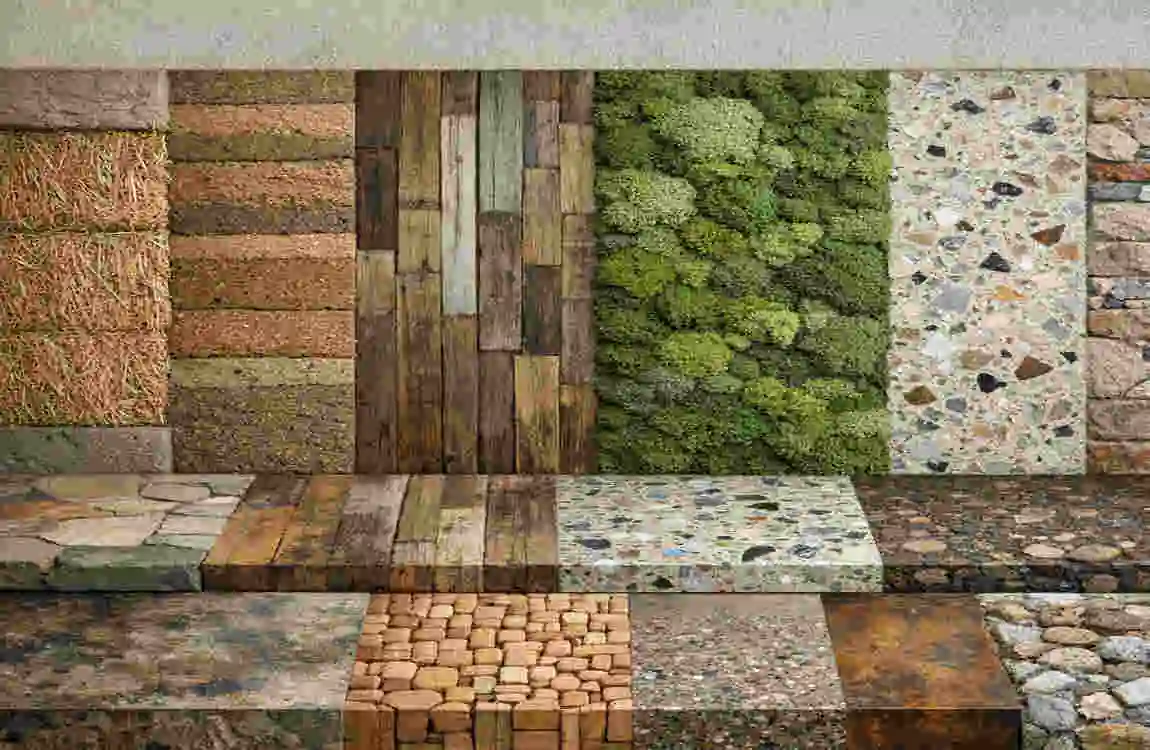
Recycled glass and ceramic tiles
Recycled glass and ceramic tiles can bring colour and shine into a room. They work especially well in kitchens, bathrooms, and accent areas.
These tiles reduce waste while adding a fresh design feature. They can look polished, playful, or elegant depending on the finish and colour.
Natural stone and responsibly sourced materials
Natural stone is often seen as a premium surface material. When responsibly sourced, it can be a long-lasting, beautiful choice.
Stone brings a timeless look to countertops, floors, and wall features. The key is to look for products that are harvested carefully and used thoughtfully.
Clay and lime-based finishes
Clay and lime finishes are growing in popularity because they create a soft, earthy look. They can give walls a textured, handmade feel that many people love.
These finishes can also help rooms feel calmer and more natural. They are a great fit if you want a relaxed, grounded interior style.
Recycled metal accents
Recycled metal can show up in handles, shelves, light fixtures, frames, and decorative details. It gives a room a modern edge without requiring brand-new raw materials.
Even small metal accents can make a room feel more finished. They work well with wood, stone, and natural fabrics.
Low-VOC paints and healthier wall finishes.
Low-VOC paint is one of the easiest sustainable upgrades you can make. VOCs are chemicals that can affect indoor air quality, so lowering them is a smart move.
If you want a healthier home, this matters. Paint may seem small, but it covers a huge amount of surface area.
How sustainable surfaces add style and texture
Sustainable surfaces often feel more layered and interesting than standard finishes. They can bring grain, movement, texture, and softness into a room.
That is one reason designers love them. They help create rooms that feel rich and inviting, not flat or overly polished.
Sustainable Fabrics, Furniture, and Decor
Organic cotton, linen, hemp, and wool
Natural fabrics play a big role in sustainable interiors. Organic cotton, linen, hemp, and wool are all popular choices because they feel good and often have a lower environmental impact than synthetic fabrics.
These materials work well for curtains, cushions, bedding, and upholstery. They also bring softness and comfort into the home.
Recycled and upcycled textiles
Recycled textiles reuse fibres from old materials. Upcycled textiles turn existing fabric into something new and useful.
This is a smart way to reduce waste while adding a unique touch to your interior. You may find rugs, throws, and decorative pillows made from reused materials that still look stylish and modern.
Sustainably sourced furniture
Furniture made from responsibly sourced wood, recycled content, or low-toxin finishes can make a huge difference. It is not just about the look. It is about how the piece was made and how long it will last.
Good furniture should feel solid and well-built. That kind of quality usually saves money over time because you do not need to replace it as often.
Secondhand and vintage furniture
Secondhand and vintage furniture are among the most sustainable choices you can make. The item already exists, so no new production is needed.
These pieces can also bring charm and originality to your home. A vintage chair, cabinet, or table can become a room’s focal point.
Eco-friendly rugs, curtains, and cushions
Soft furnishings may not seem like a big sustainability issue, but they matter. Rugs, curtains, and cushions can be made from natural fibres, recycled materials, or safer dyes.
These pieces help shape the mood of a room. They also let you bring in colour and pattern without replacing major furniture.
How to combine sustainability with modern design
You do not have to choose between eco-friendly and stylish. The two go very well together.
A simple modern room with clean lines can still feel warm when you add natural textiles, reclaimed wood, and recycled accents. In fact, sustainable design often looks more thoughtful and personal than mass-produced interiors.
How to Choose Sustainable Interior Materials
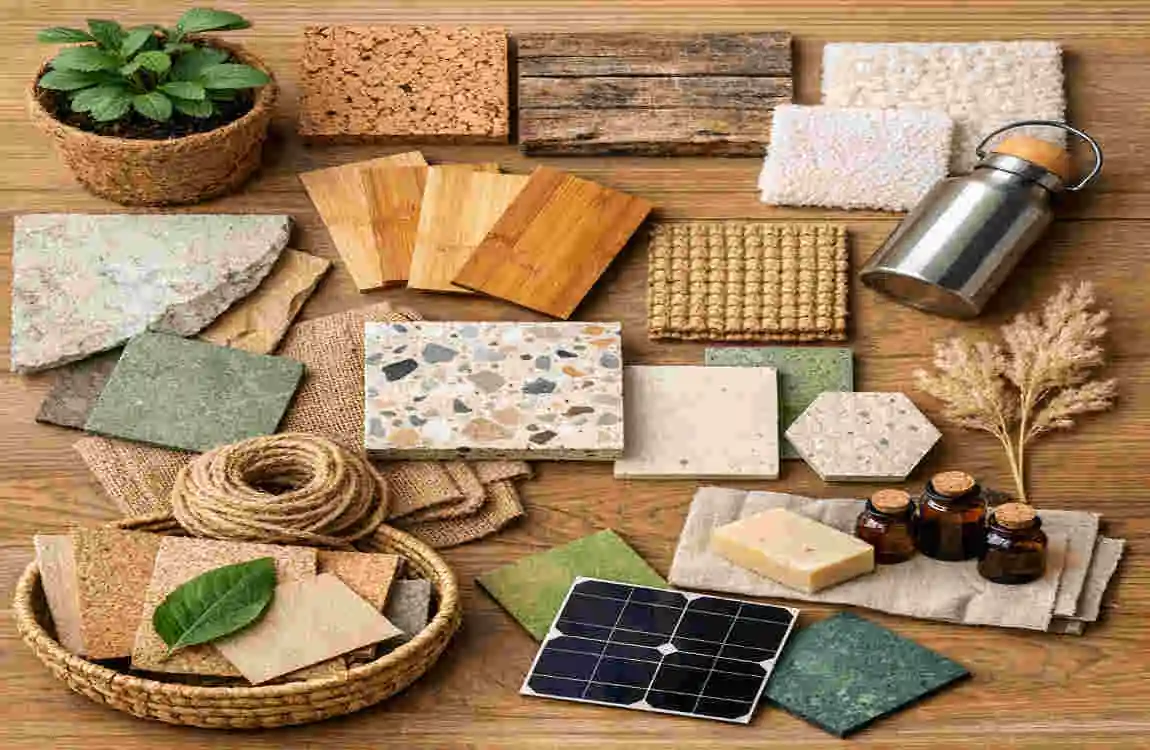
Check certifications and sourcing information.
Always look for proof when possible. Certifications and sourcing details help you understand whether a product is truly sustainable or just marketed that way.
This is especially important for wood, flooring, textiles, and paints. A little research can prevent a poor choice.
Consider durability and lifespan.
A sustainable product should last. If something wears out quickly, it creates more waste and usually costs more in the long run.
Think about how the material will hold up in daily life. Will it scratch easily? Will it fade? Will it need constant replacement?
Compare recycled, renewable, and reclaimed materials.
These terms are often used together, but they are not the same.
- Recycled means made from reused material.
- Renewable means it can grow or be replenished fairly quickly.
- Reclaimed means it has been recovered from a previous use.
All three can be smart choices, but the best one depends on your project.
Look for low-VOC and low-toxin products.
This is important for paints, adhesives, sealants, and finishes. These products can affect the air you breathe every day.
If you want a healthier home, low-toxin materials should be high on your list.
Consider local materials
Local materials can reduce transportation impact. They may also work better with your climate and regional style.
Choosing local options can make your design feel more connected to place and more practical over time.
Balance budget, style, maintenance, and impact
Sustainable interior design works best when it fits your real life. You want materials that look good, stay strong, and fit your budget.
A beautiful material is only a great choice if you can live with it comfortably. That is why balance matters.
FAQ
What are the most sustainable materials used in interior design?
Some of the best options include reclaimed wood, bamboo, cork, recycled tile, organic fabrics, low-VOC paints, and responsibly sourced wood products.
Is bamboo a good sustainable material for interiors?
Yes, bamboo is a strong choice because it grows quickly and can be used for flooring, furniture, and decorative features. Just check product quality and adhesives.
What is the most eco-friendly flooring material?
There is no single answer for every room, but cork, reclaimed wood, linoleum, bamboo, and recycled tile are all strong eco-friendly choices depending on your needs.
Are reclaimed wood products environmentally friendly?
Yes, reclaimed wood is generally a very sustainable option because it reuses existing material instead of requiring new harvesting.
Which sustainable materials are best for furniture?
Reclaimed wood, FSC-certified wood, bamboo, secondhand furniture, and pieces made from recycled or low-toxin materials are all good choices.
How can I make my interior design more sustainable?
Start with durable products, low-VOC finishes, local materials, and secondhand items. Also avoid replacing items that are still usable.
Are sustainable interior materials more expensive?
Sometimes they cost more upfront, but not always. In many cases, they save money over time because they last longer and need less replacement.
What should I look for when buying eco-friendly materials?
Check certifications, sourcing, durability, toxin levels, and maintenance needs. This helps you choose products that fit your lifestyle and budget.
| Sustainable Material | Best Interior Use | Key Benefit |
|---|---|---|
| Bamboo | Flooring, furniture, wall panels | Fast-growing and renewable |
| Cork | Floors, walls, accessories | Soft, durable, and recyclable |
| Reclaimed Wood | Walls, floors, furniture | Reduces new timber use |
| Recycled Glass | Countertops, tiles, décor | Turns waste into stylish surfaces |
| Recycled Metal | Lighting, furniture, accents | Durable and highly recyclable |
| Natural Stone | Floors, countertops | Long-lasting and timeless |
