
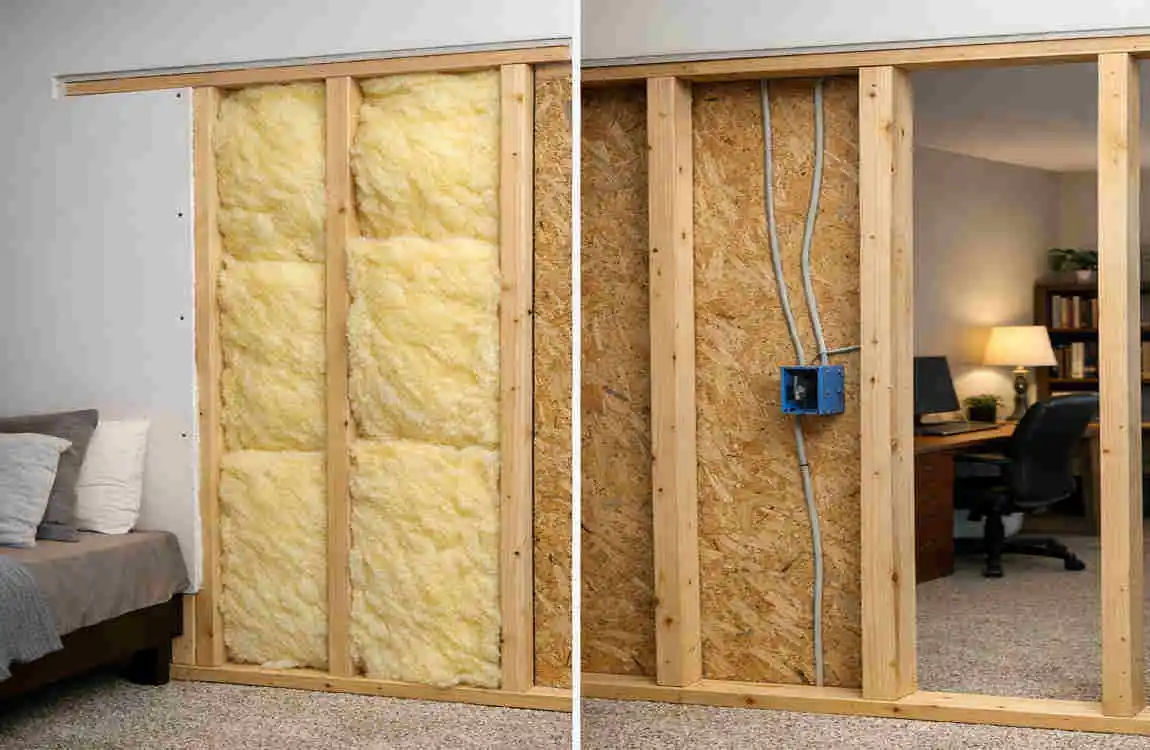
The question of whether interior walls need insulation comes up a lot during home updates, remodels, and new builds. The short answer is not always, but in many homes, it can make a real difference.
Interior wall insulation is not mainly about keeping heat in or out of the house. That job usually belongs to exterior walls. Instead, interior wall insulation is often used for sound control, privacy, comfort, and sometimes fire resistance.
Does an Interior Wall Need Insulation?
What interior wall insulation does
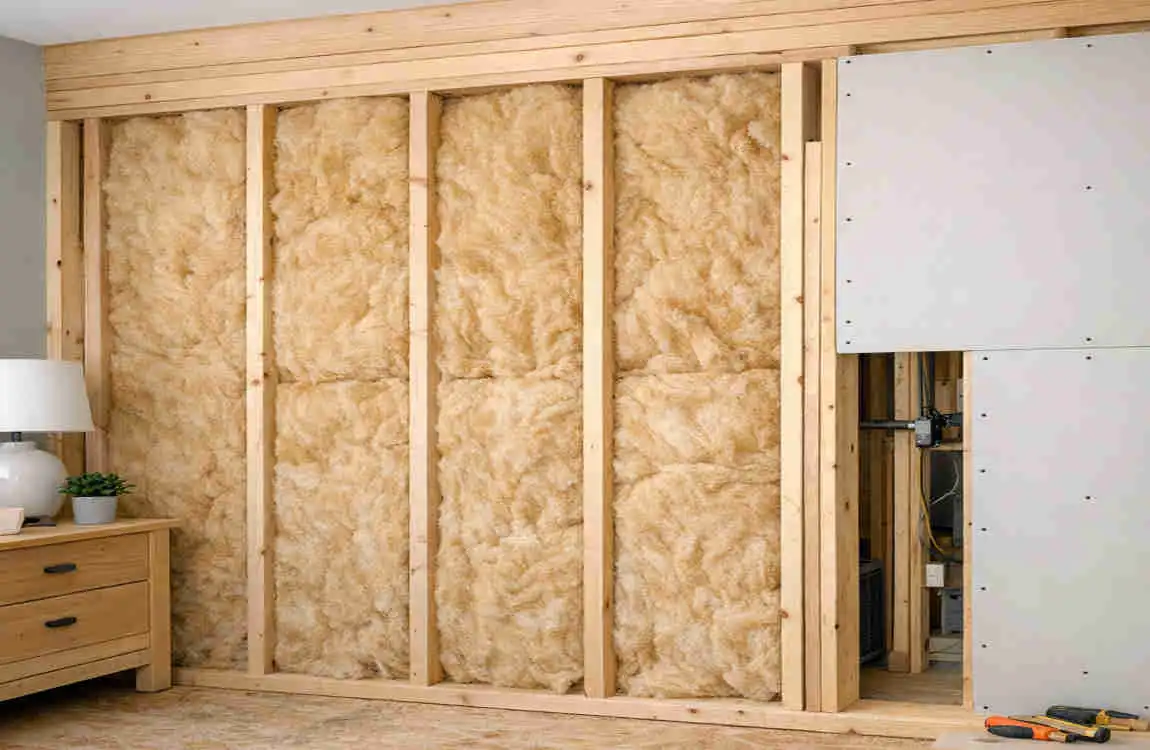
Interior wall insulation is placed between rooms inside the house. It sits inside the wall cavity, usually between the studs, just like exterior wall insulation.
Its main job is not to fight outdoor weather. Instead, it helps manage what happens from room to room.
That can mean less noise between bedrooms and living spaces, better privacy in bathrooms, and more comfort in rooms with different uses.
Do all interior walls need it?
No, not every interior wall needs insulation.
A plain hallway wall, for example, may not need it at all. But a wall between a noisy laundry room and a bedroom might benefit a lot from it.
So the answer depends on how the room is used and what problem you want to solve.
Why it matters
Interior wall insulation can help with:
- Noise reduction
- Privacy
- Temperature control between rooms
- Fire resistance in some cases
If those things matter in your home, insulation can be a smart upgrade.
Why Insulate Interior Walls?
Reduce noise between rooms.
One of the biggest reasons to insulate interior walls is to reduce sound transfer.
If you live with kids, work from home, or share a house with others, this can make a big difference. It can help cut down voices, TV noise, foot noise, and general activity from one room to another.
Improve privacy
A bathroom wall, bedroom wall, or office wall should feel private. Insulation helps soften sounds, so conversations are easier to hear.
That can make everyday life feel more comfortable and less exposed.
Help rooms stay more comfortable.
In some homes, different rooms may be warmer or cooler for different reasons. Interior insulation can help slow the movement of heat between those spaces.
That is especially useful if one room gets more sun, has more appliances, or is used less often.
Support special spaces
Some rooms benefit more than others. For example, a home office, nursery, laundry room, or bathroom often needs more quiet and separation than a storage room or closet.
In those spaces, insulation can be a simple improvement that you notice every day.
Which Interior Walls Should Be Insulated?
Bedrooms and living areas
Walls between bedrooms and living spaces are often good candidates. If someone is watching TV, talking, or moving around in the living room, insulation can help keep the bedroom quieter.
Bathroom and bedroom walls
This is one of the most common places to add insulation. Bathrooms need privacy, and they can also create noise from fans, water, and plumbing.
Home office walls
If you work from home, you probably want fewer distractions. A well-insulated office wall can help reduce noise from the rest of the house.
Laundry and utility rooms
Laundry rooms, utility areas, and mechanical spaces can be noisy. Insulation helps keep that noise from spreading.
Garage and living area walls
Walls that separate a garage from the home are often worth insulating. They can help reduce noise and heat transfer and, in some cases, improve fire safety, depending on local building codes.
Walls around HVAC or equipment spaces
If a wall surrounds mechanical equipment, insulation can help reduce vibration and noise. That can make the rest of the house feel calmer.
Best Types of Insulation for Interior Walls
Fiberglass batts
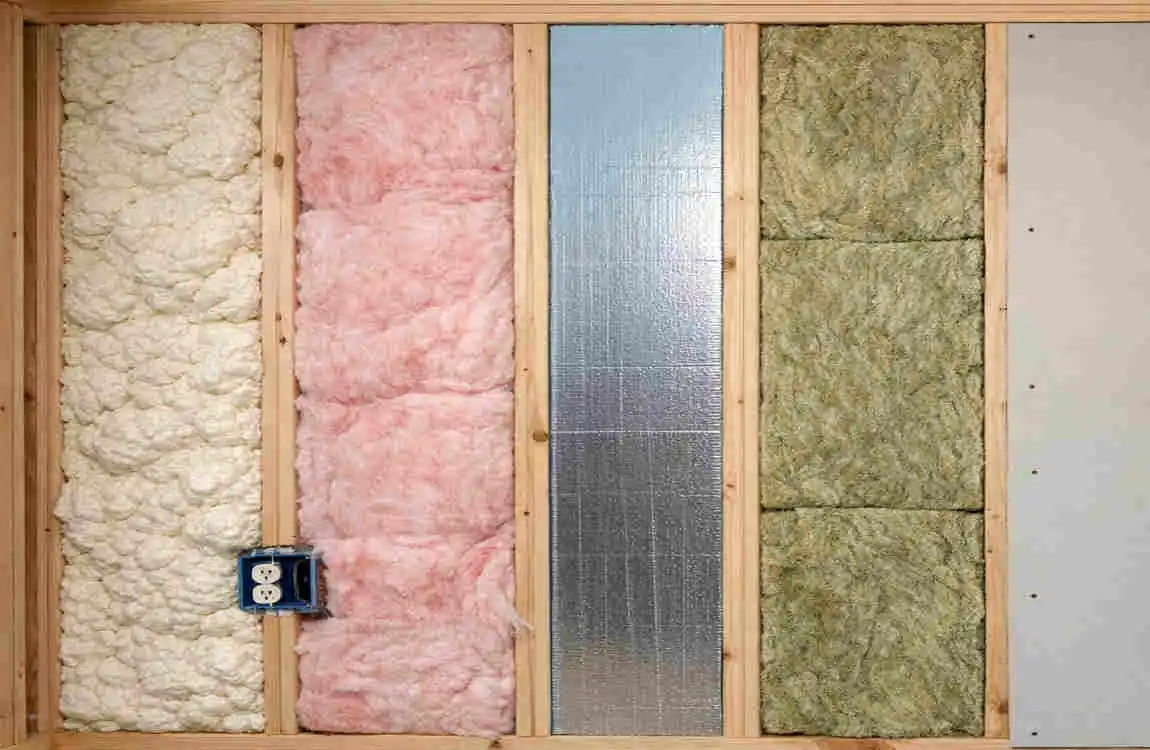
Fiberglass batts are one of the most common choices. They are affordable, easy to find, and simple to install in standard wall cavities.
They work well for general interior wall use, especially when the main goal is basic sound reduction.
Mineral wool
Mineral wool is often a better pick when you want stronger sound control and better fire resistance. It is denser than fiberglass, so it can absorb sound well.
It usually costs more, but many homeowners like it for bedrooms, offices, and bathrooms.
Spray foam
Spray foam can seal gaps very well, especially in tricky spaces. It is useful when you need air sealing in addition to insulation.
The downside is that it usually costs more and may not be necessary for a simple interior wall.
Rigid foam
Rigid foam is less common for standard interior walls, but it can work in special situations. It offers thermal resistance, but it is not always the easiest fit for typical stud walls.
How to Insulate an Interior Wall
Inspect the wall first.
Before you start, look closely at the wall. Check where the studs are and see whether the wall already has insulation.
If it is an existing wall, you may need to open it up to properly add insulation.
Watch for wiring and plumbing.
This step matters a lot. Interior walls often hold electrical wiring, pipes, or other hidden parts.
If you are not sure what is inside the wall, stop and check carefully. Do not cut unthinkingly.
Choose the right material.
Pick insulation based on your goal.
- For noise control: mineral wool or fiberglass
- For air sealing: spray foam
- For special thermal needs: rigid foam in selected cases
Measure and cut carefully.
Cut insulation so it fits the cavity without leaving big gaps. It should sit snugly between the studs.
Do not compress it too much. Compressed insulation loses effectiveness.
Install wall covering
Once the insulation is in place, close the wall with drywall or another suitable covering.
After that, seal any gaps as needed to improve performance.
When to call a professional
If the wall has electrical lines, plumbing, moisture damage, or complicated framing, professional help is often the safer choice.
Pros, Cons, and Cost of Interior Wall Insulation
Benefits
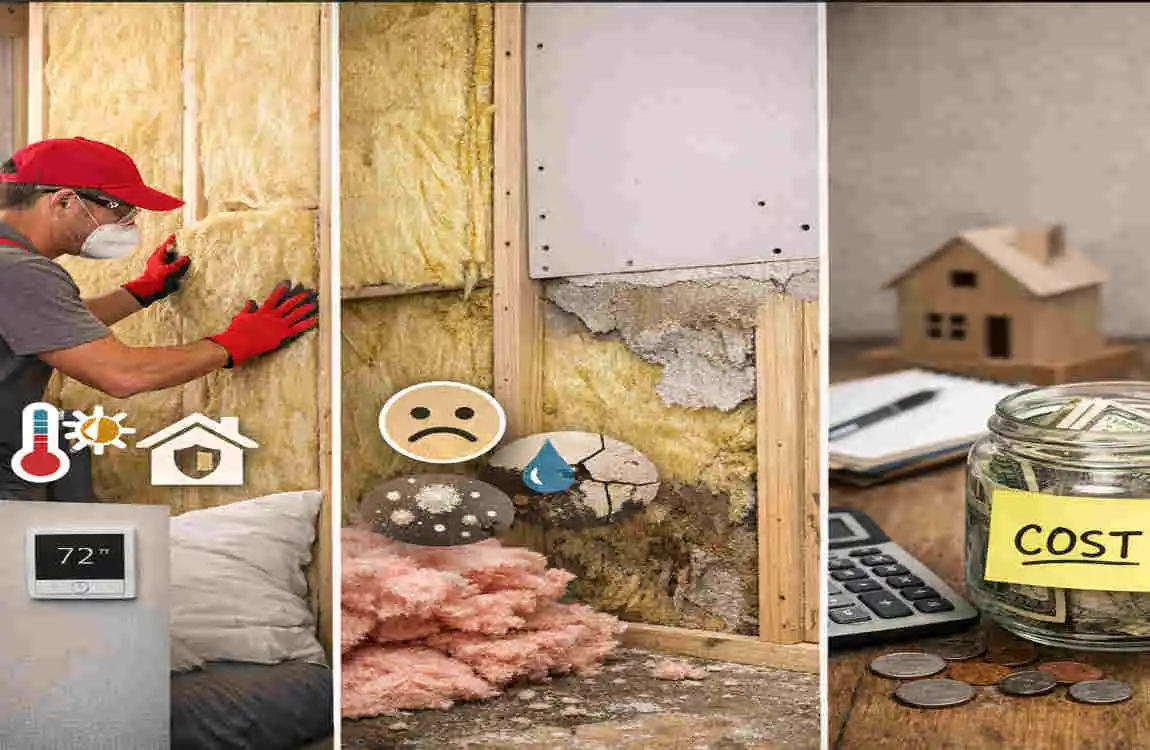
Interior wall insulation can offer real value in the right spaces.
- Better sound control
- Improved privacy
- More comfortable rooms
- Some energy savings in special layouts
- Added fire resistance with certain materials
Possible drawbacks
There are also a few downsides to think about.
- Extra installation cost
- Possible need to remove drywall
- Limited energy benefit compared with exterior walls
- Less usable space in some wall systems
Cost factors
The price depends on:
- Wall size
- Insulation type
- Labor
- Existing wall condition
- Whether drywall must be removed
A small project may be affordable, while a full-home retrofit can cost much more.
FAQ: Does an Interior Wall Need Insulation?
Does every interior wall need insulation?
No. It depends on the room use, noise level, temperature needs, and home layout.
Is it worth insulating interior walls?
Yes, if you want better privacy, quieter rooms, or more comfort between spaces.
What is the best insulation for interior walls?
Fiberglass and mineral wool are common choices. Mineral wool is often better for sound and fire resistance.
Does interior wall insulation reduce noise?
Yes. It can help reduce sound moving from one room to another.
Should bathroom walls be insulated?
Often yes, especially for privacy and noise control.
Can I insulate an existing interior wall?
Yes, but it may require opening the wall or using retrofit methods.
Is interior wall insulation better than exterior wall insulation?
They do different jobs. Exterior wall insulation is more important for overall thermal performance, while interior wall insulation is mostly for sound and separation.
| Interior Wall Situation | Is Insulation Needed? | Main Benefit |
|---|---|---|
| Between bedrooms | Usually optional | Reduces noise |
| Bathroom walls | Sometimes | Helps with temperature and sound |
| Wall between bedroom & living room | Recommended | Improves privacy |
| Wall between home & garage | Yes, recommended | Improves energy efficiency |
| Interior wall with plumbing | Often useful | Reduces pipe noise |
| Home theater or office | Recommended | Better sound control |
| Standard interior partition | Not always | Insulation may not be necessary |
| Fire-rated wall | May be required | Improves fire resistance |
