
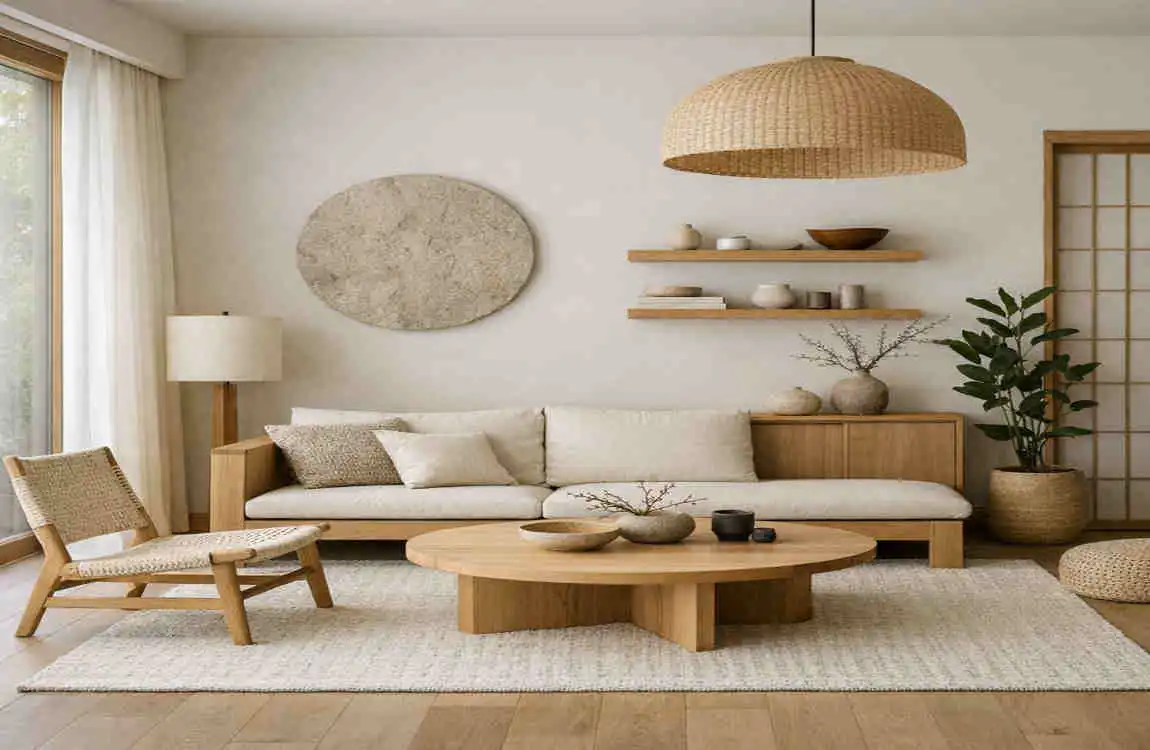
Modern Japandi interior design brings together two ideas that fit beautifully in today’s homes: Japanese calmness and Scandinavian comfort. The result is a style that feels peaceful, clean, warm, and easy to live with.
If you like rooms that feel uncluttered but still inviting, this style may be exactly what you need. It is not cold or empty. It is soft, balanced, and thoughtful. Every item has a purpose, and every space feels intentional.
What Is Modern Japandi Interior Design?
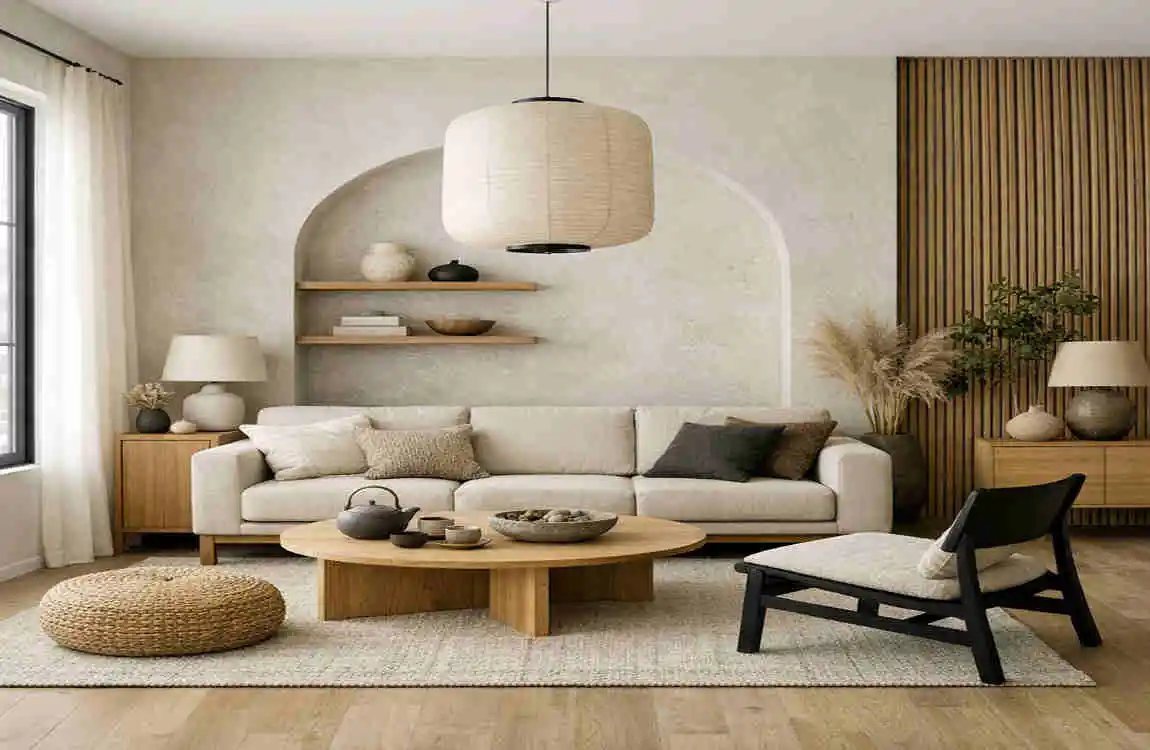
Modern Japandi interior design is a mix of Japanese minimalism and Scandinavian functionality. It blends the quiet, mindful feel of Japanese interiors with the warmth and practicality of Scandinavian spaces.
The style focuses on simplicity, comfort, natural materials, and clean lines. That means fewer unnecessary decorations, more usable furniture, and a strong connection to nature.
The Japanese side of Japandi
Japanese design often values calm, order, and balance. It uses low furniture, natural finishes, and open space to create a feeling of peace.
This part of Japandi helps the home feel grounded and uncluttered. It encourages you to slow down and enjoy your space instead of filling it with too much stuff.
The Scandinavian side of Japandi
Scandinavian design brings in comfort, warmth, and everyday function. It often uses light woods, soft textiles, and simple furniture that works well in daily life.
This side of the style makes the home feel welcoming rather than strict. It keeps the design practical and livable.
Why Japandi works so well in modern homes
Many modern homes already have open rooms, simple shapes, and plenty of natural light. That makes them a natural fit for Japandi style.
It also works because people today want homes that feel calm and useful. The style avoids clutter while still feeling warm and personal. That balance is a big reason modern Japandi interior design has become so popular.
Key Features of Modern Japandi Interior Design
Japandi may look simple at first glance, but that simplicity is carefully built. The style depends on a few clear design choices.
Natural materials
Natural materials are among the strongest elements of Japandi design. These include:
- Wood
- Bamboo
- Stone
- Linen
- Cotton
- Ceramics
These materials bring softness and texture into the room. They also help the space feel more real and less artificial.
A wood table, linen curtains, or a ceramic vase may seem small, but together they create a warm and balanced home. The goal is to let natural texture do the work instead of relying on bright colours or heavy decoration.
Neutral colour palette
Japandi spaces often use a calm colour palette of beige, cream, white, taupe, greygrey, and soft brown. These shades help the room feel open and quiet.
You can also use darker accents, but they should be gentle and controlled. A deep brown chair, a charcoal lamp, or a black frame can add contrast without making the room feel heavy.
The palette should feel soft and grounded, not sharp or flashy.
Clean lines and simple shapes
Japandi furniture usually has clean lines and simple forms. It does not rely on ornate decoration or dramatic shapes.
Instead, the focus stays on practical pieces that look good and work well. A low table, a plain sofa, or a simple shelf can often do more for the room than something highly decorative.
This is one reason the style feels timeless. It avoids trends that fade quickly.
Less clutter, more purpose
Another important part of Japandi is restraint. Rooms should feel calm and open. That does not mean empty. It means carefully chosen.
Every object should serve a reason. If it is not useful or meaningful, it probably does not need to stay in the room.
Modern Japandi Living Room Ideas
The living room is often the best place to start with Japandi design. It is where comfort and calm matter most.
Choose low-profile seating
A low-profile sofa or chair works well in a Japandi living room. These pieces keep the room feeling open and relaxed.
You do not need a bulky sectional to make the room feel inviting. A simple, well-made sofa with clean lines often works better.
Use wooden furniture
A wooden coffee table, side table, or media console adds warmth and texture. Natural wood is one of the strongest visual elements in Japandi design.
Choose finishes that feel soft and natural rather than glossy or overly polished. Light oak, ash, walnut, and similar tones work especially well.
Add comfort with textiles.
Because Japandi style is minimal, it can sometimes feel too plain without added texture. That is where rugs, cushions, and throws come in handy.
Choose fabrics like wool, linen, cotton, or woven blends. These soften the room and make it more inviting without breaking the clean look.
Bring in plants and handmade accents.
Plants fit beautifully into Japandi spaces because they bring life and calm. A single larger plant or a few smaller ones can make the room feel more complete.
Handmade décor also works well. A ceramic bowl, a woven basket, or a simple handcrafted vase can add character without making the room feel crowded.
Keep the seating area uncluttered.
A Japandi living room should feel easy to move through. Leave space around the furniture so the room can breathe.
That does not mean you need to remove everything. It means choosing what matters most and letting the room stay visually quiet.
A few simple Japandi living room ideas
- Use a neutral sofa with clean lines
- Add a wood coffee table
- Include one or two soft rugs or throws
- Choose a few plants instead of many small accessories
- Keep shelves and tables lightly styled
Focus on quality over quantity.
This is one of the most important Japandi rules. It is better to buy fewer well-made pieces than to fill the room with things that do not last.
Quality furniture and décor help the room feel more thoughtful and more refined. That is a big part of the style’s appeal.
Japandi Bedroom Ideas for a Calm Home
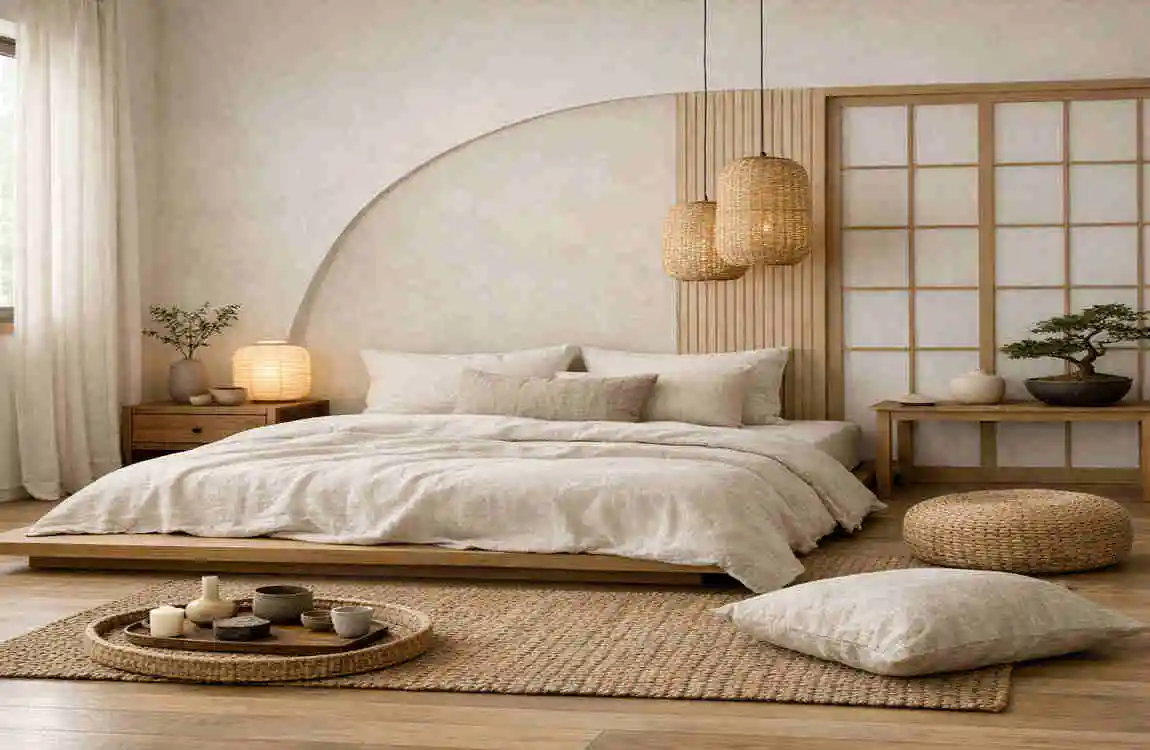
A bedroom is a perfect place for Japandi style because the design naturally supports rest, quiet, and simplicity.
Choose a simple bed frame.
A platform bed or low-profile bed works very well in a Japandi bedroom. It helps keep the space grounded and calm.
Look for wood frames or soft neutral finishes. Avoid heavy ornamentation or tall, dramatic headboards if you want a more authentic look.
Keep bedding soft and natural.
Your bedding should feel comfortable and soothing. Natural fabrics like cotton and linen work especially well.
Use a neutral palette here too. Soft white, beige, warm grey, and pale brown help the bedroom feel restful and clean.
Add wooden nightstands
Wooden nightstands bring warmth and balance to the room. They also help connect the bedroom to the rest of the Japandi home.
Choose simple shapes with enough storage for everyday use. You want the room to stay neat and easy to maintain.
Use minimal lighting
Lighting in a Japandi bedroom should feel gentle and calm. A simple lamp or soft pendant light often works better than something bright or bold.
Warm lighting helps the room feel cosy in the evening and supports the peaceful mood you want.
Keep decorations purposeful
The bedroom should not feel crowded. A few thoughtful pieces are enough.
You might add:
- One piece of art
- A small plant
- A ceramic tray
- A woven basket for storage
The key is to keep everything intentional. If an object does not add calm or function, it may be better left out.
Why Japandi works well in bedrooms
Japandi design is especially strong in bedrooms because it supports both physical and mental rest. The calm colours, simple furniture, and clean layout help reduce visual noise.
That can make the room feel like a true retreat.
How to Create a Japandi Kitchen and Dining Area
The kitchen and dining area should feel useful, organised, and beautiful without looking busy. Japandi design fits this need very well.
Use modern cabinets with natural wood finishes.
Cabinets are a big part of the kitchen’s visual style. In Japandi design, they often have smooth fronts and simple hardware.
Natural wood finishes work especially well because they soften the clean lines and make the kitchen feel warm.
Choose clean countertops
Countertops should look tidy and easy to maintain. Simple stone surfaces, matte finish, or light neutral tones fit the style well.
Try to avoid too many bold patterns or glossy finishes that draw too much attention.
Keep accessories understated
Even useful kitchen items should fit the room’s tone. Ceramic dishes, wooden utensils, and simple glass containers all work well.
This is where Japandi really shines. Everyday objects become part of the design when they are chosen carefully.
Add a wooden dining table.
A wooden dining table is a strong Japandi feature. It brings natural texture into the room and gives the dining area a grounded feel.
Pair it with minimalist chairs that are comfortable but not overly decorated. The mix should feel balanced and practical.
Keep the space open and organised.
Open space matters in the kitchen and dining area. You do not want counters packed with clutter or the room filled with too much furniture.
Good organisation helps the room feel more spacious. It also makes daily use easier, which aligns with the Japandi way of life.
Lighting matters
Pendant lights, soft overhead lighting, or simple wall lighting can all work well. Keep the fixture design clean and understated.
The goal is to light the space clearly without making it feel harsh.
Modern Japandi Décor: Colours, Furniture & Styling Tips
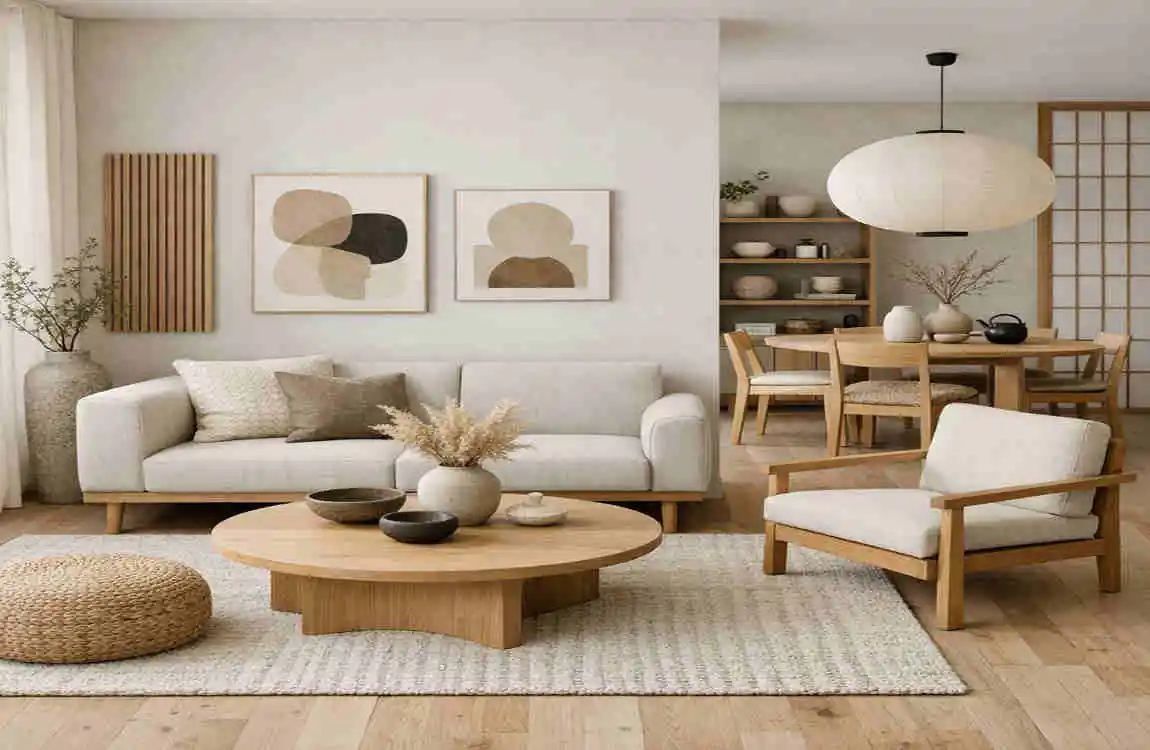
Styling is where the Japandi look comes together. Even small choices can shape the entire feel of the room.
Best Japandi colors
Japandi colour choices are soft and calming. The best shades usually include:
- Warm whites
- Cream
- Beige
- Taupe
- Soft gray
- Earthy brown
- Muted green
- Natural wood tones
These colours help the room feel balanced and gentle. They also work well with natural materials.
Best furniture choices
The best furniture for Japandi style is simple, durable, and functional. It should look good but also work well every day.
Look for pieces that combine Scandinavian comfort with Japanese simplicity. That means soft shapes, clean lines, and materials that feel natural.
Décor and lighting
Japandi décor should be calm and intentional. A few strong pieces are better than many small ones.
Good décor choices include:
- Handmade ceramics
- Plants
- Woven textures
- Minimal artwork
- Soft lamps and warm lighting
You do not want the room to feel empty, but you do want it to feel open.
Japandi ElementBest ChoiceWhy It Works
Colours Warm neutrals and muted earth tones Creates calm and balance
Furniture Simple, durable, low-profile pieces Supports comfort and function
Materials Wood, linen, stone, bamboo, ceramics Adds warmth and texture
Décor Plants, handmade objects, minimal art Keeps the room personal but uncluttered
Lighting Soft, warm, understated fixtures Helps maintain a peaceful mood
Leave intentional space.
One of the most important styling rules in Japandi design is to leave room around your furniture and décor. Space is not wasted space here.
It helps the home feel quiet and balanced. It also gives each item more visual importance.
Avoid overdecorating
Too many accessories can weaken the Japandi effect. If every shelf, table, and wall is full, the room loses its sense of calm.
Instead, choose a few meaningful pieces and let them stand out.
Benefits, Common Mistakes
Why choose modern Japandi interior design?
There are many reasons people love this style.
It creates a peaceful home.
The calm colours, simple forms, and natural materials all work together to make the space feel restful.
It works in small and large spaces.
Japandi is flexible. It can make a small room feel larger and help a big room feel more focused.
It has a timeless look.
Because it avoids trends that feel too loud or too temporary, Japandi usually stays attractive for a long time.
It supports practical living.
The style is not just beautiful. It is also useful. It makes it easier to keep your home organised and functional.
It can feel more sustainable.
Japandi often encourages better quality, fewer purchases, and more natural materials. That can support a more thoughtful way of decorating.
Common Japandi design mistakes
Even a simple style can go wrong if you overdo it. Watch out for these mistakes:
- Using too many decorative items
- Making the room completely white and cold
- Mixing too many furniture styles
- Ignoring texture
- Choosing pieces that are too trendy
- Filling the room with clutter
A Japandi room should feel calm, not empty or cold.
FAQ
What is modern Japandi interior design?
It is a style that blends Japanese minimalism with Scandinavian functionality. The result is a calm, warm, and practical home design.
What colours are best for Japandi interiors?
Warm neutrals, soft greys, cream, beige, taupe, natural wood tones, and muted greens work especially well.
What materials are commonly used in Japandi design?
Wood, bamboo, stone, linen, cotton, ceramics, and other natural textures are common in Japandi spaces.
Is Japandi style suitable for small homes?
Yes, it works very well in small homes because it keeps spaces open, clean, and uncluttered.
How is Japandi different from minimalist interior design?
Minimalist design often focuses mainly on reducing items. Japandi also values simplicity, but it adds warmth, texture, and comfort.
Can modern furniture work with Japandi design?
Yes. The key is choosing modern pieces with clean lines, natural materials, and a calm, simple feel.
How can I make my home more Japandi without remodelling?
Start with small changes like neutral colours, natural fabrics, simple furniture, wood accents, and less clutter.
| Design Element | Simple Japandi Idea |
|---|---|
| Color Palette | Use beige, cream, white, taupe, and soft earthy tones. |
| Furniture | Choose simple, low-profile furniture with clean lines. |
| Materials | Combine natural wood, bamboo, linen, cotton, and stone. |
| Lighting | Add warm, soft lighting with minimalist lamps and pendants. |
| Decor | Keep accessories minimal and choose meaningful handmade pieces. |
| Plants | Add a few green plants to bring a natural, calming feel. |
| Overall Style | Balance Japanese simplicity with Scandinavian comfort and warmth. |
