
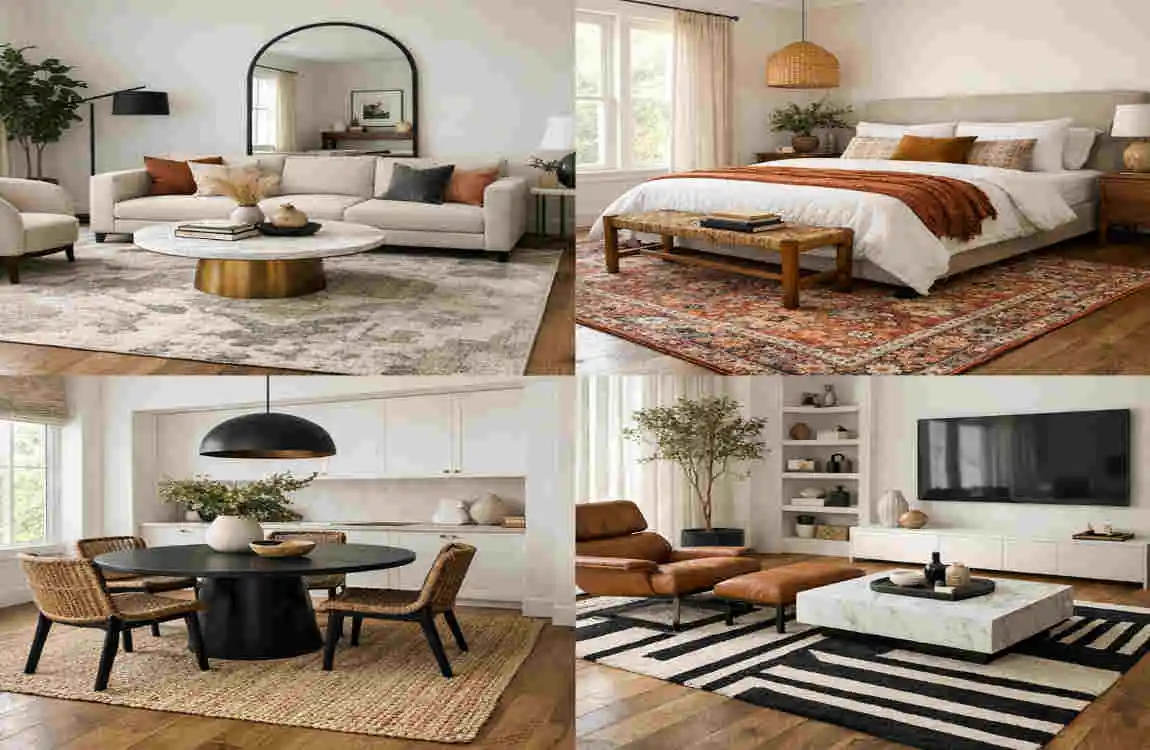
When you learn how to use rugs in interior design, you quickly see that a rug can do much more than cover the floor. It can add warmth, comfort, texture, colour, and personality to almost any room.
A rug is also a simple way to define space without changing walls or doing a big renovation. With the right rug, a room can feel more organized, balanced, and finished.
Choose the Right Rug Size for Your Room
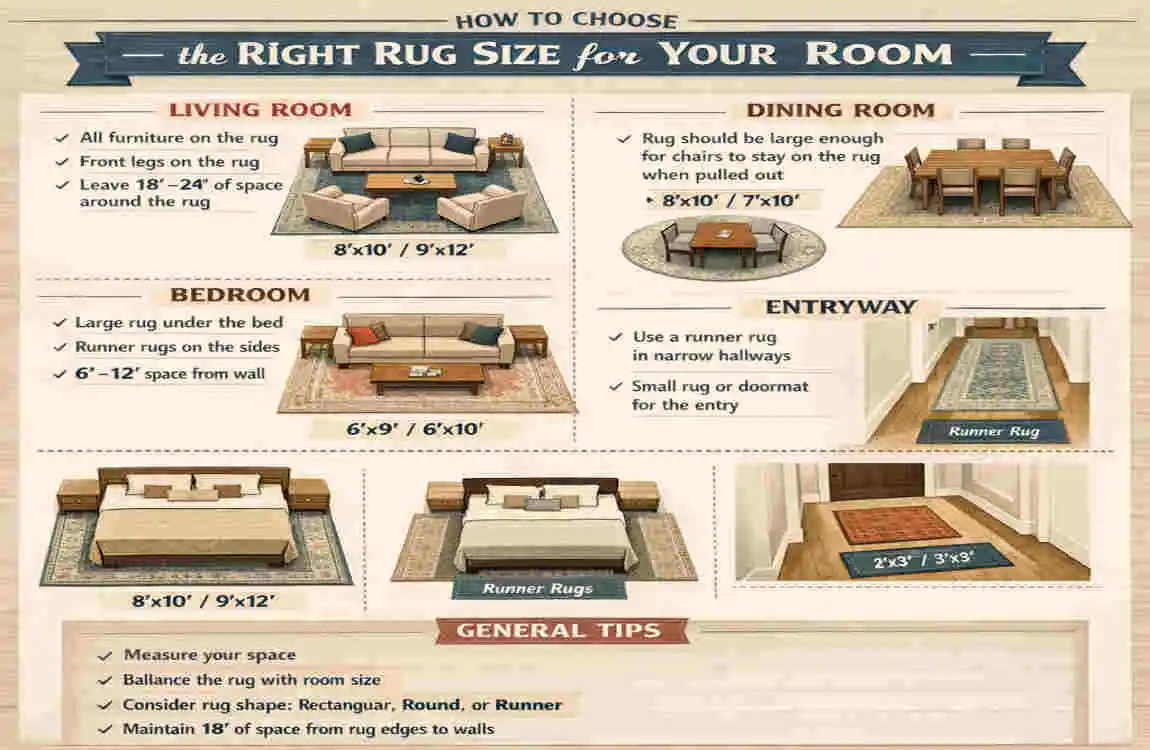
Measure the Space Before Buying
Size is one of the most important parts of rug placement. A rug that is too small can make a room feel awkward, while one that is too large may overwhelm the space.
Before buying, measure the room and think about how much floor you want to show around the rug. This helps create a clean and balanced look.
Select a Rug Based on Furniture Placement
Different rooms need different rug placements. A living room rug should usually connect the main seating area. In a bedroom, the rug should feel soft and comfortable when you step out of bed.
For a dining room, the rug must be large enough for chairs to stay on it even when pulled out. In entryways and hallways, runners often work best because they guide the eye and protect the floor.
Avoid Common Size Mistakes
One common mistake is choosing a rug that is too small. This often makes furniture look like it is floating around the room.
Another mistake is using a rug that covers too much floor in a small room. The goal is to make the room feel balanced, not crowded.
Simple Rug Size Tips
- Let the rug connect the furniture group
- Keep proportions in mind
- Do not force one standard size into every room
- Make sure the rug supports the room’s layout
Use Rugs to Define Different Living Spaces
Create a Cozy Living Room
In the living room, a rug helps bring the seating area together. Place it under the main furniture group so the sofa and chairs feel visually connected.
A larger rug often makes the room feel more complete. It also helps an open space feel warmer and less empty.
Define Open-Plan Areas
Open-plan homes often need help separating different zones. Rugs can act like soft boundaries between the living area, dining area, and sitting space.
This works especially well when you want each area to feel distinct without using walls or dividers. A rug can quietly guide the eye and shape the room.
Make Small Rooms Feel More Organized
In small rooms, the right rug can make everything feel neater. Choose a rug that fits the space properly and avoid heavy designs that make the room feel crowded.
Simple patterns and lighter colours can also help the room feel more open and airy. That is a smart trick for making the space look bigger than it is.
Match Rug Colours and Patterns With Your Interior Style
Choose Colours That Complement the Room
A rug should work with the room’s walls, furniture, curtains, and accessories. When the colours relate to one another, the space feels calm and intentional.
Neutral rugs are highly versatile because they blend with many styles. Bold rugs, on the other hand, can become a focal point and add energy to the room.
Add Personality With Patterns
Patterns can bring life into a plain room. Geometric rugs often suit modern interiors, while floral patterns can feel more traditional.
If you like a clean look, choose a minimal pattern. If you want more character, vintage-inspired designs can add charm and depth.
Balance Bold Rugs With Simple Décor
A statement rug should stand out, but it should not fight with everything else in the room. If the rug is bold, keep the furniture and accessories simpler.
This balance helps the rug shine without making the space feel busy. It is one of the easiest ways to make a room look well-designed.
Use Rugs in Different Rooms
Living Room
The living room is one of the best places to use a rug. It often sits under the coffee table and near the main seating area, helping everything feel connected.
You can also layer rugs here for a more styled look. This works well if you want depth and personality without changing the whole room.
Bedroom
A bedroom rug should feel soft and welcoming. You can place it under the bed or use smaller rugs on each side.
This adds warmth and makes the room feel more comfortable, especially in the morning when your feet touch the floor.
Dining Room
In the dining room, rug size matters even more. The rug should be large enough so chairs stay on it even when pulled out from the table.
It is also smart to choose a material that is easy to clean. Dining areas can handle spills, crumbs, and everyday messes.
Entryway and Hallway
Entryways and hallways benefit from runners and durable rugs. These areas usually get heavy foot traffic, so the rug should be durable and practical.
A well-chosen runner also creates a welcoming first impression when guests enter your home.
Home Office
A rug can help define a home office, especially in an open room or shared space. It gives the work area a clear visual boundary.
Choose a low-maintenance material that feels comfortable but is still easy to care for. That keeps the space functional and neat.
Select the Right Rug Material and Maintenance Style
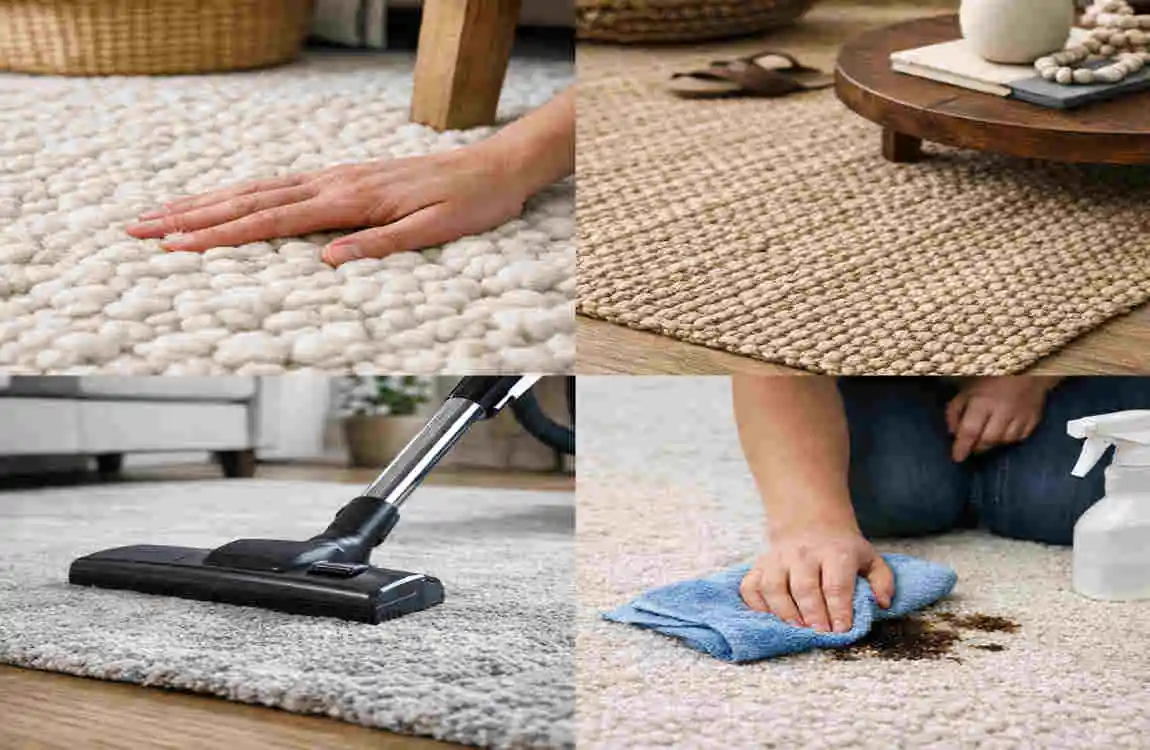
Popular Rug Materials
Different materials work better for different needs. Here is a simple table to compare them:
Rug MaterialBest ForMain Benefit
Wool Living rooms, bedrooms Soft, durable, warm
Cotton Casual spaces Lightweight and easy to move
Synthetic fibres Busy homes Affordable and easy to clean
Natural fibres Relaxed interiors Textured, natural look
Washable materials Family rooms, kitchens Simple cleaning and convenience
Choose Materials Based on Lifestyle
If you have children or pets, choose a rug that can handle spills and heavy use. Synthetic or washable rugs are often a practical choice.
For low-traffic rooms, you may prefer something softer or more decorative. The key is to match the material to the room’s real needs.
Keep Rugs Looking Their Best
Good rug care does not need to be complicated. A few simple habits can help a rug last longer and stay attractive.
- Vacuum regularly
- Clean spills quickly
- Rotate the rug when needed
- Use professional cleaning if necessary
- Place a rug pad underneath for protection
A rug pad also helps keep the rug in place, which adds safety and comfort.
Stylish Rug Ideas and Common Mistakes to Avoid
Try Layering Rugs
Layering rugs can add texture and depth to a room. A larger neutral rug underneath a smaller decorative rug often creates a stylish, finished look.
This idea works especially well in living rooms and bedrooms. It is a simple way to make a room feel more personal.
Use Round Rugs for Visual Interest
Round rugs can soften a room with many straight lines. They work nicely in seating areas, bedrooms, and entry spaces.
If you want a room to feel less formal, a round rug can help. It adds movement and draws attention gently.
Mix Different Textures
Texture matters as much as colour. A rug can help warm up a room with wood, tile, stone, or even plain carpet.
This is especially useful in modern or minimalist spaces. The rug adds comfort and keeps the room from feeling too cold or flat.
Avoid These Common Rug Mistakes
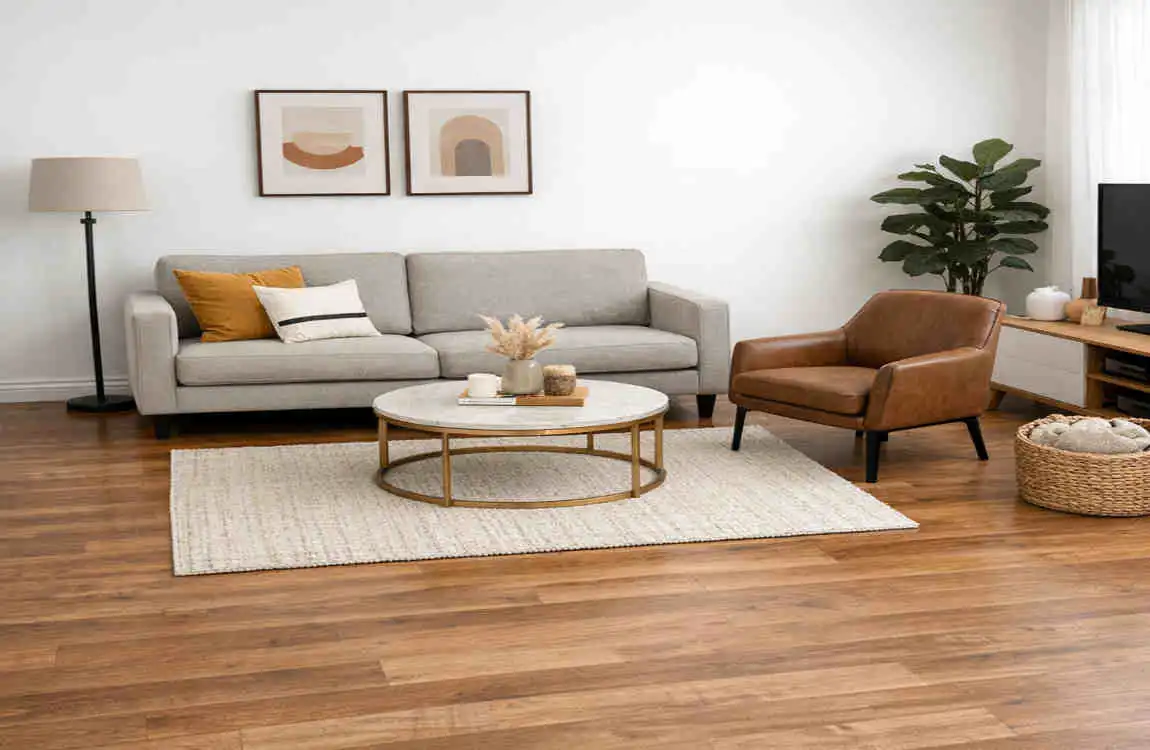
Some rug mistakes are easy to make but also easy to avoid:
- Choosing a rug that is too small
- Ignoring the furniture layout
- Using too many competing patterns
- Forgetting a rug pad
- Picking the wrong material for the room
- Choosing style over daily practicality
If you keep both looks and function in mind, your rug will work better and last longer.
FAQ: How to Use Rugs in Interior Design
How do you use rugs in interior design?
Rugs help define space, connect furniture, add texture and colour, and make rooms feel more comfortable and complete.
Should a rug go under the sofa?
In many cases, yes. At least the front legs of the sofa and chairs should sit on the rug to help the room feel connected.
What size rug is best for a living room?
The best size depends on the room and furniture layout. A rug should support the seating area rather than sit too far away from it.
Should a bedroom rug go under the bed?
Yes, that is a popular choice. You can use a large rug under the bed or smaller runners on each side.
Can you layer rugs in the same room?
Yes, layering can look beautiful when the sizes, colours, and textures work together.
What rug colour makes a room look bigger?
Lighter and neutral colours often help a room feel more open. Still, lighting and layout also matter a lot.
How often should interior rugs be cleaned?
It depends on traffic, material, pets, and room type. Busy rooms usually need more frequent cleaning than low-use spaces.
| Rug Idea | How to Use It | Best For |
|---|---|---|
| Large Area Rug | Place under the main furniture to define the space. | Living rooms |
| Layered Rugs | Combine different textures or patterns for a cozy look. | Bedrooms & lounges |
| Round Rug | Use beneath a round table or seating area to soften the room. | Dining rooms |
| Patterned Rug | Add bold patterns to create a stylish focal point. | Modern interiors |
| Neutral Rug | Choose beige, cream, or gray for a calm and timeless feel. | Minimalist homes |
| Runner Rug | Place along narrow spaces to add warmth and visual interest. | Hallways & kitchens |
