
If you are planning to redesign your home, one of the first questions you may ask is how much an interior design costs in the UK. The honest answer is that there is no single price. Interior design costs can vary widely depending on the size of the space, the amount of work involved, the designer’s experience, your location, and the materials you choose.
That is why one home may only need a small budget for a simple room refresh, while another may need a much larger budget for a full-house redesign. A kitchen, for example, usually costs more to design than a bedroom because it involves more planning, more fittings, and often more installation work.
How Much Does Interior Design Cost in the UK?
Average Interior Design Costs
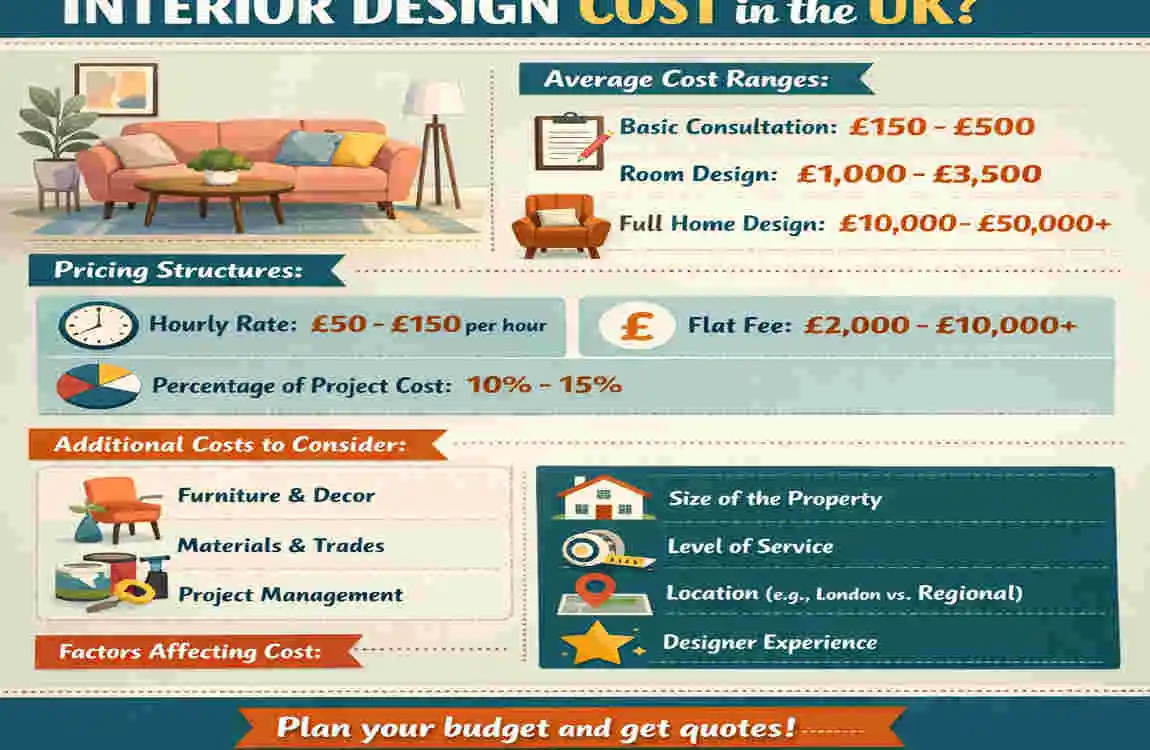
Interior design prices in the UK can vary widely, but there are a few common pricing patterns. Some designers charge by the hour, some charge a fixed fee, and others charge a percentage of the total project budget.
For small projects, you might pay a few hundred pounds for advice and planning. For larger projects, the cost can rise into the thousands, especially if the designer is handling full project management.
In larger cities, especially London, rates are often higher. That does not always mean better quality, but it does reflect higher business costs, stronger demand, and more premium service options.
Interior Designer vs. Interior Decorator
It helps to understand the difference between an interior designer and an interior decorator.
An interior designer usually helps with planning the space. They may work on layouts, lighting, material choices, storage, and sometimes even structural changes. An interior decorator usually focuses on the look and feel of a room, including colors, furniture, fabrics, and accessories.
This difference matters because the professional you choose will affect the final cost. If you only need styling help, a decorator may be enough. If you want a full redesign, an interior designer may be the better choice.
What Is Usually Included?
Interior design services often include several parts. The more of these a designer handles, the higher the cost may be.
Common inclusions are:
- Initial consultation
- Design concepts
- Floor plans and layouts
- Color and material selection
- Furniture recommendations
- Project management
Some designers include only planning. Others handle sourcing, supplier communication, and contractor coordination too. Always check what is included before you agree to work together.
Interior Design Costs by Room
Living Room
The living room is often one of the first places people want to improve. It is a high-use space, so it needs to be both attractive and practical.
Living room design may include furniture choices, lighting, flooring, curtains, storage, and decorative details. If you are starting from scratch, the cost can rise quickly because sofas, tables, rugs, and lighting all add up.
A simple room refresh may be more affordable, while a full redesign with custom pieces will cost more. If your living room is large or open-plan, the design fee may also be higher because the space needs more planning.
Bedroom
Bedroom design costs can vary depending on whether you are updating a small guest room or a large main suite.
A bedroom project may include wardrobes, bedside furniture, lighting, curtains, and flooring. If you want built-in storage or custom joinery, the price will usually increase.
The good news is that bedrooms can often be redesigned in stages. You can start with the layout and main furniture, then add accessories later if your budget is tight.
Kitchen
Kitchen design usually costs more than many other rooms. That is because kitchens involve more than decoration. They need careful planning for storage, plumbing, appliances, lighting, and workflow.
A kitchen designer may help with cabinet layout, worktops, appliance placement, and finish choices. If you are changing the structure or moving services such as plumbing and electrical, the cost will increase further.
Because kitchens are used every day, it is worth investing in good planning. A well-designed kitchen can save time, improve storage, and reduce installation errors.
Bathroom
Bathroom design also tends to be more expensive than simple decorating. Even a small bathroom requires thoughtful planning for tiles, fixtures, storage, waterproofing, and labor.
Design costs may include choosing the suite, planning the layout, selecting tiles, and arranging storage. If the bathroom needs plumbing changes, the budget will rise again.
Bathrooms are small but detail-heavy. That means the design work can be more involved than it first appears.
Whole-House Interior Design
If you are designing several rooms at once, the total cost is usually higher, but you may also get better value per room.
This is because the designer can create a consistent style across the home and often work more efficiently when the whole project is planned together. However, the final price will depend on the property’s size and how much of the home you want redesigned.
A whole-house project can also be easier to manage if you want a single look and feel throughout the property.
Simple room cost comparison
Room Type Typical Cost Level Main Cost Drivers
Living Room Medium Furniture, lighting, layout
Bedroom Low to Medium Storage, bedding, lighting
Kitchen High Cabinets, appliances, installation
Bathroom Medium to High Tiles, fixtures, plumbing
Whole House High Multiple rooms, project management
What Factors Affect Interior Design Costs in the UK?
Property Size and Number of Rooms
Bigger homes usually cost more to design. That is because larger spaces need more time, more planning, and often more furniture and materials.
If you have several rooms to design, the cost may rise even if each room is simple. More rooms usually mean more decisions and more coordination.
Designer Experience
A designer’s experience can strongly affect the price. Independent designers may charge less than large studios, while luxury designers may charge much more.
That does not always mean one is better than the other. It just means their services, style, and client base are different.
Location
Location matters a lot. Interior design in London often costs more than in smaller towns or less expensive regions.
This is usually due to higher business overheads, stronger demand, and access to more premium suppliers. If you live in a major city, expect fees and materials to reflect that.
Materials and Furniture
Your choice of materials can make a big difference. Budget-friendly finishes will keep costs lower, while premium fabrics, stone, custom joinery, and designer furniture will raise the price.
A good designer can help you mix affordable and higher-end pieces smartly. That often gives you a stylish result without overspending.
Structural Changes
If the project involves moving walls, changing layouts, or updating plumbing and electrics, the cost will increase.
These changes take more time, more workers, and more planning. They also require careful coordination, which can add to the design fee.
Project Management
Some designers only provide ideas and drawings. Others manage the full process, including suppliers, contractors, and scheduling.
Project management adds value, but it also adds cost. If you want the designer to stay involved through the build or installation stage, expect a higher fee.
Interior Designer Fees and Pricing Models
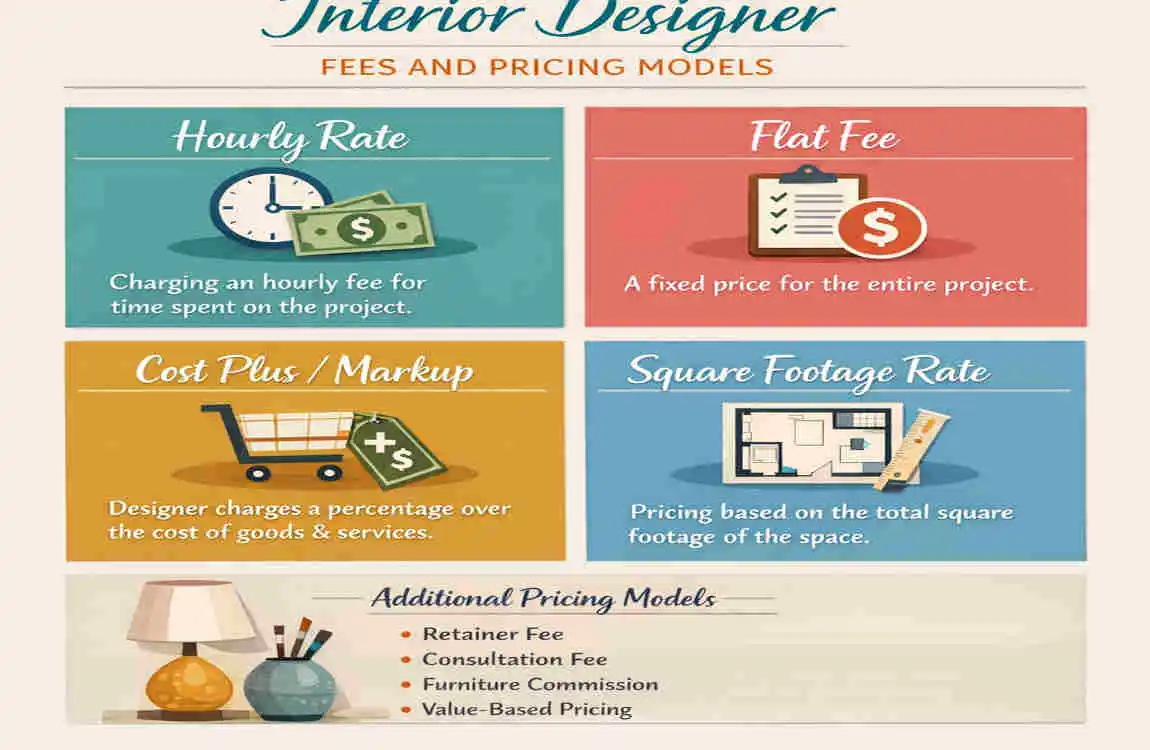
Hourly Rates
Hourly pricing is common for consultations or smaller jobs. It works well if you only need advice or help solving a specific problem.
This type of pricing gives you flexibility, but it can add up if the project becomes more complicated than expected. Make sure you know the hourly rate and how time is tracked.
Fixed Design Fees
Some designers charge a fixed fee for a clearly defined job. This is useful when the scope is clear, and both sides know what is included.
Fixed pricing can make budgeting easier because you know the design cost in advance. It is a good option if you want certainty.
Percentage-Based Fees
Some interior designers charge a percentage of the total project cost. This is more common for larger or full-service projects.
The fee increases as the budget increases, so it works best when the project scope is well understood from the beginning.
Package Pricing
Package pricing is common for single rooms or set services. For example, a designer may offer a room plan, a mood board, and shopping recommendations for one fixed price.
This can be useful if you want a clear, simple service without paying for a full custom project.
Additional Expenses
Do not forget the smaller extra costs. These may include:
- Travel
- Drawings and plans
- Procurement fees
- Contractor coordination
- Custom furniture
- Revisions
These costs can change the final total more than people expect. Always ask what is included and what is extra.
How to Budget for Interior Design in the UK
Set a Realistic Budget
Before hiring anyone, decide how much you can spend comfortably. Do not focus only on the design fee. You also need room for furniture, materials, labor, and unexpected changes.
A clear budget helps the designer make better choices for you. It also prevents disappointment later.
Prioritize Important Areas
If your budget is limited, focus on the rooms you use most. Kitchens, living rooms, and bathrooms often bring the biggest day-to-day value.
You can always improve less important spaces later. That makes the project feel more manageable.
Choose Materials Carefully
A smart mix of materials can keep costs down. You do not need premium finishes everywhere to create a beautiful home.
Many homeowners use a few higher-end pieces in the most visible spots and more affordable items elsewhere. That balance often works very well.
Get Multiple Quotes
Do not stop at the first designer you speak to. Ask for more than one quote so you can compare services fairly.
The cheapest option is not always the best one. You should compare what each designer offers, how they work, and whether their style fits your goals.
Keep a Contingency Fund
Always leave some extra money aside. Unplanned costs arise in most interior projects, especially at the start.
A contingency fund gives you breathing room if prices change or if something unexpected comes up.
Ways to Reduce Interior Design Costs
Start With a Clear Brief
A strong brief saves time and money. Tell the designer your style, budget, room list, and priorities from the start.
When the direction is clear, there are fewer revisions and fewer delays.
Reuse Existing Furniture
You do not need to replace everything. Good design can work with furniture you already own.
If a sofa, table, or cabinet still works well, keep it. That can lower your spending and make the room feel more personal.
Consider One Room at a Time
If your budget is tight, do not try to do everything at once. Start with one room and move slowly.
This spreads the cost over time and helps you make better decisions room by room.
Compare Materials and Suppliers
A designer may suggest several material options. Ask about alternatives so you can choose what best fits your budget.
Sometimes a less expensive option looks almost the same but costs much less.
DIY Small Decorative Projects
You can save money by handling some smaller tasks yourself. Painting, styling shelves, hanging artwork, or adding accessories may not require a professional.
Just be honest about your skill level. DIY can help, but only if the result still looks neat.
Avoid Unnecessary Structural Changes
Keeping your existing layout can save a lot of money. Moving walls, plumbing, or electrics usually pushes the budget up fast.
If the current layout already works well, it may be better to improve the look rather than rebuild the space.
Is Hiring an Interior Designer Worth the Cost?

Benefits of Professional Interior Design
A professional designer can save you time, reduce stress, and help you avoid expensive mistakes. They can also improve the flow, look, and function of your home.
Other benefits include:
- Better space planning
- Professional style guidance
- Access to suppliers
- Improved functionality
- Better project coordination
When You May Not Need a Designer
You may not need a designer if you only want a small refresh, already know exactly what you want, or are comfortable making simple decorating choices yourself.
For basic styling jobs, DIY can be enough.
How to Choose the Right Interior Designer
Before you hire anyone, check their portfolio. Look at previous projects and see whether their style home matches yours.
Also ask for a detailed quote, discuss the timeline, and confirm exactly what services are included. Most importantly, make sure they understand your budget and respect it.
FAQ: How Much Does Interior Design Cost in the UK?
How much does an interior designer cost in the UK?
Prices vary by fee model. Some designers charge hourly, others charge fixed fees, and some charge a percentage of the project budget.
How much does interior design cost for one room in the UK?
It depends on the room size, the amount of work needed, and whether you are buying new furniture or just refreshing the space.
Is interior design expensive in the UK?
It can be, especially for full-service projects. Simple decorating help is usually much more affordable than full design and project management.
Do interior designers charge by the hour in the UK?
Yes, many do. Hourly pricing is common for consultations and smaller projects.
Is it cheaper to hire an interior designer or decorate yourself?
DIY is usually cheaper upfront, but a designer can help you avoid mistakes and save time. The better choice depends on your needs and confidence level.
Does London interior design cost more?
Yes, often it does. Higher demand and higher business costs usually push fees up in London.
How can I reduce interior design costs?
Set a clear budget, reuse furniture, focus on key rooms, compare quotes, and avoid unnecessary structural work.
| Interior Design Service | Typical UK Cost | What It Includes |
|---|---|---|
| Initial Consultation | £50–£200 | Design advice and project discussion |
| Single Room Design | £500–£2,000+ | Layout, colors, furniture, and styling |
| Full Home Design | £2,000–£10,000+ | Design plan for multiple rooms |
| Hourly Designer Rate | £50–£150/hour | Professional design consultation |
| 3D Design & Visuals | £200–£1,000+ | Digital layouts and realistic visuals |
| Project Management | 10%–20% of project cost | Contractor coordination and supervision |
| Luxury Interior Design | £10,000+ | Bespoke designs, premium materials, and furnishings |
