
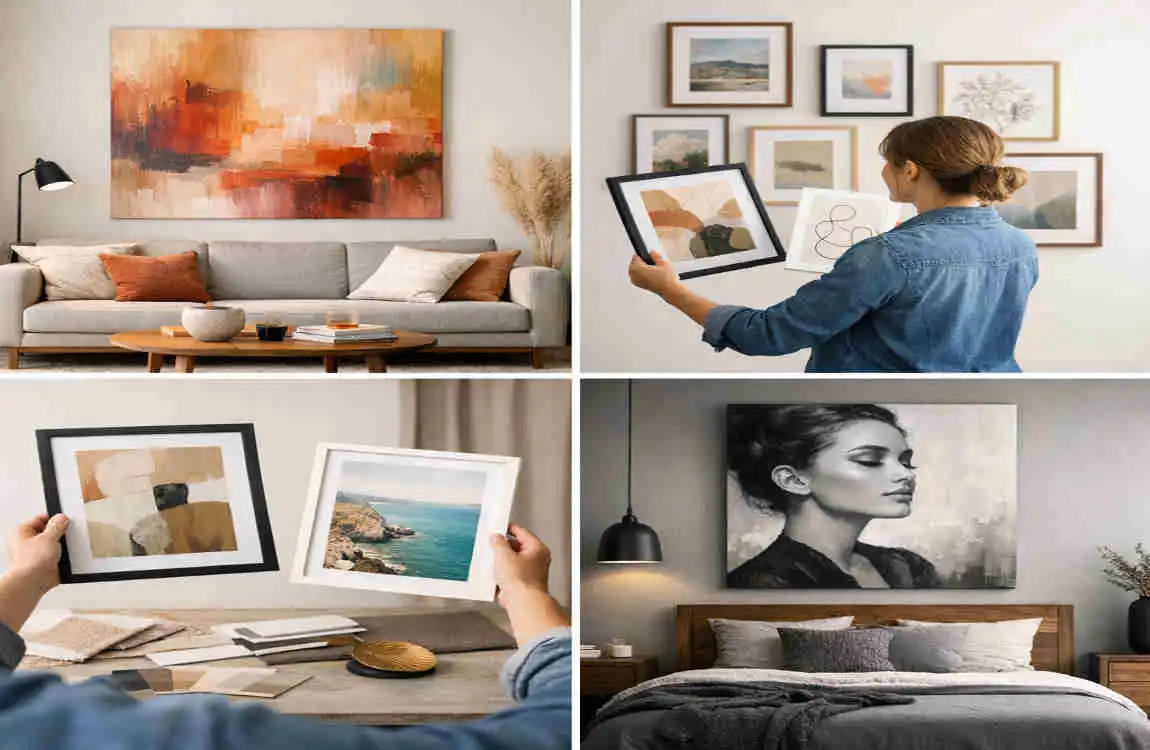
Art can change a room faster than almost anything else. It can make a plain wall feel warm, add colour to a quiet space, and give your home a stronger sense of personality. If you have ever looked at a room and felt that something was missing, art may be the answer.
Understand Your Interior Style Before Choosing Art
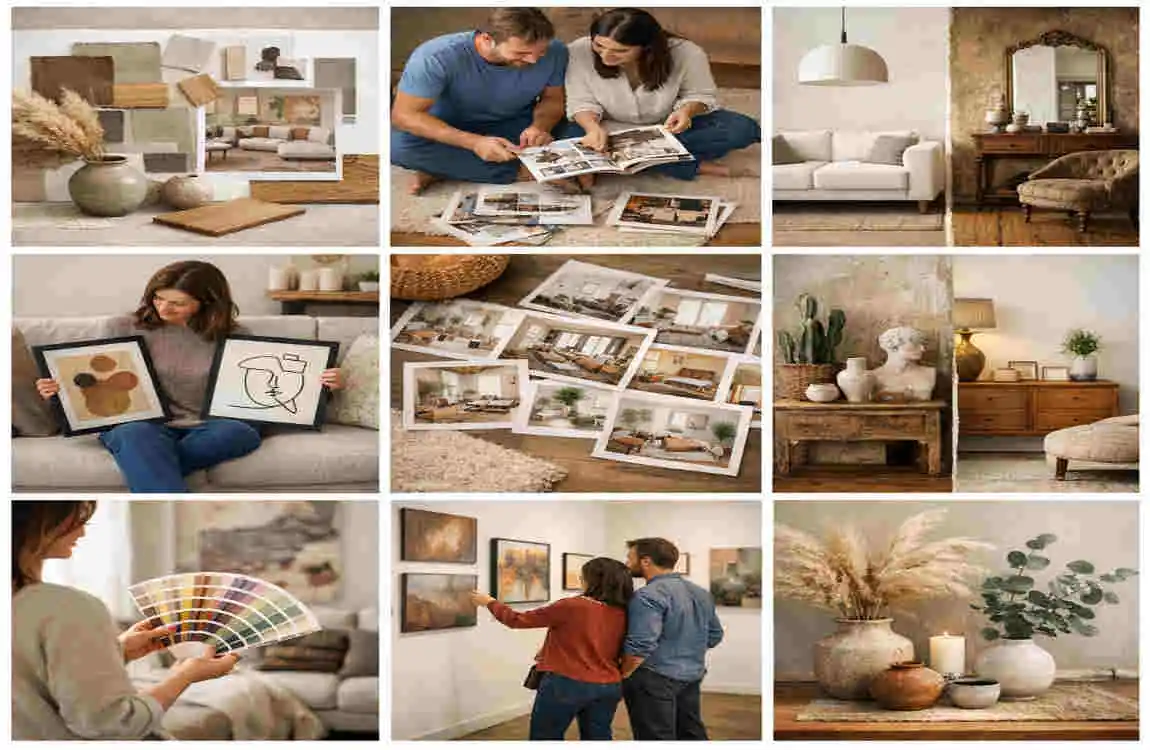
Identify Your Existing Design Style
Before you buy anything, take a careful look at your room. The artwork should support the space, not fight against it.
A few common styles include:
- Modern and contemporary interiors
- Minimalist spaces
- Traditional and classic rooms
- Farmhouse and rustic homes
- Bohemian or eclectic designs
A modern room may look best with clean lines and abstract art. A rustic space may feel more natural with landscapes or warm, textured pieces.
Match Art With the Room’s Personality
Think about the mood of the room. Is it calm, formal, playful, or relaxed? Art should match that feeling.
For example, a soft bedroom may call for gentle colours and peaceful imagery. A dining room might look better with something bold and expressive. The goal is harmony. You do not want the artwork to feel random unless you are intentionally creating contrast.
Consider Your Personal Taste
Your home should reflect your own style, not just current trends. If you connect with a piece, that connection will stay with you much longer than a trend.
So ask yourself a simple question: Do I really enjoy looking at this art? If the answer is yes, that matters a lot.
Choose the Right Art Size for Your Space
Measure the Wall
Size is one of the most common mistakes people make. A piece that is too small can disappear on a large wall. A piece that is too large can feel overwhelming.
Start by measuring the full wall area. Then look at the furniture below it, if there is any. Artwork should feel connected to the room, not floating awkwardly on a blank surface.
Large vs. Small Artwork
Large artworks work well when you want a strong focal point. It can anchor a living room or make a big wall feel complete. One oversized piece often has more impact than several tiny ones.
Smaller pieces work better in tighter areas, or when you want to create a gallery wall. A group of small pieces can look thoughtful and balanced if arranged well.
Follow Proportion and Balance
A simple rule is to keep the artwork proportional to the furniture and wall around it. Here is a quick guide:
Space Good Art Approach Why It Works
Living room above sofa: Large piece or grouped set. Fills the wall and feels balanced.
Bedroom above bed Wide horizontal art Matches the bed’s shape
Hallway Small series or narrow art Fits narrow wall space
Dining room Medium to large statement piece Adds focus without crowding
Good proportion makes the room feel calm and well planned.
Select Colours That Complement Your Interior
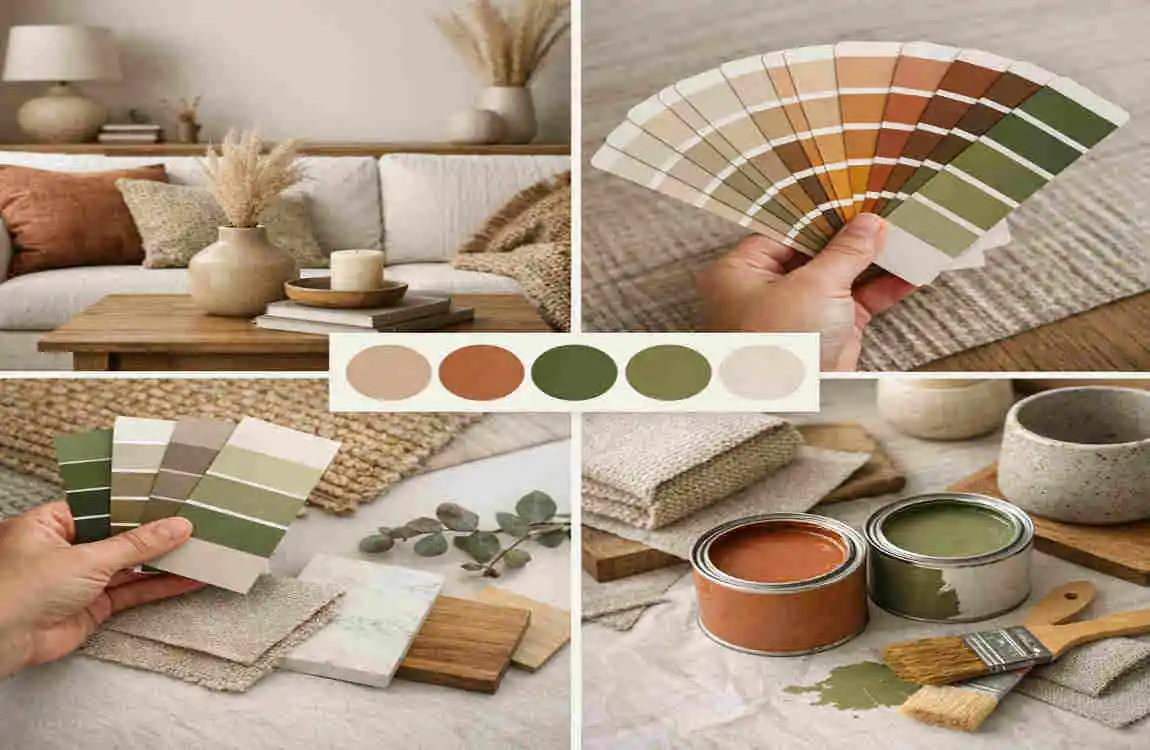
Match Existing Colors
One of the easiest ways to choose art is to repeat colours already in the room. Look at your pillows, rug, curtains, chairs, or lamps. If the artwork includes one or two of those colours, it will feel naturally connected.
This does not mean the art must look identical to the room. It only needs to relate to it.
Create Contrast
Sometimes contrast works even better. A bold artwork can stand out beautifully in a neutral room. A bright painting in a room filled with beige, white, or grey can become the main focus right away.
This is a smart option if you want the art to feel lively and eye-catching.
Don’t Match Everything Perfectly
Perfect matching can make a room feel flat or overly planned. Instead, aim for complementary colours. That means the art should fit the room while still having its own personality.
A little difference creates energy. Too much matching can remove character.
Choose the Right Type and Subject of Artwork
Paintings and Canvas Art
Paintings are a classic choice because they add colour, movement, and emotion. They also work in many different styles.
Popular choices include:
- Abstract paintings
- Landscapes
- Portraits
- Botanical artwork
Abstract pieces feel modern and flexible. Landscapes can bring a calming mood. Botanical art adds a soft, natural look.
Photography and Prints
Photography works well when you want something clean and visually clear. It can also bring a more personal or polished feel to a space.
Common options include:
- Black-and-white photography
- Architectural photography
- Nature prints
- Graphic or typography prints
Black-and-white images are especially useful in minimalist or modern interiors because they pair well with many colours.
Sculptures and Three-Dimensional Art
Not all art has to go on a wall. Sculptures and other three-dimensional pieces can add depth and texture.
They work well on:
- Shelves
- Consoles
- Entry tables
- Sideboards
- Large open surfaces
These pieces are helpful when you want the room to feel layered rather than flat.
Consider the Meaning of the Artwork
Art feels stronger when it has meaning. You may choose something that connects to your memories, family, culture, travels, or personal interests.
That kind of artwork often stays special for years. It does not depend on fashion. It means something to you, and that makes the room feel more personal.
Think About Placement, Framing, and Lighting
Where Should You Hang Artwork?
Placement can completely change the effect of the art. Even a beautiful piece can look wrong if it is hung in the wrong place.
Good spots include:
- Above sofas
- Above beds
- Dining room walls
- Entryways
- Staircases
- Empty hallway walls
Try to place art where people naturally look. That helps it feel like part of the room instead of an afterthought.
Choose the Right Frame
A frame should support the art and the room. It should not compete with either.
Here is a simple guide:
- Wooden frames work well in warm or natural interiors
- Metal frames suit modern rooms
- Simple frames fit minimalist spaces
- Decorative frames work in traditional rooms
The frame matters more than many people think. It helps the artwork feel finished.
Use Lighting to Highlight Art
Good lighting can make art look much better. Natural light is beautiful, but too much direct sun can damage some artwork over time.
You can also use:
- Picture lights
- Track lighting
- Soft wall lighting
The goal is to show the art clearly without creating glare or fading.
Common Art-Choosing Mistakes to Avoid
Mistakes to Watch For
Here are some of the most common problems people run into:
- Choosing art that is too small for a large wall
- Using too many competing colours
- Hanging art too high
- Ignoring the room’s existing style
- Buying art only because it is trendy
- Overcrowding the space with too many pieces
- Forgetting about framing and presentation
- Ignoring lighting conditions
Simple Tips for Better Results
A few simple habits can improve your results a lot:
- Measure before you buy
- Plan the wall layout first
- Leave enough space
- Look at the room from different angles
- Choose quality pieces that fit your budget
When you plan carefully, the final result looks more natural and polished.
How to Choose Art for Interiors on Different Budgets
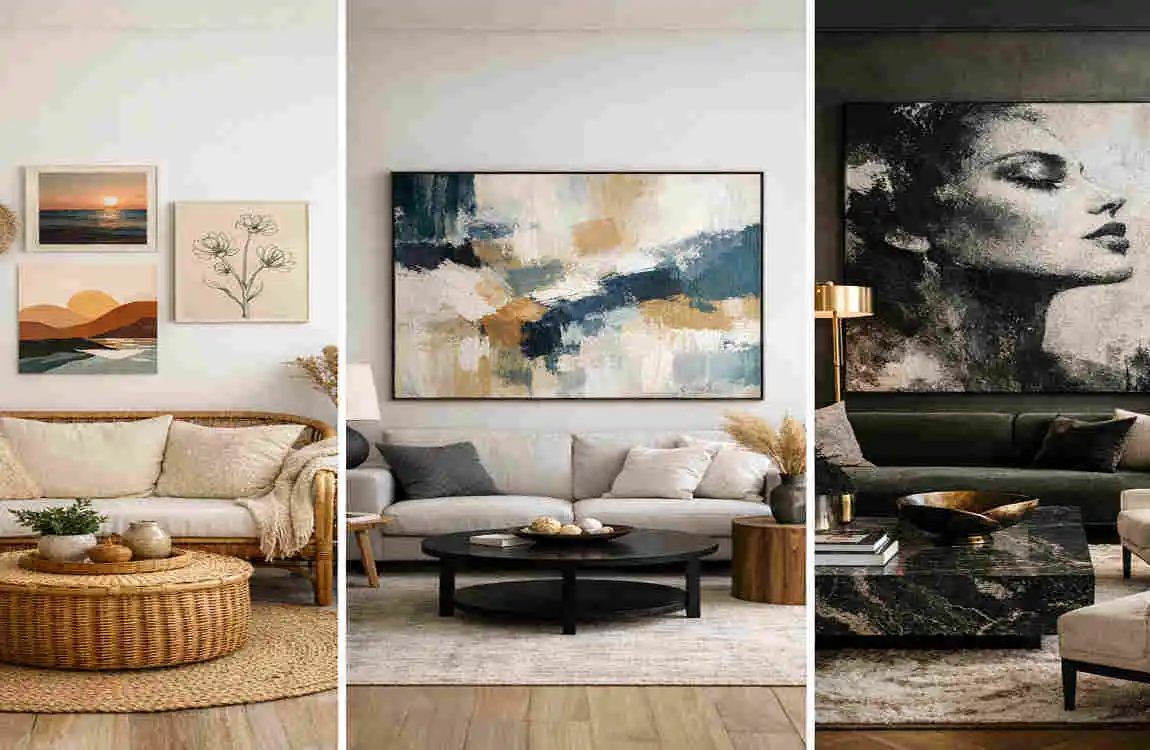
Affordable Art Ideas
You do not need to spend a lot to decorate well. Some good lower-cost options include:
- Prints
- Posters
- Local artwork
- DIY artwork
- Digital art prints
These can look beautiful when framed and placed thoughtfully.
Mid-Range Options
If you want something with more character, mid-range options often strike a good balance between quality and price.
Examples include:
- Limited-edition prints
- Handmade paintings
- Framed photography
- Artisan pieces
These often feel more special and unique than mass-produced decor.
Investing in Statement Pieces
Sometimes it makes sense to spend more on one strong piece. This is especially true if the artwork will be the room’s main focus.
An original piece may be worth the cost because of its craftsmanship, durability, and personal meaning. Price matters, but it should not be the only factor.
FAQ: How to Choose Art for Interiors
What is the easiest way to choose art for interiors?
Start with your style, wall space, preferred colours, and personal taste. Those four things give you a solid base.
How do I choose the right size artwork for a wall?
Measure the wall and the furniture below it. Then choose art that feels proportional rather than tiny or oversized.
Should artwork match my furniture?
It does not need to match exactly. Complementary colours and themes usually look more natural.
How high should artwork be hung?
Artwork should usually sit at a comfortable eye level, while still fitting well with the furniture beneath it.
What type of art works best in a minimalist home?
Simple abstract art, neutral photography, geometric designs, and clean prints usually work very well.
Can I mix different art styles in one room?
Yes. Mixing styles can look great if there is one shared element, such as colour, theme, or frame style.
How can I choose art for a small room?
Use a well-scaled piece and avoid crowding the walls. One strong artwork can often do more than several small ones.
| Factor | What to Consider | Quick Tip |
|---|---|---|
| Room Style | Match the artwork with your interior theme. | Choose modern art for contemporary spaces. |
| Color Palette | Look for colors that complement your furniture and walls. | Use artwork to add an accent color. |
| Size | Consider the wall and available space. | Large walls often need larger artwork or a gallery arrangement. |
| Placement | Hang art where it can be easily seen. | Keep artwork at a comfortable eye level. |
| Personal Taste | Select pieces that reflect your personality. | Choose art you will enjoy seeing every day. |
| Frame Style | Consider the frame’s material, color, and finish. | Keep frames consistent for a clean look. |
