
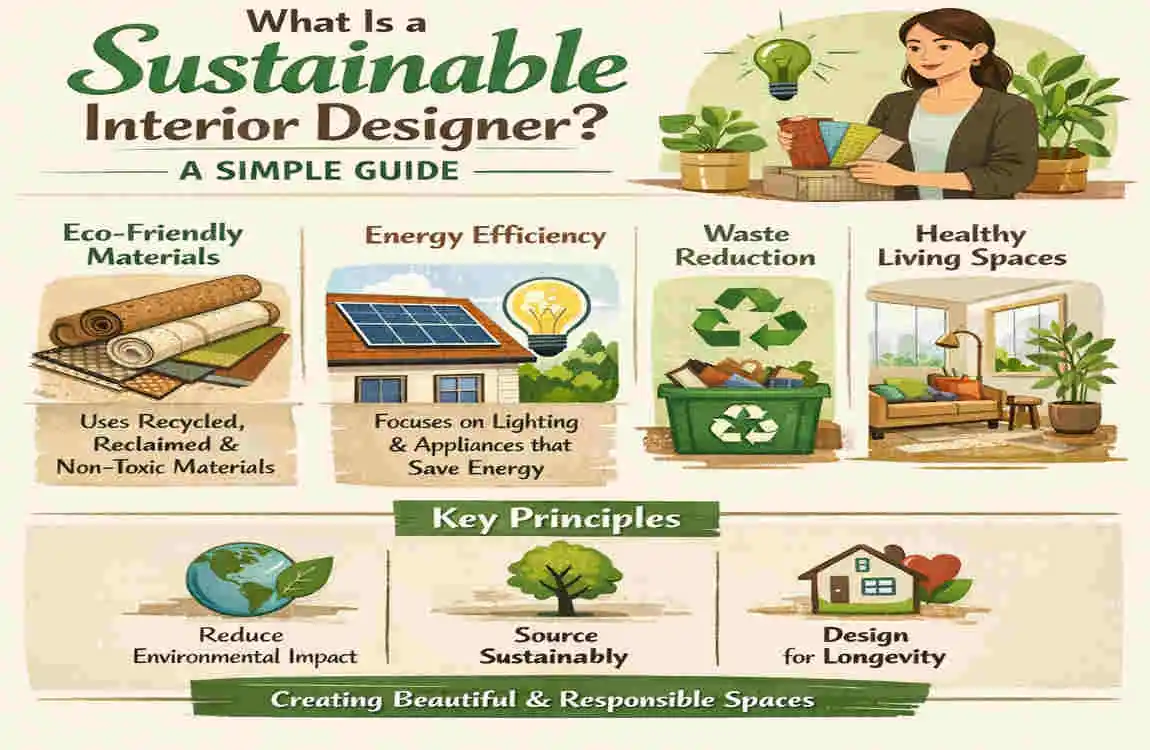
A sustainable interior designer creates spaces that look good, feel comfortable, and use fewer resources. In simple terms, this kind of designer helps you build or refresh a room in a way that is better for people and better for the planet.
If you have ever wondered what a sustainable interior designer is, think of a professional who pays attention to materials, energy use, waste, air quality, and long-term durability. They do not only focus on style. They also think about how a space will affect daily life and the environment over time.
This matters because the way we design a home can affect energy bills, indoor comfort, health, and how often things need to be replaced. A smart, sustainable design can still feel stylish, warm, and modern. It just does so with more care.
What Is a Sustainable Interior Designer?
Definition of a Sustainable Interior Designer
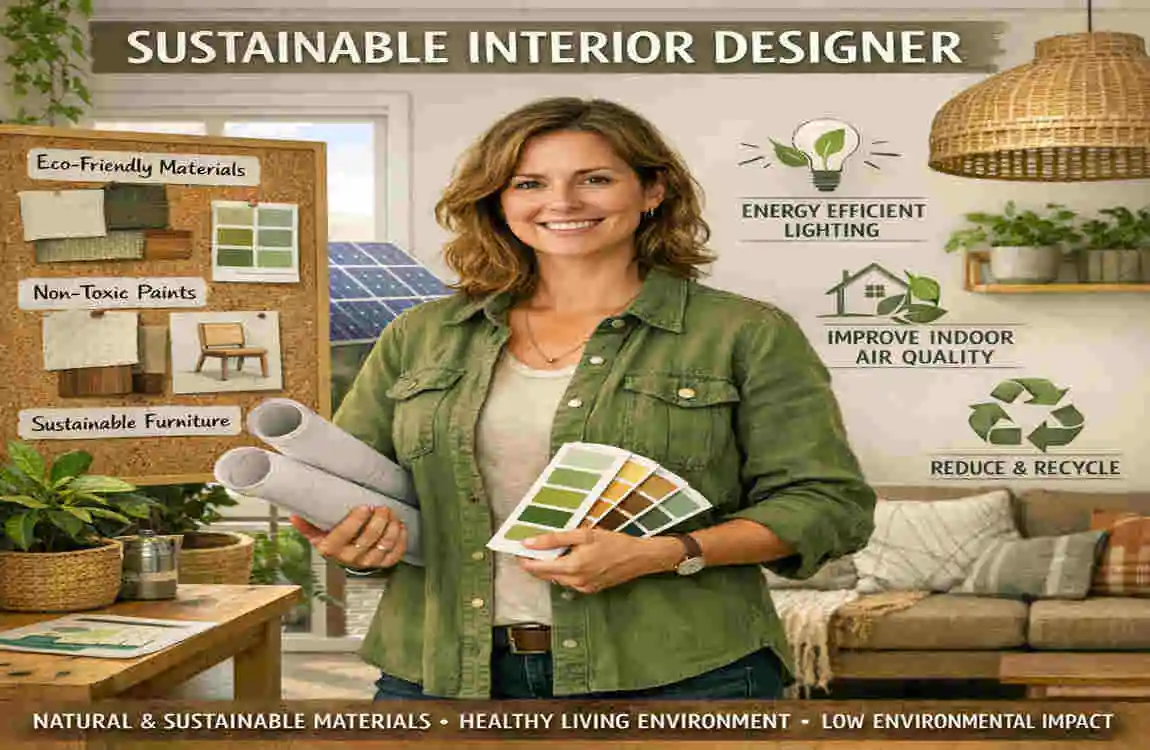
A sustainable interior designer plans interiors with environmental responsibility in mind. That means they choose materials, furniture, lighting, and layouts that reduce waste and support healthier living.
They may recommend recycled materials, low-emission paints, energy-saving lighting, and furniture that lasts longer. They also think carefully about how to make a room functional without using more than necessary.
How It Differs From Traditional Design
Traditional interior design often focuses mainly on style, comfort, and budget. A sustainable approach includes those things too, but it adds one more layer: long-term impact.
Instead of chasing short-lived trends, sustainable design focuses on choosing items that will age well and remain useful. That often means fewer replacements, less waste, and better value over time.
Main Goals of Sustainable Interior Design
The core goals are simple:
- Reduce waste
- Save energy and resources
- Use durable, responsibly sourced materials
- Improve indoor air quality
- Create a comfortable and functional space
These goals work together. When a room is designed well, it can be beautiful, practical, and easier to live in.
What Does a Sustainable Interior Designer Do?
Choosing Eco-Friendly Materials
One of the biggest jobs of a sustainable interior designer is choosing the right materials. This includes reclaimed wood, bamboo, cork, recycled glass, recycled metal, and natural stone.
Why does this matter? Because materials have a story. Some are made with a lot of energy and waste, while others come from recycled or renewable sources. The designer looks for better options that still fit the home’s style.
Reducing Waste
A sustainable designer tries to use what already exists whenever possible. They may restore old furniture, reuse cabinets, or upcycle pieces instead of throwing them away.
This is important during remodelling because renovations can create a lot of waste. A good designer helps reduce that waste by making thoughtful choices from the start.
Improving Energy Efficiency
Interior design can support lower energy use in many small but meaningful ways. A designer may suggest efficient lighting, better use of daylight, and layouts that help rooms feel brighter and more open.
They may also think about insulation, window coverings, and how furniture placement affects airflow and comfort. These details can make a home easier to live in and less costly to run.
Creating Healthier Indoor Spaces
A sustainable interior designer also cares about the air you breathe. That means using low-VOC paints, safer finishes, natural materials, and good ventilation.
This can make a big difference, especially in bedrooms, living rooms, and family spaces where people spend a lot of time. A healthier room often feels fresher and more comfortable too.
Benefits of Hiring a Sustainable Interior Designer
Lower Environmental Impact
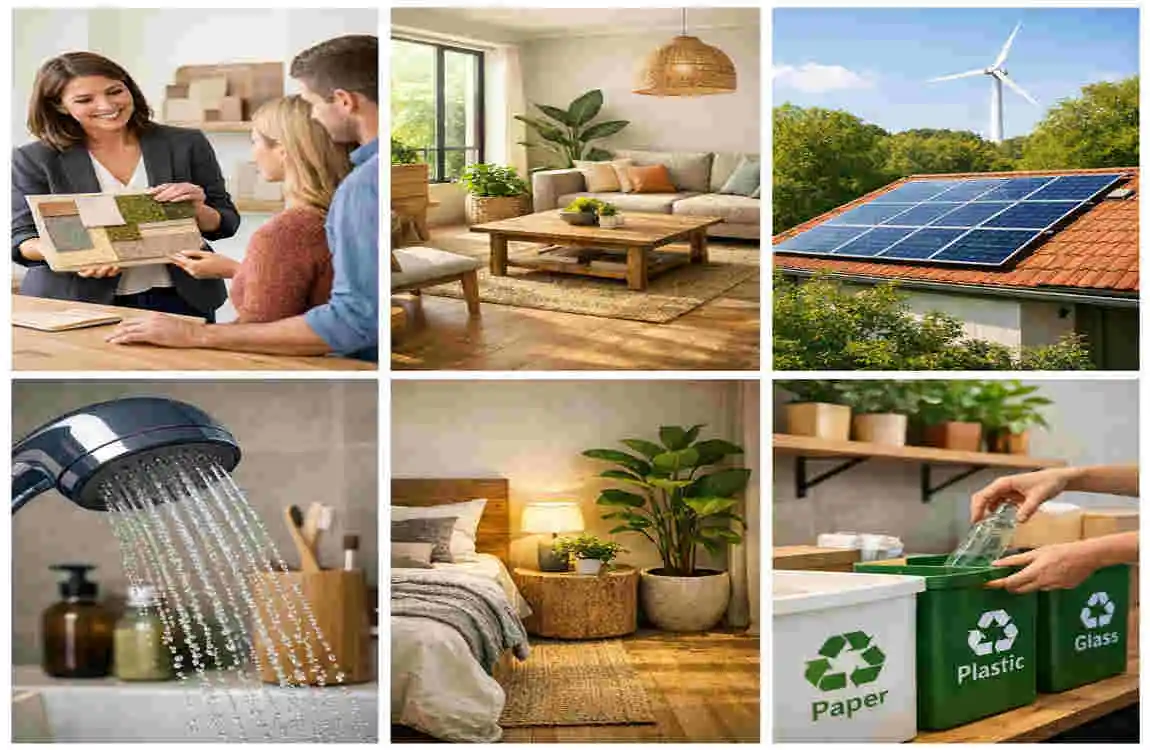
Sustainable design helps reduce waste and limit the use of new raw materials. That means fewer resources are used to create the final space.
Even small decisions, like choosing a long-lasting table or a recycled finish, can add up over time. You may not see the difference right away, but it matters.
Long-Term Cost Savings
At first, some sustainable products may seem more expensive. But durable materials and efficient lighting often last longer and require fewer replacements.
That can save money over time. A good design choice now may prevent repairs, replacements, or higher energy use later.
Better Indoor Air Quality
Many traditional materials can release chemicals into the air. Sustainable design often avoids that by choosing low-emission products and natural options.
This can help create a cleaner indoor environment. If you care about comfort and health, this is one of the strongest reasons to go sustainable.
Timeless and Durable Design
Sustainable design often focuses on quality instead of disposable trends. That means your home is more likely to feel relevant and useful for years to come.
A timeless space is easier to enjoy. You do not need to keep changing it every season to make it feel fresh.
Increased Home or Property Appeal
More buyers and renters now care about energy use, health, and quality materials. A sustainable interior can make a property more attractive to these people.
It can also help your space stand out by offering more than just style. It shows care, planning, and long-term thinking.
Sustainable Materials and Design Ideas
Popular Sustainable Interior Materials
Some of the most common sustainable materials include:
- Reclaimed wood
- Bamboo
- Cork
- Recycled glass
- Recycled metal
- Natural stone
- Organic or recycled textiles
These materials are popular because they combine function with lower environmental impact. They also bring texture and warmth into a space.
Sustainable Furniture
A sustainable interior designer looks for furniture that is durable, repairable, responsibly sourced, or secondhand. This avoids the cycle of buying cheap furniture that wears out quickly.
Quality furniture can last many years. That means less waste and better value. A solid chair or table often does more good than a trend-based piece that needs replacing soon.
Eco-Friendly Paint and Finishes
Paint and surface finishes can affect indoor air quality. Sustainable designers often choose low-VOC, water-based options because they emit fewer harmful fumes.
That creates a cleaner feel in the home, especially during and after a renovation. It is a simple change, but it can greatly improve comfort.
Natural Lighting and Ventilation
Good design should make the most of daylight. When natural light enters a room well, you may not need to use artificial lights as much during the day.
Ventilation matters too. Fresh air helps rooms feel better and supports a healthier indoor environment. A sustainable designer pays attention to both.
Reuse and Upcycling
Instead of replacing everything, a designer may restore what you already own. A worn dresser can be painted, a table refinished, and old shelves repurposed.
This approach saves money and reduces waste. It also gives your home a more personal feel.
How to Choose a Sustainable Interior Designer
Check Their Experience
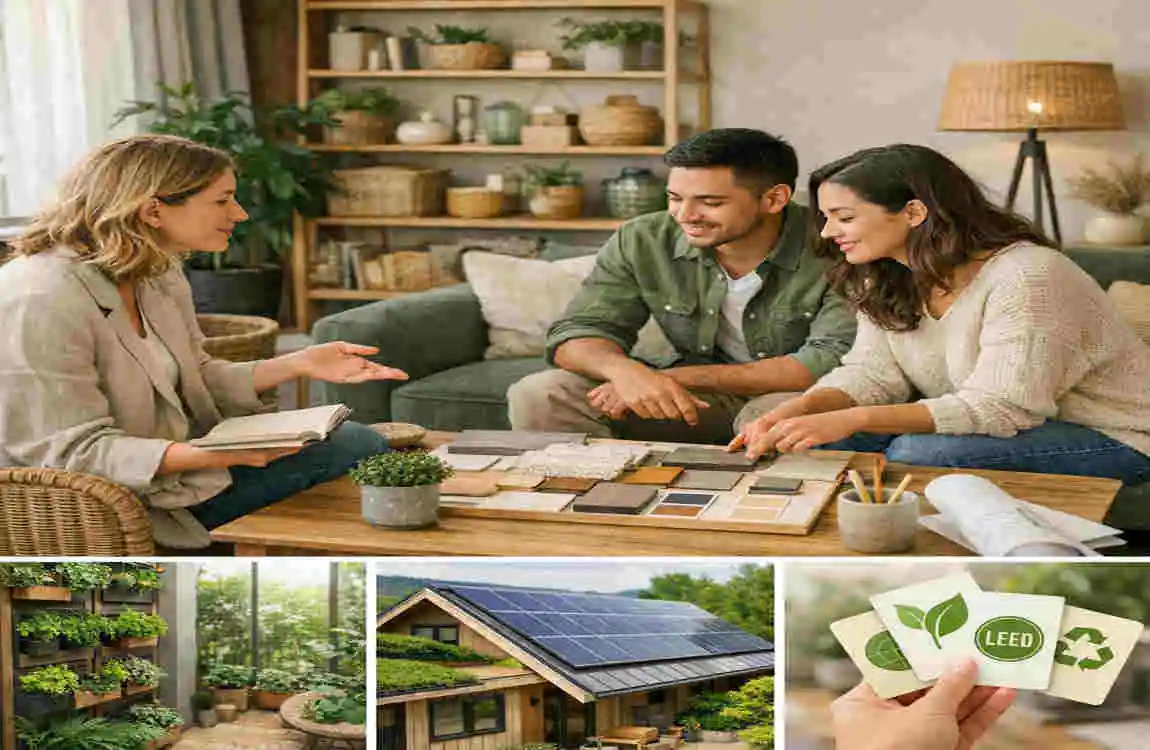
Look at their past work. Have they completed sustainable residential or commercial projects? Do they show a clear understanding of materials, energy use, and healthy design?
A strong portfolio tells you more than a promise. It shows how they actually work.
Ask About Materials
Ask where materials come from and how they are chosen. A good sustainable designer should be able to explain whether items are recycled, locally sourced, low-emission, or responsibly made.
If they only talk about style and not about sourcing, that may be a sign to look deeper.
Discuss Your Budget
Sustainable design does not always mean expensive design. Your budget may support simple but effective changes, like better lighting, reusable furniture, or safer paint.
A good designer will help you focus on the improvements that matter most. That way, you can make progress without overspending.
Ask About Certifications and Practices
Some designers have training or certifications related to green building or sustainable design. That can be helpful, but it is also good to ask practical questions.
You want someone who uses real sustainability habits, not just buzzwords. Their process should make sense to you.
Look for a Practical Approach
The best designer balances beauty, function, budget, and responsibility. They should understand your needs and offer realistic solutions.
A practical approach usually works better than one that is too idealistic or too expensive for daily life.
FAQ About Sustainable Interior Designers
What is a sustainable interior designer?
A sustainable interior designer creates attractive and functional spaces while considering environmental impact, resource use, waste, energy efficiency, material selection, and indoor health.
Is sustainable interior design expensive?
Not always. Reusing furniture, choosing durable products, and making smart lighting choices can keep costs reasonable.
What materials do sustainable interior designers use?
They often use reclaimed wood, bamboo, cork, recycled materials, natural materials, responsibly sourced products, and low-emission finishes.
Why is sustainable interior design important?
It helps reduce waste and energy use while creating spaces that are more durable, comfortable, and healthier to live in.
Can sustainable interior design work in a small home?
Yes. Small homes can benefit a lot from multifunctional furniture, natural light, efficient layouts, and less clutter.
How do I find a good sustainable interior designer?
Review their portfolio, ask about their materials and methods, discuss your budget, and choose someone whose approach aligns with your goals.
| Key Point | Simple Explanation |
|---|---|
| Sustainable Interior Designer | Creates beautiful spaces while reducing environmental impact. |
| Eco-Friendly Materials | Uses recycled, renewable, natural, and low-toxicity materials. |
| Energy Efficiency | Plans lighting, insulation, windows, and layouts to save energy. |
| Healthy Interiors | Chooses materials and finishes that support better indoor air quality. |
| Waste Reduction | Reuses, upcycles, and selects durable products to reduce waste. |
| Main Goal | Balance style, comfort, functionality, and environmental responsibility. |
