
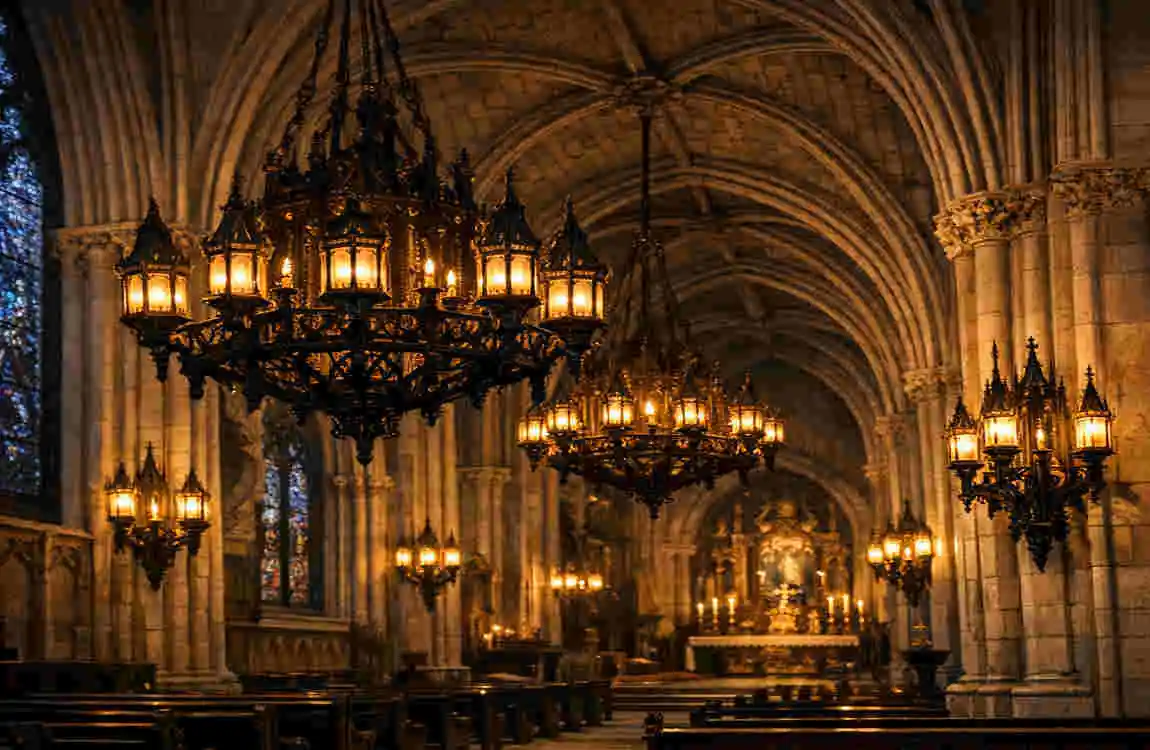
If you have ever looked at a cathedral, castle hall, or old stone home and felt drawn in by its mood, light was a big part of that feeling. Gothic spaces were never only about stone, arches, and tall windows. They were also shaped by the way light moved through them.
Were Gothic Interior Lights Used in Medieval Spaces?
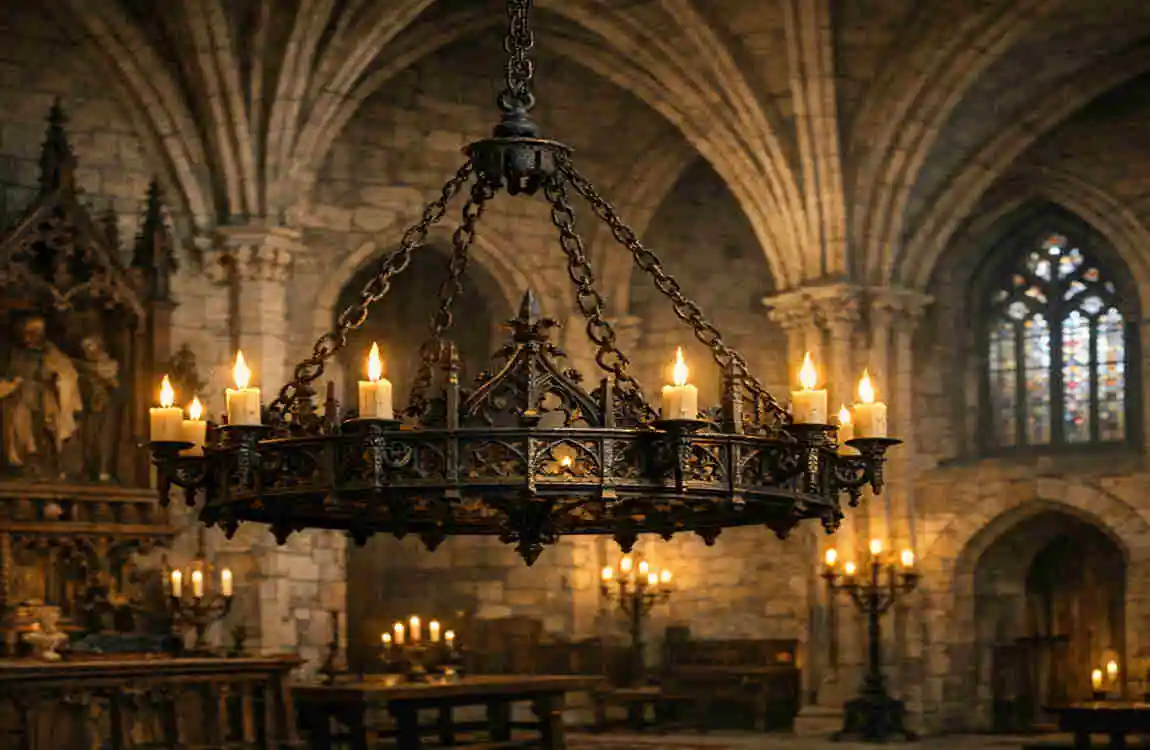
Natural light played a huge role.
Medieval builders also used windows to bring in natural light. In Gothic churches, stained-glass windows were especially important. They let in colour, not just brightness.
This meant that even daylight felt special. Sunlight passing through colored glass turned the interior into something rich and almost magical.
Limits of medieval lighting
The old lighting was weaker than modern lighting. Rooms could feel dim, especially at night or in winter. That darkness was not always a design choice, but it still influenced the Gothic atmosphere.
Because the light was limited, people paid more attention to shadows, textures, and glowing points of brightness.
Historic vs modern Gothic lighting
Historic Gothic lighting came from flame and daylight. Modern Gothic-style lighting uses electricity, LEDs, and replicas of old fixtures.
The past may inspire the look, but the function is very different. Today, you can enjoy the style without the smoke, soot, or fire risk.
How Gothic Lighting Changed Historic Architecture
Gothic churches and cathedrals
In churches, candlelight and natural light worked together. Tall windows, pointed arches, and stained glass guided the eye upward. This made the building feel larger and more sacred.
Light also helped reveal religious art, altars, and carved details. In the glow of candles, everything felt deeper and more meaningful.
Castles and great halls
Castles needed lighting that was both useful and dramatic. Fireplaces, wall sconces, and hanging fixtures often lighted large rooms.
These light sources did not just help people see. They made the hall feel like a place of power. The flicker of flame across stone walls created a strong, memorable mood.
Historic homes
In homes, lighting was usually simpler. Wealthier households could afford better candles, more lamps, or more decorative fixtures.
Even then, the goal was the same: create enough light for daily life while still keeping the rich, dramatic feeling that fit the Gothic style.
How architecture and light worked together
Gothic buildings were designed to work with light, not against it. Tall ceilings, deep shadows, and large windows all shaped how the room felt at different times of day.
That is why Gothic interior lighting is not just about fixtures. It is about how the entire space responds to light.
Key Features of Gothic Interior Light Design
Iron and wrought-metal fixtures
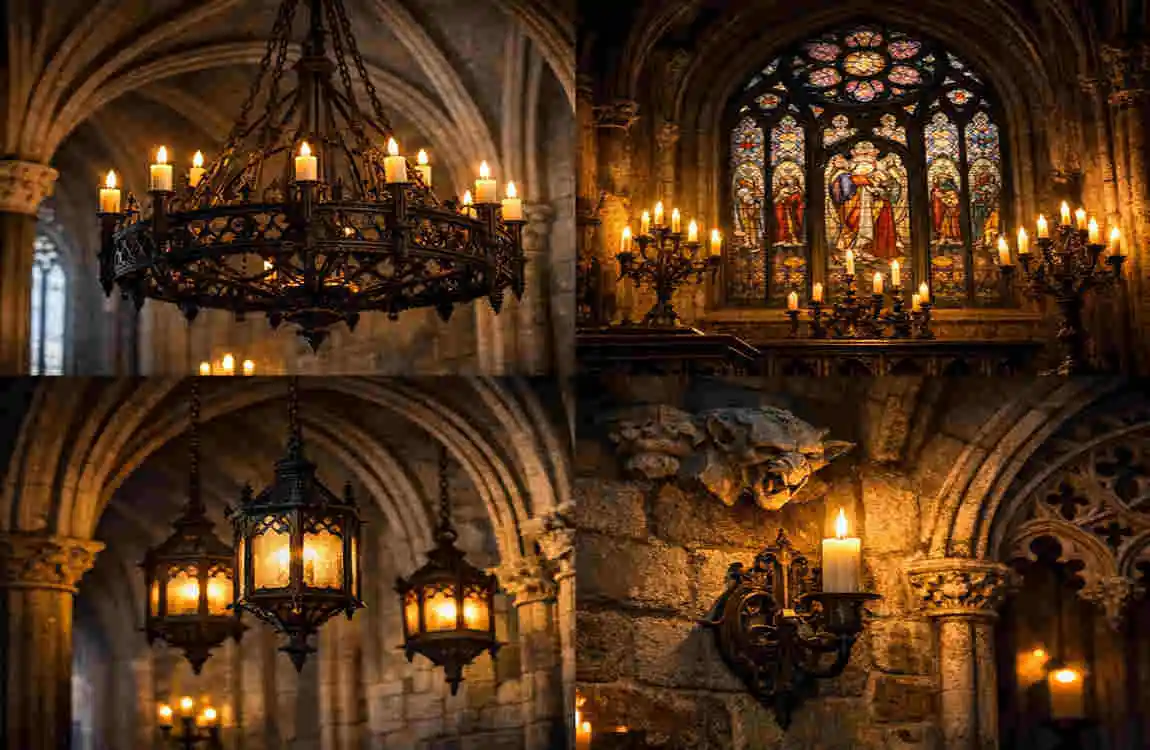
Metal was a major part of Gothic style. Iron and wrought metal gave fixtures a strong, handmade look that matched the heavy architecture around them.
These materials felt sturdy and old-world. They still do.
Candle holders and candelabras
Candles were central to the Gothic look. Large candle holders and candelabras added height, symmetry, and a sense of ceremony.
When several flames burned together, they created a warm, flickering effect that felt very different from modern white light.
Wall-mounted sconces
Sconces were useful because they saved space and helped spread light across the room. They also looked elegant when made with dark metal or ornate shapes.
Placed along stone walls, they helped create rhythm and balance.
Hanging chandeliers
Chandeliers became a strong visual feature in later Gothic-inspired spaces. Even when they were simple, they added drama by drawing the eye upward.
A hanging fixture made the room feel formal and important.
Dark finishes and dramatic shapes
Gothic design often featured dark finishes, pointed forms, and decorative details such as arches or quatrefoil patterns. These shapes helped the light fixture feel like part of the architecture.
The result was a look that felt bold, historic, and slightly mysterious.
Why Gothic Interior Lighting Felt Dramatic and Mysterious
Light and shadow worked together.
The real magic of Gothic lighting came from contrast. Light did not fill every corner. Instead, it highlighted some areas and left others dim.
That balance created depth. It made the room feel layered and alive.
Limited light made details stand out.
When a room is only partly lit, your eye notices texture more easily. Stone, wood, glass, and metal all become more interesting under soft lighting.
This is one reason Gothic interiors feel so powerful. The building itself seems to emerge from the darkness.
Candlelight felt human and spiritual.
Candlelight is gentle and moving. It never looks perfectly still. That quality made it feel emotional, sacred, and intimate in old spaces.
In churches, it supported prayer and reflection. In homes, it created comfort. In castles, it added atmosphere and status.
Gothic lighting shaped how people felt.
Lighting changes mood. Gothic interiors used that truth very well. They made people feel small in a grand space, but also connected to something greater.
That emotional effect is one reason Gothic design remains so admired today.
Gothic Interior Lights in Modern Historic-Style Design
Modern designers still borrow the look.
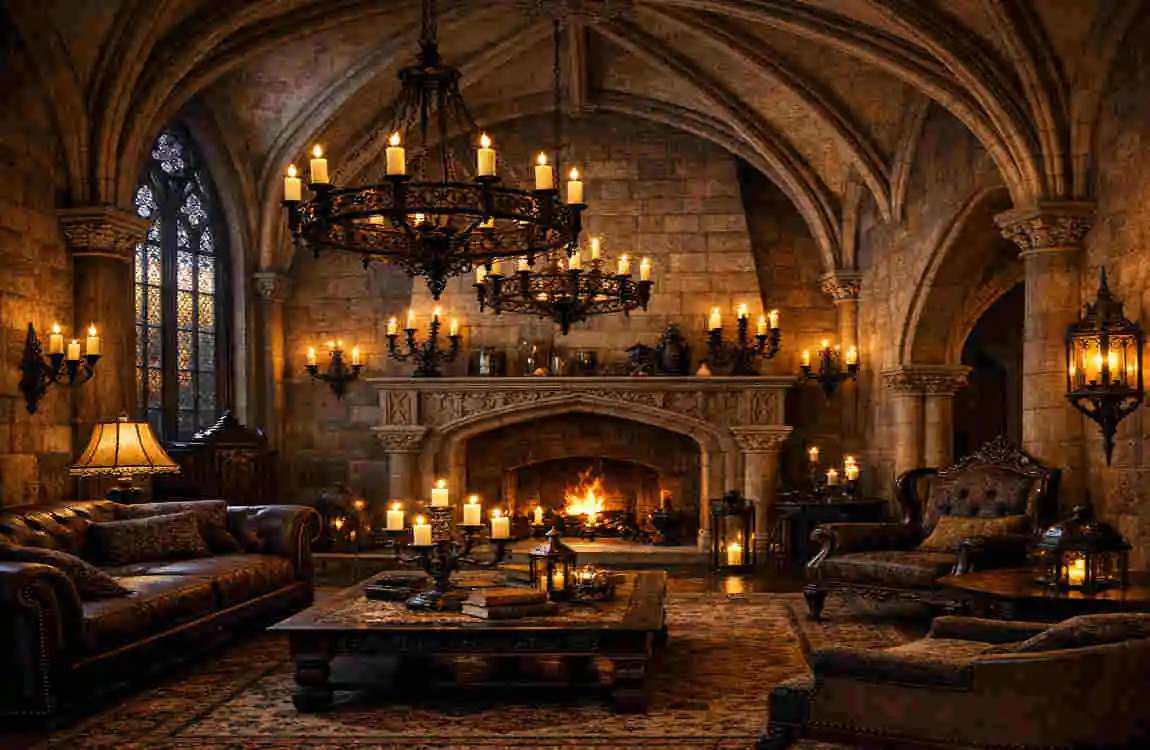
Today, many designers use Gothic lights in homes, restaurants, hotels, and themed interiors. The goal is often to capture old-world character without making the space feel like a museum.
You may see this in black metal chandeliers, lantern-style pendants, or wall sconces with decorative detailing.
Electric light changes the experience.
Modern fixtures use electric bulbs or LEDs, which are far brighter and safer than candles or oil lamps. That makes the room easier to use every day.
Still, the design can echo the past. Warm bulbs, dimmers, and layered lighting help keep the mood soft and historic.
Best rooms for Gothic-inspired lighting
Gothic lighting works especially well in:
- Dining rooms
- Libraries
- Bedrooms
- Entryways
- Living rooms
These rooms benefit from atmosphere, and atmosphere is where Gothic style shines.
FAQs About Gothic Interior Lights
Were Gothic interior lights common in medieval buildings?
Yes, but they were simple. Medieval spaces used candles, oil lamps, torches, fireplaces, and daylight from windows.
What lights were used in Gothic churches?
Churches commonly used candles, lamps, and natural light from stained-glass windows. Firelight also helped in some spaces.
Did Gothic interiors use chandeliers?
Yes, especially in larger or wealthier spaces. Hanging lights became an important part of the Gothic look over time.
What makes a light fixture Gothic?
A Gothic fixture often includes ironwork, pointed shapes, ornate details, dark finishes, and dramatic form.
How can I create Gothic lighting in a modern home?
Use warm bulbs, wall sconces, lantern-style fixtures, and layered lighting. Keep the look moody but still practical.
Were Gothic interior lights only decorative?
No. They were also practical and symbolic. They helped people see, shaped the room, and added meaning.
What is the difference between medieval Gothic lighting and modern Gothic lighting?
Medieval lighting came from flame and daylight. Modern Gothic lighting uses electric bulbs and LED fixtures inspired by the historic style.
| Feature | Impact on Historic Spaces |
|---|---|
| Candle-Style Fixtures | Created a warm, medieval atmosphere. |
| Iron Chandeliers | Added Gothic character and dramatic detail. |
| Stained-Glass Lighting | Enhanced colorful architectural features. |
| Wall Sconces | Highlighted arches, stone walls, and artwork. |
| Dim, Warm Light | Produced a mysterious and elegant mood. |
| Ornamental Designs | Complemented Gothic carvings and furniture. |
| Modern Adaptations | Preserved Gothic style while improving brightness and efficiency. |
