
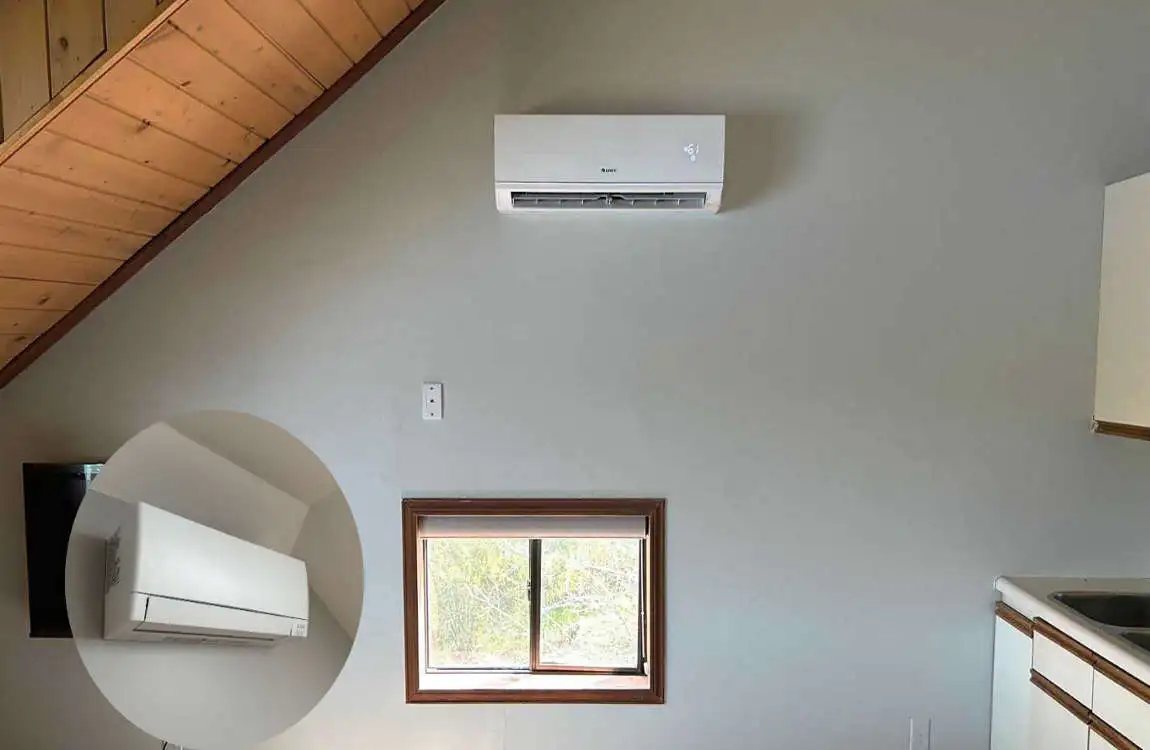
Yes, a mini split can be installed on an interior wall at home, but the installation usually requires more planning than mounting the indoor unit on an exterior wall. The key is having a practical route for the refrigerant lines, electrical wiring, communication cable, and condensate drain.
An interior wall can be a good choice when exterior walls have large windows or doors, limited space, or other obstacles. However, the location must be carefully selected so that the system can operate efficiently and remain easy to maintain.
Can a Mini Split Be Installed on an Interior Wall at Home?
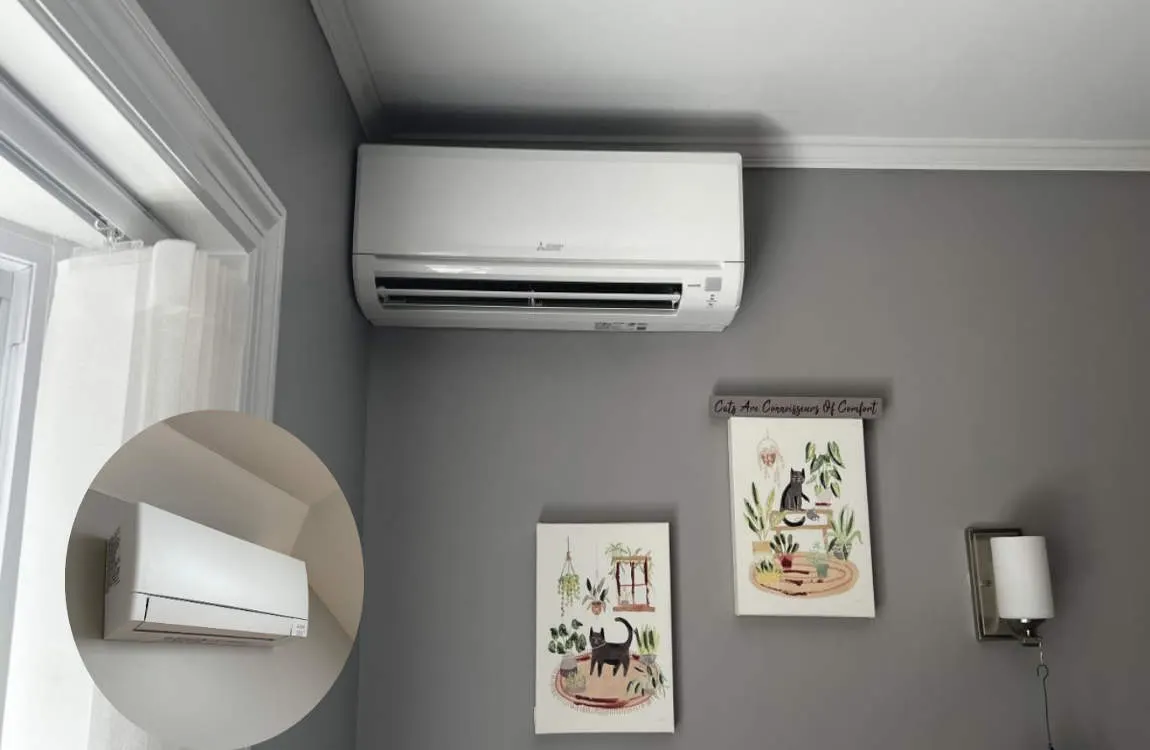
A ductless mini split normally has an indoor air-handling unit connected to an outdoor condenser. When the indoor unit is mounted on an interior wall, the required connections still need to reach the outdoor unit.
The lines may travel through a wall cavity, ceiling, attic, crawl space, or another suitable route. This makes interior-wall installation possible, but it can increase the amount of work required.
How Interior-Wall Mini Split Installation Works
The indoor unit is attached to a secure mounting plate on the wall. The installer then plans a route for the refrigerant lines, drain pipe, electrical wiring, and communication cable.
These connections eventually reach the outdoor condenser. Depending on the home’s design, some lines may be hidden inside walls or ceilings, while others may be covered with a decorative line set cover.
Because refrigerant connections and electrical work require proper procedures, a qualified HVAC professional should handle the complete installation.
Why Choose an Interior Wall?
Homeowners may choose an interior wall for several practical reasons:
- Exterior walls may have too many windows or doors.
- The interior wall may provide better airflow.
- The preferred furniture layout may work better with an interior location.
- Exterior walls may not offer convenient access to the outdoor unit.
- Remodeling may make it easier to conceal the required lines.
What Makes an Interior Wall Suitable?
Not every interior wall is automatically suitable for a mini split. Before installation, consider the wall structure and the route to the outdoor unit.
A Clear Route to the Outdoor Unit
The indoor unit needs a practical connection to the outdoor condenser. A short, simple route is generally easier and less expensive than a long route through several walls or ceilings.
The installer should also check the manufacturer’s limits for refrigerant-line length and elevation.
Adequate Wall Strength
The mounting plate must be firmly secured. Studs or suitable wall anchors may be needed depending on the wall construction and unit weight.
A weak mounting surface can cause vibration, movement, or damage over time.
Space for Condensate Drainage
Mini-splits produce condensation during cooling. That water needs to drain away properly.
If the drain can run downward using gravity, installation may be straightforward. If gravity drainage is not possible, a condensate pump may be required.
Access for Refrigerant and Electrical Lines
Before mounting the unit, plan where all necessary connections will go. Hidden plumbing, electrical wiring, ducts, and structural components can make an interior wall difficult to use.
Challenges of Installing a Mini Split on an Interior Wall
Condensate Drainage Problems
Drainage is one of the biggest concerns for interior wall installations. The water produced by the indoor unit must have somewhere to go.
When gravity drainage is not practical, a condensate pump can provide another solution. However, pumps add another component that may eventually require maintenance.
Longer Refrigerant Line Runs
An interior wall may require a longer route to the outdoor condenser. Longer lines can increase labor and may require specific requirements depending on the mini-split model.
Always check the manufacturer’s maximum line length and elevation limits.
Hidden Plumbing and Electrical Components
Drilling into an interior wall without checking what is inside can be dangerous and expensive.
Professional installers should identify potential obstacles before creating openings for the line set.
Appearance and Line Concealment
Exposed refrigerant lines can affect a room’s appearance. Fortunately, installers can use line covers, soffits, wall cavities, or ceiling routes to create a cleaner finish.
Good planning is especially important when appearance is a major concern.
Interior Wall vs. Exterior Wall Mini Split Installation
FeatureInterior WallExterior Wall
Installation complexity Usually higher Usually simpler
Line routing May require longer route Often more direct
Drainage Can be challenging Usually easier
Appearance Lines can often be concealed Exterior lines may be visible
Outdoor-unit access Depends on layout Often convenient
Installation cost May be higher Often lower
An exterior wall is generally easier because the indoor and outdoor units can often be connected through a short path. However, an interior wall can still be the better choice when it provides superior airflow or fits the home’s layout better.
Benefits of Installing a Mini Split on an Interior Wall
More Flexible Room Layout
An interior wall gives you more options when windows, doors, fireplaces, or other features occupy exterior walls.
You can select a position that works better with the way you use the room.
Potentially Better Air Distribution
A centrally positioned indoor unit may distribute conditioned air more effectively throughout a room.
However, placement should always follow the manufacturer’s clearance and airflow requirements.
Cleaner Exterior Appearance
If you do not want refrigerant lines running visibly along the exterior of your home, an interior-wall installation may allow more of the system’s connections to be concealed.
Useful During Home Remodeling
Interior-wall installation can be particularly convenient during remodeling. If walls or ceilings are already open, installers may have easier access to route the required connections.
Drawbacks to Consider Before Installation
An interior-wall installation can provide flexibility, but it also comes with potential disadvantages.
The main concerns include:
- More complicated refrigerant-line routing
- Difficult condensate drainage
- Higher labor costs
- Additional wall or ceiling access
- Greater installation planning
- Possible need for a condensate pump
- More complicated future maintenance access
The best choice depends on your home’s layout, not just on the wall that looks best.
How Much Does an Interior Wall Mini-Split Installation Cost?
The cost varies significantly because every home has a different layout. A simple installation may be relatively straightforward, while an interior-wall installation requiring concealed lines and a condensate pump can require considerably more labor.
Important cost factors include:
Cost Factor Why It Matters
Mini split capacity Larger systems may cost more
Number of indoor units Multiple units increase installation work
Refrigerant-line length Longer routes require more materials and labor
Electrical work New circuits or upgrades may add expense
Condensate pump May be needed for difficult drainage
Wall or ceiling access Openings and repairs can increase labor
Line concealment Covers or concealed routing add work
Labor Complex installations require more time
Instead of relying on a general average, get an estimate based on your home’s actual wall location, line route, drainage requirements, and outdoor-unit position.
Can You Install a Mini Split on an Interior Wall Yourself?
Basic preparation, such as choosing a location or identifying studs, may be manageable for a knowledgeable homeowner. However, a complete mini split installation involves more than simply hanging the indoor unit.
Refrigerant connections, electrical work, pressure testing, vacuum procedures, and system commissioning need to be performed correctly.
Incorrect installation can lead to poor cooling, refrigerant leaks, water damage, electrical hazards, equipment problems, or warranty concerns.
For this reason, professional installation is generally the safer approach.
When an Interior-Wall Installation May Not Be a Good Idea
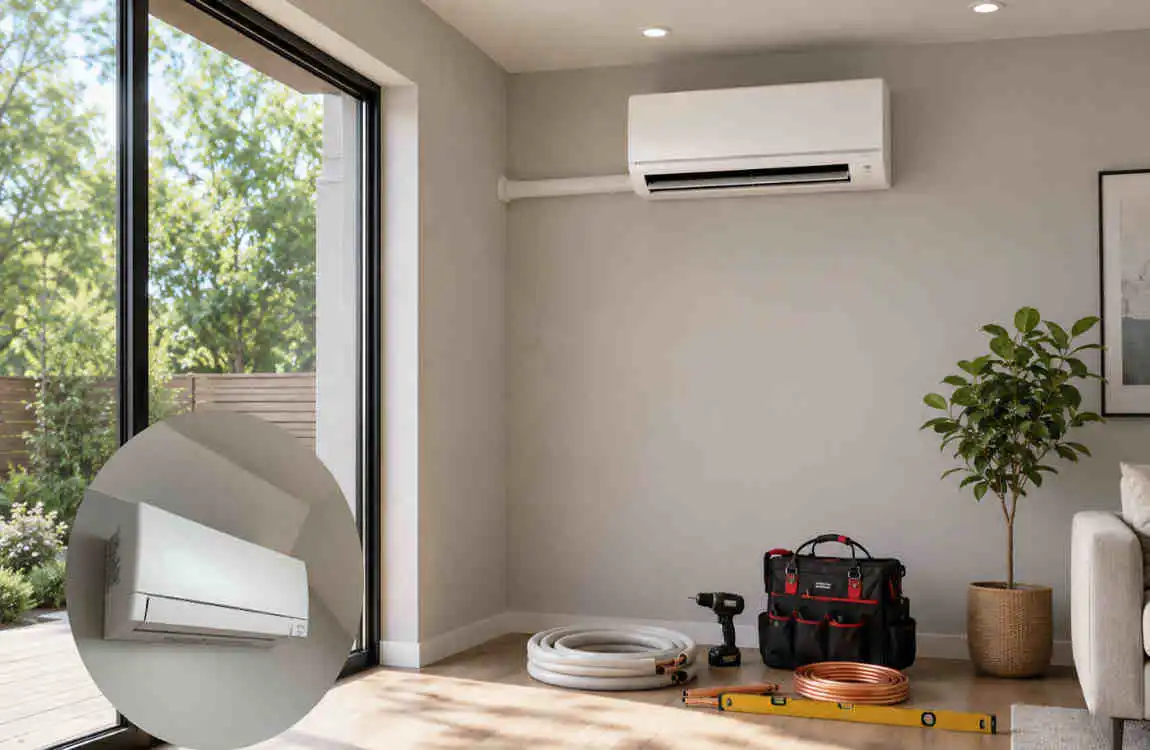
An interior wall may not be suitable if there is no practical route to the outdoor condenser.
It may also be a poor choice when condensate cannot be properly drained, the wall contains difficult-to-relocate plumbing or electrical systems, or the refrigerant line distance exceeds the manufacturer’s limits.
You should also reconsider the location if another wall provides better airflow, easier maintenance, and a much simpler installation.
Frequently Asked Questions
Can a mini split be installed on an interior wall at home?
Yes. A mini split indoor unit can be installed on an interior wall when there is a suitable route for refrigerant lines, electrical connections, and condensate drainage.
Does a mini split indoor unit have to be on an exterior wall?
No. A mini split does not necessarily need to be mounted on an exterior wall. However, an exterior wall can make it easier to connect to the outdoor condenser.
Can a mini split be installed in the middle of a room?
It may be possible depending on the room’s structure and the specific system. The location must allow proper airflow and provide a practical route for all required connections.
Does an interior wall mini-split need a condensate pump?
Not always. If the condensate drain can run properly using gravity, a pump may not be necessary. A pump may be useful when gravity drainage is not practical.
Is an interior wall mini-split more expensive to install?
It can be more expensive because of longer line routes, drainage challenges, wall access, concealment, and additional labor.
Can refrigerant lines run through an interior wall?
They can often be routed through suitable building spaces, but the installation must follow the system manufacturer’s requirements and applicable local codes.
How far can a mini split be installed from the outdoor unit?
The maximum distance varies by model. Always check the manufacturer’s specified maximum refrigerant-line length and elevation difference.
| Aspect | Quick Information |
|---|---|
| Can it be installed? | Yes, a mini split can sometimes be installed on an interior wall, but proper planning is required. |
| Best wall location | Choose a strong, unobstructed wall that allows good airflow throughout the room. |
| Drainage | A condensate drain must be properly routed, often requiring a condensate pump for interior-wall installations. |
| Refrigerant lines | Lines must be routed from the indoor unit to the outdoor condenser through an appropriate path. |
| Electrical needs | The system requires a suitable electrical connection according to the manufacturer’s specifications and local codes. |
| Wall strength | The wall should securely support the indoor unit and mounting bracket. |
| Main challenge | Interior walls can make drainage and line routing more complicated than exterior-wall installation. |
| Installation cost | Costs may be higher if additional piping, pumps, electrical work, or wall modifications are needed. |
