
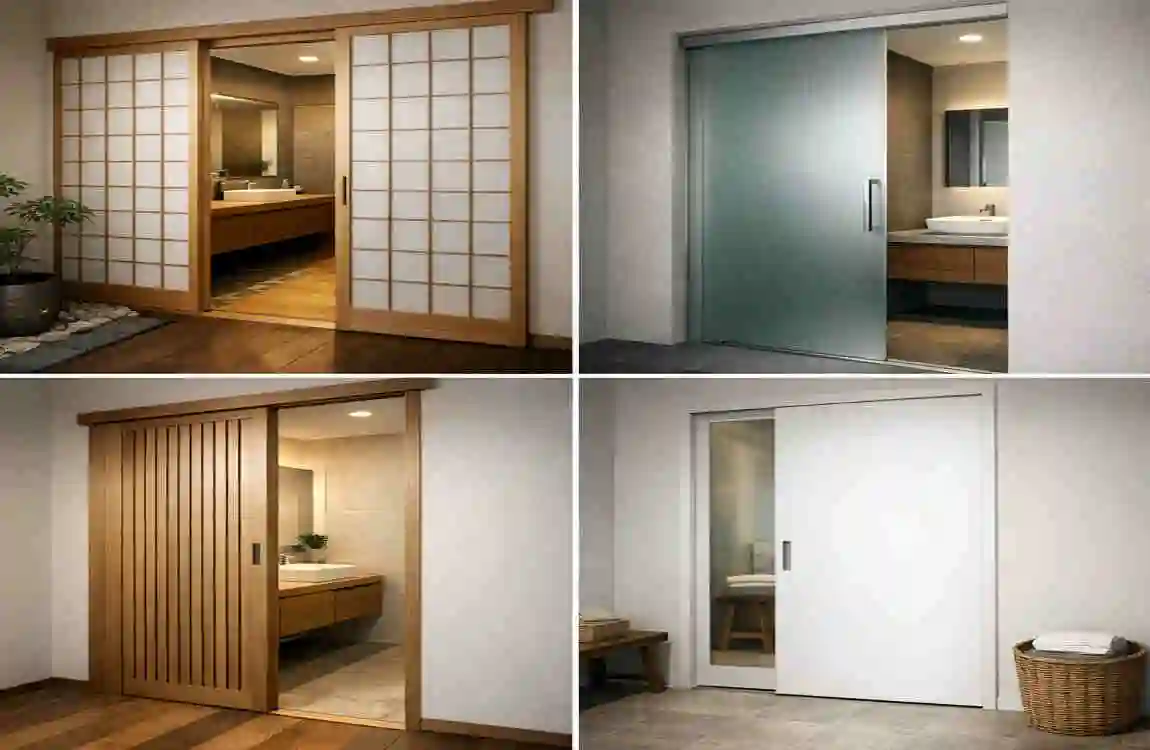
Japanese interior design is renowned for its unique blend of minimalism, functionality, and timeless elegance. Among the key elements of Japanese homes, bathroom door design stands out as an area where form and function meet. Interestingly, Japanese homes are leading global searches for minimalist bathroom designs, as highlighted in the 2026 Interior Trend Report. With compact spaces, humid climates, and a strong cultural emphasis on harmony, Japanese bathroom doors are the perfect inspiration for modern homes.
| Design Type | Key Features | Materials Used | Pros | Cons | Ideal Home Fit (sq ft) | Approx. Cost (USD) |
|---|---|---|---|---|---|---|
| Shoji Sliding Doors | Translucent panels, track-mounted | Rice paper, wood/bamboo frame | Light diffusion, space-saving | Fragile in high humidity | Small (under 50) | $150-400 |
| Frosted Glass Pocket | Flush wall install, hidden tracks | Tempered glass, aluminum frame | Privacy + modern light | Requires wall modification | Medium (50-100) | $300-600 |
| Bamboo Framed Panel | Natural weave, lightweight swing | Bamboo, frosted glass | Eco-friendly, zen aesthetic | Needs sealing for moisture | Small-Medium | $200-450 |
| Fusuma-Style Wooden | Opaque panels, removable/reposition | Washed cedar, fabric insert | Custom patterns, quiet slide | Less light transmission | Any size | $250-500 |
| Accordion Folding | Compact fold, no floor track | Aluminum + vinyl/plastic | Max space savings | Basic look, less durable | Tiny (under 30) | $100-250 |
Why Japanese Bathroom Door Designs Are Trending in Modern Homes
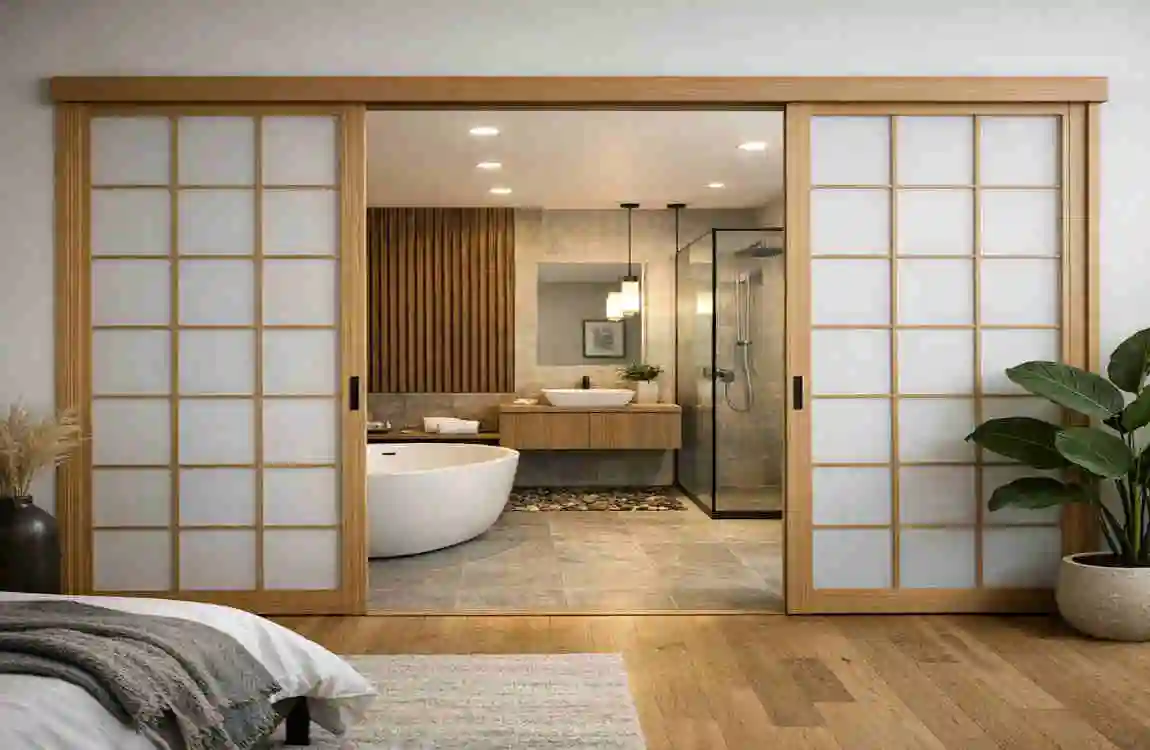
The Rise of Japandi and Wabi-Sabi Aesthetics
In 2026, Japandi (a fusion of Japanese and Scandinavian design) and wabi-sabi (the Japanese philosophy of embracing imperfection) have become global trends. These styles prioritize simplicity, natural materials, and functional designs, making them a perfect match for bathroom spaces.
Key Advantages of Japanese Bathroom Doors
Japanese bathroom door designs are favored for their practical benefits, making them ideal for modern homes:
- Space Efficiency: Sliding doors and pocket doors are common in Japan, where homes are often compact. These doors save space by eliminating the need for door swings.
- Moisture Resistance: Humidity-resistant materials such as aluminum and tempered glass ensure durability in wet environments.
- Low-Maintenance Elegance: The minimalist style of Japanese doors, combined with quality materials, reduces the need for frequent upkeep.
Cultural Influence: Shoji Screens and Fusuma Doors
Traditional Japanese doors, such as shoji screens (wooden frames with translucent paper) and fusuma panels (sliding doors with decorative designs), continue to influence modern bathroom door designs. These elements reflect Japan’s commitment to creating spaces that are both serene and functional.
Top Bathroom Door Designs at Home in Japan
When it comes to bathroom door design at home in Japan, the options range from timeless classics to cutting-edge innovations. Here are the top 10 designs:
Classic Shoji Sliding Doors
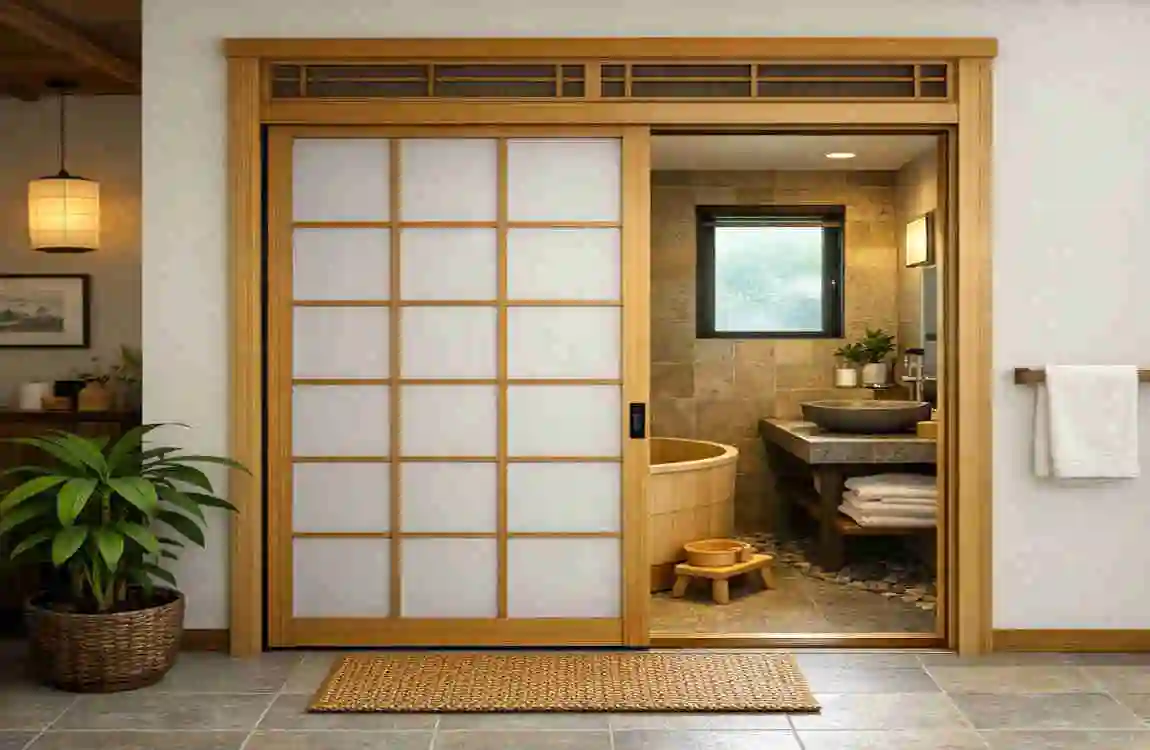
Shoji doors are a hallmark of Japanese interiors. These sliding doors feature wooden frames with translucent paper panels, allowing natural light to filter through while maintaining privacy. They’re perfect for creating a calming, zen-like atmosphere in your bathroom.
Pros: Space-saving, elegant, and lightweight.
Cons: Paper panels can be delicate and may require periodic replacement.
Adaptation Tip: Use frosted glass instead of paper for better durability in bathrooms.
Frosted Glass Pocket Doors
A modern twist on the traditional sliding door, frosted glass pocket doors slide into the wall, maximizing space while providing privacy. The frosted finish allows light to pass through without compromising discretion.
Why It Works: Ideal for compact bathrooms and modern homes, it blends functionality with sleek aesthetics.
Bamboo-Framed Panel Doors
For an eco-friendly option, consider bamboo-framed doors. Bamboo’s natural texture and durability make it a great choice for creating a zen-inspired bathroom.
Benefits: Sustainable, lightweight, and resistant to moisture.
Hidden Flush-Mount Doors
For those who love minimalist designs, flush-mount doors are an excellent choice. These doors sit flush with the wall, creating a seamless appearance that blends into the surrounding decor.
Best For: Modern, minimalist homes where subtlety is key.
Wooden Fusuma-Style Doors
Inspired by traditional Japanese homes, fusuma-style doors are lightweight sliding panels made of wood and paper, or fabric. They often feature decorative patterns, adding a touch of art to your bathroom.
Pros: Customizable designs and a strong cultural appeal.
Cons: Less durable than modern materials.
Aluminum Frame Rain Screen Doors
For humid climates, aluminum-frame rain-screen doors are a smart choice. These doors are designed to withstand moisture, making them perfect for bathrooms.
Key Feature: Waterproof construction ensures long-lasting performance.
Accordion Folding Doors
If you’re working with a small bathroom, accordion folding doors are a space-saving solution. These doors fold neatly to one side, taking up minimal room.
Why It’s Popular: Affordable, easy to install, and ideal for tight spaces.
LED-Lit Translucent Panels
For a futuristic touch, opt for LED-lit translucent doors. These doors combine modern technology with sleek design, creating a statement piece for your bathroom.
Trend Alert: Perfect for smart homes looking to integrate lighting with design.
Rice Paper Overlay Doors
For a more traditional vibe, rice paper-overlay doors add authenticity to your bathroom. These doors are a DIY-friendly option for those who want to add a personal touch to their space.
Modular Magnetic Doors
Modular magnetic doors are perfect for those who value flexibility. These doors allow you to swap out panels or designs as needed, making them a versatile choice for evolving styles.
Materials and Features for Durable Japanese-Style Doors
Choosing the right materials is crucial for creating a functional and long-lasting bathroom door. Here are some of the most popular options:
Popular Materials
- Washed Wood: A natural, lightweight option commonly used in traditional designs.
- Tempered Glass: Durable and scratch-resistant, perfect for modern bathrooms.
- Rice Paper: Adds authenticity but requires extra care in humid environments.
- Anodized Aluminum: Waterproof and ideal for high-humidity areas.
Must-Have Features
- Anti-Mold Coatings: Prevent mold and mildew growth in damp areas.
- Soft-Close Mechanisms: Ensure doors close quietly and smoothly.
- Soundproofing: Reduce noise transmission for added privacy.
MaterialDurabilityCostMaintenance
Washed Wood Moderate $$ Regular sealing
Tempered Glass High $$$ Easy to clean
Rice Paper Low $ Replace as needed
Anodized Aluminum Very High $$$ Minimal
Installation Guide: Bringing Japanese Designs to Your Home
Step-by-Step for Sliding Doors
- Gather Tools: You’ll need a drill, screws, a level, and a sliding door track system.
- Measure the Space: Ensure the track fits the width of your bathroom doorway.
- Install the Track: Secure the track above the doorway using screws.
- Hang the Door: Attach the sliding door to the track and test for smooth movement.
Pocket Door Setup
For pocket doors, make sure the wall is free of wiring or plumbing before installation. This ensures the door has enough space to slide into the wall cavity.
Common Mistakes to Avoid
- Ignoring Humidity: Use moisture-resistant materials to prevent warping.
- Misaligned Tracks: Double-check measurements to ensure smooth sliding.
Cost Breakdown and Where to Buy
Here’s a rough estimate of costs for Japanese bathroom doors:
Type Price Range
Shoji Sliding Doors $100-$300
Frosted Glass Pocket Doors $200-$500
Bamboo-Framed Doors $150-$400
LED-Lit Panels $500+
You can find these designs online at retailers like Amazon, Wayfair, or Japanese import stores specializing in home decor.
Bathroom Door Design at Home in Japan – FAQ
What type of bathroom doors are common in Japanese homes?
A: Sliding doors are most common because they save space and suit compact home layouts.
Why do Japanese bathrooms use sliding doors?
A: They maximize space, improve accessibility, and fit well with minimalist home designs.
What materials are used for Japanese bathroom doors?
A: Popular materials include frosted glass, wood, aluminum, and waterproof PVC for durability.
Are Japanese bathroom doors waterproof?
A: Yes, many are designed to resist moisture and humidity, especially in modern homes.
Do Japanese bathrooms have separate wet and dry areas?
A: Yes, most homes separate the shower/bath area from the toilet and sink space.
What style defines Japanese bathroom door design?
A: Minimalist, clean lines, neutral colors, and functional simplicity define the style.
Are traditional Japanese doors still used in bathrooms?
A: Traditional shoji doors are less common in bathrooms due to moisture but may inspire modern designs.
Are sliding doors better than hinged doors for small homes?
A: Yes, sliding doors are ideal for small spaces because they don’t require extra opening room.
