
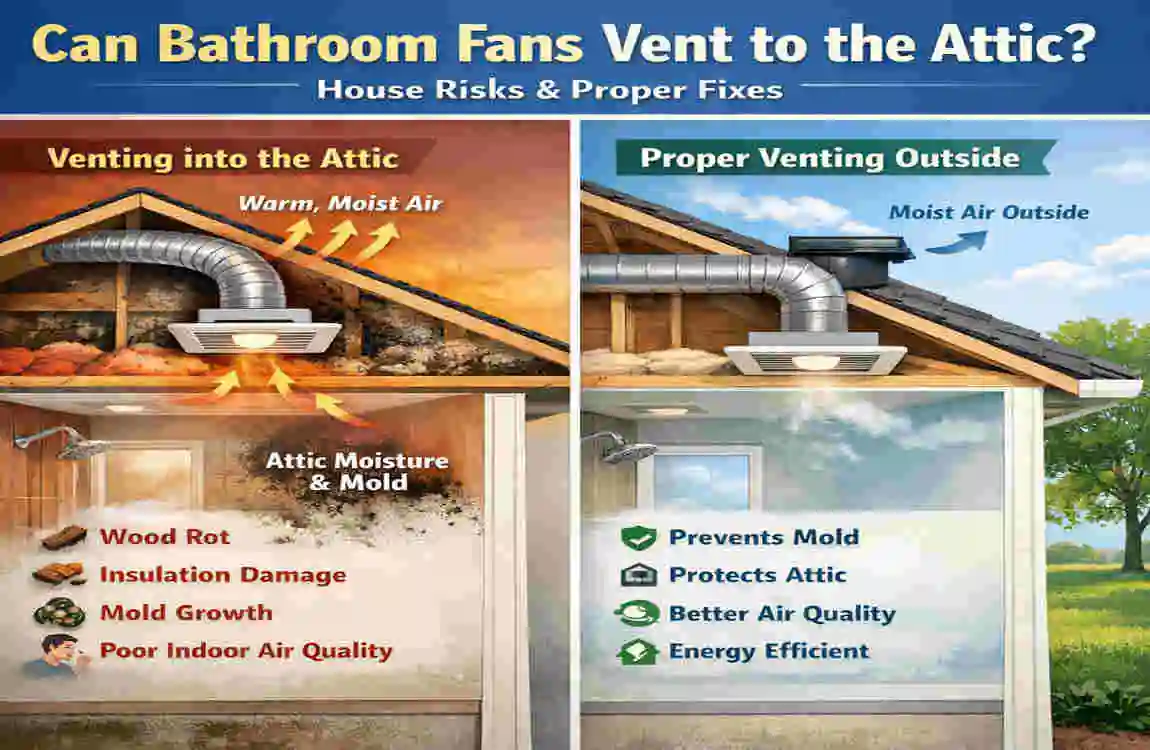
Picture this scenario. You finally purchase your dream home. You spend weekends painting the walls, arranging your furniture, and settling into your new life. But a few months later, you climb into your attic to store some holiday decorations. When you shine your flashlight around the dark space, you freeze. Instead of clean, dry wood, you see fuzzy black spots creeping across your roof joists. Your insulation looks compressed, damp, and ruined.
What caused this nightmare? You trace the mold back to a simple, silver pipe. It is your bathroom exhaust fan, dumping hot, steamy shower air directly into your pristine attic space.
In 2026, home inspections are more rigorous than ever, and a massive number of homeowners are suddenly facing this exact problem. As a result, the internet search “can bathroom fan vent to attic” has absolutely skyrocketed. Homeowners want to know if this “quick fix” installation from decades past is acceptable.
It is completely unsafe. Venting hot, moist air into an enclosed attic space is essentially watering your roof from the inside. According to real estate data, roughly 20% of U.S. homes have improper bathroom ventilation. If your home falls into that statistic, you are sitting on a ticking time bomb of moisture damage, structural rot, and severe health hazards.
| Aspect | Attic Venting Risks | Proper Fixes & Alternatives | Notes |
|---|---|---|---|
| Safety/Code | Violates IRC codes (M1505.4); fails inspections, voids insurance | Vent outdoors via roof/wall/soffit with rigid duct & cap | Use 4-6″ insulated metal duct; seal joints with foil tape |
| Moisture/Mold | Steam condenses on rafters/insulation, causing black mold & rot in 6-12 months | High-velocity ENERGY STAR fan (80+ CFM) to exterior; add humidity sensor | Reduces R-value by 50%; health risks like allergies |
| Structural Damage | Wood rot in sheathing/joists; roof failure after 5+ years ($20k+ cost) | Roof cap (shortest run) or gable wall vent for remodels | Avoid flexible ducts—they sag & leak |
| Energy/Air Quality | Higher bills from poor insulation; VOCs/odors recirculate | Insulate ducts (R-8 in cold climates); shortest path outdoors | Stack effect pushes moisture back if near soffit intake |
| Cost | Fixes: $5k-15k after damage; ongoing energy loss | Install: $150-600 DIY/pro; prevents $20k+ repairs | Pros ensure warranty/code compliance |
Why Venting to the Attic Always Fails
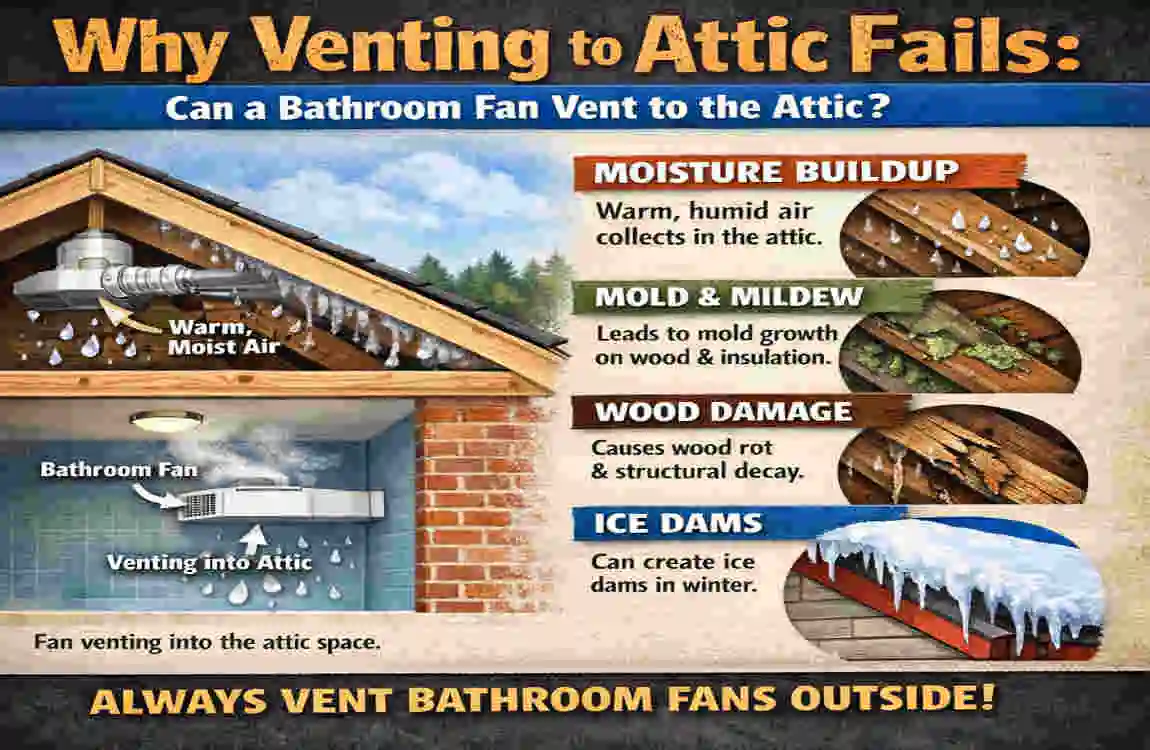
You might wonder why so many builders and DIY enthusiasts used to vent fans this way. To understand the vent bathroom fan attic risks, we first need to look at the bad advice and poor building science that led us to this point.
Common Misconceptions About Attic Airflow
The biggest myth surrounding bathroom ventilation is the idea that an attic is “already ventilated.”
Many homeowners believe that because their attic has soffit vents, ridge vents, or gable louvers, the hot shower steam will float up and blow away outside. This is a massive, costly misconception.
Your attic ventilation system is designed to handle slow, passive air movement. It relies on the natural flow of outdoor breezes to keep the attic temperature regulated. It is absolutely not designed to handle a sudden, high-powered blast of concentrated, 100-degree, moisture-heavy shower steam.
When you turn on your exhaust fan, you are injecting gallons of water vapor directly into a space that cannot process it fast enough.
Furthermore, you have to consider the stack effect. This is a building science term that describes how air moves through a house. Warm air naturally rises. As it rises, it creates a slight negative pressure in the lower levels of your home, pulling in new air. If you dump warm, wet air into your attic, the stack effect can actually push that heavy, damp air back down into your living spaces through tiny cracks in your ceiling, defeating the entire purpose of the exhaust fan.
Building Code Basics: The Updates
Let us talk about the rules. If you are asking, “Can a bathroom fan vent to the attic?” you need to look at the law.
According to the modern International Residential Code (IRC) and local 2026 bathroom exhaust codes, you must exhaust all bathroom fans directly to the outside of the building.
The code is incredibly strict and clear on this matter:
- You cannot vent a fan into an attic.
- You cannot vent a fan into a crawlspace.
- You cannot vent a fan into a garage.
- You cannot just lay the ductwork under a roof vent and hope the air finds its way out.
The duct must connect to a dedicated, sealed termination cap on your roof, your exterior wall, or your soffit.
What happens if you ignore these codes? First, you will instantly fail any home inspection. If you try to sell your house, the buyer’s inspector will flag the improper vent, and you will be forced to pay for the repair before closing. Second, insurance companies in 2026 are actively cracking down on preventable water damage. If an adjuster discovers that an illegal bathroom vent caused your attic rot, they will likely deny your claim entirely, leaving you with a massive repair bill.
The Hidden House Risks Exposed
When you vent a bathroom fan into an attic, you are not just breaking a building code; you are also risking a fire. You are actively destroying your home. Let us break down the exact risks you face when you ignore proper venting protocols.
Moisture and Mold Explosion
Your daily shower creates an incredible amount of steam. When your exhaust fan sucks that steam up, it has to go somewhere. If that “somewhere” is your attic, you are creating a perfect storm for mold growth and attic disasters.
Think about what happens in the winter. Your attic space is cold. The wood rafters are freezing. The air coming from your bathroom is hot and completely saturated with water. When that hot steam hits the cold wood rafters, physics takes over. The steam instantly condenses, turning back into liquid water.
Your roof decking and joists will physically sweat. Water will drip from the nails. The wood will soak up this moisture like a giant sponge.
Mold spores are everywhere in nature, just waiting for the right conditions to bloom. They need three things to survive: oxygen, a food source (like the wood in your attic), and moisture. By venting your fan into the attic, you are providing the exact moisture they need to explode into life.
Within weeks, harmless-looking white fuzz can turn into toxic black mold. This mold does not just stay in the attic. The spores can filter down through your recessed lighting fixtures and air conditioning vents.
Health Impacts: Breathing in these spores daily can lead to severe health issues. Your family might experience chronic coughing, unexplained allergies, asthma flare-ups, irritated eyes, and constant fatigue. What started as a lazy plumbing shortcut quickly becomes a serious medical hazard.
Structural Damage Breakdown
Mold is awful, but the physical destruction of your home is just as terrifying. Wood rot is a slow, silent killer.
When your roof sheathing (the wood panels under your shingles) stays constantly damp from shower steam, it begins to delaminate and rot. The wood loses its structural integrity. It turns soft and spongy. Over time, the heavy weight of your roof shingles can cause this rotted wood to sag, leading to a wavy, collapsing roofline.
Simultaneously, you are destroying your insulation. Most attics use fluffy fiberglass or blown-in cellulose insulation. These materials keep your house warm by trapping tiny pockets of air.
When you dump shower steam onto insulation, it becomes wet and heavy. It compresses and flattens out. Wet insulation can lose up to 50% of its R-value (its resistance to heat transfer). Even worse, fiberglass insulation takes an incredibly long time to dry out, meaning it will sit there holding a wet sponge against your ceiling drywall until the ceiling eventually crumbles.
Here is a look at how quickly this damage escalates:
The Improper Venting Risk Timeline
Timeframe, Type of Damage You Will See, Estimated Repair Cost
6 to 12 Months Surface condensation, initial mold spotting, musty odors. $500 to $2,000
1 to 2 years of wet, compressed insulation. Widespread mold blooms. Peeling ceiling paint below. $2,000 to $5,000
2 to 5 Years: Early stages of wood rot in roof sheathing and rafters. Loss of insulation R-value. $5,000 to $15,000
5+ Years Severe structural rot. Sagging roof decking. Potential for ceiling collapse. $20,000+
Energy and Air Quality Hits
Beyond the rotting wood and dangerous mold, improper venting costs you money every single month.
Because your wet insulation can no longer keep the heat in your home during winter (or keep it out during summer), your HVAC system has to work overtime. You will notice your energy bills slowly climbing, all because your bathroom fan ruined your attic’s thermal barrier.
Furthermore, your indoor air quality plummets. Bathrooms are full of volatile organic compounds (VOCs) from cleaning chemicals, hairsprays, and perfumes, not to mention natural biological odors. If you vent these into the attic, the stack effect will eventually pull these stale, chemical-laden odors right back down into your bedrooms and hallways.
Proper Venting Alternatives: How to Fix It Right
So, we have established that venting into the attic is a disaster. How do we fix it?
You need to create a dedicated pathway that takes the moist air from your bathroom ceiling and exhausts it 100% outdoors. There are three main ways to achieve this, depending on your home’s layout.
The Roof Venting Guide
Installing a roof vent fan exhaust is often the most direct and efficient method. Hot air naturally wants to travel upwards, so venting straight up through the roof provides the path of least resistance.
The Step-by-Step Process:
- Measure the Shortest Path: You want the ductwork to be as short and straight as possible.
- Use Rigid Ductwork: Never use cheap, crinkly plastic hoses. You must use smooth, rigid galvanized steel ducting. Smooth walls prevent air friction and stop water from pooling in ridges.
- Insulate the Duct: This is crucial. If you run a metal pipe through a cold winter attic, the steam will condense inside the pipe and drip back down into your bathroom fan. You must wrap the rigid duct in a heavy insulation sleeve.
- Install a Roof Damper Cap: You must cut a hole in your roof decking and install a specialized exhaust cap. This cap features a flapper valve that only opens when the fan turns on, preventing cold air, rain, and birds from entering the pipe.
- Seal and Flash: You must carefully integrate the roof cap with your shingles, using roofing cement and proper flashing techniques to ensure it is 100% watertight.
Wall and Soffit Options
If you do not want to cut a hole in your roof, you have two other excellent outdoor venting options.
The Gable Wall Vent: If your bathroom is located relatively close to the exterior wall of your attic (the gable end), you can run the insulated duct horizontally and vent it right out the side of the house.
This is often the easiest retrofit for older homes. You cut a hole in the siding, install a louvered wall cap, and attach the duct. By avoiding roof shingles, the risk of causing a rain leak drops significantly.
The Soffit Vent (Proceed with Caution): Your soffit is the underside of your roof’s overhang. You can route the bathroom duct down to the soffit and install an exhaust vent pointing downward.
However, you must be extremely careful here. Soffits are typically intake areas for your attic ventilation. If you place a bathroom exhaust vent right next to an attic intake vent, the hot, steamy air will blow out of the bathroom vent and get immediately sucked right back into the attic through the neighboring intake vent!
If you must use a soffit vent, you must use a high-velocity exhaust cap that directs the air downward, and you must ensure there are no passive intake vents within several feet of the exhaust location.
Venting Location Comparison Table
Venting Method, Installation Difficulty, Average Professional Cost, Best Situation For Use
Roof Vent Medium to Hard $200 – $500 New builds, or when the bathroom is far from exterior walls.
Gable Wall Easy to Medium $150 – $400 Remodels, DIYers, or bathrooms near the end of the house.
Soffit Vent Hard (requires specific caps) $300 – $600. Very tight attics where roof access is impossible or restricted.
Fan Upgrade Tips
While you are fixing the ductwork, consider upgrading the bathroom fan. The builder-grade fans from twenty years ago do not move enough air to keep a modern bathroom dry.
Here is what you need to look for when upgrading:
- CFM Rating (Cubic Feet per Minute): This measures how much air the fan moves. The golden rule is 1 CFM for every square foot of your bathroom. If your bathroom is 80 square feet, you need a fan with at least 80 CFM.
- ENERGY STAR Certification: These models use 70% less energy and feature vastly superior, quieter motors. You want a fan that whispers, not one that sounds like a jet engine.
- Smart Humidity Sensors: In 2026, the best fans run themselves. You can buy models with built-in moisture sensors. When someone takes a shower, the fan detects the rising humidity and turns itself on automatically. It stays on until the room is completely dry, then shuts itself off.
- Proper Duct Sizing: Older fans used tiny 3-inch ducts. Modern, powerful fans require 4-inch or even 6-inch ducts to push air effectively. You must upgrade the duct size to match the new fan’s output.
DIY vs Professional Fixes
Once you discover that your bathroom fan vents into the attic, you have a choice to make. Do you tackle this project yourself, or do you call in the professionals?
Safe DIY Steps
If you are handy, comfortable using power tools, and unafraid of tight, itchy spaces, routing a bathroom fan outdoors is a manageable weekend project.
Tools You Will Need:
- Reciprocating saw, or hole saw (for cutting through siding or roof decking)
- Foil HVAC tape (Never use cloth “duct tape,” which dries out and falls off)
- Rigid galvanized metal ducting
- Insulation sleeves
- Roofing cement and a caulking gun
- A high-quality exterior vent cap
Common DIY Pitfalls to Avoid: The biggest mistake DIYers make is using flexible, ribbed plastic ducting. While flexible duct is easy to bend around obstacles, its interior ridges create significant air friction, slowing the exhaust. Worse, water vapor condenses in the plastic valleys, forming heavy puddles inside the tube. Eventually, the flexible tube sags under the weight of the water and rips wide open. Always use smooth, rigid metal pipes.
Another massive pitfall is failing to seal the joints. You must use aluminum foil, HVAC tape, and mastic sealant on every single connection point to ensure steam cannot escape into the attic along the journey.
Safety First: Before you begin, always shut off the power to the bathroom at your main breaker box. Attics are dangerous places. Wear a heavy-duty N95 respirator mask to protect your lungs from fiberglass dust and potential mold spores. Wear long sleeves, gloves, and safety goggles. Step only on the wooden ceiling joists; if you step on the drywall between the joists, you will fall straight through your bathroom ceiling!
When to Hire the Pros
While DIY is possible, we strongly recommend hiring a professional contractor or HVAC specialist for this specific job.
Why? Because you are cutting a literal hole in the exterior envelope of your home.
If you cut a hole in your roof to install a vent cap and you do not flash and seal it perfectly, the very next rainstorm will pour water directly into your attic. The water damage from a botched roof vent installation will be ten times worse than the shower steam you were trying to fix.
Professionals have the experience to safely cut through roofing materials and siding. They know exactly how to flash under shingles to ensure a watertight seal.
Furthermore, a professional installation comes with a warranty. It ensures the job meets all local 2026 building codes, so you will never have to worry about a failed home inspection.
Prevention and Maintenance
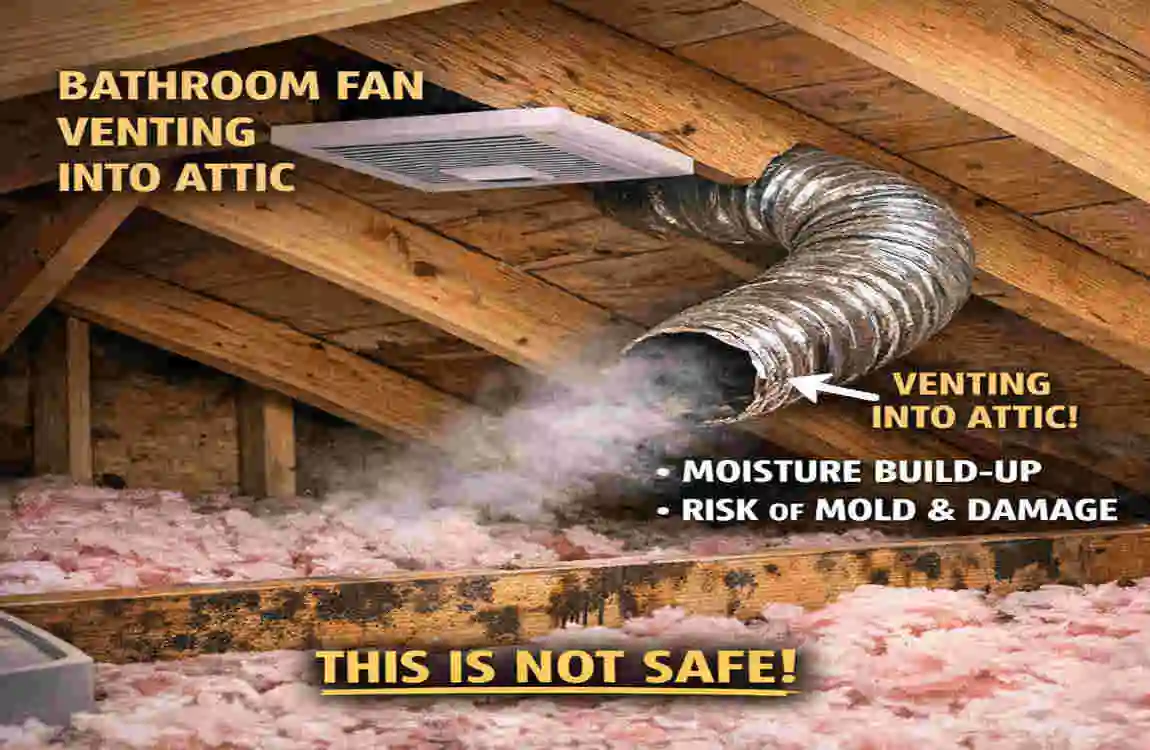
Once you have properly routed your bathroom exhaust to the outside world, your job is not finished. You need to perform basic maintenance to ensure the system stays efficient.
Annual Checks: Make it a habit to climb into your attic once a year, preferably during the colder winter months. Bring a flashlight and inspect the rigid ductwork. Feel around the joints. Do you feel any warm, moist air escaping? Check the insulation sleeve to ensure it hasn’t slipped or torn.
Next, go outside and look at the termination cap on your roof or wall. Ensure that birds or wasps have not built nests inside the flapper valve, which could be holding it open.
Embrace Smart Tech: As we move deeper into 2026, home maintenance is becoming automated. Consider integrating IoT (Internet of Things) humidity monitors in your bathroom and your attic. These tiny, affordable sensors sync with your smartphone. If the humidity in your attic suddenly spikes, your phone will alert you instantly, allowing you to catch a disconnected duct pipe before mold ever has a chance to grow.
Frequently Asked Questions (FAQs)
We know that dealing with attic ventilation can be confusing. Here are the most common questions homeowners ask us about bathroom exhaust fans.
Is soffit venting really that bad for bathroom fans? It is not inherently bad, but it is risky. Because soffits are designed to pull fresh air into the attic, venting moisture nearby means the steam might just get sucked right back inside. You must use specific, high-velocity directional caps and keep the exhaust far from intake vents to ensure soffit venting works safely.
How much does it cost to fix a fan venting into the attic? If you catch it early and there is no mold or rot, hiring a professional to run a new, insulated rigid duct to a new roof or wall cap generally costs between $200 and $500 per fan.
Can I bury the exhaust duct under my attic insulation? Absolutely not. The moisture will eventually saturate the insulation, destroying its R-value, soaking your ceiling drywall, and causing massive mold growth. The duct must exit the building.
My fan vents near a gable louver. Is that good enough? No. Pointing a duct towards an attic vent is illegal under modern building codes. The moist air will disperse before it leaves the vent, settling on your rafters. The duct must make a hard, physical, sealed connection to an exterior cap.
How do I know if I have attic mold from my fan? Look for dark, fuzzy discoloration on the rafters directly above or near the bathroom. You might also notice a damp, musty smell in your living space, or see peeling paint and water stains on your bathroom ceiling.
Can I combine two bathroom fans into one roof vent? Yes, but you must use a specialized Y-connector, and the shared duct going to the roof must be upsized (usually to 6 inches) to handle the combined airflow. You also need backdraft dampers on both individual lines so one bathroom doesn’t blow odors into the other.
