
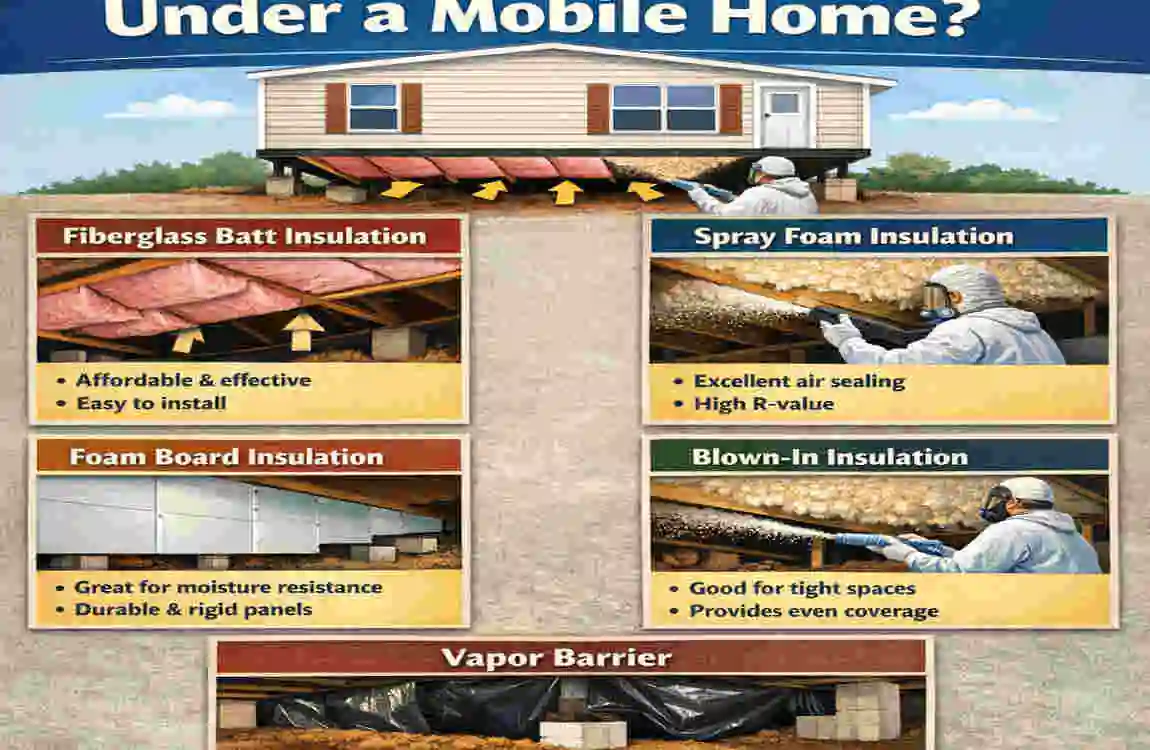
Cold floors? High energy bills? If you’ve ever wondered why your mobile home struggles to stay warm in winter or cool in summer, the answer might lie beneath your feet. The underbelly of a mobile home plays a critical role in maintaining indoor temperatures, protecting plumbing, and reducing energy costs. Without proper insulation, up to 25% of your home’s heat can escape, leading to discomfort and higher utility bills.
Underbelly insulation helps protect against moisture, freezing pipes, and even pests while improving energy efficiency. Plus, with the right insulation, homeowners can save 20-30% on annual energy bills.
Why Insulate Under a Mobile Home?
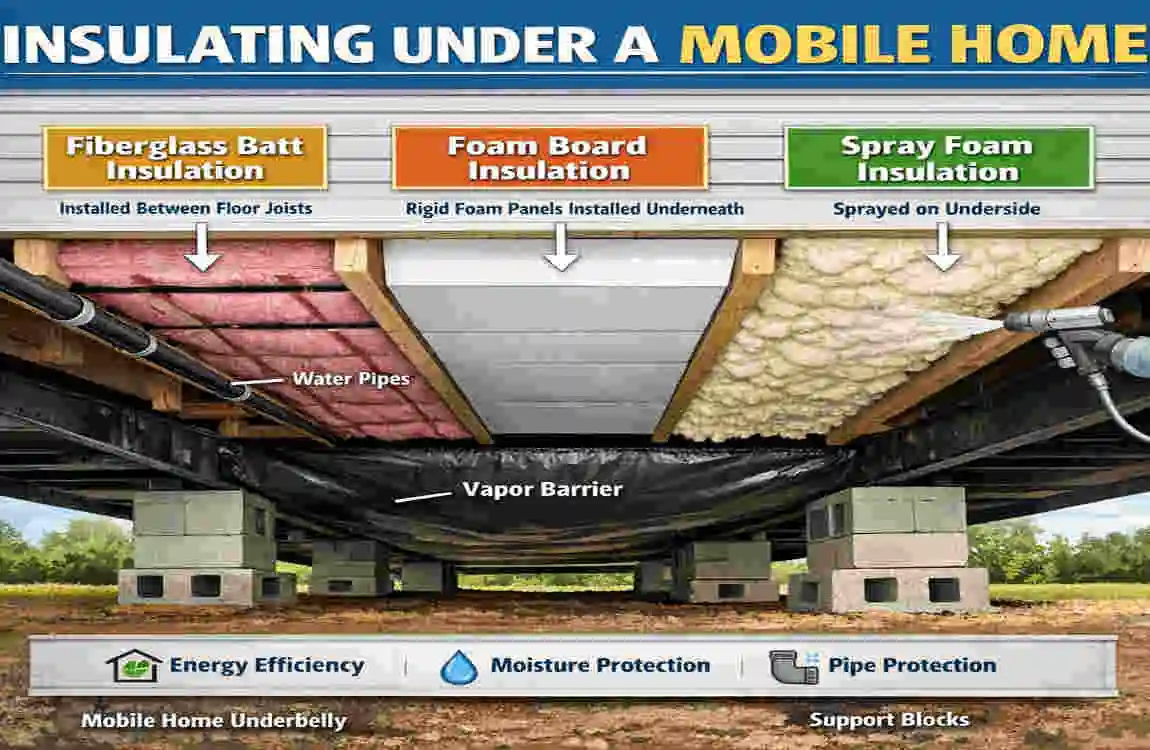
Mobile homes are more vulnerable to heat loss than traditional homes, particularly through the floors. This happens because the underbelly is often exposed to outdoor conditions, leaving it susceptible to moisture, cold air, and pests. Here’s why insulating the underbelly is essential for your home:
Energy Savings
Proper insulation can reduce energy bills by up to 30%. By reducing winter heat loss and summer heat gain, insulation helps your HVAC system operate more efficiently, saving you money year-round.
Improved Comfort
Nobody likes walking on icy floors during winter! Insulating your mobile home‘s underbelly helps maintain more even indoor temperatures, keeping your living spaces cozy year-round.
Plumbing Protection
Exposed pipes can freeze and burst in cold weather, leading to costly repairs. Insulation acts as a protective barrier, keeping your pipes safe even in freezing temperatures.
Mold and Moisture Prevention
Moisture is a common issue in mobile home underbellies, especially in humid climates. Insulation with vapor barriers helps keep moisture out, preventing mold, rot, and structural damage.
Increased Durability
By protecting your home from pests, ground moisture, and thermal stress, insulation extends the lifespan of your mobile home’s structure and systems.
Understanding R-Values
When insulating your underbelly, aim for an R-value (thermal resistance) of R-25 to R-30. The higher the R-value, the better the insulation’s ability to resist heat flow, which is particularly important for floors exposed to outdoor conditions.
Types of Insulation for Mobile Home Underbellies
To decide which type of insulation to use under a mobile home, consider factors such as climate, budget, and ease of installation. Here’s a detailed look at the most popular options:
Closed-Cell Spray Foam (Best Overall Choice)
Closed-cell spray foam is widely regarded as the gold standard for underbelly insulation. It offers an R-value of 6-7 per inch, making it one of the most efficient insulation types available.
- Pros:
- Excellent R-value and moisture resistance.
- Seals gaps and cracks to prevent air leaks.
- Adds structural strength to the underbelly.
- No risk of sagging over time.
- Cons:
- High upfront cost ($1-2 per square foot).
- Requires professional installation.
- Ideal Use Case: Perfect for areas with extreme weather or homes that need maximum efficiency.
Fiberglass Batts
Fiberglass batts are a common and affordable insulation option for mobile home underbellies. They offer an R-value of 2.9-3.8 per inch and are widely available.
- Pros:
- Budget-friendly (around $0.50 per square foot).
- Easy to install for DIYers.
- Cons:
- Absorbs moisture, which can lead to mold and rot.
- Requires mesh support to prevent sagging.
- Ideal Use Case: Suitable for dry climates or homeowners on a tight budget.
Rigid Foam Boards
Rigid foam boards come in pre-cut panels with an R-value of 3.8-6.5 per inch. They are a durable and moisture-resistant option for insulating flat surfaces.
- Pros:
- Excellent moisture resistance.
- Easy to cut and fit into specific spaces.
- Cons:
- Labor-intensive installation process.
- Less effective for irregular or hard-to-reach areas.
- Ideal Use Case: Best for flat sections of the underbelly that require precision fitting.
Blown-In Insulation (Cellulose or Fiberglass)
Blown-in insulation is typically made of cellulose or fiberglass and is applied using a blower machine. It offers an R-value of 2.2-3.8 and is ideal for filling cavities.
- Pros:
- Quick installation for retrofits.
- Fills hard-to-reach spaces effectively.
- Cons:
- Settles over time, reducing effectiveness.
- Moderate moisture resistance.
- Ideal Use Case: Great for homes with irregular underbelly spaces or retrofitting older insulation.
Comparison Table: Types of Insulation
Insulation Type R-Value per Inch Moisture Resistance Cost (per Sq Ft)Best Use Case
Closed-Cell Spray Foam 6-7 Excellent $1-2 Extreme climates, joists
Fiberglass Batts 2.9-3.8 Poor $0.50 Budget-friendly retrofits
Rigid Foam Boards 3.8-6.5 Good $0.80 Flat underbelly sections
Blown-In Insulation 2.2-3.8 Fair $0.60 Hard-to-reach areas
Step-by-Step Installation Guide
If you’re ready to insulate your mobile home‘s underbelly, follow this step-by-step guide for a successful project:
Prepare the Area
- Inspect the underbelly for damage, leaks, or sagging material.
- Repair any tears in the belly wrap and seal leaks with tape or adhesive.
- Lay down a vapor barrier to prevent ground moisture from entering.
Choose Your Insulation Type
- For maximum efficiency, opt for closed-cell spray foam.
- For a budget-friendly approach, use fiberglass batts or rigid foam boards.
Install Insulation
- For Spray Foam: Hire a professional to apply the foam evenly.
- For Batts or Foam Boards: Cut insulation to size and secure it between floor joists using a support mesh or staples.
Reattach the Belly Wrap
- Once the insulation is in place, reattach the belly wrap securely.
- Ensure there are no gaps or openings that could let in air or moisture.
Ventilate the Crawl Space
- Proper ventilation prevents moisture buildup and extends the life of your insulation.
Common Mistakes & How to Avoid Them
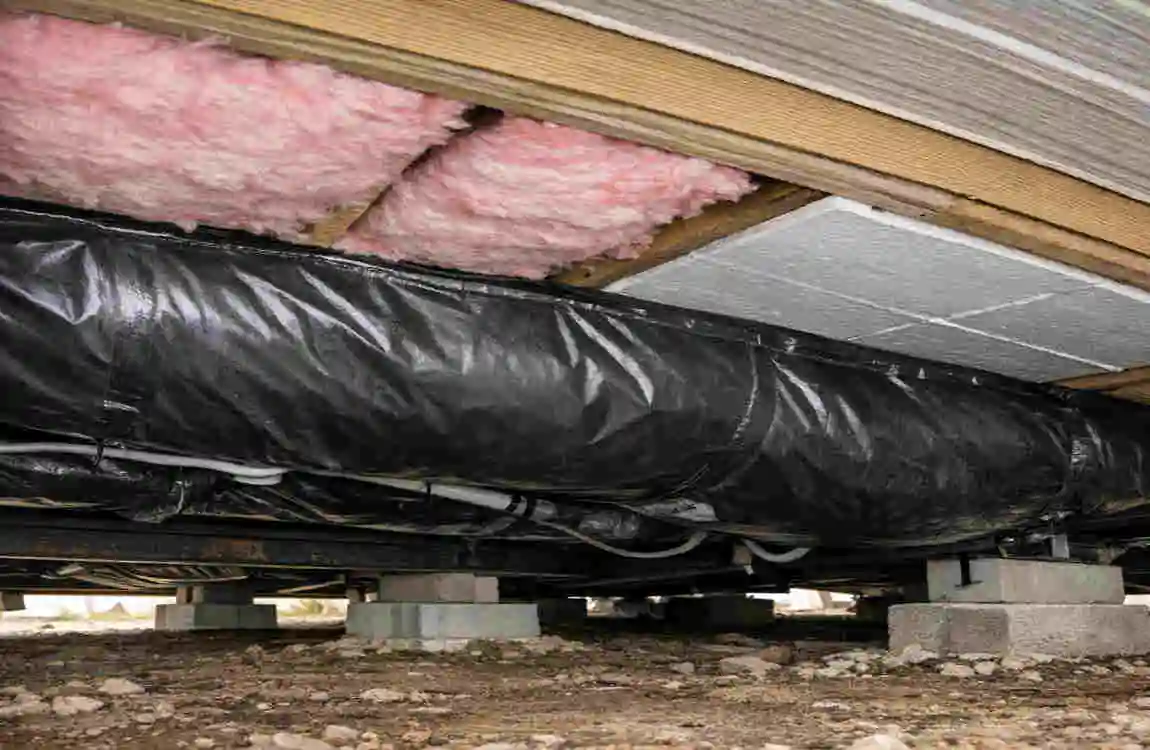
Even with the best intentions, mistakes can happen. Here are some common pitfalls and how to avoid them:
- Skipping Air Sealing: Always seal gaps and cracks before insulating.
- Ignoring Moisture: Use vapor barriers to prevent mold and rot.
- Undersizing R-Value: Choose insulation with an R-value appropriate for your climate.
FAQs About Mobile Home Underbelly Insulation
What type of insulation is used under a mobile home most often?
Closed-cell spray foam and fiberglass batts are the most common choices due to their efficiency and affordability.
Is spray foam the best insulation for a mobile home’s underbelly?
Yes. It offers the highest R-value and seals gaps, making it ideal for extreme climates.
How much does underbelly insulation cost?
The cost ranges from $1 to $ 3 per square foot, depending on the material and installation method.
Can I DIY the insulation for mobile home floor joists?
Yes, with proper tools and safety gear, you can install fiberglass batts or foam boards yourself.
What’s the ideal R-value for mobile home floors?
Aim for an R-value of R-25 or higher for optimal thermal protection.
