
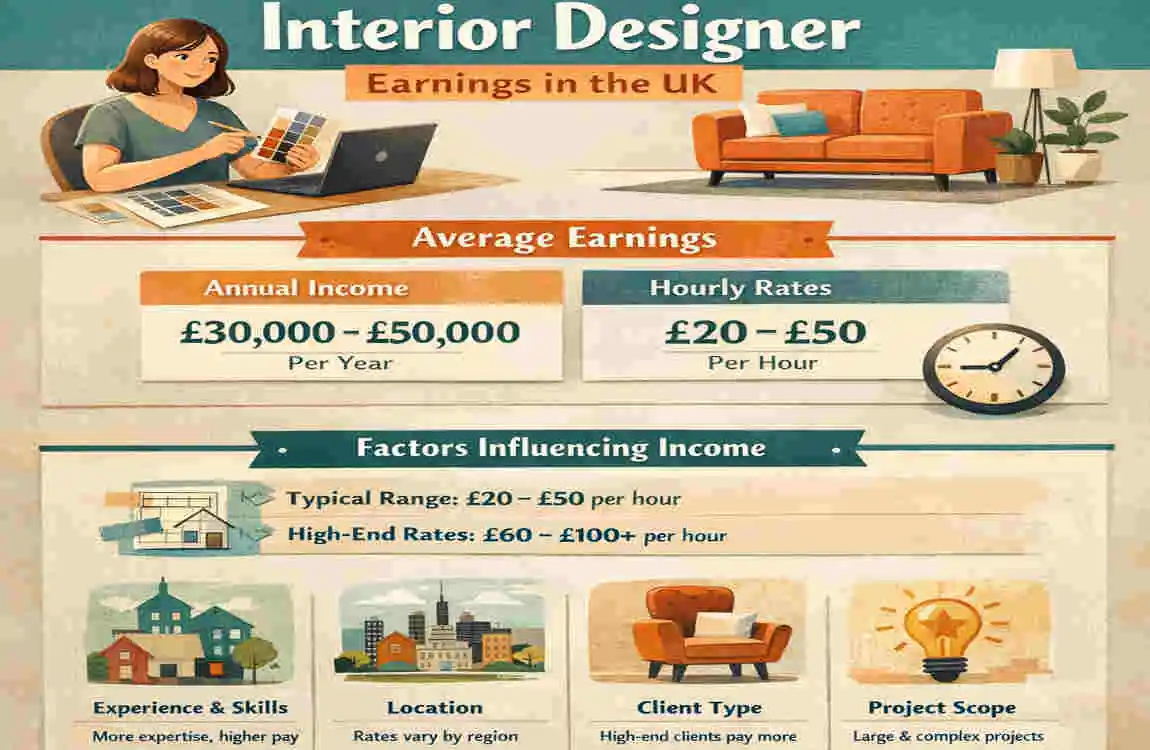
Freelance interior design can be a rewarding career in the UK. It gives you creative freedom, flexible work, and the chance to build your own brand. But one of the biggest questions people ask is: How much do interior designers make in the UK?
| Income Factor | Estimated Earnings (GBP) |
|---|---|
| Hourly Rate | £25–£75 per hour |
| Daily Rate | £200–£500 per day |
| Small Interior Design Project | £500–£2,000 |
| Medium Design Project | £2,000–£5,000 |
| Large Residential Project | £5,000–£15,000+ |
| Annual Gross Income | £25,000–£60,000+ |
| Experienced Specialist Designers | £60,000–£80,000+ annually |
Income changes based on your experience, location, the type of client you work with, and the size of each project. Some freelancers charge by the hour, some by the day, and others prefer fixed project fees. A beginner may earn a modest income at first. Meanwhile, an established designer with a strong portfolio can earn much more.
Interior Designer Earnings in the UK: An Overview
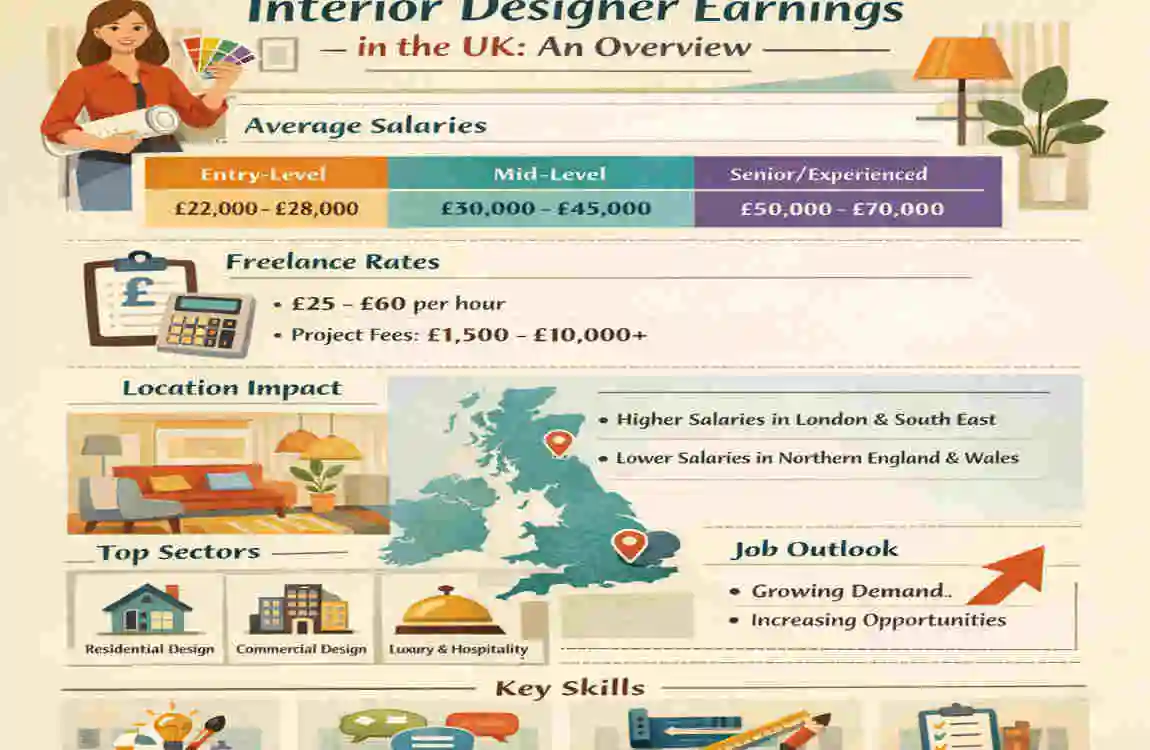
Freelance interior designers in the UK usually earn through a mix of hourly, daily, and project-based fees. Unlike employed designers, freelancers do not receive a fixed salary. That means income can rise and fall from month to month.
Average income ranges
In general, a freelance interior designer in the UK may earn:
- £25 to £75 per hour for standard design work
- £200 to £600 per day for consultations or project work
- £2,000 to £15,000+ per project, depending on the scope
- £25,000 to £60,000+ per year for many freelancers
- £70,000 or more for experienced designers with strong demand
These figures are broad because every designer works differently. Someone handling small room refreshes will earn less than a designer managing full-home renovations or luxury commercial spaces.
Freelance vs employed designers
Employed interior designers often get a regular salary, benefits, and paid leave. Freelancers, on the other hand, have more control over pricing and clients, but they also carry more risk.
That means a freelancer can sometimes earn more than an employee, but only if they keep a steady flow of work and manage costs well.
What affects earnings most
Several things influence income:
- Experience
- Qualifications
- Location
- Client budget
- Project size
- Portfolio quality
- Marketing and referrals
A designer with a polished brand and strong contacts can often charge more than a beginner with limited visibility.
How Much Do Freelance Interior Designers Charge in the UK?
Pricing depends on the service you offer. Some clients want a quick consultation, while others want a complete design service from start to finish.
Common pricing methods
Hourly rates
Many freelance interior designers charge £25 to £100+ per hour. This works well for advice sessions, planning, and smaller tasks.
Daily rates
For larger jobs or site visits, designers may charge £200 to £800 per day. More experienced designers, especially those in London, usually sit at the higher end.
Fixed project fees
Some designers prefer a set price for the whole job. For example:
- Single room design: £500 to £2,500
- Full-home design: £3,000 to £15,000+
- Commercial projects: often much higher, depending on scale
Extra services that can increase fees
You can also charge extra for:
- Furniture sourcing
- Mood boards and concept plans
- 2D or 3D drawings
- Project management
- On-site styling
- Client meetings and revisions
This is important because design work is not only about creativity. It also includes time, planning, admin, and coordination.
Quick pricing guide
Service Type Typical Fee Range
Hourly consultation £25–£100+
Daily design fee £200–£800
Single room design £500–£2,500
Full-home design £3,000–£15,000+
Commercial project Varies widely
Factors That Affect Freelance Interior Designer Income
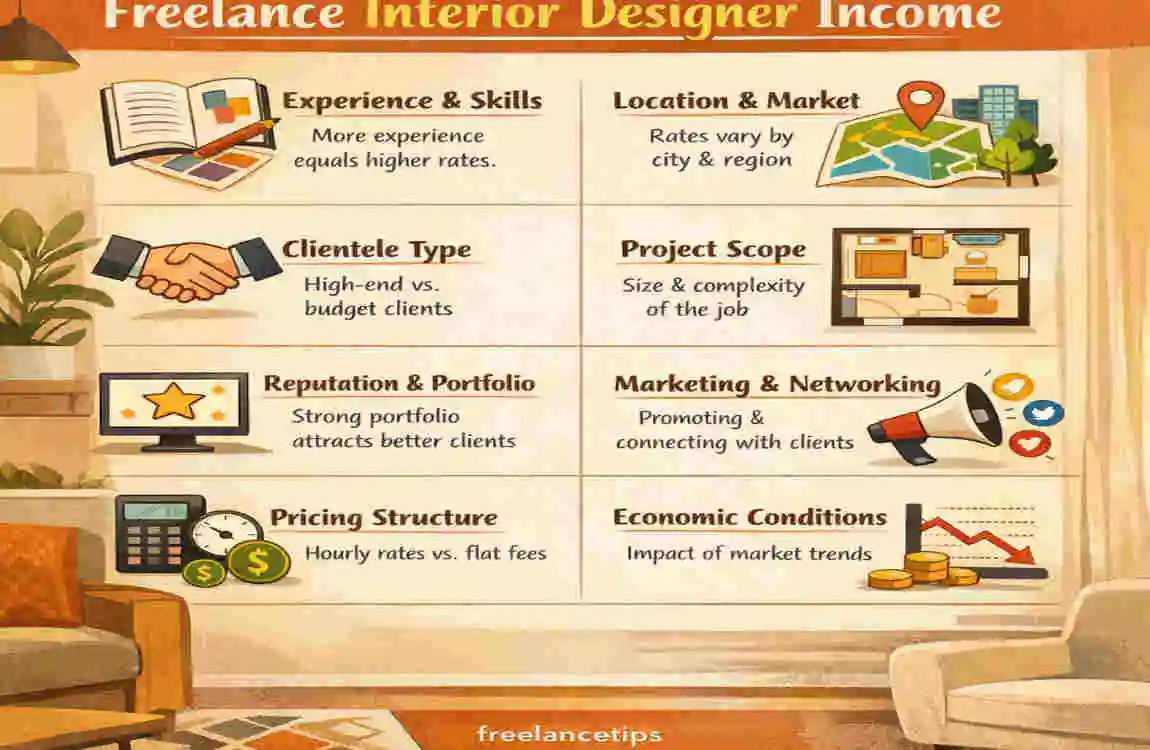
Experience and reputation
The more experience you have, the easier it becomes to charge higher fees. Clients often pay for trust, taste, and confidence. A strong reputation can make a big difference.
Location
Location matters a lot. London and other major cities usually offer higher budgets, but they also come with more competition and higher living costs. In smaller towns, fees may be lower, but so may your expenses.
Specialism
Some niches pay better than others. For example:
- Luxury homes
- Commercial offices
- Hospitality spaces
- Sustainable interiors
- Property styling for sales
If you work in a profitable niche, you may be able to charge premium rates.
Business costs
This is where many beginners make a mistake. Your income is not the same as your profit. You still need to pay for:
- Software
- Insurance
- Marketing
- Transport
- Subcontractors
- Office equipment
- Taxes
A designer may bring in £4,000 in a month but keep much less after expenses.
Client type and project complexity
A private homeowner may have a smaller budget than a developer or business client. A simple room refresh also takes less time than a full renovation, so your earnings will change based on workload and complexity.
How to Increase Your Income as a Freelance Interior Designer
To earn more, focus on value, trust, and visibility. Strong design skills matter, but they are not the only thing that matters.
Build a strong portfolio.
Your portfolio is one of your biggest tools. It shows your style, skill, and results. Even if you are starting, include:
- Personal projects
- Mock concepts
- Before-and-after work
- Styled room visuals
- Client testimonials
Choose a profitable niche.
Instead of trying to serve everyone, pick a niche that matches your strengths. For example, you might focus on modern family homes, boutique offices, or high-end rental properties.
Use service packages
Packages make pricing easier for clients and help you earn more clearly. You might offer:
- One-hour advice calls
- Room redesign packages
- Full project management
- Virtual design services
Market yourself well
Use your website, social media, and referrals to stay visible. Many freelance designers get work through word of mouth, so happy clients are valuable.
Improve client communication
Clear communication helps you avoid delays, confusion, and unpaid work. It also builds trust, which leads to repeat business and better referrals.
Offer virtual design
Virtual interior design can help you work with clients outside your local area. It often takes less travel time and can improve your overall profit.
Practical ways to grow your income
- Ask for testimonials after each project
- Raise prices gradually as demand grows
- Specialize in higher-value projects
- Keep your portfolio updated
- Follow up with past clients for repeat work
Starting a Freelance Interior Design Business in the UK
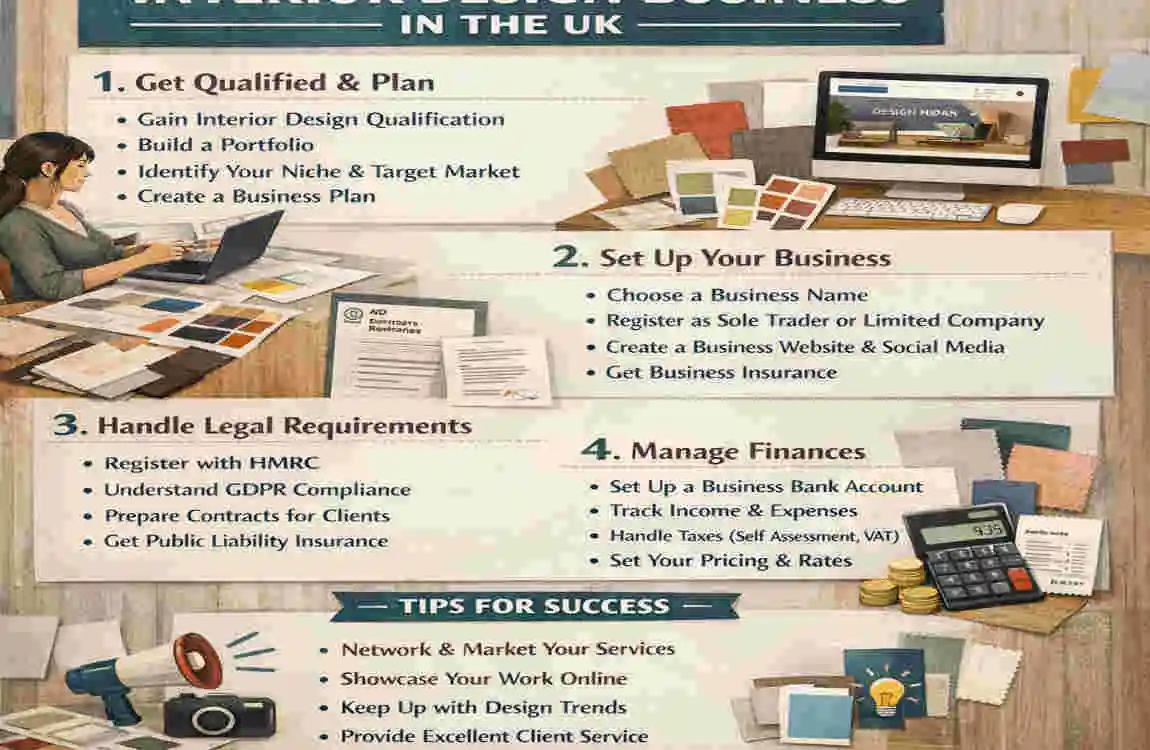
Starting takes more than creativity. You also need a solid business setup.
Skills and qualifications
You do not always need a formal degree, but training helps. Useful skills include:
- Spatial planning
- Colour coordination
- Drawing and software skills
- Budget management
- Communication
- Problem-solving
Business setup
As a freelancer, you will need to handle self-employment tasks such as:
- Registering with HMRC
- Tracking income and expenses
- Issuing invoices
- Keeping contracts
- Paying tax on time
Startup costs
Common startup expenses may include:
- Design software
- A laptop or tablet
- Insurance
- Website and branding
- Marketing materials
- Samples and presentation tools
Managing income gaps
Freelance work can be uneven. Some months will be busy, and some will be quiet. That is why it is smart to set financial goals and keep a cash reserve.
First-year goal
In your first year, focus on building trust, gaining clients, and learning how to price your time properly. Your goal shouldn’t be just income. It should also be consistency.
Frequently Asked Questions
How much does an interior designer make in the UK?
It depends on experience and role. Employed designers may earn a salary, while freelancers can earn anywhere from £25,000 to £60,000+ a year, sometimes more.
How much do freelance interior designers charge per hour?
Many charge between £25 and £100+ per hour, depending on skill level and project type.
Can freelance interior designers earn £50,000 a year?
Yes, they can. With steady clients, good pricing, and strong project management, £50,000 a year is possible.
Do interior designers earn more in London?
Usually yes. London clients often pay more, but costs and competition are also higher.
Is freelance interior design profitable?
It can be very profitable if you manage your rates, expenses, and client flow well.
What qualifications do freelance interior designers need?
There is no single required path, but interior design training, a strong portfolio, and practical skills help a lot.
How can beginners find their first clients?
Start with your network, build a simple portfolio, ask for referrals, and use social media to show your work.
