
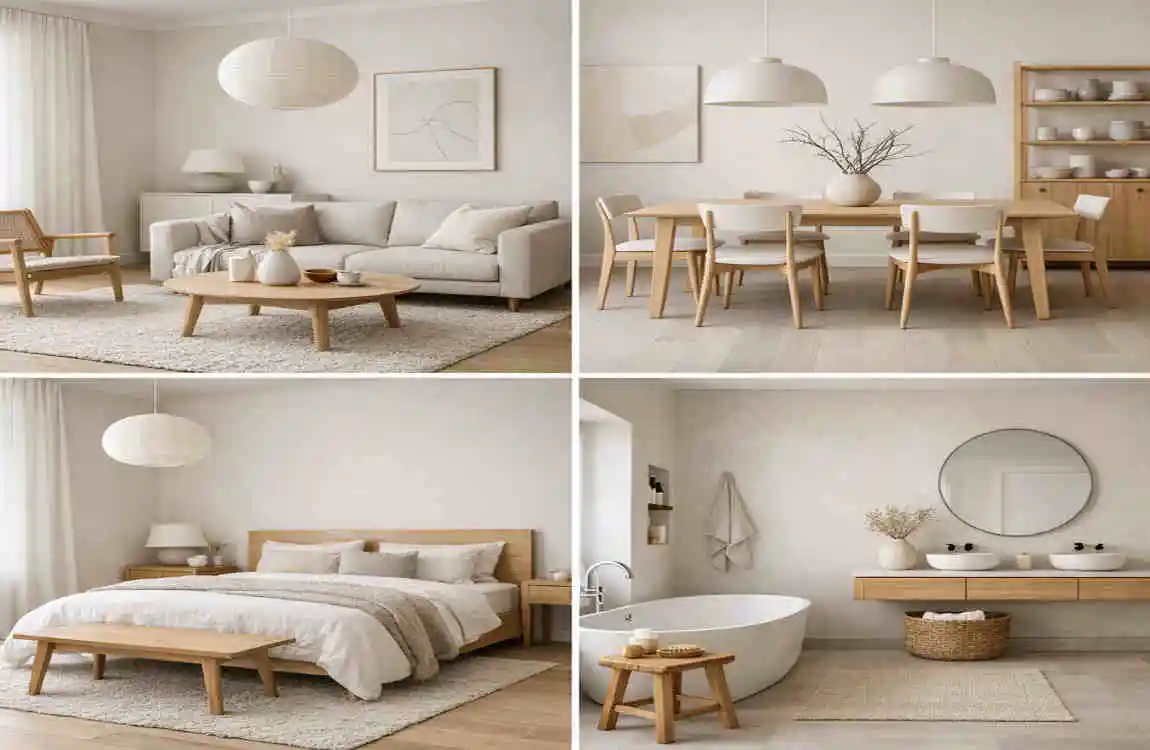
Minimalist and Scandinavian interior design styles are two of the most popular choices for modern homes because they feel clean, calm, and easy to live with. They focus on simple forms, functional furniture, and a more peaceful overall look.
Minimalist design keeps things very simple. It removes anything without a clear purpose. Scandinavian design also values simplicity, but it adds more warmth, softer textures, and a cozy feeling.
That is why many people love these styles. They help a home feel open, stylish, and comfortable at the same time. If you want a space that looks neat without feeling cold, these two styles are a smart place to start.
What Minimalist Interior Design Means
Minimalist design is about less, but better. It uses only what is needed and avoids extra decoration. The goal is to make the room feel calm and organized.
This style often uses clean lines, plain shapes, and a simple color palette. Choose furniture for function first, then appearance. The result is a space that feels light, clear, and uncluttered.
What Scandinavian Interior Design Means
Scandinavian design comes from Nordic countries and is known for its bright, cozy, and practical look. It uses light colors, natural wood, and soft textures to make rooms feel warm and welcoming.
Unlike strict minimalism, Scandinavian design often includes details that make a room feel more lived-in. It stays simple, but it feels softer and more personal.
Key Similarities Between the Two Styles
These styles overlap in many ways. Both focus on:
- Simple furniture
- Neutral colors
- Clean layouts
- Practical use of space
- A calm atmosphere
Because of that, they work very well together.
Main Differences Between Minimalist and Scandinavian Interiors
The biggest difference is the mood. Minimalist interiors often feel sharper and more refined. Scandinavian interiors feel warmer and cozier.
Minimalist spaces may have fewer objects overall. Scandinavian rooms may include more soft textures, like rugs, blankets, and cushions, to create a welcoming feel.
Why These Styles Are Popular for Modern Homes
People like these styles because they make homes feel easier to manage. They suit small homes, busy lifestyles, and anyone who wants a more organized space.
They also age well. Instead of following a short trend, they rely on simple ideas that stay attractive over time.
Key Features of Minimalist Interior Design
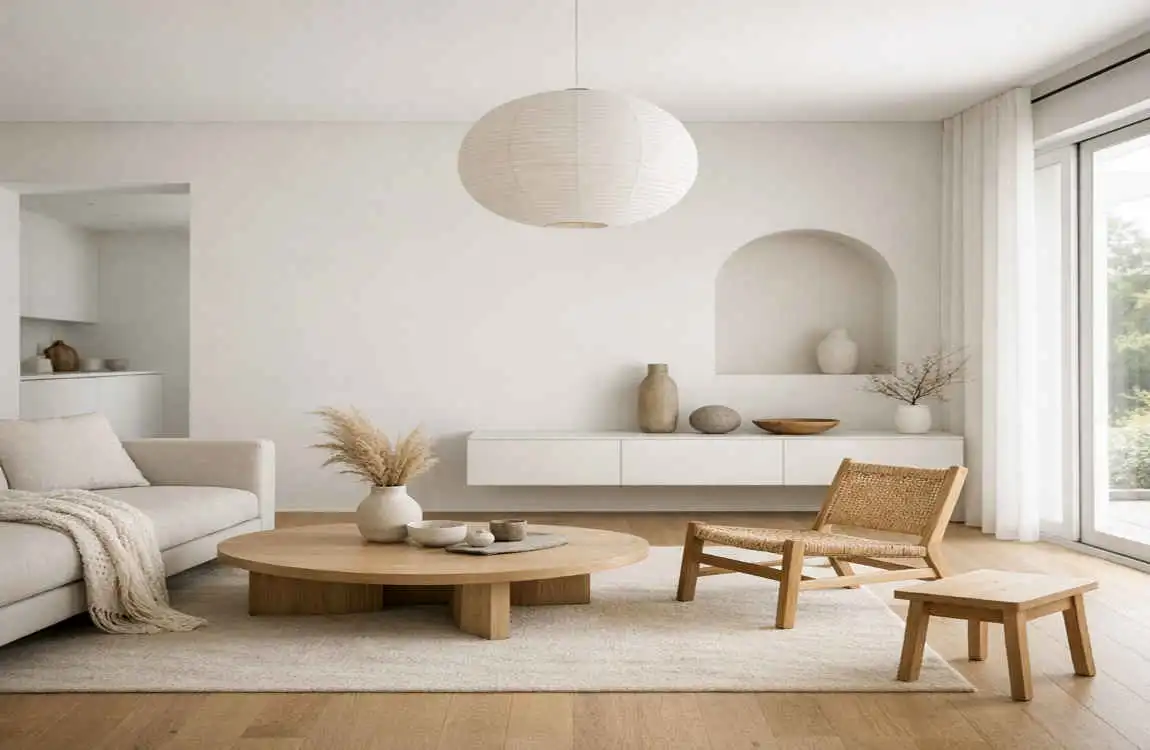
Clean Lines and Simple Shapes
Minimalist interiors often use straight lines and basic shapes. Furniture is usually low-key, smooth, and not overly decorative.
This creates a calm visual flow. Your eye does not get pulled in too many directions, so the room feels more open and balanced.
Neutral Color Palettes
A minimalist home usually uses colors like white, beige, gray, black, and soft earth tones. These shades keep the space feeling quiet and uncluttered.
You can still use contrast, but it should be simple and controlled. For example, a black chair in a white room can look bold without making the room feel busy.
Less Clutter, More Function
Minimalism works best when every item has a reason to be there. That does not mean the room should feel empty. It means avoiding extras that don’t add value.
Storage matters a lot in this style. Hidden cabinets, clean shelves, and smart furniture choices help you keep the room tidy.
Open and Airy Spaces
Minimalist interiors often feel open because they use space carefully. They do not fill every corner with furniture or décor.
Natural light is very important here. Large windows, light curtains, and simple layouts help the room feel brighter and bigger.
Key Features of Scandinavian Interior Design
Natural Materials and Textures
Scandinavian interiors often use wood, wool, linen, cotton, and leather. These materials add warmth and make the room feel more grounded.
Wood is especially important. It softens the space and adds a natural touch that works well with simple furniture.
Light and Neutral Colors
This style usually starts with a light base. White walls, pale floors, and soft neutral tones help the room feel bright, especially during darker seasons.
Small accent colors may appear too, but they are usually subtle. Common choices include soft green, dusty blue, muted beige, and warm gray.
Cozy and Comfortable Furniture
Scandinavian furniture is practical, but it also feels comfortable. Sofas, chairs, tables, and beds are chosen to be useful and pleasant to live with.
The shapes stay simple, but comfort remains important. This is one reason Scandinavian spaces feel so inviting.
Hygge and Cozy Details
A big part of Scandinavian design is the feeling of hygge, which means comfort, warmth, and contentment. You can create that feeling with soft lamps, blankets, cushions, candles, and rugs.
These details make the room feel warm without looking cluttered. That balance is what gives Scandinavian design its charm.
Minimalist vs. Scandinavian Interior Design: What Is the Difference?
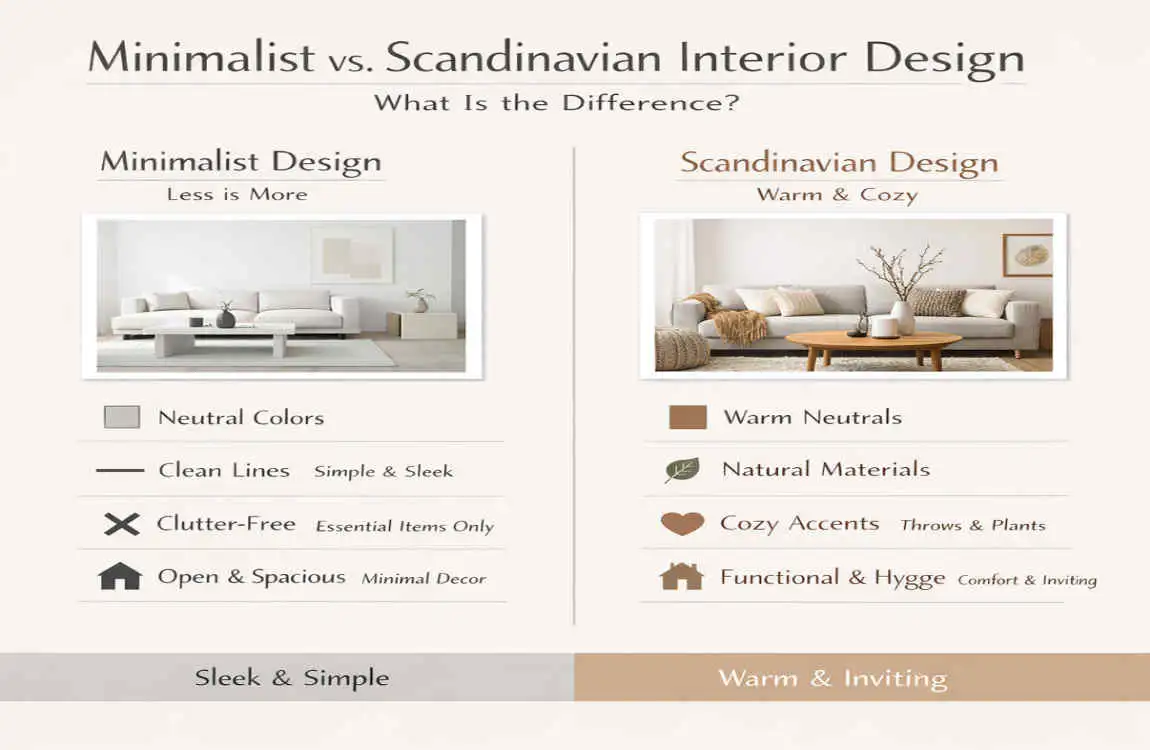
Color
Minimalist interiors often lean toward a more monochrome look. Scandinavian spaces also use light colors, but they may feel softer and more varied.
Furniture
Minimalist furniture is usually sleek and stripped back. Scandinavian furniture is still simple, but it often feels more comfortable and homey.
Décor
Minimalist rooms use very little décor. Scandinavian rooms may use a few more cozy accents, like textiles, plants, or soft lighting.
Materials
Minimalist design can use wood, glass, metal, and concrete. Scandinavian design leans more toward natural materials like wood, wool, and linen.
Atmosphere
Minimalist spaces feel clean and refined. Scandinavian spaces feel warm, bright, and welcoming.
FeatureMinimalist DesignScandinavian Design
Main focus Simplicity and function Function, comfort, and warmth
Colors Neutral and monochromatic Light neutrals with soft accents
Furniture Simple and streamlined Simple, practical, and comfortable
Materials Wood, glass, metal, concrete Wood, wool, linen, leather
Décor Minimal Simple but cozy
Overall feel Clean and calm Warm, bright, and inviting
How to Combine Minimalist and Scandinavian Interior Design Styles
Choose a Neutral Base
Start with a calm color foundation. White, cream, beige, and light gray work very well because they keep the room open and bright.
Use these shades on walls, large furniture, and major surfaces. That gives you a simple base to build on.
Add Natural Wood
Wood is one of the easiest ways to bring warmth into a minimalist room. It also helps the space feel more Scandinavian.
Use it in flooring, tables, shelves, chairs, or bed frames. Light wood often works especially well in this kind of design.
Use Functional Décor
Decor should have a purpose, even if it is a small one. A vase, tray, lamp, or basket can be both beautiful and useful.
This helps you keep the room clean while still giving it personality.
Add Soft Textures
A room with only hard surfaces can feel flat. Add soft layers through rugs, cushions, throws, and curtains.
These textures make the room more comfortable and stop it from feeling too strict or cold.
Improve Natural and Artificial Lighting
Lighting matters a lot in both styles. Use as much natural light as possible during the day.
At night, add warm lamps, pendant lights, and floor lights. Soft lighting makes the space feel calm and cozy.
Keep Storage Simple
Good storage is essential. Built-in cabinets, floating shelves, and hidden storage help you keep the room neat without making it feel heavy.
When storage blends into the room, the design stays clean and easy to enjoy.
Room-by-Room Ideas for a Stylish Minimalist-Scandinavian Home
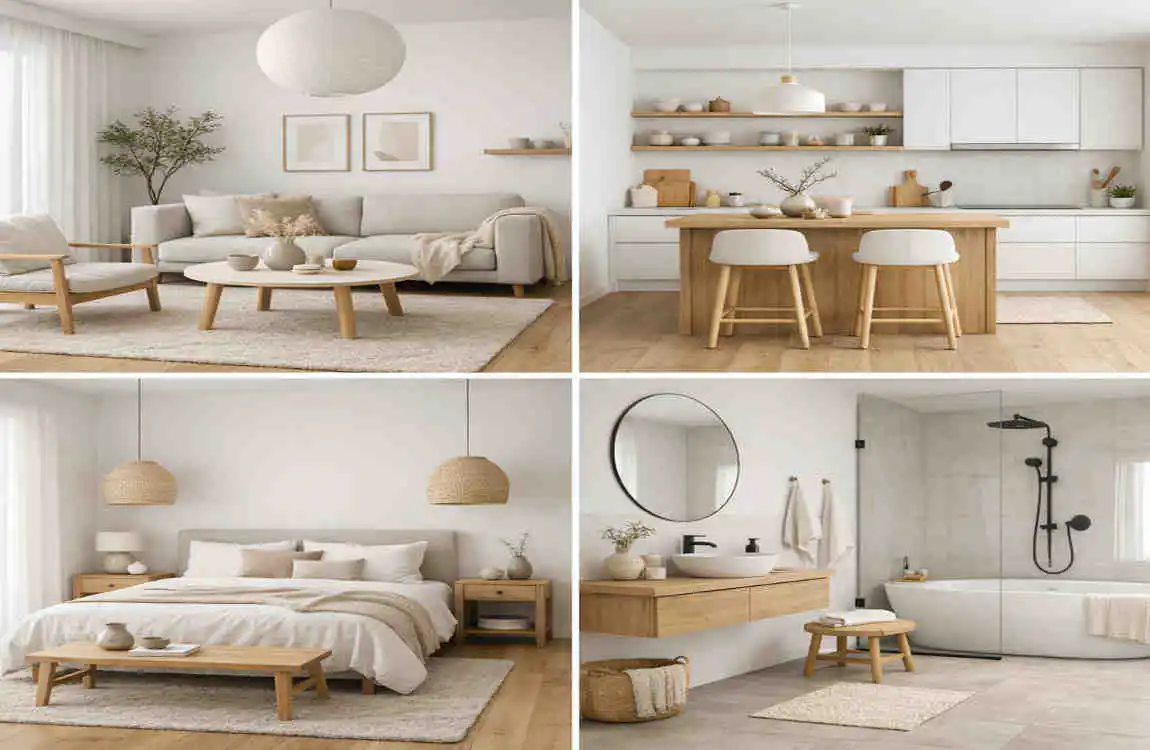
Living Room
Your living room should feel open, comfortable, and calm. A neutral sofa, a wooden coffee table, and a simple rug can create a great base.
Keep wall décor minimal. One large print or a few small pieces can be enough. Add warm lighting to finish the space.
Bedroom
The bedroom should feel restful. A simple bed frame, neutral bedding, and wooden nightstands work very well.
Keep surfaces clear and use soft fabrics to add comfort. The goal is to make the room peaceful and easy to relax in.
Kitchen
A minimalist-Scandinavian kitchen often uses flat-panel cabinets, light wood, white finishes, and simple hardware.
Open shelving can work if you keep it organized. The kitchen should feel practical, bright, and easy to clean.
Bathroom
In the bathroom, use neutral tiles, simple mirrors, and clean fixtures. A wood-look accent can add warmth without making the room feel busy.
Keep the design fresh and uncluttered. This keeps the bathroom calm and modern.
Home Office
A home office should support focus. Use a clean desk, an ergonomic chair, and good natural light.
Add only a few accessories. Organized storage helps keep the room professional and distraction-free.
Frequently Asked Questions
What is the difference between minimalist and Scandinavian interior design?
Minimalist design focuses more on simplicity and function, while Scandinavian design adds warmth, comfort, and natural textures.
Can minimalist and Scandinavian design be combined?
Yes. They work very well together because both styles value clean lines, simple layouts, and practical furniture.
What colors are best for Scandinavian minimalist interiors?
White, beige, light gray, soft brown, and muted earthy tones work very well.
Is Scandinavian interior design expensive?
Not always. You can create the look with simple furniture, natural materials, and smart decorating choices.
How can I make my home look minimalist and Scandinavian on a budget?
Start with decluttering, use neutral paint, buy simple furniture, add wood accents, and use soft textiles.
What materials are commonly used in Scandinavian interiors?
Wood, wool, linen, cotton, and leather are very common.
How do you make a minimalist home feel cozy?
Use soft lighting, warm textures, rugs, cushions, and a few natural materials.
| Feature | Minimalist Style | Scandinavian Style |
|---|---|---|
| Main Idea | Simple, clean, clutter-free | Cozy, functional, and natural |
| Color Palette | White, beige, gray, neutral tones | White, cream, light gray, soft earthy tones |
| Furniture | Simple shapes and sleek designs | Functional, comfortable, and elegant |
| Materials | Glass, metal, wood, concrete | Light wood, wool, linen, cotton |
| Decor | Very limited and purposeful | Simple decor with cozy accents |
| Lighting | Clean, modern fixtures | Natural light plus warm lamps |
| Flooring | Plain wood, tile, or polished surfaces | Light-colored wood or natural flooring |
| Best For | Modern, uncluttered homes | Warm, inviting family spaces |
