
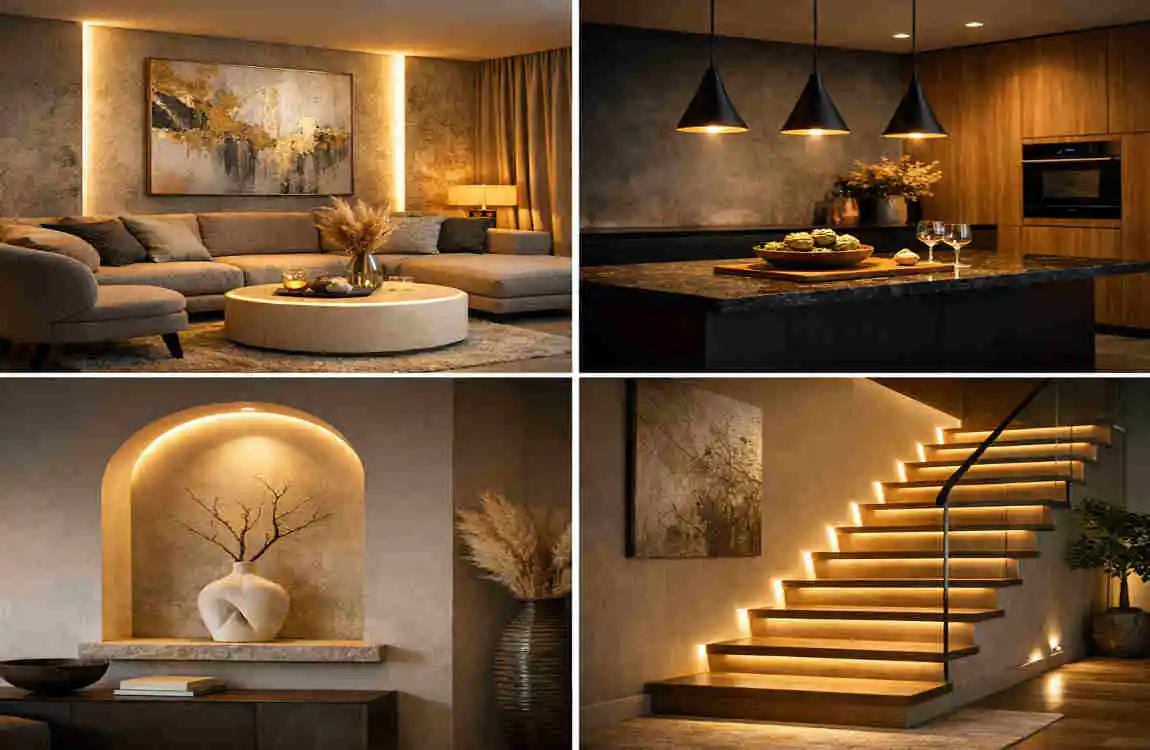
Lighting does much more than brighten a room. It helps shape what people notice first, how a room feels, and where the eye naturally goes. That is why designers treat light as a design tool, not just a practical need.
When you understand how interior designers use lighting to draw attention, you can make a room feel more balanced, stylish, and purposeful. Brightness, direction, contrast, and fixture style all help create a clear focal point. Simply put, lighting guides the eye.
How Interior Designers Use Lighting to Create Focal Points
Highlighting artwork and wall décor
Designers often use accent lighting to make artwork stand out. A small picture light above a framed print can make it feel special. Spotlights and track lighting also work well because they focus light exactly where it is needed.
This is useful when you want one wall to become more important than the others. Instead of letting the artwork blend into the background, the light gives it attention and depth.
Making furniture the center of attention
Lighting can also pull attention toward furniture. A dining table with a pendant above it becomes a natural gathering point. A reading chair near a floor lamp can feel like its own little zone. Even a bed can look more important when soft lights frame the headboard.
If you want a room to feel more organized, light the piece you want people to notice first.
Using statement light fixtures
Sometimes the fixture itself becomes the focal point. A chandelier, sculptural pendant, or oversized lamp can act like art. These lights do two jobs at once: they brighten the space and draw the eye upward or inward.
That is one reason statement fixtures are so popular in modern homes. They help a room feel finished without adding too many extra objects.
Using Light and Shadow to Guide the Eye
Creating contrast
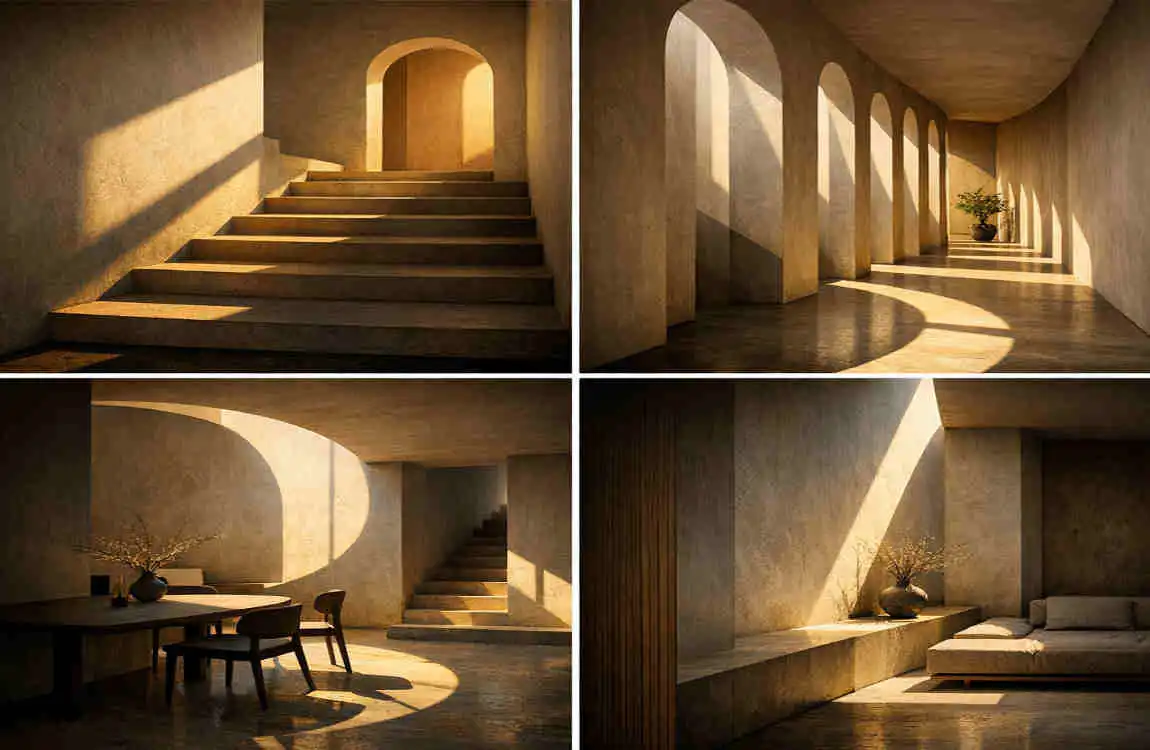
One of the strongest design tools is lighting contrast. When one area is brighter than the rest of the room, people naturally look there first. This is how designers create visual hierarchy.
For example, a bright sofa area with softer light around the edges feels more focused. The eye knows where to go because the room does not compete with itself.
Using directional lighting
Directional lighting helps draw attention to a specific object or surface. Downlights can highlight a table. Uplights can make a plant or wall feature feel taller. Wall washing can make textured surfaces stand out more clearly.
This kind of lighting makes a room feel thoughtful, not random.
Creating a visual path
Lighting can also guide people through a space. In hallways, staircases, and open-plan rooms, a series of lights can lead the eye from one zone to the next.
This flow matters because it helps the room feel connected. Instead of looking flat, the space feels like it has movement and direction.
Layering Different Types of Lighting
Interior designers rarely rely on a single light source. They usually combine several layers so the room feels complete.
Ambient lighting
Ambient lighting gives overall light to the room. It is the base layer. Ceiling fixtures, recessed lights, and some large pendant lights often do this job.
Without ambient light, a room can feel too dark or uneven. It creates the general brightness that lets everything else work properly.
Task lighting
Task lighting helps with specific activities like reading, cooking, getting dressed, or working. A desk lamp, under-cabinet light, or vanity light is a good example.
This layer matters because it makes the room more useful. At the same time, it can still help draw attention to certain spots.
Accent lighting
Accent lighting is the layer that most clearly supports focal points. It highlights shelves, art, plants, and architectural details.
When used well, it adds depth and makes the room feel more designed. It also keeps the eye from drifting everywhere at once.
Simple lighting layers at a glance
Lighting LayerMain PurposeBest Use
Ambient General room brightness Overall comfort
Task Focused activity light Reading, cooking, working
Accent Draw attention Art, décor, architecture
How Lighting Draws Attention to Architectural Features
Highlighting ceilings and walls
Lighting can make architecture feel more valuable and more visible. A coffered ceiling, wood paneling, or textured wall looks more impressive when light touches it from the right angle.
Soft uplighting or wall washing can add shape and depth. This makes flat surfaces look richer and more interesting.
Emphasizing staircases and hallways
Staircases and hallways are often overlooked, but lighting can change that. Step lights, wall sconces, and linear lights can turn them into design features instead of plain transition spaces.
This is especially helpful in homes where you want every area to feel intentional.
Enhancing natural features
If a home has brick, stone, or a fireplace wall, lighting can help show off those textures. The same idea works with large windows, exposed beams, or built-in shelves.
A small amount of light in the right place can make a natural feature feel more important without looking overdone.
Choosing Color, Brightness, and Placement
Warm vs. cool light
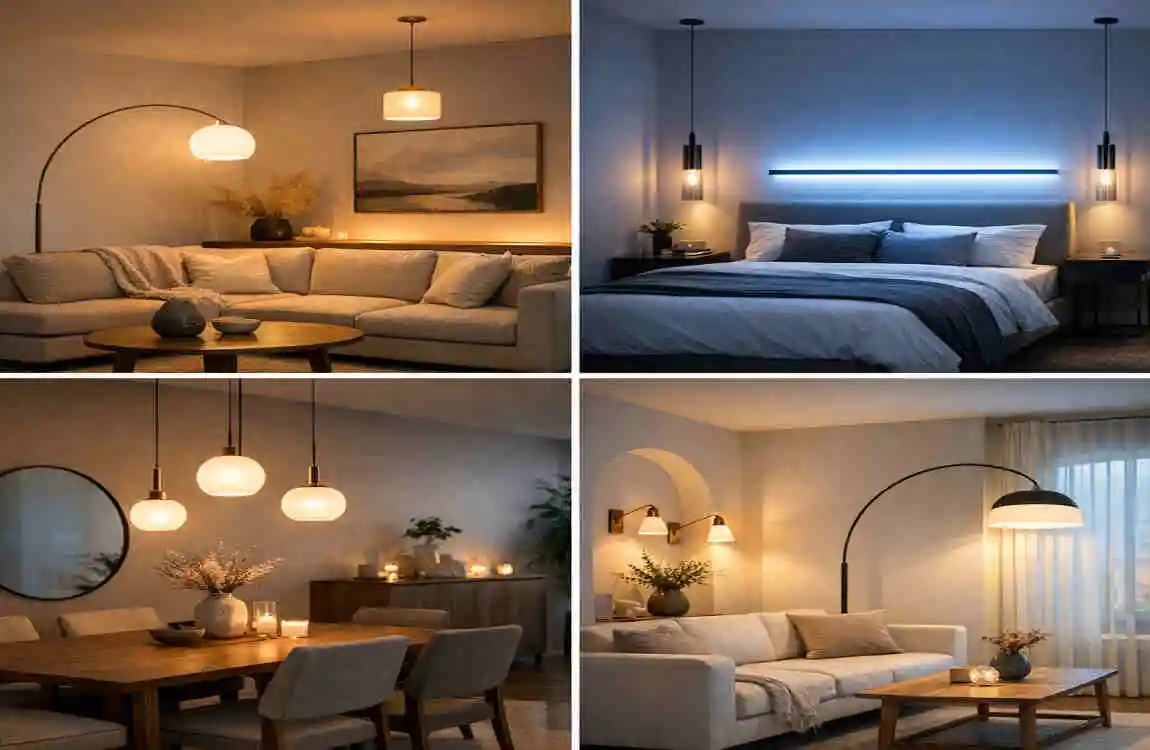
Warm light feels softer and more relaxing. Designers often use it in living rooms and bedrooms because it creates a comfortable mood.
Cool light feels brighter and sharper. It works better in kitchens, bathrooms, and work areas where clarity matters more.
Light color can change the whole mood of a room, so it should match the space’s purpose.
Brightness and dimming
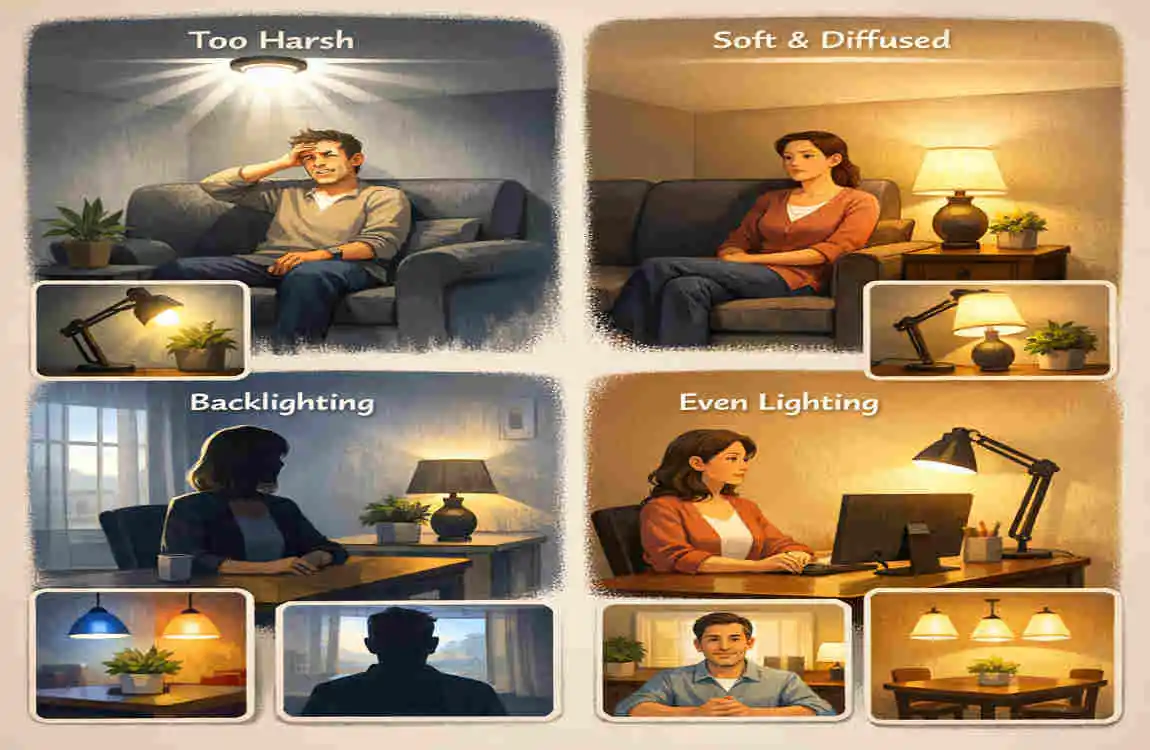
Brightness controls attention. A brighter area naturally feels more important. But too much brightness can make a room feel flat and harsh.
That is why dimmers are so useful. They let you adjust the light based on the time of day, the mood you want, and the feature you want to highlight.
Fixture size and position
A light fixture should match the room’s scale. A tiny pendant over a large dining table may look weak. An oversized fixture in a small room may feel too heavy.
Height also matters. If a light hangs too high, it may not draw attention. If it hangs too low, it can feel awkward. Good placement helps the room feel balanced.
Room-by-Room Lighting Strategies
Living room
In the living room, designers often mix lamps, overhead light, and accent lighting. Artwork, a fireplace, or a feature wall can become a focal point.
A statement chandelier or a tall floor lamp can also help anchor the room.
Kitchen
In kitchens, pendant lights over the island work well. They help define the work area and make the island feel like a center point.
Under-cabinet lighting also helps by brightening the workspace and adding a clean, finished look.
Bedroom
Bedrooms usually need softer light, but that does not mean they should be plain. Sconces beside the bed, gentle headboard lighting, or a small pendant can create a calm focal point.
The idea is to keep the room restful while still giving it visual interest.
Dining room
The dining room is one of the easiest places to create a focal point. A chandelier or pendant centered above the table naturally brings everyone’s attention inward.
If you use a dimmer, you can make the room feel more intimate during meals.
Entryway and hallway
The entryway is where first impressions happen. A statement pendant, a wall light, or lighting on artwork can make the space feel welcoming right away.
In hallways, a series of lights can guide the eye and make the space feel less plain.
Common Lighting Mistakes and How to Avoid Them
Using only one ceiling light
A single ceiling light usually creates flat lighting. It can make the room feel less interesting and may cause important details to go unnoticed.
Add layers so the room has depth.
Making everything equally bright
When every part of the room is lit the same way, nothing stands out. The eye has no reason to focus anywhere.
A better approach is to choose one main point and support it with softer lighting around it.
Ignoring scale and placement
A fixture that is too small may disappear. One that is too large may overpower the room. The same is true for placement.
Before installing a light, think about where people will look and how the fixture fits the room.
Overlighting the room
Too much light can create confusion instead of focus. If every corner shines equally, the room can lose its visual shape.
Use light with purpose. Let some areas stay softer so the focal point can stand out.
FAQ: How Interior Designers Use Lighting to Draw Attention
How do interior designers use lighting to draw attention?
They use brightness, contrast, direction, placement, and layered lighting to guide the eye toward the most important parts of the room.
What type of lighting creates a focal point?
Accent lighting and statement fixtures are the most common choices for creating a focal point.
How does lighting affect visual hierarchy?
Brighter or more focused light makes one area stand out more than the rest. That creates visual hierarchy, which helps the room feel organized.
Can lighting make a small room look better?
Yes. The right lighting can make a small room feel deeper, more balanced, and less crowded.
Why is layered lighting important in interior design?
Layered lighting gives you more control. It supports mood, function, and visual emphasis at once.
How can I use lighting to highlight artwork?
Use picture lights, spotlights, or track lighting aimed directly at the piece. Keep the light controlled so the art stands out without glare.
Should focal-point lighting be brighter than the rest of the room?
Not always much brighter, but it should have enough contrast to stand out clearly.
| Lighting Technique | How It Draws Attention |
|---|---|
| Accent Lighting | Highlights artwork, shelves, or decorative features. |
| Pendant Lights | Creates a focal point above dining tables or kitchen islands. |
| Wall Lighting | Directs attention to textured walls, artwork, or architectural details. |
| Recessed Lighting | Provides a clean way to emphasize selected areas. |
| Track Lighting | Focuses light on specific objects or displays. |
| Under-Cabinet Lighting | Highlights countertops and improves kitchen visibility. |
| Statement Fixtures | Acts as a decorative centerpiece in a room. |
