
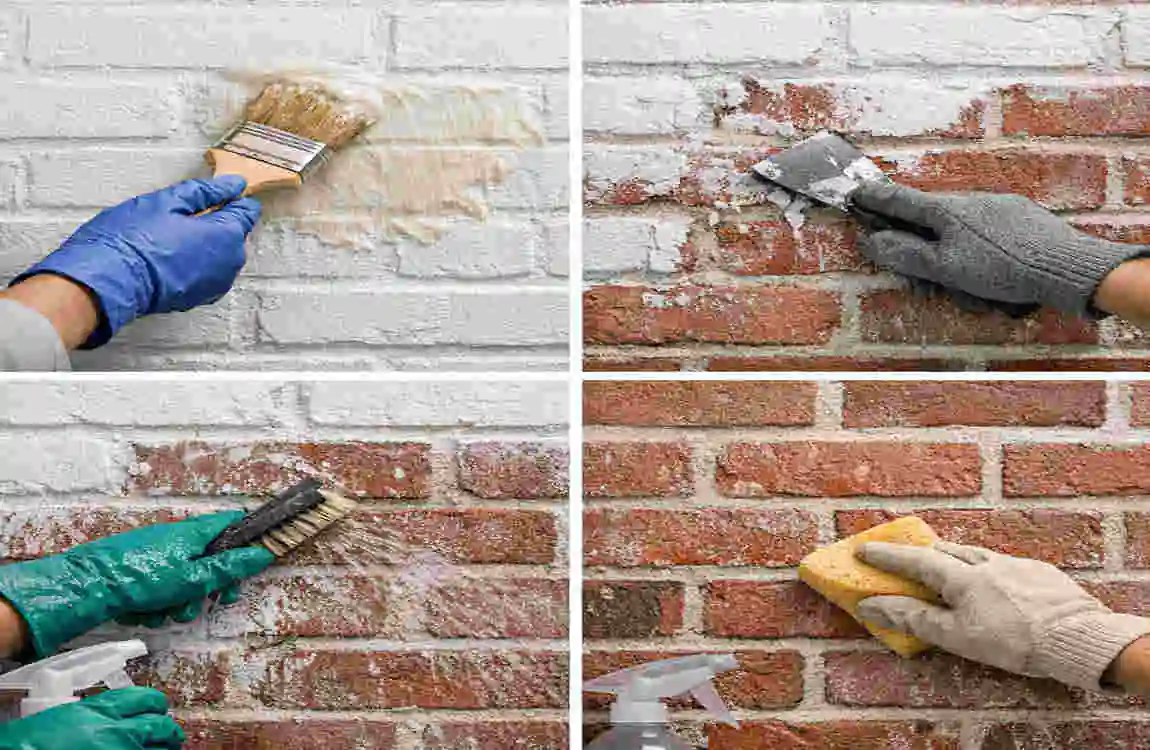
Painted interior brick can look charming at first, but over time it may start to feel heavy, dated, or worn. If the paint peels, chips, or no longer matches your style, you may want to bring back the brick’s natural look.
That is where how to remove paint from interior brick becomes important. The job sounds simple, but brick is not like drywall or wood. Heavy scraping, harsh chemicals, excessive water, or abrasive tools can damage it.
Why Remove Paint From Interior Brick?

Reasons Homeowners Remove Paint
Many homeowners choose to remove paint to make the brick look more natural. Exposed brick can add warmth, texture, and character to a room.
Some people also remove paint to update an old fireplace or accent wall. In other cases, the paint is already peeling, which makes the wall look messy rather than finished.
A clean brick surface can make a room feel more authentic and balanced. It often becomes a prominent feature rather than something hidden beneath layers of colour.
Can Painted Brick Be Restored?
Yes, in many cases it can. But the final result depends on a few things:
- How many paint layers are on the brick
- What type of paint was used
- How old and fragile the brick is
- How well the mortar has held up
Older brick may need extra care because it can be softer or more worn. That is why patience matters more than speed.
What You Need Before Removing Paint
Basic Tools and Supplies
Before you begin, gather the right supplies so you do not stop halfway through the job.
You will usually need:
- Plastic scraper
- Soft-bristle brush
- Protective gloves
- Safety glasses
- Drop cloths
- Buckets and sponges
- Mild cleaning solution
- Masonry-safe paint remover
A plastic scraper is better than a metal one for starting the job because it is less likely to damage the brick.
Safety Precautions
Interior paint removal can create dust, fumes, and mess. Protect yourself and the room before you start.
Keep these simple safety steps in mind:
- Open windows or improve ventilation
- Cover nearby furniture and floors
- Wear gloves and safety glasses
- Do not mix cleaning or chemical products
- Test any product in a hidden spot first
These steps may seem small, but they help you avoid damage and keep the work area safe.
How to Remove Paint From Interior Brick Safely
Test a Small Area First
This is one of the most important steps. Never start on the full wall right away.
Pick a hidden section and try your chosen method there first. Watch how the brick and mortar react. If the surface changes colour, becomes rough, or starts to crumble, stop and try a gentler approach.
Remove Loose Paint Gently
Start with the paint that is already peeling or lifting. That is the easiest to remove and gives you a clear idea of how the rest will respond.
Use a plastic scraper and work slowly. Avoid digging into the brick. The goal is to lift paint, not shave the surface.
Apply a Suitable Paint Remover
If the paint stays stuck, use a masonry-safe paint remover. Choose a product made for brick or concrete, not just general household surfaces.
Follow the label carefully. Let it sit for the suggested time to soften the paint. Rushing this step usually makes the job harder, not easier.
Scrub Away Softened Paint
Once the paint softens, use a soft or medium-soft masonry brush. Work in small sections so you can stay in control.
Do not scrub too hard. Heavy pressure can wear down the brick face or damage the mortar joints.
Clean the Brick
After the paint comes off, remove any leftover residue with clean water and a sponge. Be careful not to soak the wall.
Then let the brick dry fully before deciding whether more work is needed. Sometimes the brick looks better once it has dried completely.
Methods to Avoid When Removing Paint From Brick
Avoid Aggressive Sandblasting
Sandblasting can strip paint, but it can also strip away the brick’s surface. That can leave the wall rough, weak, and damaged.
For interior brick, this method is usually too harsh.
Be Careful With Pressure Washing
Pressure washing is not a good choice for most indoor brick walls. It adds too much moisture and can create problems inside the home.
Too much water can also seep into the mortar, causing damage over time.
Avoid Harsh Acids
Strong acids may seem like a fast fix, but they can harm the brick and mortar. They may also create dangerous fumes.
Always consider brick and personal safety before using any chemical.
Don’t Use Excessive Scraping
Metal tools and too much force can chip, scratch, or gouge the surface. Brick may look strong, but it can still be damaged easily.
Gentle pressure always works better than force.
How to Remove Stubborn Paint From Interior Brick
Multiple Paint Layers
If the wall has several coats of paint, do not expect it to come off all at once. Thick layers usually need more than one gentle treatment.
Work in stages. Remove what you can, clean the area, then repeat if needed. This gives you more control and lowers the risk of damage.
Old or Hardened Paint
Old paint can harden and become stuck over time. A masonry-safe remover can help soften it again.
Always test first. One product may work well on one wall but poorly on another because the paint type or brick condition may differ.
Paint in Brick Crevices
Paint often stays trapped in the small grooves and edges of brick. A soft brush can help reach these spots.
Use small, careful motions. Do not dig into the mortar joints, because that can weaken them.
How to Protect Brick and Mortar During Paint Removal
Brick-and-mortar do not always react the same way. The brick face and the mortar joints may have different strength levels, so both need care.
To protect them:
- Use gentle tools
- Keep moisture under control
- Avoid scraping mortar joints directly
- Stop if the surface starts to crumble
- Take extra care with historic brickwork
If the brick is fragile, decorative, or very old, it may be better to stop and call a professional. Preserving the wall is more important than removing every last bit of paint.
Cleaning and Finishing the Exposed Brick
Remove Residue
After the paint is gone, there may still be leftover remover or softened paint. Wipe it away carefully with a sponge and clean water.
Do not leave chemical residue behind. That can affect the brick’s appearance and long-term condition.
Let the Brick Dry
Drying time matters. Brick can hold moisture longer than expected, especially if you used any liquid product.
Wait until the wall is completely dry before applying any finish or sealer.
Inspect the Surface
Look over the wall carefully. Check for:
- Remaining paint
- Loose mortar
- Cracks
- Soft spots
- Uneven areas
This is the time to decide whether the wall needs any light repair before you leave it exposed.
Optional Brick Sealing
Some homeowners choose a breathable masonry sealer to help protect the brick after cleaning. This can be useful if the wall is in a high-use area or near moisture.
Never seal damp brick. If moisture is trapped inside, sealing can cause more problems than it solves.
Common Mistakes to Avoid
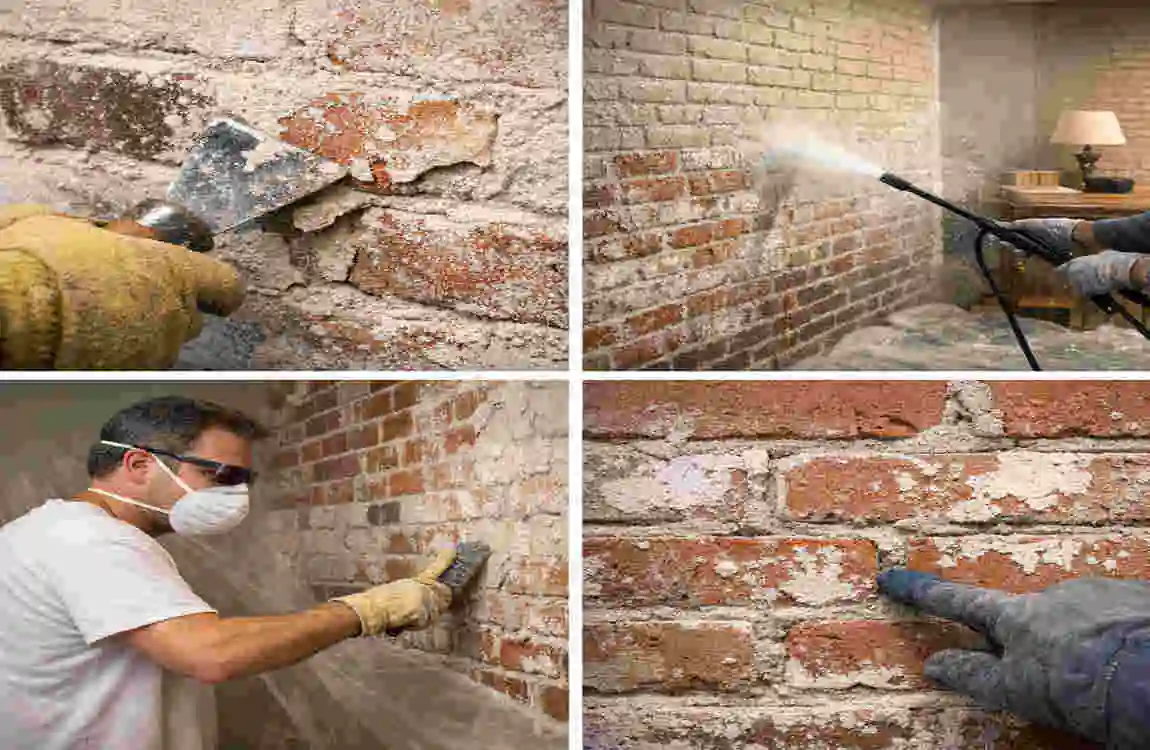
Many paint removal projects go wrong because of simple mistakes. Try to avoid these:
- Starting without testing a small area
- Using too much chemical remover
- Scrubbing too aggressively
- Ignoring ventilation
- Using abrasive power tools
- Applying too much water indoors
- Removing paint from historic brick without caution
A slower approach usually yields a better finish and protects the brick beneath.
When Should You Hire a Professional?
Sometimes DIY is the right choice, but not always. You should think about hiring help if:
- The brick is historic, fragile, or decorative
- The paint may contain hazardous materials
- There are many thick layers of paint
- The mortar is already crumbling or damaged
- The project covers a large wall or multiple rooms
- Previous cleaning attempts have already harmed the surface
A professional can often save time and prevent further damage, especially on older brick.
Frequently Asked Questions
Can you remove paint from interior brick without damaging it?
Yes. A careful, gradual approach with masonry-safe products and gentle tools can help protect the brick.
What is the safest way to remove paint from brick?
Testing a small area first, softening the paint, and using gentle tools is usually the safest approach.
Can vinegar remove paint from brick?
Vinegar is not usually the best option for stubborn paint on brick. It is better to use a product made for masonry and the type of paint you are dealing with.
Will paint remover damage brick?
It can, if the product is too strong or left on too long. Always choose a remover that is safe for masonry and follow the directions.
Can I use a wire brush on interior brick?
A wire brush can be too rough for some brick surfaces. A softer brush is usually the safer choice.
How long does it take to remove paint from brick?
It depends on the type of paint, the number of layers, and the size of the area. Thick paint can take a long time and may need several rounds of treatment.
Should I remove all paint from old brick?
Not always. For old or fragile brick, it may be better to keep the surface stable than to force complete removal.
| Step | What to Do | Important Tip |
|---|---|---|
| Prepare the Area | Cover floors and nearby surfaces. Wear gloves and eye protection. | Ensure good ventilation. |
| Test the Brick | Try your chosen method on a small hidden area first. | Check for discoloration or damage. |
| Soften the Paint | Use a suitable masonry-safe paint remover if needed. | Avoid harsh chemicals that can damage old brick. |
| Remove Paint Gently | Use a soft nylon brush or plastic scraper. | Never aggressively scrape or grind the brick. |
| Clean the Surface | Wipe away residue with warm water and a soft brush. | Avoid excessive water on porous brick. |
| Let It Dry | Allow the brick to dry completely naturally. | Check for remaining paint before repeating. |
| Final Inspection | Look for loose mortar, stains, or damaged areas. | Repair mortar only after the brick is fully dry. |
