

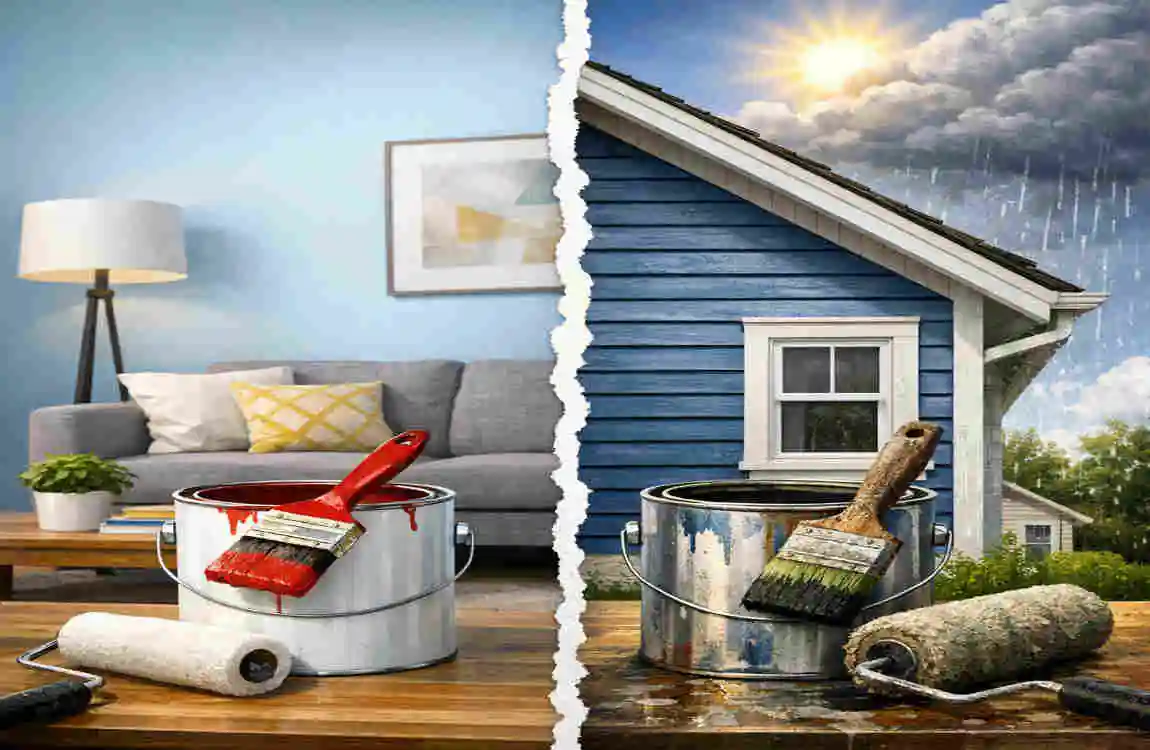
Interior paint is designed for stable indoor spaces. Exterior paint is designed to withstand sunlight, rain, moisture, temperature fluctuations, and outdoor wear.
When you mix them, you can change how the paint dries, how long it lasts, how it looks, and how well it sticks to the surface. In most cases, it is safer to use the right paint for the right place.
Understanding the Difference Between Interior and Exterior Paint
What Is Interior Paint?
Interior paint is made for rooms inside the house. It works well on walls, ceilings, trim, bedrooms, kitchens, and living rooms.
It is often designed to have low odor, a smoother finish, and easy cleanup. It is also meant for spaces where temperature and moisture stay fairly controlled.
What Is Exterior Paint?
Exterior paint is made for the outside of a home. That includes siding, exterior walls, doors, fences, and other exposed surfaces.
It is built to handle sun, rain, humidity, wind, and changes in heat and cold. It also has additives that help it resist mildew and weather damage.
Why Are the Formulations Different?
The ingredients are balanced differently for each job. Manufacturers adjust binders, pigments, and additives based on where the paint will be used.
That is why mixing interior and exterior products can lead to unpredictable results.
Can You Mix Interior Paint With Exterior Paint?
What Happens When You Mix Them?
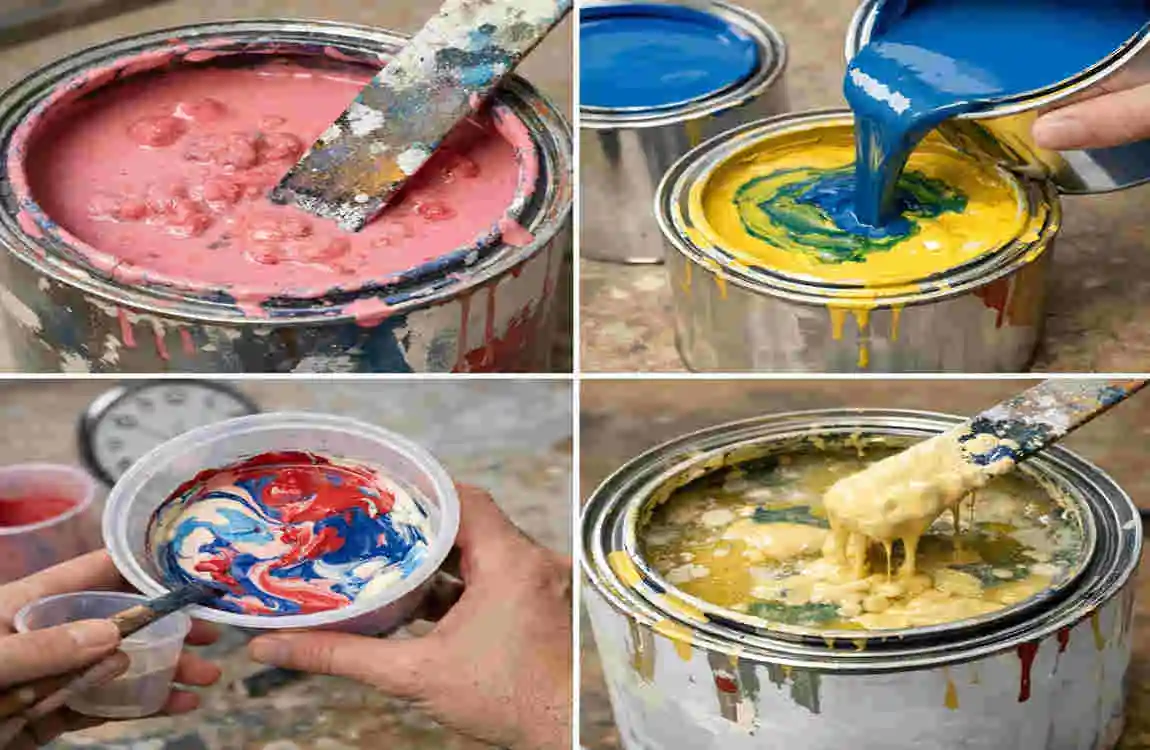
Mixing these paints can cause problems such as:
- Uneven drying
- Poor adhesion
- Changes in sheen
- Color differences
- Weak durability
- Cracking or peeling
- Tacky or patchy finish
The paint may look fine at first, but that does not mean it will perform well later.
Does It Make the Paint Suitable for Outdoors?
No. Adding exterior paint to interior paint does not automatically turn it into a proper outdoor coating.
The final result depends on the full formula, not just the fact that one can include exterior paint.
Does It Make the Paint Stronger?
Not always. Durability comes from the full product design. Mixing in a weather-resistant paint does not guarantee better performance.
When Is Mixing Paint Acceptable?
Mixing Paints From the Same Product Line
Sometimes paints from the same brand and line may be compatible. But you should always check the label or product details first.
Mixing Paints for Small Indoor Projects
Some homeowners mix compatible interior paints to create a custom color. That is different from mixing interior and exterior paint.
Mixing Leftover Paint
If you want to use leftover paint, check:
- Paint type
- Brand
- Finish
- Base
- Intended surface
- Compatibility instructions
If you are unsure, do not mix them.
Safer Alternatives to Mixing Interior and Exterior Paint
Use Each Paint for Its Intended Purpose
Use interior paint indoors and exterior paint outdoors whenever possible. This gives you the best results.
Buy the Correct Paint
If you need a better match, buying a small can of the right paint is usually safer than risking a failed project.
Ask the Manufacturer
If you are unsure, check the manufacturer’s guidance. Product labels and technical notes often answer compatibility questions.
Test Before a Large Application
If compatibility is confirmed, test a small amount on a sample area first.
Store Leftover Paint Properly
Keep leftover paint sealed, labeled, and stored in a cool, dry place. That makes future touch-ups easier.
Common Mistakes to Avoid When Mixing Paint
- Mixing paint without checking the label
- Assuming the same color means the same formula
- Using interior paint outside
- Using exterior paint everywhere indoors
- Mixing different bases without checking compatibility
- Skipping a test area
- Applying mixed paint to a large project too soon
Professional painters usually choose paint based on surface, climate, and performance needs, not just what is left in the garage.
Frequently Asked Questions About Mixing Interior and Exterior Paint
Can you mix interior paint with exterior paint?
Usually, no. Only do it if the manufacturer says the products are compatible.
Can I mix leftover interior and exterior paint to make a new color?
It is better not to. The finish, color, and performance may turn out badly.
Can exterior paint be used inside a house?
Sometimes, but only if the product is approved for indoor use. Always check the label.
Can interior paint be used outside?
No, not usually. It is not made to handle weather and sun exposure.
Can I mix two different brands of paint?
Not unless compatibility is confirmed. Different brands may use different formulas.
Can you mix latex interior and exterior paint?
Both may be water-based, but that does not mean they work well together.
Does mixing paint change its color?
Yes. It can change both color and sheen.
Is it better to buy new paint than mix incompatible leftovers?
Yes, in most cases. It can save time, money, and frustration later.
| Aspect | Interior Paint | Exterior Paint |
|---|---|---|
| Main Purpose | Used for walls, ceilings, and indoor spaces | Designed for exterior walls, siding, and outdoor surfaces |
| Durability | Made for indoor wear and easy cleaning | Built to handle weather, moisture, and sunlight |
| Mixing Together | Generally not recommended | Generally not recommended |
| Why Not Mix? | May affect drying, finish, and performance | Can reduce weather resistance and durability |
| Best Approach | Use paint specifically labeled for interior use | Choose paint formulated for exterior conditions |
| Key Tip | Match the paint to the room and surface | Match the paint to the climate and exterior material |
