
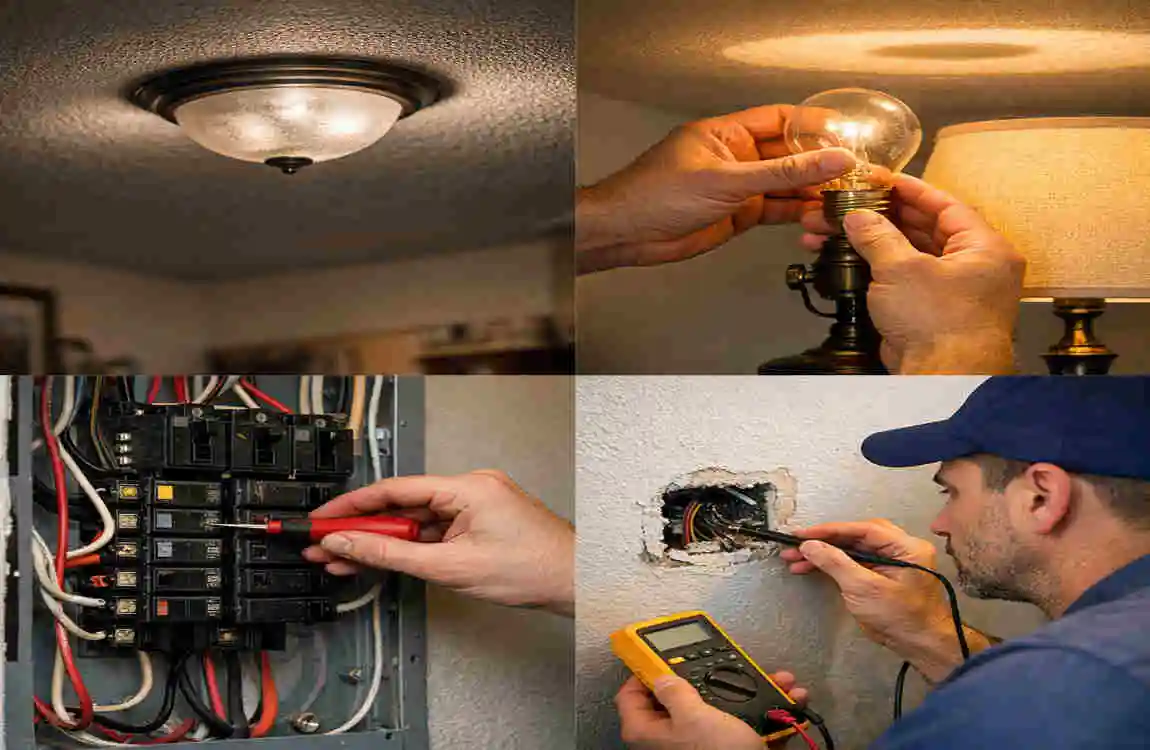
Flickering house lights can be annoying, but they can also be a warning sign. Sometimes the cause is simple, like a loose bulb or an old dimmer switch. Other times, the issue points to a bigger electrical problem that should not be ignored.
If you are wondering why your interior lights flicker in your house, the answer depends on when it happens, how many lights are affected, and whether you notice other signs like buzzing, warmth, or a burning smell. In many cases, you can solve the issue with a small fix. In others, you may need a licensed electrician.
Why Do My Interior Lights Flicker in My House?
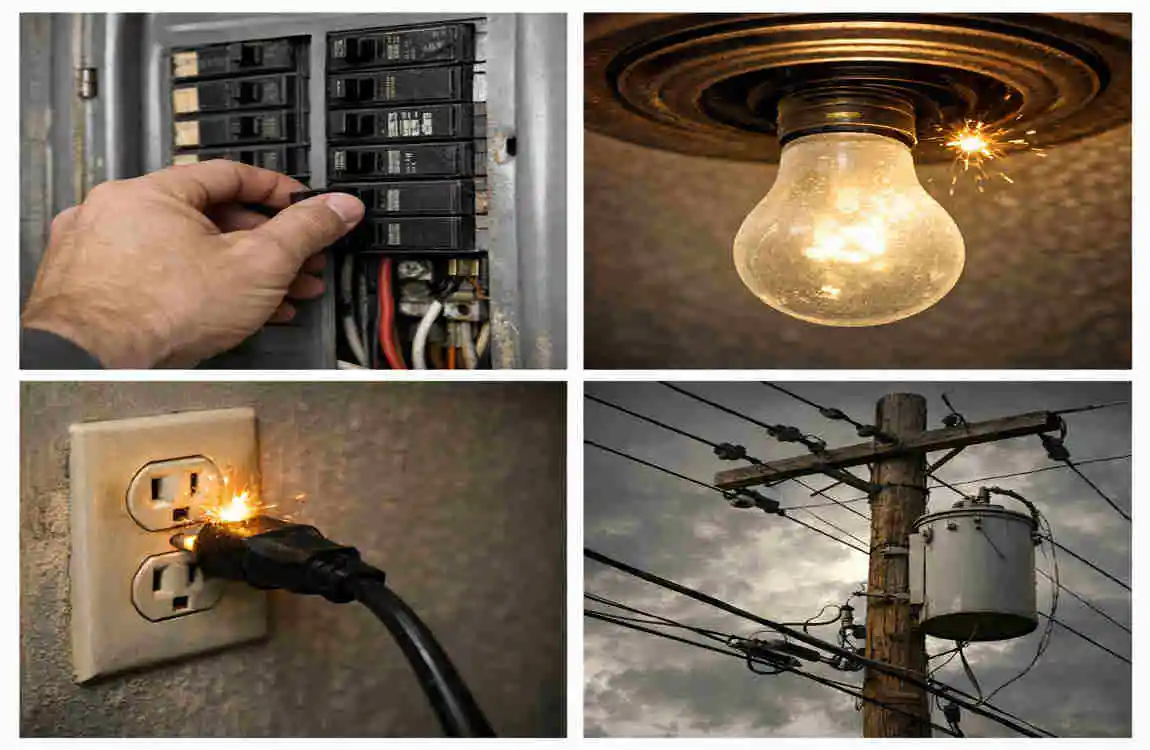
Loose or Improperly Installed Light Bulb
A loose bulb is one of the simplest causes of lights flickering. If the bulb is not seated correctly, the connection can come loose and break in and out as the light runs.
You can usually fix this by turning the light off, letting it cool, and gently tightening the bulb. If the bulb still flickers, try replacing it.
Faulty Light Switch
A worn switch can also cause flickering. The switch may be starting to fail inside, which interrupts the flow of power.
If you hear buzzing or crackling, or feel warmth near the switch, treat it as a warning sign.
Incompatible Dimmer Switch
Not every bulb works well with every dimmer. This is especially common with LED lights and older dimmer switches.
If your lights flicker only when dimmed, the bulb and dimmer may not match.
Loose Wiring or Electrical Connections
Loose wiring can create intermittent power. This is more serious than a loose bulb because it may point to a deeper electrical issue.
Do not try to fix hidden wiring yourself unless you are trained to do so. That job is best left to a professional.
Common Causes of Flickering Lights in Different Situations
One Light Flickers
If only one light flickers, the problem is often local to that fixture. It may be the bulb, the socket, or the switch.
This is usually the easiest type of flicker to diagnose.
Several Lights Flicker in One Room
If more than one light in one room flickers, the problem may be on the same circuit. This can point to an overloaded circuit or loose wiring.
If the flickering occurs frequently, it warrants attention.
Lights Throughout the House Flicker
When the whole house flickers, the issue may be bigger. It could involve the electrical panel, the service connection, or voltage changes coming from outside the home.
This is a stronger sign that you should call an electrician.
Lights Flicker When Appliances Turn On
Some homes flicker when a large appliance starts up. This often happens with:
- Air conditioners
- Refrigerators
- Washing machines
- Power tools
These appliances pull a lot of power for a short time, which can cause a brief voltage drop.
Can LED Lights Cause Flickering?
Yes, LED lights can flicker more noticeably than older bulbs. That does not always mean something is wrong with your wiring.
Sometimes the problem is the bulb quality. Cheap or older LEDs may flicker because they are poorly built. In other cases, the dimmer switch is the real issue.
If you want fewer problems, choose compatible LED bulbs and make sure your dimmer is designed for LED use.
Is Flickering Light Dangerous?
Sometimes flickering is minor. Other times, it can signal a safety issue.
Signs You Should Not Ignore
Watch for these warning signs:
- Burning smell
- Buzzing or crackling
- Warm outlets or switches
- Sparks
- Discolored outlets
- Frequent breaker trips
- Multiple lights flickering at once
If you notice any of these, stop using the affected circuit and call a licensed electrician.
When to Turn Off the Circuit
If the flickering is accompanied by heat, sparks, or a smell, it is safer to turn off that circuit. Do not keep testing it over and over.
Safety should come first.
How to Fix Flickering House Lights Safely
Check the Bulb
Turn off the light and let the bulb cool. Then make sure it is tightened properly.
If that does not help, replace it with a new bulb.
Try a Different Bulb
Sometimes the bulb itself is the problem. A new bulb can help you determine whether the fixture is working properly.
Check Dimmer Compatibility
If the flicker happens only on a dimmer, check whether the bulb and dimmer are designed to work together.
This is one of the most common LED issues.
Check for Overloaded Circuits
If lights flicker when appliances turn on, your circuit may be working too hard.
Try not to run too many large devices on the same circuit.
Call an Electrician
If the flickering keeps coming back, or if several lights are affected, bring in a professional. Electrical panel issues and loose wiring should not be handled casually.
Why Do Lights Flicker When Appliances Turn On?
This usually happens because large appliances need a lot of power when they start. That sudden demand can cause a short voltage drop.
Older homes may show this more clearly because their electrical systems were not built for today’s high power use.
If the flicker is small and brief, it may not be a serious issue. If it is strong or frequent, have the system checked.
Flickering Lights and Electrical Panel Problems
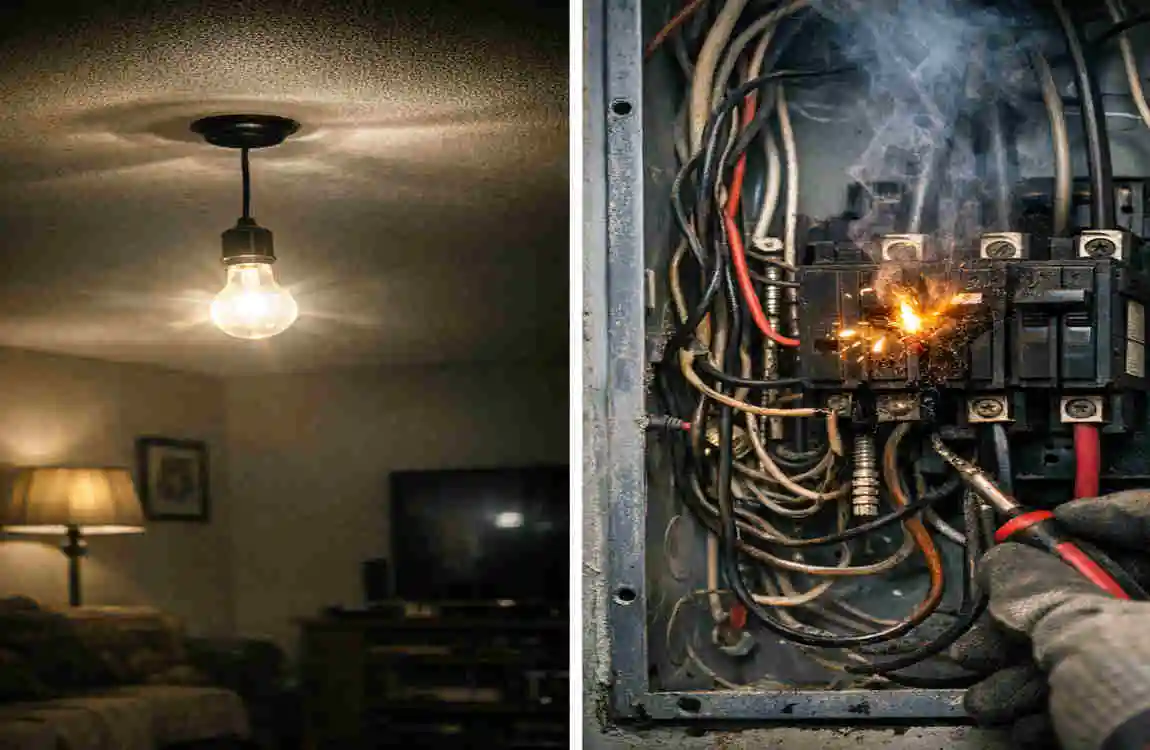
Loose Breaker Connections
A loose connection in the panel can cause lights to flicker. This is not a DIY repair job for most homeowners.
Overloaded Circuits
If too many devices are running on the same circuit, the electrical load can affect your lights.
Aging Electrical Systems
Older wiring and older panels may struggle to handle modern power demands. In that case, an inspection is a smart idea.
Expert Tips to Prevent House Lights From Flickering
- Use quality bulbs
- Match LEDs with the right dimmer
- Replace damaged bulbs quickly
- Avoid overloading circuits
- Keep an eye on buzzing switches
- Schedule inspections for older wiring
- Do not ignore repeat problems
A little maintenance can prevent bigger issues later.
When Should You Call an Electrician?
Situation Recommended Action
One loose bulb flickers Tighten or replace bulb
LED flickers with dimmer Check compatibility
One switch buzzes Have switch inspected
Several lights flicker Contact an electrician
Whole house flickers Seek professional inspection
Burning smell or sparks Turn off circuit and get urgent help
Breaker trips again and again Have the system inspected
If the problem spreads beyond one bulb, it is time to take it seriously.
Common Mistakes Homeowners Make With Flickering Lights
One common mistake is replacing bulbs repeatedly without checking the root cause. That wastes money and delays the fix.
Other mistakes include:
- Ignoring buzzing sounds
- Using the wrong LED bulb
- Overloading circuits
- Trying panel repairs without training
- Assuming flickering is always harmless
A small flicker can become a bigger issue if you keep ignoring it.
Frequently Asked Questions About Flickering House Lights
Why do my interior lights flicker in my house?
The most common causes are loose bulbs, faulty switches, incompatible LEDs, loose wiring, circuit overloads, or voltage changes.
Why are my lights flickering but the bulbs are not burned out?
The issue may be with the socket, switch, dimmer, wiring, or electrical supply.
Is it normal for LED lights to flicker?
A small amount of flickering can occur if the bulb is low-quality or not compatible with the dimmer. Regular flickering should be checked.
Why do my lights flicker when the AC turns on?
That usually happens because the AC draws a lot of power at startup, which briefly affects voltage.
Can a loose wire cause lights to flicker?
Yes. Loose wiring can interrupt power and pose a safety risk.
Why are all the lights in my house flickering?
That can point to a panel issue, service problem, or utility-related voltage fluctuation.
Should I be worried if my lights flicker?
Not always, but if the flickering is frequent, widespread, or paired with other warning signs, you should call an electrician.
| Cause | What It Means | Quick Fix |
|---|---|---|
| Loose Bulb | The bulb may not be seated properly. | Turn off power and tighten or replace the bulb. |
| Faulty Bulb | An old or damaged bulb can flicker. | Replace it with a quality bulb. |
| Loose Wiring | Poor connections can interrupt power. | Have a licensed electrician inspect the wiring. |
| Overloaded Circuit | Too many devices may share one circuit. | Reduce the load or have the circuit evaluated. |
| LED Compatibility | Some LEDs flicker with incompatible dimmers. | Use a compatible LED and dimmer. |
| Voltage Fluctuations | Changes in electrical supply can cause flickering. | Contact an electrician or utility provider. |
| Faulty Switch | A worn switch may cause intermittent contact. | Replace the switch professionally. |
| Main Electrical Issue | Flickering throughout the house can signal a serious problem. | Arrange an electrical inspection promptly. |
