
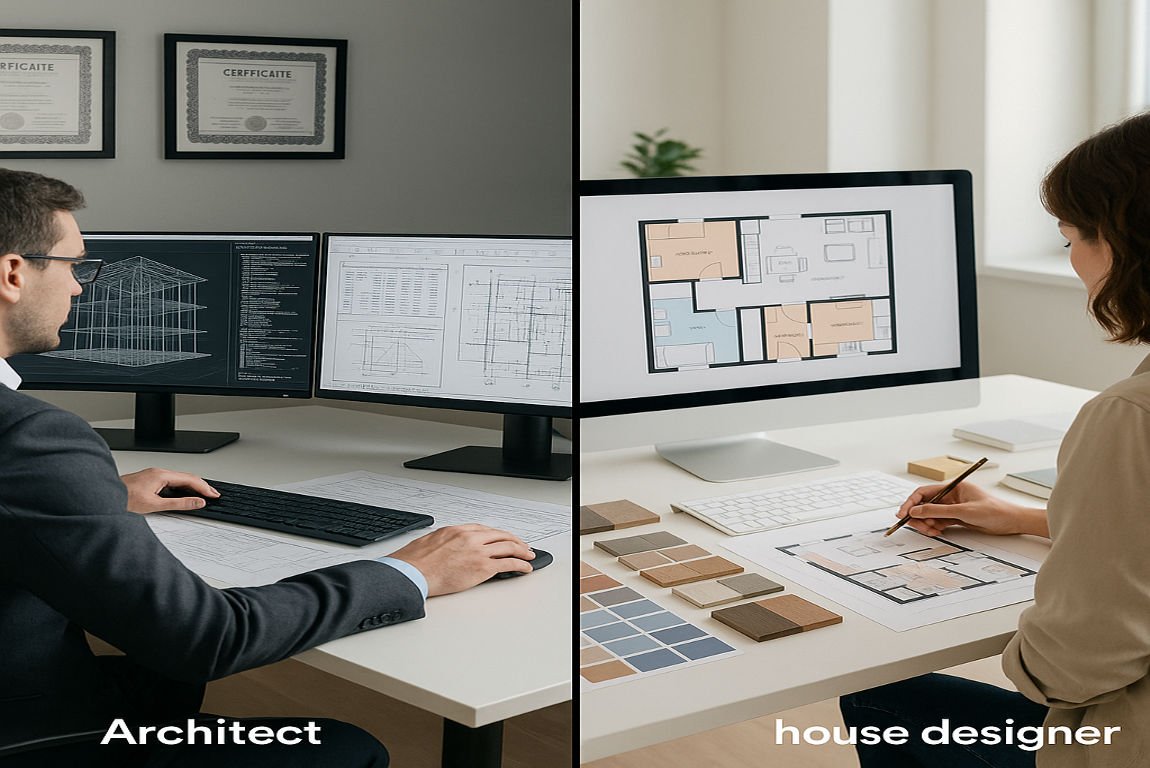
Building or renovating a home is one of the most significant investments you’ll ever make. Whether you’re starting from scratch or remodeling an existing space, the design process plays a crucial role in ensuring your vision comes to life. But when it comes to hiring professionals for your project, you might find yourself asking: Should I hire an architect or a house designer?
Understanding the Roles: Architect vs. House Designer
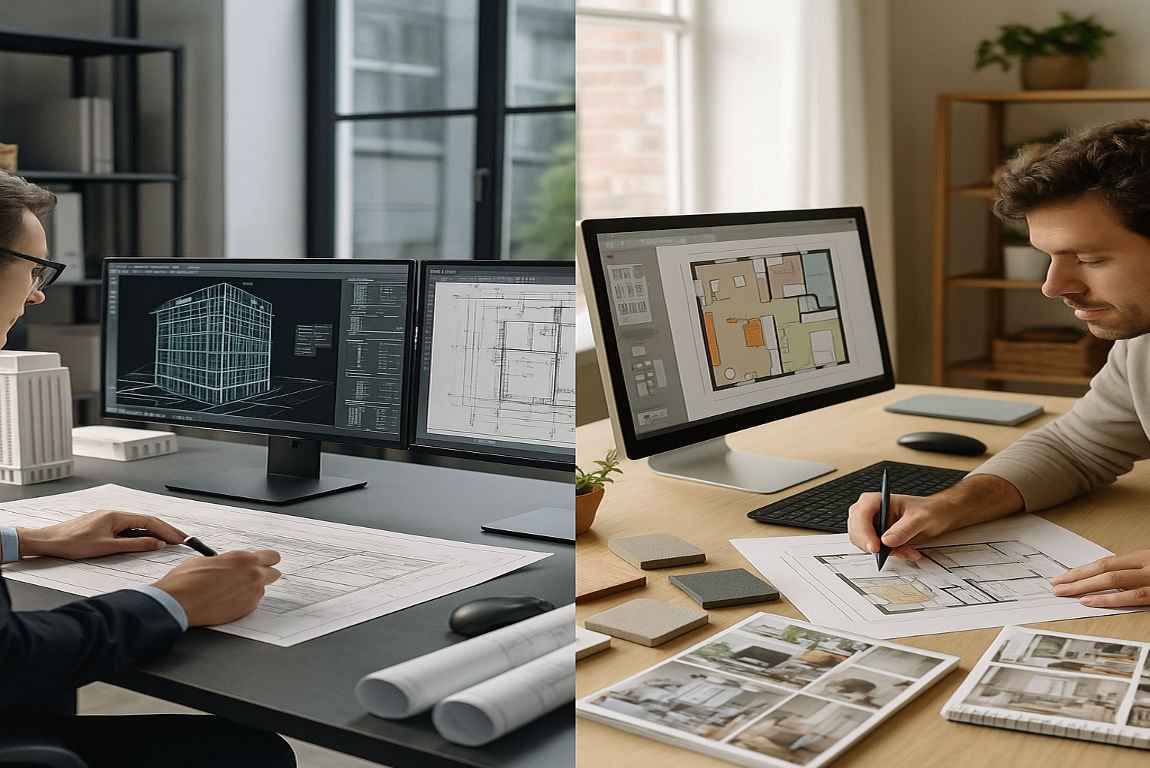
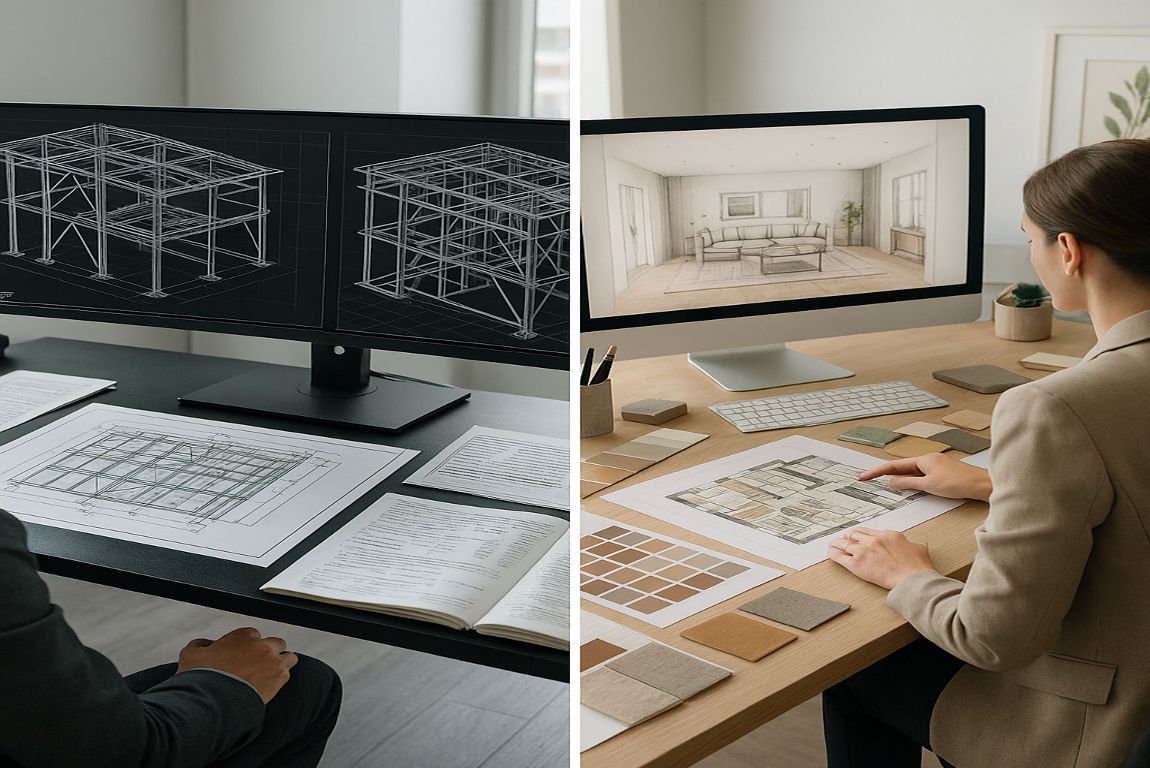
When embarking on a home design project, it’s essential to understand the unique roles of architects and house designers. While both contribute to creating functional and beautiful spaces, their expertise, training, and responsibilities differ.
What Does an Architectural House Designer Do?
An architectural house designer specializes in creating design plans for residential spaces. These professionals focus on the aesthetics, layout, and functionality of homes, often working closely with clients to bring their ideas to life. However, unlike architects, house designers may not be required to hold a professional license, depending on the jurisdiction.
Here’s what an architectural house designer typically does:
- Drafting Design Plans: House designers create detailed blueprints and layouts for homes, including floor plans, room arrangements, and interior designs.
- Remodeling and Renovations: They assist with redesigning existing spaces, such as updating kitchens, bathrooms, or entire interiors.
- Focus on Aesthetics: House designers prioritize the visual appeal and functionality of a home, ensuring the design aligns with the client’s preferences and aesthetics.
- Collaboration: In some cases, house designers work under the supervision of licensed architects or collaborate with contractors to execute the design.
House designers are an excellent choice for homeowners seeking creative input for smaller-scale projects or interior-focused renovations. Their expertise lies in optimizing space and creating visually pleasing designs.
What Does an Architect Do?
An architect, on the other hand, is a licensed professional responsible for the overall design, safety, and functionality of buildings. Architects undergo extensive education and training, including earning a degree in architecture, completing internships, and passing licensing exams.
Here are the key responsibilities of an architect:
You may also read (is architecture house a recognized stem major).
- Structural Design: Architects ensure that the building’s structure is safe, stable, and compliant with local building codes and regulations.
- Project Oversight: They oversee the entire construction process, from initial design to completion, ensuring the project adheres to the approved plans and specifications.
- Regulatory Compliance: Architects ensure the project meets all applicable regulations by handling permits, zoning laws, and other legal requirements.
- Innovative Solutions: Architects often tackle complex design challenges, such as integrating sustainable features or designing for unique site conditions.
Architects are essential for large-scale projects, new constructions, or any project requiring structural changes. Their expertise ensures that the building is not only visually appealing but also safe and functional.
Key Differences Between Architects and House Designers
While architects and house designers share some similarities, their roles differ in several key areas:
AspectArchitectHouse Designer
Licensing: Licensed professionals with formal training. It may not require a license, depending on the location.
Scope of Work Handles structural design, safety, and compliance Focuses on aesthetics and interior layouts.
Project Complexity Suitable for complex or large-scale projects Ideal for smaller, interior-focused projects
Legal Responsibilities: Can sign off on official plans and permits Typically cannot sign off on permits.
Cost: Higher fees due to extensive training and responsibilities. More affordable for simpler projects.
Understanding these differences will help you determine which professional is best suited for your project.
When to Hire an Architect vs. a House Designer
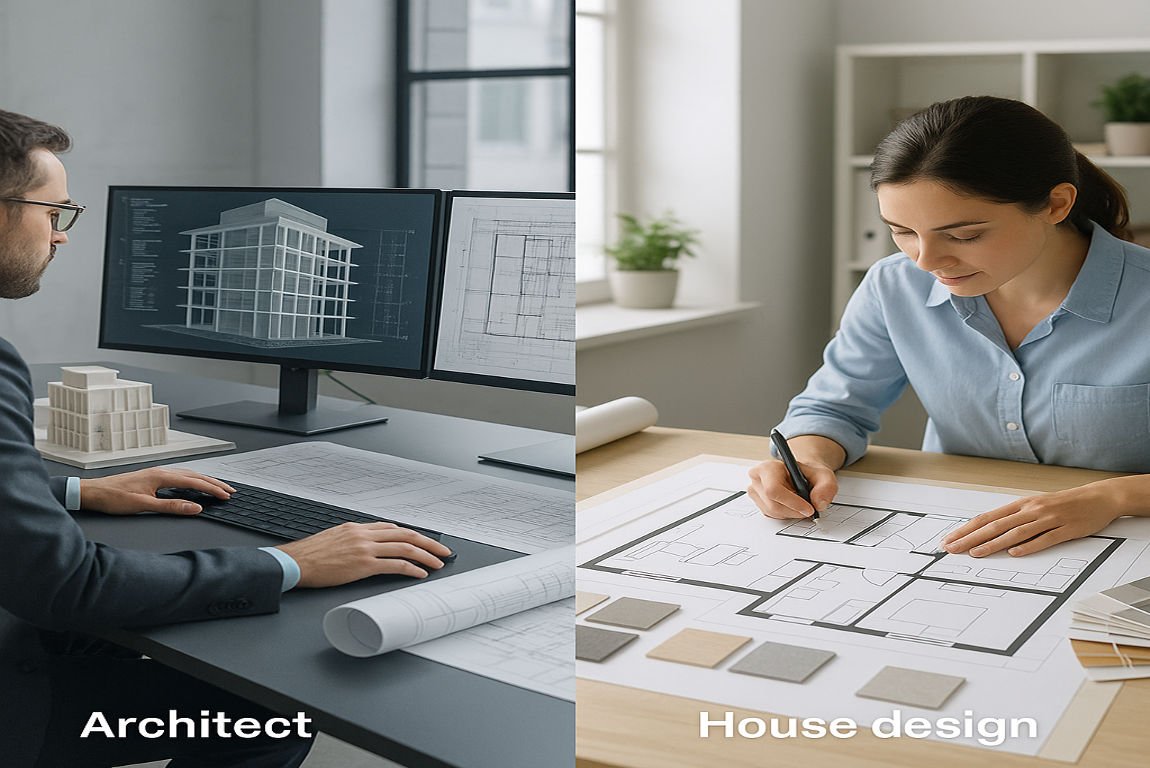
Choosing between an architect and a house designer depends on the scope and complexity of your project. Let’s explore scenarios where each professional is the better choice.
Situations Requiring an Architect
You should consider hiring an architect for the following situations:
- New Construction: If you’re building a home from scratch, an architect can design the structure, ensure it meets safety standards, and oversee the construction process.
- Complex Projects: Projects involving unique designs, challenging site conditions, or advanced engineering solutions require the expertise of an architect.
- Structural Changes: Renovations that involve altering the foundation, adding new floors, or making significant structural changes need an architect to ensure safety and compliance.
- Permit Requirements: Architects are responsible for handling the legal aspects of construction, including obtaining permits and ensuring the project complies with zoning laws.
Situations Suitable for a House Designer
A house designer is an excellent choice for:
- Interior Remodeling: Projects focused on updating interiors, such as redesigning a kitchen or bathroom, are well-suited for house designers.
- Cosmetic Changes: If your project involves aesthetic updates without structural alterations, a house designer can help bring your vision to life.
- Budget-Friendly Solutions: House designers are often more affordable than architects, making them a practical choice for smaller projects.
- Collaborative Work: House designers can work alongside architects or contractors to refine design elements after the initial plans are created.
By assessing your project’s needs, you can decide whether to hire an architect, a house designer, or both.
The Process: How Architects and House Designers Work
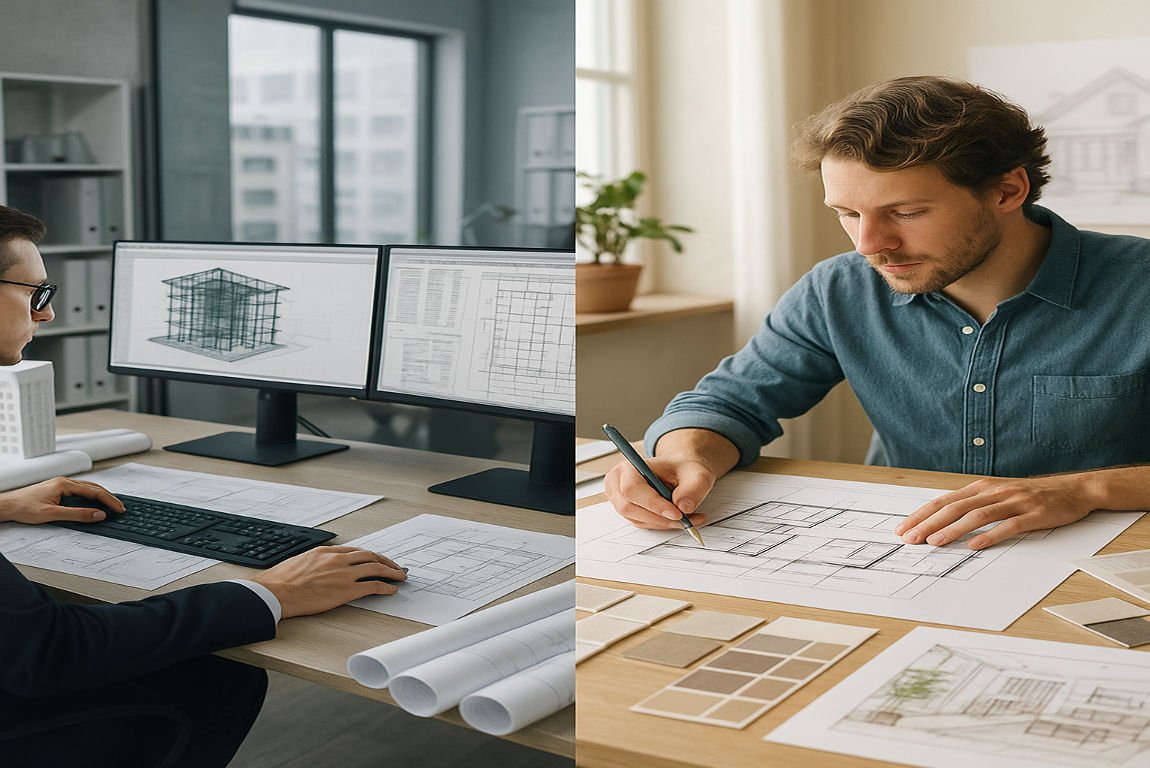
Both architects and house designers follow structured workflows to deliver successful projects. Let’s take a closer look at how each professional approaches their work.
The Architect’s Workflow
- Conceptualization: Architects begin by consulting with clients to understand their needs, preferences, and budget. They also analyze the site to identify opportunities and constraints.
- Design Development: Architects create preliminary designs, incorporating client feedback to refine the plans.
- Documentation: Detailed construction documents, including blueprints and technical specifications, are prepared to guide the building process.
- Coordination: Architects oversee the construction phase, ensuring the project aligns with the approved design and addressing any issues that arise.
The House Designer’s Workflow
You may also read (mastering home kitchen outlet placement what you need to know).
- Client Consultation: House designers start by discussing the client’s vision, lifestyle, and functional requirements.
- Design Creation: They develop interior layouts, select materials, and choose finishes that align with the client’s style.
- Collaboration: House designers often work with specialists, such as lighting designers or furniture makers, to enhance the design.
- Execution: During the installation phase, house designers ensure that the design is implemented cohesively and meets the client’s expectations.
Benefits of Hiring Each Professional
Both architects and house designers bring unique advantages to a project. Here’s why you might choose one over the other:
Advantages of Hiring an Architect
- Comprehensive Expertise: Architects handle every aspect of the project, from design to construction oversight.
- Structural Safety: They ensure the building is safe, stable, and compliant with regulations.
- Innovative Solutions: Architects can create custom designs tailored to your needs and site conditions.
Advantages of Hiring a House Designer
- Cost-Effective: House designers are more affordable for smaller projects or interior-focused work.
- Quick Turnaround: They can deliver design plans faster, especially for straightforward projects.
- Aesthetic Focus: House designers excel at optimizing space and creating visually appealing interiors.
SEO Tips for Architectural and House Design Businesses
If you’re an architect or house designer, optimizing your online presence is crucial for attracting clients. Here are some SEO strategies to help you stand out:
Importance of SEO for Architects and Designers
- Increased Visibility: SEO helps potential clients find your services when searching for terms like “What does an architectural house designer do.”
- Targeted Traffic: By using relevant keywords, you can attract clients specifically interested in your expertise.
On-Page SEO Best Practices
- Optimize titles, meta descriptions, and headers with focus keywords to enhance search engine visibility.
- Use descriptive URLs and internal links to improve navigation.
- Include high-quality images with optimized alt text.
Content Strategy
- Publish blog posts explaining your services and processes.
- Showcase your portfolio and client testimonials to build trust.
- Focus on local SEO to attract clients in your area.
You may also read (top 7 cities for home architectural engineer earnings).
