
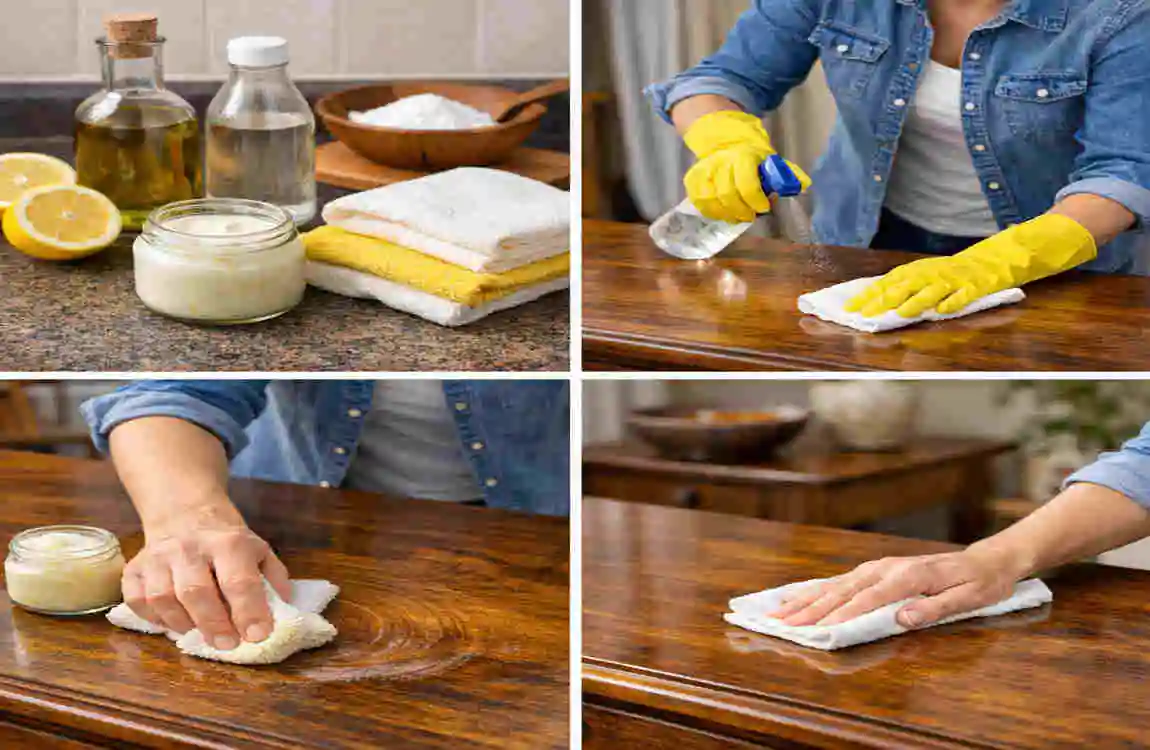
Knowing how to polish furniture at home can help your wooden pieces look fresh, clean, and well-cared for. It is a simple task, but it can make a big difference in how your home feels.
Furniture polish does more than add shine. It helps protect the surface from dust, dryness, and everyday wear. If you take a little time to care for your furniture, it can stay beautiful for many years.
The good news is that you do not need special skills to do this. With the right cloth, a safe polish, and a few easy steps, you can handle it yourself at home.
Why You Should Polish Furniture Regularly
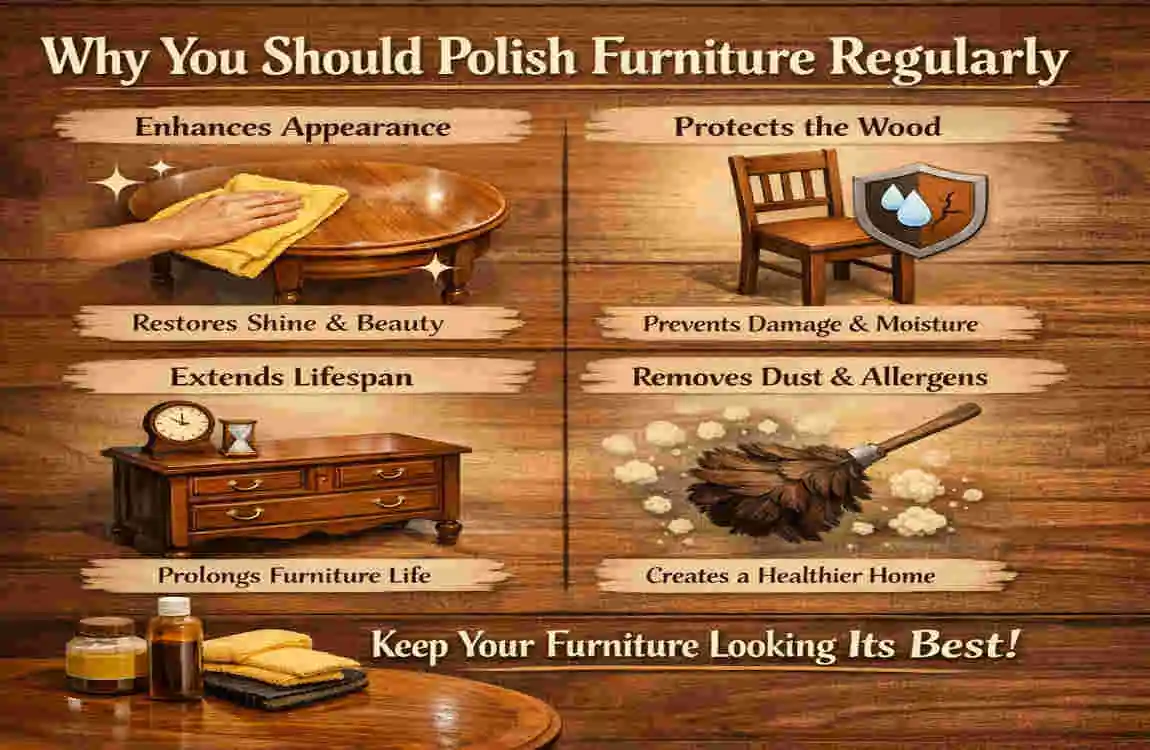
Restores Natural Shine
Over time, wood can look dull and tired. Polishing brings back the shine and helps the grain stand out again.
Protects Against Dust and Moisture
A polished surface is easier to clean. It also gives a light layer of protection against dust and small spills.
Increases Furniture Lifespan
When you care for wood properly, it lasts longer. Regular polishing can help reduce dry spots and surface damage.
Enhances Home Appearance
Shiny, clean furniture makes a room feel more polished and welcoming. Even one well-kept table or cabinet can improve the look of a space.
Types of Furniture That Can Be Polished
Solid Wood Furniture
This is the easiest type to polish because it responds well to care and cleaning.
Veneer Furniture
Veneer can be polished too, but use gentle products and light pressure.
Antique Furniture
Older furniture needs extra care. Use mild polish and test a small area first.
Painted Wooden Furniture
You can polish painted wood, but only with products that suit the finish.
Engineered Wood Furniture
This type often has a surface layer, so avoid using too much liquid or strong chemicals.
Tools and Materials You’ll Need
Before you begin, gather a few simple items:
- Soft microfiber cloth
- Furniture polish
- Natural oils
- Soft brush
- Mild soap and water
- Protective gloves
A microfiber cloth is best because it is gentle and does not scratch the surface. If you want a more natural option, homemade polish can also work well.
How to Polish Furniture at Home
Step 1 – Clean the Surface
Start by wiping the furniture with a soft cloth. If needed, use mild soap and water to remove dirt.
Remove Dust Completely
Dust can scratch the finish if you polish over it. Make sure the surface is fully clean and dry.
Test Polish on a Small Area
Always test a small hidden spot first. This helps you check if the polish is safe for that piece.
Apply Polish Evenly
Use a small amount of polish and spread it lightly across the surface. Do not soak the wood.
Buff with a Soft Cloth
Buff the surface in gentle circles. This step brings out the shine and helps remove extra product.
Let the Finish Dry
Give the furniture time to dry before using it again. This helps the finish settle properly.
Homemade Furniture Polish Recipes
If you prefer natural options, try one of these simple mixes.
Olive Oil and Lemon Juice
This is a popular DIY polish. Olive oil adds shine, while lemon juice helps clean lightly.
Vinegar and Olive Oil
This mix works well for dull wood. Use a small amount and buff it well.
Coconut Oil Polish
Coconut oil can help restore softness and shine on certain wood surfaces.
Beeswax Furniture Polish
Beeswax gives a richer finish and can help protect the surface for longer.
Common Furniture Polishing Mistakes
Using Too Much Polish
Too much product can leave the surface sticky or cloudy.
Skipping Cleaning Before Polishing
Polishing over dust is a bad idea because it can trap dirt and scratch the wood.
Using Abrasive Cloths
Rough cloths can damage the finish. Always use soft material.
Polishing in Direct Sunlight
Sunlight can make polish dry too quickly and leave streaks.
Using Wrong Products
Not every polish works on every surface. Always check the label or test first.
Best Tips for Long-Lasting Shine
To keep furniture looking good, follow these simple habits:
- Dust furniture weekly
- Avoid excessive moisture
- Use coasters and mats
- Keep furniture away from direct sunlight
- Polish every 2–4 months
- Clean spills immediately
These small steps help protect the finish and reduce damage over time.
Natural vs Commercial Furniture Polish
FeatureNatural PolishCommercial Polish
Cost Low Medium
Eco-Friendly Yes Depends on product
Easy to Make Yes No
Shine Duration Moderate Long-lasting
Safe for Daily Use Yes Usually
Both options can work well. Natural polish is simple and affordable, while commercial polish may give longer shine.
How Often Should You Polish Furniture?

Indoor Furniture
Most indoor furniture only needs polishing every few months.
Dining Tables
These may need more frequent care because they are used daily.
Cabinets
Cabinets usually stay in good shape with light polishing every 2 to 4 months.
Antique Furniture
Older pieces should be polished less often and with extra care.
Outdoor Wooden Furniture
Outdoor furniture may require more frequent attention due to exposure to the elements.
Signs Your Furniture Needs Polishing
Look for these signs:
- The surface looks dull
- The wood appears dry
- Fine scratches show clearly
- Dust sticks easily
- The color looks faded
If you notice these signs, it may be time to polish again.
Caring for Polished Furniture
Daily Maintenance
Wipe surfaces gently and avoid placing wet items directly on the wood.
Weekly Cleaning
Dust regularly so dirt does not build up.
Seasonal Care
Check for dryness or fading during seasonal changes, especially in dry weather.
Preventing Scratches
Use mats, pads, and coasters to protect the finish from damage.
Frequently Asked Questions
How do you polish furniture at home naturally?
You can use natural ingredients like olive oil, lemon juice, coconut oil, or beeswax to restore shine.
How often should furniture be polished?
Most indoor wooden furniture should be polished every 2–4 months.
Can I use olive oil on wood furniture?
Yes, but use only a small amount and buff it well so the surface does not feel greasy.
What is the best cloth for polishing furniture?
A soft microfiber cloth is the best choice because it is gentle and does not scratch.
Is homemade furniture polish safe?
Yes, homemade polish is usually safe when used on the right type of wood finish.
Should furniture be cleaned before polishing?
Yes. Cleaning first removes dust and dirt, which helps the polish work better.
| Topic | Information |
|---|---|
| Guide Title | How to Polish Furniture at Home: Easy DIY Guide |
| Purpose | Restore shine, protect wood, and extend furniture life. |
| Best Furniture Types | Wooden tables, chairs, cabinets, dressers, and shelves. |
| Recommended Polish | Beeswax polish, natural oils (olive or linseed), commercial wood polish, or furniture wax. |
| Basic Tools Needed | Soft microfiber cloth, lint-free rag, soft brush, mild soap, water, and wood polish. |
| Preparation | Dust the furniture thoroughly and clean with a damp cloth before polishing. |
| DIY Polishing Steps | Clean the surface, apply a small amount of polish, rub in the direction of the wood grain, let it absorb, then buff with a clean cloth. |
| Natural DIY Polish | Mix 2 parts olive oil with 1 part white vinegar or lemon juice for a simple homemade polish. |
