
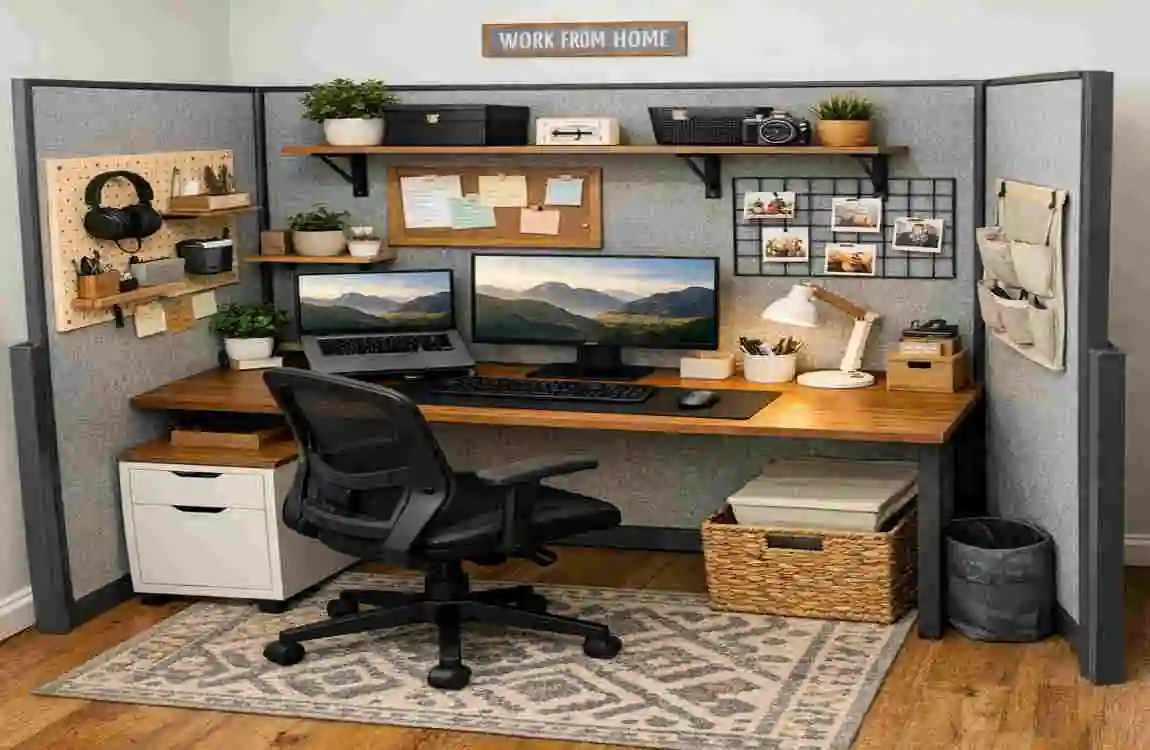
Creating a simple home office can make a big difference in your daily routine. If you are looking for how to make a cubicle at home, the good news is that you do not need a large room or a big budget. With a few smart choices, you can turn almost any corner into a focused and comfortable workspace.
A home cubicle helps you stay organised, cut distractions, and feel more ready for work. Whether you work from home full-time, study, or freelance part-time, a small dedicated space can improve your focus and make your day feel more structured.
What Is a Home Office Cubicle?
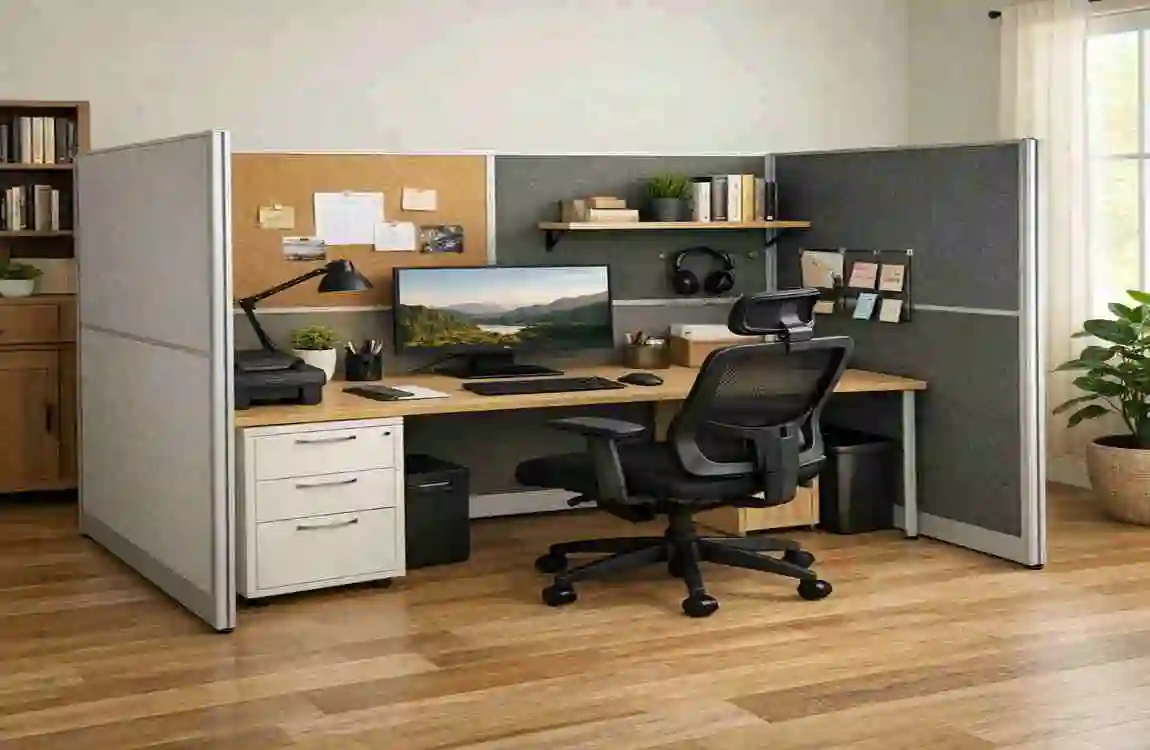
A home office cubicle is a small, defined work area inside your home. It gives you a clear place to work without needing a full separate room.
Difference Between an Office Cubicle and a Home Cubicle
An office cubicle is usually built into a workplace and often has fixed walls or panels. A home cubicle is more flexible. You can build it with shelves, curtains, screens, or even a simple desk in a corner.
Why It Helps
A dedicated space helps your brain understand that it is time to work. It also makes it easier to keep your items in one place and avoid mess around the house.
How to Make a Cubicle at Home
If you want to know how to make a cubicle at home without spending too much, start small and keep it practical.
Choose the Right Space
Pick a quiet corner in your home. This could be:
- A bedroom corner
- A spot under the stairs
- A living room section
- A small area near a window
Try to choose a place with less foot traffic and fewer distractions.
Create Clear Boundaries
A cubicle feels real when the space is clearly separated. You can use:
- Curtains
- Bookshelves
- Folding screens
- DIY cardboard or plywood panels
Even a simple divider can make your workspace feel private and focused.
Add a Simple Desk
You do not need a large desk. A compact desk, wall-mounted table, or foldable surface works well for small spaces. The goal is to have enough room for your laptop, notebook, and a few essentials.
Use a Comfortable Chair
A good chair matters more than many people think. If you sit for long hours, choose one with back support. If your budget is limited, add a cushion or lumbar pillow to improve comfort.
Set Up Good Lighting
Lighting can change how your workspace feels. Natural light is best, but a small desk lamp also works well. Good lighting helps reduce eye strain and keeps you alert.
Keep Storage Simple
A clean cubicle is easier to use every day. Add small shelves, boxes, or drawer organisers to store your supplies.
Helpful storage ideas:
- Vertical shelves for books and files
- Cable clips for wires
- Small trays for pens and chargers
Add a Personal Touch
Your cubicle should feel nice to use. Add a small plant, a wall quote, or simple décor that makes you feel calm and motivated.
DIY Cubicle Ideas for Small Spaces
If your luxury home is very small, do not worry. There are still many smart ways to build a workspace.
IdeaBest ForCost
Curtain divider Shared rooms Low
Bookshelf partition Privacy and storage Medium
Foldable desk setup Very small spaces Low
Closet-to-office space Hidden workspace Medium
DIY plywood divider Custom look Low to medium
Best Small-Space Options
A bookshelf partition works well if you want both storage and privacy. A curtain divider is easy and cheap. A closet office is a clever choice if you want to hide your workspace when not in use.
Budget-Friendly Tips
You do not need expensive furniture to build a good cubicle. Start with what you already have. Reuse an old table, buy second-hand items, or make simple décor yourself.
Simple ways to save money
- Use furniture you already own
- Shop second-hand
- Choose minimal décor
- Avoid buying things you do not need
A minimal setup often looks cleaner and feels less stressful.
Mistakes to Avoid
A few small mistakes can make your cubicle less useful.
- Poor lighting can make work tiring
- Clutter can reduce focus
- The wrong chair height can hurt posture
- No airflow can make the space uncomfortable
- Ignoring ergonomics can cause strain over time
Try to fix these basics early, so your workspace stays comfortable.
Benefits of a Home Cubicle Setup
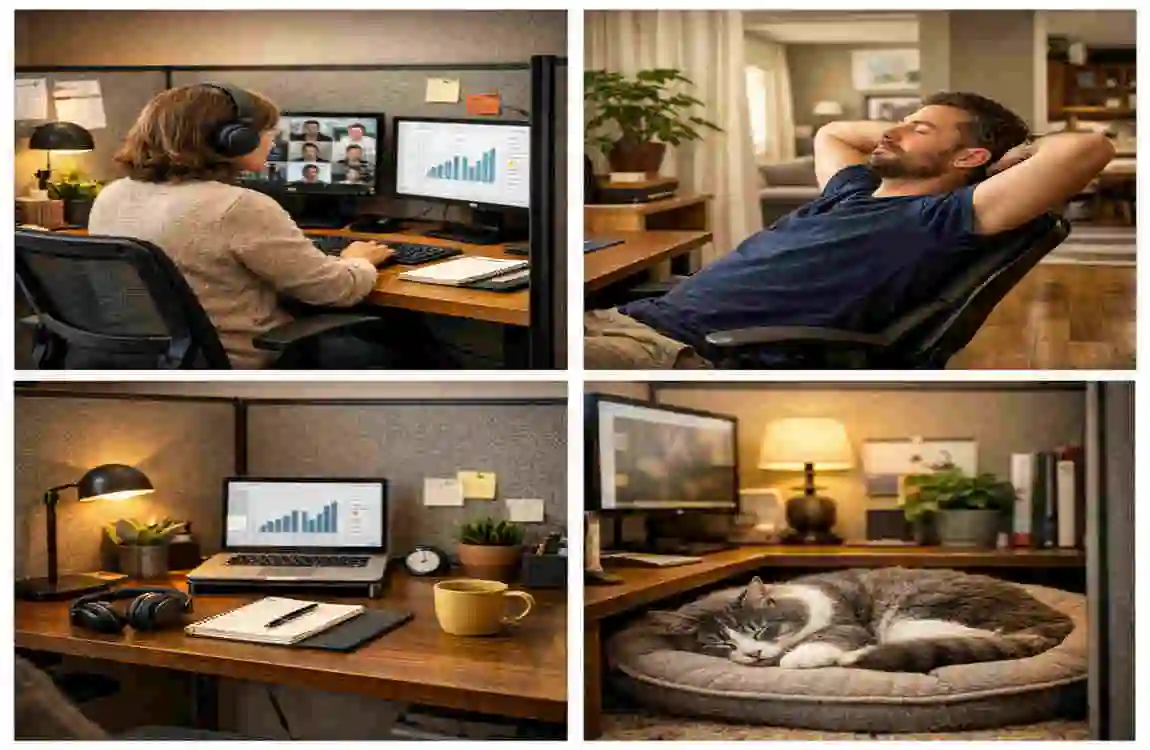
A good cubicle gives you more than just a desk.
- Better focus
- Less distraction
- Cleaner work habits
- Improved posturehow to make a cubicle at home
- A more professional mindset
When your workspace feels organised, your mind often feels more organised too.
FAQ
How to make a cubicle at home in a small space?
Use a corner of a room, add a compact desk, and separate the area with a curtain, shelf, or screen.
What is the cheapest way to build a home cubicle?
Use DIY dividers, second-hand furniture, and simple storage boxes.
Do I need a separate room?
No. You can build a cubicle in a bedroom, living room, or even a hallway.
How can I make my cubicle more productive?
Keep it clean, well-lit, and free from distractions. Use a comfortable chair and simple storage.
| Idea | Description | Budget Level |
|---|---|---|
| Foldable Desk Cubicle | Use a foldable table with side panels for privacy | Low |
| Bookshelf Divider | Place a bookshelf behind your desk to create a mini cubicle | Low–Medium |
| Curtain Partition | Hang curtains around your workspace for a soft cubicle feel | Low |
| Cardboard/DIY Panels | Build lightweight privacy panels using cardboard or foam boards | Very Low |
| Corner Desk Setup | Use a corner of a room to naturally form a cubicle space | Low |
| Pegboard Wall Setup | Install a pegboard for storage and visual separation | Medium |
| Portable Room Divider | Use a movable divider screen for instant cubicle privacy | Medium |
