
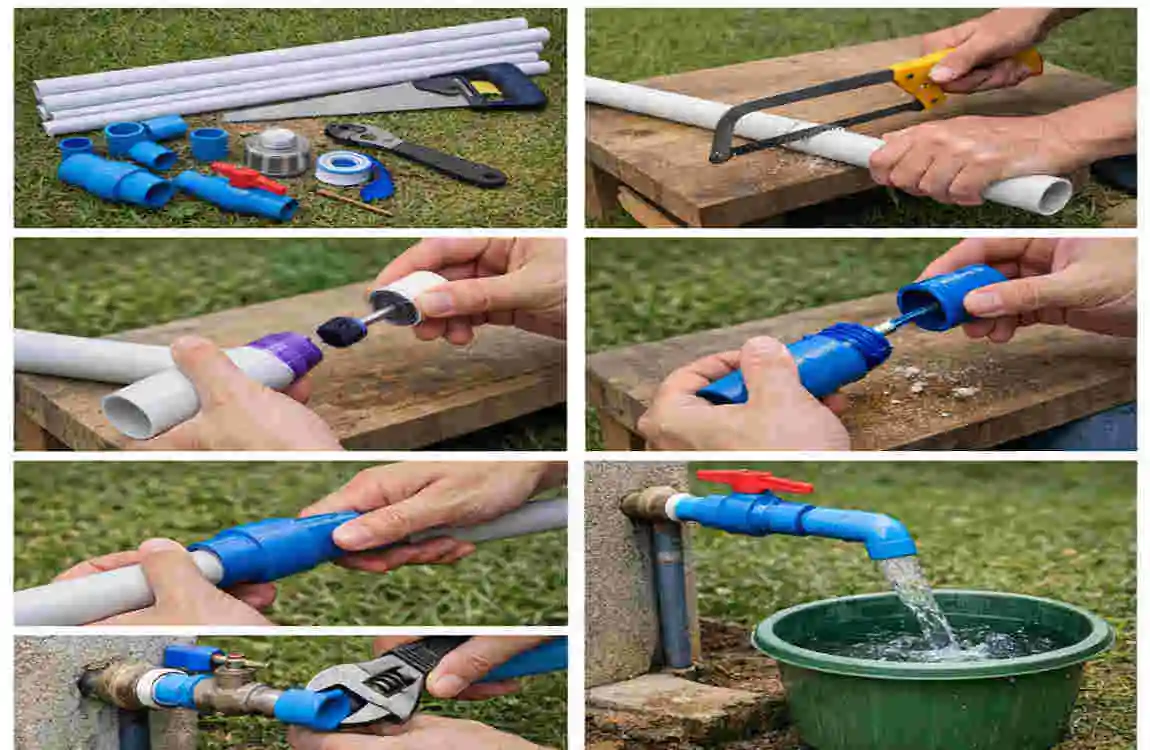
If you want to learn how to make a water pipe at home, the good news is that simple plumbing projects are often manageable for beginners. You do not need to be a professional plumber to handle basic pipework, as long as you plan carefully and use the right tools.
A home water pipe system carries water to sinks, bathrooms, kitchens, and outdoor areas. Many homeowners choose DIY installation because it can save money and help them understand how their home works. It can also be useful when you need to fix a small section quickly.
What Does It Mean to Make a Water Pipe at Home?
Understanding Residential Water Pipes
Residential water pipes move clean water through the home. They connect the main water supply to different fixtures and appliances.
These pipes can be installed for new plumbing, small repairs, or replacement work. The goal is always the same: safe water flow with no leaks.
Common Uses of DIY Water Pipes
DIY water pipe projects often include:
- Replacing a short damaged section
- Extending a pipe to a new sink or tap
- Installing a simple outdoor water line
- Fixing minor leaks or loose fittings
Types of Home Plumbing Projects
Some projects are easy enough for beginners. Others are more advanced and need experience.
A small pipe extension is often fine for DIY. A full bathroom line or hidden wall plumbing is much harder and may need expert help.
Materials Needed to Make a Water Pipe at Home
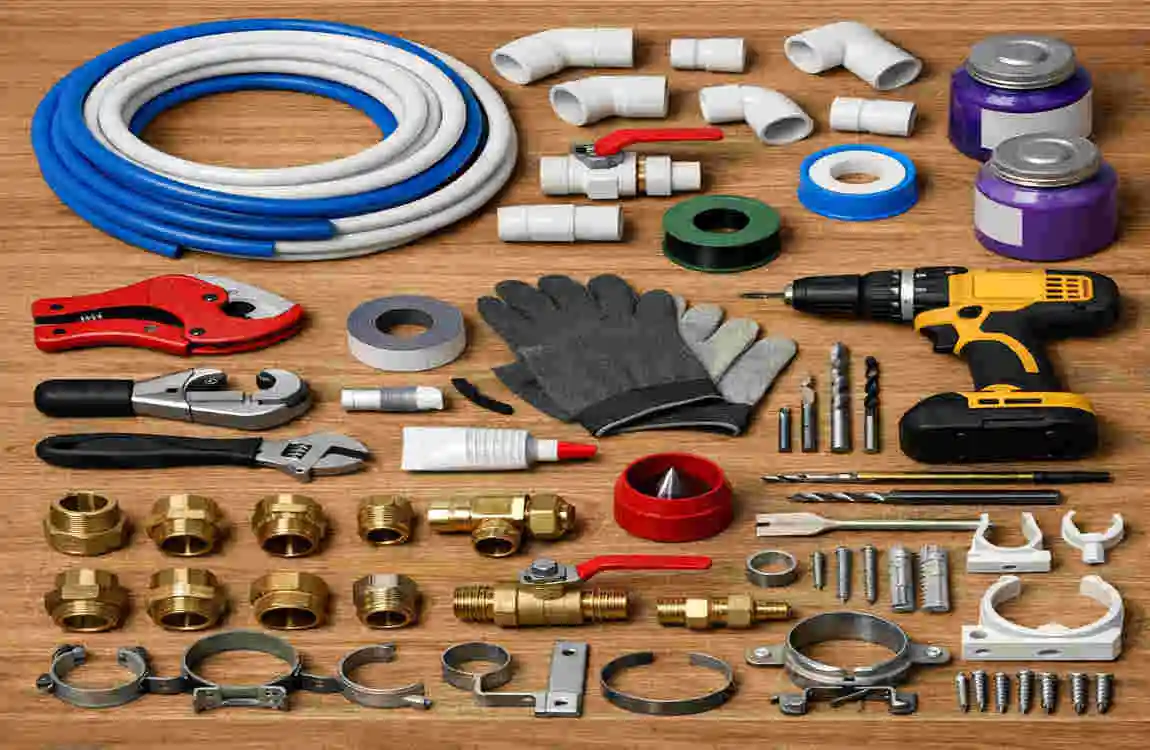
Essential Pipe Materials
The pipe material matters because each type works best for different jobs.
- PVC: Affordable and common for cold water
- CPVC: Good for both hot and cold water
- PEX: Flexible and easy to work with indoors
- Copper: Strong and long-lasting, but more expensive
Required Plumbing Tools
You will usually need:
- Pipe cutter
- Measuring tape
- Adjustable wrench
- Pipe wrench
- PVC cement
- Primer
- Teflon tape
- Safety gloves
Having everything ready before you begin makes the job much smoother.
Choosing the Right Pipe Material
Pipe TypeBest ForAdvantagesDisadvantages
PVC Cold water Affordable Not for hot water
CPVC Hot & cold water Heat resistant Slightly expensive
PEX Indoor plumbing Flexible Requires fittings
Copper Long-term use Durable Higher cost
If you are doing a small home project, PVC or PEX is often easier for beginners. If you need hot water lines, CPVC or copper may be better.
Planning Before Installation
Measure the Pipe Length
Before cutting anything, measure the route carefully. An incorrect measurement can waste material and cause leaks later.
Locate the Water Supply
You should know exactly where the water comes in and where it needs to go. This helps you plan the pipe route more clearly.
Turn Off the Main Water Valve
Always shut off the main water supply before starting. This keeps water from flowing while you work.
Prepare the Installation Area
Clear the space so you can move freely. A clean work area helps reduce mistakes and makes the job safer.
How to Make a Water Pipe at Home Step by Step
Plan the Pipe Route
Decide where the pipe will run. Keep the path as simple and straight as possible.
Fewer bends usually mean fewer chances for leaks.
Measure and Mark the Pipe
Use a measuring tape and mark each section before cutting. Double-check the length so you do not cut too short.
Cut the Pipe Correctly
Use a pipe cutter for a clean cut. Rough cuts can make connections weaker.
Clean the Pipe Ends
Wipe away dust, dirt, or loose pieces. Clean ends help fittings seal better.
Connect Pipe Fittings
Attach elbows, couplings, or connectors as needed. Make sure each fitting matches the pipe size.
Apply Primer and PVC Cement
If you are using PVC, apply primer first, then cement. This helps the joint bond properly.
Work quickly but carefully, because the cement starts setting fast.
Important Safety Tips
Wear Protective Equipment
Use gloves and, if needed, safety glasses. This helps protect your hands and eyes while cutting or sealing pipes.
Avoid Excess Glue
Too much cement can create a messy joint and weaken the connection. Use only what you need.
Keep Pipes Straight
Misaligned pipes can put pressure on the system. That often leads to leaks or cracks over time.
Check Local Plumbing Codes
Some areas have rules about pipe materials and installation methods. Make sure your project follows local requirements.
Common DIY Mistakes to Avoid
A few simple mistakes can ruin the job:
- Incorrect pipe measurements
- Loose fittings
- Skipping primer
- Overtightening joints
- Ignoring leak testing
- Using the wrong pipe type
If you avoid these, your project has a much better chance of lasting.
Tips for Long-Lasting Water Pipes
Regular Inspection
Check your pipes now and then for signs of wear, moisture, or loose joints.
Prevent Freezing
If pipes are in cold areas, insulate them to prevent them from freezing and cracking.
Replace Damaged Sections Quickly
A small crack can become a bigger problem fast. Fix damaged parts early.
Keep Pipes Clean
Clean connections and clear pipe surfaces help your system work better for longer.
Estimated DIY Water Pipe Installation Cost
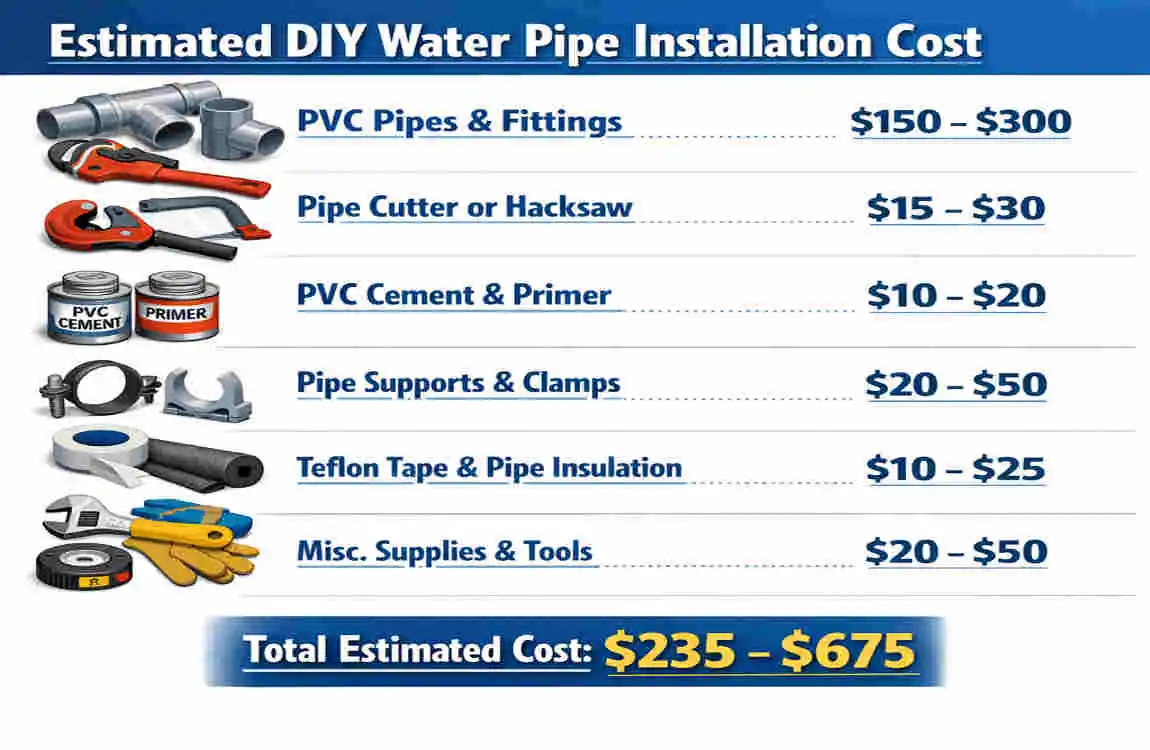
Item Estimated Cost
PVC Pipe $10–$30
Pipe Fittings $10–$25
PVC Cement $5–$10
Pipe Cutter $15–$40
Teflon Tape $2–$5
Total DIY Cost $40–$110
Your final cost will depend on the size of the project and the material you choose.
DIY vs Professional Installation
DIY Installation Professional Installation
Lower cost Higher cost
Good for small projects Best for complex plumbing
Requires basic skills Expert artistry
Time-consuming Faster completion
DIY works well for small, simple jobs. Professional installation is better when the system is large or complicated.
Maintenance Tips
Inspect for Leaks Monthly
Look around pipe joints and fittings for moisture or dripping water. Early checks save money later.
Clean Pipe Connections
Keep connections free of dirt and buildup to keep them in good shape.
Protect Outdoor Pipes
Outdoor pipes should be covered or insulated to protect them from weather damage.
Replace Worn Fittings
Old fittings can weaken over time. Replace them before they fail.
Frequently Asked Questions
How do you make a water pipe at home?
Measure the route, cut the pipe, attach the correct fittings, secure the joints, and test for leaks.
Which pipe is best for home water supply?
PEX is flexible, CPVC works for hot and cold water, and PVC is usually for cold water only.
Can beginners install a water pipe?
Yes, simple projects can be done by beginners with the right tools and safety steps.
How long does DIY water pipe installation take?
A small project usually takes about 2 to 5 hours.
What tools are required to install a water pipe?
Common tools include a pipe cutter, measuring tape, wrench, PVC primer and cement, Teflon tape, and gloves.
| Topic | Details |
|---|---|
| Guide Title | How to Make a Water Pipe at Home: Easy DIY Installation Guide |
| Purpose | Install a simple, reliable water pipe for household water supply. |
| Common Pipe Materials | PVC, CPVC, PEX, Copper (depending on water type and local codes). |
| Tools Needed | Pipe cutter, measuring tape, marker, wrench, drill, PVC cement (if using PVC), fittings. |
| Basic Steps | Measure the route → Cut the pipe → Attach fittings → Connect sections → Secure the pipe → Test for leaks. |
| Recommended Pipe Size | ½-inch for most fixtures; ¾-inch for main water supply lines. |
| Best for DIY | PEX and PVC are generally the easiest materials for beginners. |
