
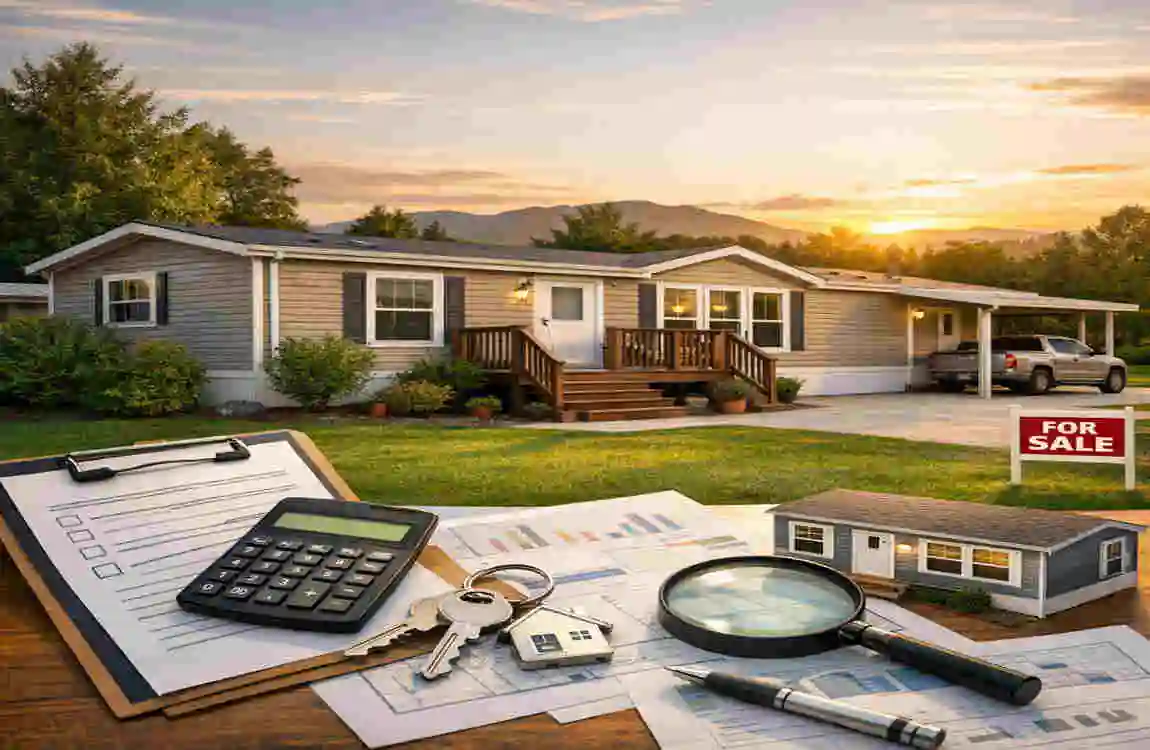
Welcome to the 2026 housing market! If you have been keeping an eye on real estate trends lately, you already know that the demand for affordable housing has skyrocketed. With traditional stick-built homes becoming increasingly expensive, mobile and manufactured homes have stepped into the spotlight as the ultimate smart housing solution. They offer a fantastic, affordable path to homeownership for millions of people. But what happens when it is time for you to move on? If you are planning to sell your property this year, you are likely staring down one massive, critical question: how do you find the value of a mobile home?
Figuring out the exact worth of your property is the single most important step you will take in the selling process. It is the foundation of a successful, profitable resale. If you rely on guesswork, you are setting yourself up for some frustrating pitfalls. Price your luxury home too low, and you leave thousands of dollars of your hard-earned equity sitting on the table. Price it too high, and your listing will gather dust, sitting on the market for months while potential buyers scroll right past it.
You need a strategy that hits the “Goldilocks” zone—pricing it just right. Knowing how to find the value of a mobile home requires a blend of local market knowledge, an understanding of depreciation, and an honest assessment of your home’s condition.
Why Accurate Valuation Matters for Resale
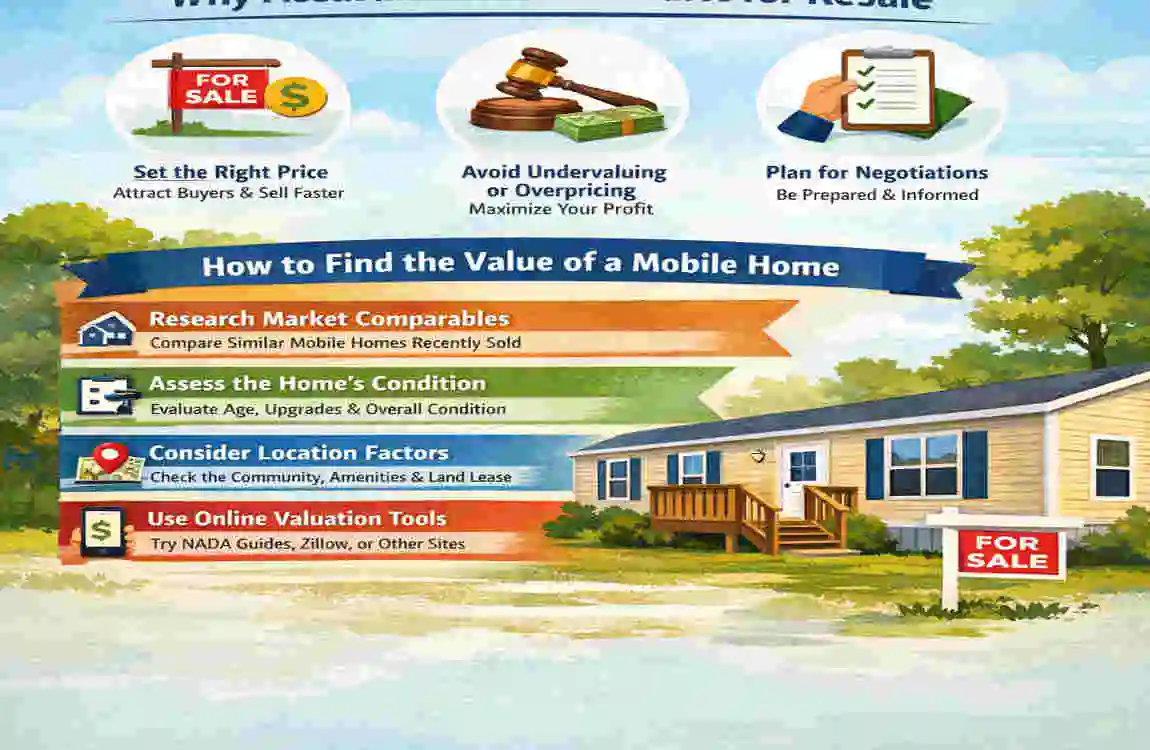
You might be tempted to look at what your neighbor sold their house for last year and slap the same price tag on your front door. Let me tell you right now that it is a huge mistake. Valuing your mobile home correctly is the secret engine that maximizes your profits and drastically speeds up your timeline. In highly competitive parks or desirable private lots, an accurately priced home will often spark bidding wars. At the same time, an overpriced one will be ignored.
Let us look at the financial realities of the current market. Recent industry data shows that the average used mobile home is currently selling for around $70,000. However, that is just a broad average. Actual resale prices vary widely based on condition, location, and the year the home was built. If your home is in pristine condition but you list it at the $70,000 average, you are giving away your equity. Conversely, if your home needs a new roof and you price it at $90,000, buyers will laugh and walk away.
Accurate pricing also attracts serious, qualified buyers. When you know exactly how to find the value of a mobile home, you remove the friction from the buying process. Buyers today are smart. They have access to the same market data you do. When they see a price that aligns perfectly with the home’s true market value, they feel confident making an offer.
Furthermore, a spot-on valuation is absolutely critical for buyer financing. Most buyers will not be purchasing your home with a briefcase full of cash; they will need a loan. If a buyer agrees to pay $80,000 for your home, but the bank evaluates it and says it is only worth $60,000, the loan will fall through, and your sale will collapse. Getting the value right from day one ensures that the appraisal matches the asking price, smoothing the way for a fast, stress-free closing. Finally, knowing your exact value helps you accurately calculate your potential tax liabilities or tax savings well before you sign the final paperwork.
Key Factors Influencing Mobile Home Value
Before we dive into the specific methods of calculating your home’s worth, we need to understand the moving parts. What actually makes one mobile home worth $40,000 and another sitting two streets over worth $120,000? Several distinct variables play a massive role in determining your final number.
The Impact of Age and Condition
Age is usually the first thing buyers look at. In the mobile home world, newer generally means more valuable. For context, brand-new manufactured homes in 2026 are averaging around $124,300. Unlike traditional real estate, which generally appreciates over time, mobile homes situated in leased parks often depreciate, much like a vehicle. You can expect a depreciation rate of about 3% to 5% yearly. However, excellent maintenance and condition can significantly slow this depreciation down. A meticulously maintained 2015 model will easily outprice a beat-up 2020 model.
Size and Layout Matter
Space is a Premium commodity. The size of your home dictates a massive chunk of its value. Single-wide homes, while highly affordable and great for minimalists, will not command the same price as a spacious double-wide or triple-wide home. Modern buyers are looking for open-concept layouts, large primary suites, and multiple bathrooms.
Location: The Ultimate Value Driver
Where your home sits is just as important as the home itself. Are you located on a leased lot in a mobile home park, or do you own the private land the home sits on? If you own the land, congratulations! Your property is likely considered real estate, and it will appreciate over time, along with the land. If you are in a park, buyers will heavily weigh the cost of the monthly lot rent and park amenities against your asking price.
Strategic Upgrades
Upgrades can drastically shift your valuation. Strategic renovations, especially those focused on energy efficiency, such as new HVAC systems or double-pane windows, can boost your home’s value by 10% to 20%. Buyers love seeing modern kitchens and updated bathrooms, as it saves them the headache of renovating after they move in.
To make this easier to digest, check out this quick breakdown of how different factors impact your bottom line:
Factor Impact on Value: Example Boosters
Age and Condition: Newer homes hold higher values; extensive repairs reduce the price. A recently replaced roof can add $5,000 to your asking price.
Size and Layout: Double-wides and multi-section homes command higher premiums than single-wides. A 3-bedroom, 2-bathroom layout can add up to $20,000 in value.
Location and Land Homes on privately owned land are worth vastly more than those in leased parks. Being located in a prime, highly desired zip code can boost value by 15%.
Upgrades and Features: Modern kitchens, bathrooms, and energy-efficient systems drive buyer interest. Updating to a modern, energy-efficient HVAC system can add $10,000.
Step-by-Step: DIY Methods to Find Value
Now that you know what factors move the needle, let us get our hands dirty. You do not always have to pay hundreds of dollars right out of the gate to get a solid estimate. If you are asking, “How do you find the value of a mobile home on your own?” you are in luck. There are several powerful, do-it-yourself strategies you can use to zero in on a highly accurate listing price.
Use Online Calculators and NADA Guides
The absolute best place to start your valuation journey is the internet. Specifically, you want to use the NADA Manufactured Housing Appraisal Guide (now operated by J.D. Power) or specialized calculators available on sites like MHVillage. These tools act as the “Kelley Blue Book” for the mobile home industry.
Using these tools is incredibly straightforward. You will enter the details of your home: the manufacturer’s name, the year it was built, the model, the width and length, and your zip code. The system uses a massive database of HUD standards and regional market demands to spit out a highly educated estimate.
For example, if you plug in a well-maintained 2008 double-wide in a mid-tier market, the calculator might give you a rough estimate of $60,000 to $75,000. It is important to remember that these calculators provide a baseline book value. They cannot see the beautiful new hardwood floors you installed, nor can they smell the lingering cigarette smoke from a previous owner. Therefore, you must use these numbers as a starting point, not a final destination.
Research Comparable Sales (Comps)
If you want to know what buyers in your area are actually willing to pay, you have to look at “comps”—comparable sales. This is exactly what professional real estate agents do. You want to find out what similar homes in your specific neighborhood or park have sold for recently.
Hop onto platforms like Zillow, Realtor.com, or local park community boards. You need to filter your search to show recently sold mobile homes within the last six months. The real estate market moves fast; a price from two years ago is completely useless to you today.
Look for homes that match your property as closely as possible. If you own a 1,200-square-foot, 2012 double-wide in a park, find three other homes just like it that sold recently.
Once you find your comps, you have to adjust the numbers subjectively. Did the comp home have a beautiful wrap-around deck, while yours has a small set of wooden stairs? You need to subtract a few thousand dollars from your estimate. Does your home have brand-new stainless-steel appliances and a modern metal roof, while the comp home had original 1990s fixtures? Add a Premium to your price!
Self-Inspection Checklist
The final step of your DIY valuation requires you to take off your “homeowner” hat and put on your “critical buyer” hat. You need to walk through your property and conduct a brutally honest self-inspection. Buyers will notice every flaw, so you need to document them first.
Grab a clipboard and walk the perimeter of your home.
- The Roof: Are there any soft spots, missing shingles, or signs of water pooling?
- The Foundation/Skirting: Is the skirting intact? Is the home properly leveled, or do the doors stick when you try to close them?
- The Interior Floors: Walk heavily across every room. Are there squeaks, soft spots, or water damage near the bathtubs and toilets?
- Appliances and Systems: Does the AC blow cold? Is the water heater aging out?
- Additions: Do you have a permitted carport, a screened-in porch, or a large storage shed?
Once you complete your checklist, grade your home’s overall condition honestly: Excellent, Good, Fair, or Poor. Use this grade to refine the baseline number you got from the online calculators. If your home is in “Fair” condition due to a leaky roof and stained carpets, you must place your asking price at the very bottom of your calculated range.
Professional Appraisal Options Explained
While DIY methods are fantastic for getting a ballpark figure, there are times when you need absolute, undeniable accuracy. When thousands of dollars are on the line, guessing is not a viable business strategy. This is when you step up and hire a professional. But when people ask, “How do you find the value of a mobile home professionally?” they often do not realize there are different types of appraisers for different situations. Let us break them down.
Types of Appraisals
- Market Value Appraisals: This is the most common type for a standard seller. You hire a certified appraiser to come out, evaluate your property, pull detailed local comps, and give you a certified report of what the home should sell for on the open market. These typically cost between $300 and $600 and take about 3 to 7 days to complete.
- Lending Appraisals (FHA/VA): If your buyer is using a government-backed loan like an FHA or VA loan to buy your home, the lender will mandate a highly specific appraisal. These appraisers have strict checklists ensuring the home meets federal safety and structural standards. These appraisals are generally more rigorous and cost between $350 and $650.
- Tax Assessments: Sometimes you need an appraisal to dispute an unfair property tax hike. A tax assessor evaluates the property strictly for local taxation purposes. These are generally cheaper, ranging from $250 to $500. Still, they are not always the best reflection of true open-market resale value.
When and Why Hire One
You should absolutely hire a professional appraiser if you are conducting a financed sale. In fact, the bank will require it before they hand over a single dime to the buyer. However, even if you are aiming for a cash sale, getting a pre-listing appraisal is a brilliant strategic move.
When you have a certified document stating your home is worth $85,000, you instantly shut down lowball offers. It gives you incredible negotiating power.
A crucial piece of advice: Never hire a standard, traditional real estate appraiser to value a mobile home located in a leased park. Stick-built appraisers often do not understand the nuances of manufactured housing depreciation and park lot rents. You must hire a certified mobile home expert to get an accurate number.
Costs vs. Benefits
You might be wincing at the thought of spending $500 to find out what your home is worth. But look at the return on investment (ROI). Industry insights show that mobile homes priced accurately, backed by a professional appraisal, sell up to 30% faster than homes priced by guesswork. Spending $500 today could save you from making a $10,000 pricing mistake tomorrow. It is an investment in your peace of mind and your final profit margin.
Common Valuation Mistakes to Avoid
Even armed with calculators and comparable sales data, sellers often stumble into psychological traps. When you are trying to figure out how to find the value of a mobile home, human nature can sometimes cloud your judgment. Here are the most common valuation mistakes you must avoid at all costs.
Leading with Emotional Attachment. You raised your children in this home. You spent countless weekends planting those beautiful rose bushes out front. To you, the home is priceless. To a buyer, it is just a structure of metal, wood, and drywall. Sellers routinely overvalue their homes by 10% to 15% simply because of their emotional attachment. You must separate your memories from the math.
Overvaluing Hyper-Personal Renovations. Just because you spent $8,000 installing a custom, bright purple tile backsplash in the kitchen does not mean the buyer wants to pay for it. In fact, highly personalized cosmetic upgrades might actually lower your home’s value, as the buyer will factor in the cost of ripping them out. Stick to neutral, universally appealing upgrades if you want a return on your investment.
Ignoring the Park’s Rules and Lot Rent. You can have the most beautiful mobile home in the state. Still, if it is located in a park with a massive monthly lot rent and strict, overbearing HOA rules, your resale value will tank. Buyers look at their total monthly output. If your park charges $1,000 a month just for the dirt the home sits on, you must lower your asking price to attract buyers.
Believing the Depreciation Myth. There is a massive myth floating around that all mobile homes lose value over time, no matter what. This is entirely false. If your manufactured home is permanently affixed to a foundation on land that you own, it is generally classified as real property. In this scenario, your home will appreciate right alongside traditional stick-built real estate. Never let a buyer tell you your home is worthless simply because it was built in a factory. Always verify your local comps to prove them wrong!
Boosting Your Mobile Home’s Resale Value
You ran the numbers, and the valuation came back slightly lower than you hoped. Do not panic! You are not locked into that number forever. There are several strategic, cost-effective steps you can take to boost your mobile home’s resale value before you list it on the open market.
Quick, High-ROI Cosmetic Wins
You do not need to gut the entire house to make more money. Small, highly visible cosmetic updates offer the best return on investment.
- Fresh Paint: A fresh coat of neutral, bright paint (think soft whites, light greys, or warm beiges) makes a home feel larger, cleaner, and newer.
- Updated Flooring: Ripping out old, stained carpets and installing affordable, durable luxury vinyl plank (LVP) flooring can completely transform your home. This relatively cheap $2,000 to $5,000 investment often yields a dollar-for-dollar return at the closing table.
- Curb Appeal: Power wash the exterior siding. Paint the front door a welcoming color. Weed the garden and fix any cracked skirting. Buyers make their decision within the first ten seconds of pulling into the driveway. Make those seconds count!
The Power of Staging
Never try to sell an empty, echoing home, and conversely, never try to sell a home packed to the ceiling with clutter. Staging your home creates an inviting atmosphere that helps buyers visualize themselves living there. Remove bulky, oversized furniture that makes the rooms feel cramped. Clear off all the kitchen counters. Open the blinds to let in as much natural light as possible. A well-staged home routinely sells for 5% to 7% more than an unstaged counterpart.
Long-Term Value Boosters: The Permanent Foundation
If you have some time and capital before you sell, consider retrofitting your home onto a permanent, FHA-approved foundation. By doing this (assuming you own the land), you legally transition the structure from personal property (like a car) to real property (like a traditional house). This opens the floodgates for buyers, who can now easily secure traditional mortgages to buy your home, thereby massively driving up demand and the final sale price.
Aligning with Market Trends
Buyers today are incredibly eco-conscious and budget-focused. High energy bills terrify them. If you can market your home as an energy-efficient oasis, you will easily command top dollar. Consider upgrading to a smart thermostat, adding additional insulation to the underbelly, or installing solar-powered exterior lighting. These modern 2026 upgrades signal to buyers that the home has been meticulously cared for and updated for the future.
Real-World Case Studies
Sometimes, the best way to understand how to find the value of a mobile home is to look at real people navigating the actual market. Let us explore two contrasting case studies to see how these valuation principles play out in the real world.
The Smart Seller in Texas
Sarah owned a well-kept 2015 single-wide in a popular family park in Texas. She was ready to move closer to her grandchildren and wanted to sell fast. Instead of guessing the price, she started by using an online NADA calculator, which gave her a baseline of $38,000.
Next, she looked at recent comps in her specific park. She noticed that homes with new appliances were selling for a Premium. Sarah smartly invested $2,000 into a matching set of modern stainless-steel kitchen appliances. She spent a weekend painting the interior a bright, neutral white.
She then hired a certified mobile home appraiser to validate her upgrades. The appraiser noted her improvements and the strong local market demand, giving her a certified valuation of $46,000. Sarah listed the home for $45,000 to remain slightly aggressive. Because she had the appraisal in hand and her home looked stunning, she received a full-price cash offer within 4 days of listing. By doing her homework, she effortlessly maximized her profit.
The Neglected Double-Wide Disaster
On the opposite end of the spectrum, we have Mark. Mark owned a massive 2018 double-wide on an incredible leased lot overlooking a lake. Similar double-wides in his park were routinely selling for $95,000. Seeing those numbers, Mark slapped a $100,000 price tag on his home and listed it online.
However, Mark ignored the crucial “condition” factor of valuation. He had neglected his roof maintenance, leading to a visible water stain on the living room ceiling. His carpets were heavily worn from large pets, and his AC unit was barely functioning.
Buyers walked through the home, saw the damage, and immediately walked out. His home sat on the market for eight agonizing months. Eventually, out of desperation, Mark had to drop his price dramatically, finally selling the home to an investor for just $65,000.
Because Mark did not conduct an honest self-inspection or adjust his price based on the home’s actual condition, he suffered a devastating $30,000 loss compared to neighborhood averages. He assumed size alone dictated value, and the market punished him for it.
These stories highlight exactly why you must use a mixed method of calculators, comps, and honest condition assessments when valuing your property.
Tools and Resources for Sellers

You do not have to tackle this massive project alone. The 2026 real estate landscape is packed with specialized tools designed specifically to help you succeed.
- Valuation Websites: Bookmark MHVillage and the J.D. Power (NADA) Manufactured Housing portal. These are the gold standards for generating your initial baseline value estimates.
- Local Specialists: Do not just hire the first real estate agent you see on a billboard. Look for agents who explicitly advertise themselves as manufactured home specialists. They understand the intricacies of park management, lot rents, and mobile home financing.
- Property Tax Records: If you own your land, jump onto your local county assessor’s website. Look at your 2026 property tax reassessments. While tax value is not always market value, seeing the historical trend of your property’s assessed value can give you a great indication of where your local market is heading.
Frequently Asked Questions
How long does a professional appraisal take? From the moment you call the appraiser to the moment the certified report lands in your inbox, you should expect the process to take anywhere from 3 to 7 business days.
Is Zillow’s “Zestimate” accurate for mobile homes? Not always. While Zillow is great for pulling comps, its automated algorithm struggles with mobile homes in leased parks because it cannot accurately account for monthly lot rent or park condition. Always verify with specialized mobile home tools.
Does taking my mobile home down to the studs increase value? Rarely. Unless the home has severe structural or mold damage, massive overhauls rarely offer a good return on investment. Stick to high-impact cosmetic updates like paint, flooring, and modern fixtures to maximize your profit!
