
Are you thinking about buying a mobile home in 2025? If so, you’re not alone. Mobile homes have become increasingly popular in recent years, offering an affordable and flexible housing option for many people. But before you dive into the world of mobile homes, it’s crucial to understand the standard size.
What Is a Standard Mobile Home Size?
Understanding Mobile Homes
First things first, let’s clarify what we mean by a mobile home. A mobile home, also known as a manufactured home, is a type of prefabricated housing built in a factory and transported to its final location. It’s essential to distinguish mobile homes from modular homes and traditional site-built homes, as they have different construction methods and regulations.
Defining “Standard Size”
When we talk about the standard size of a mobile home, we’re referring to the typical dimensions that most manufacturers produce. These dimensions can vary slightly by region and manufacturer, but there are common measurements widely accepted as the standard.
Standard Length and Width Measurements
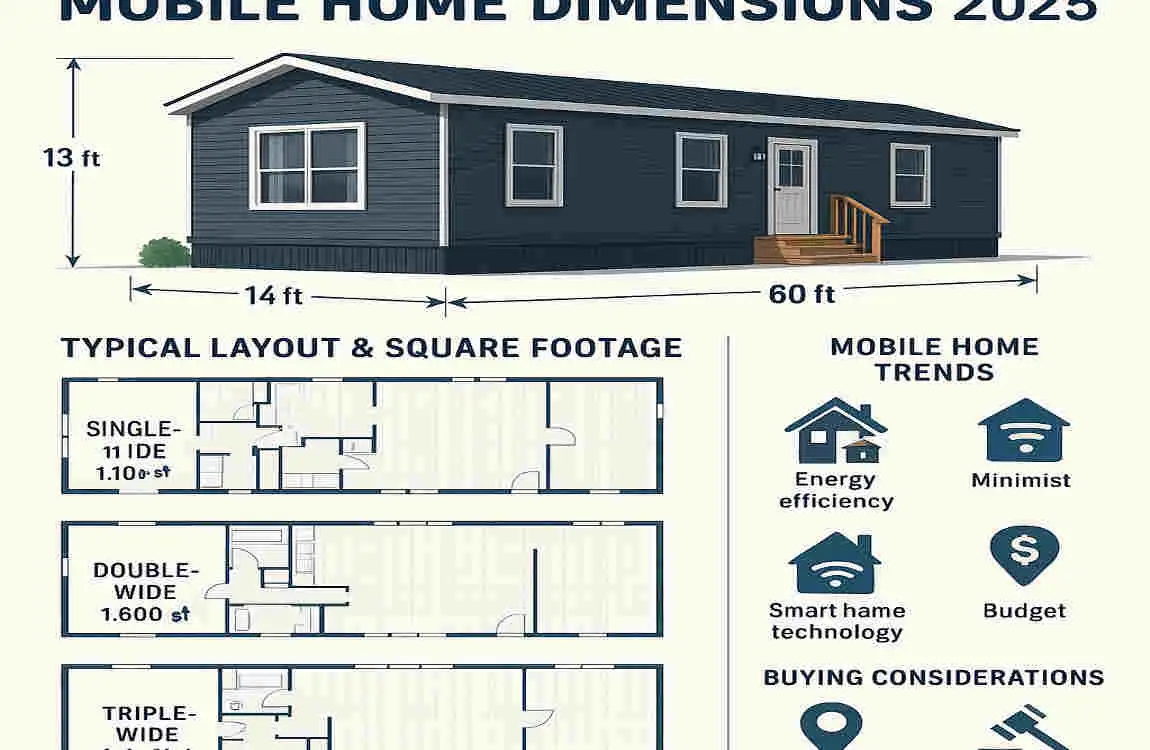
- Widths: The most common widths for standard mobile homes are 12, 14, 16, 18, and 20 feet. These widths determine the home’s overall footprint and can affect the layout and room sizes.
- Lengths: Standard mobile home lengths typically range from 40 feet to 80 feet. The length of the home will affect the number of rooms, the overall square footage, and the amount of living space available.
Single-Wide vs. Double-Wide Mobile Homes
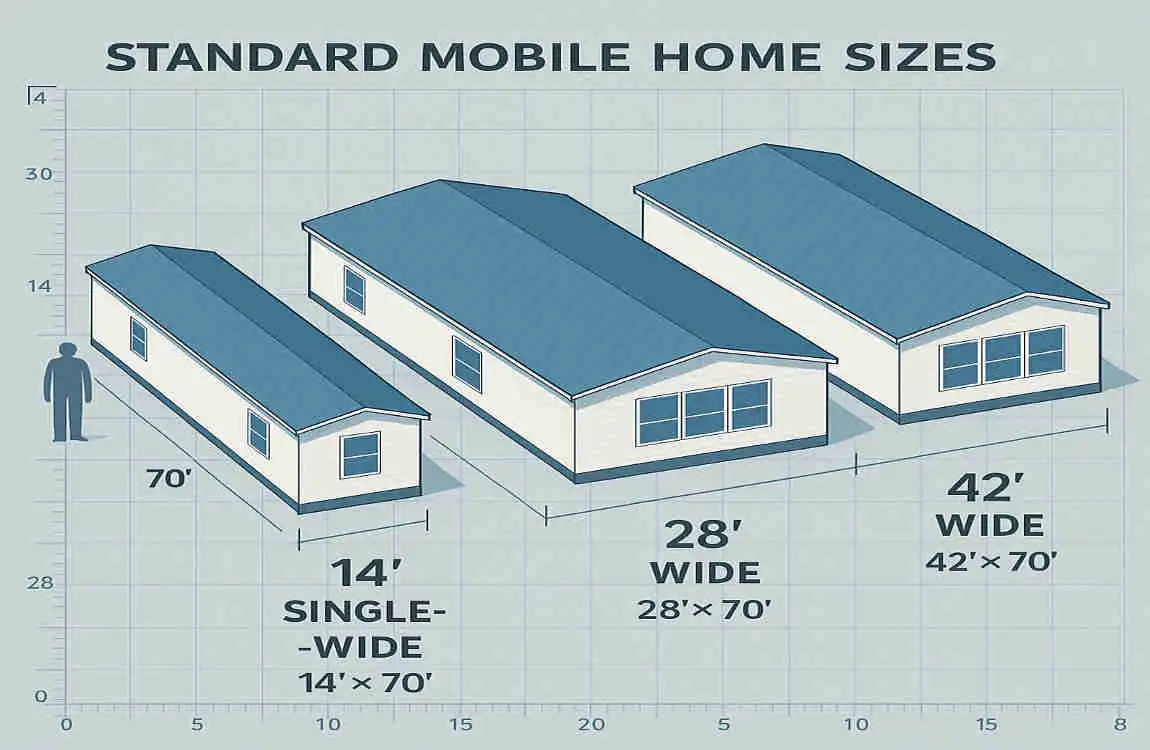
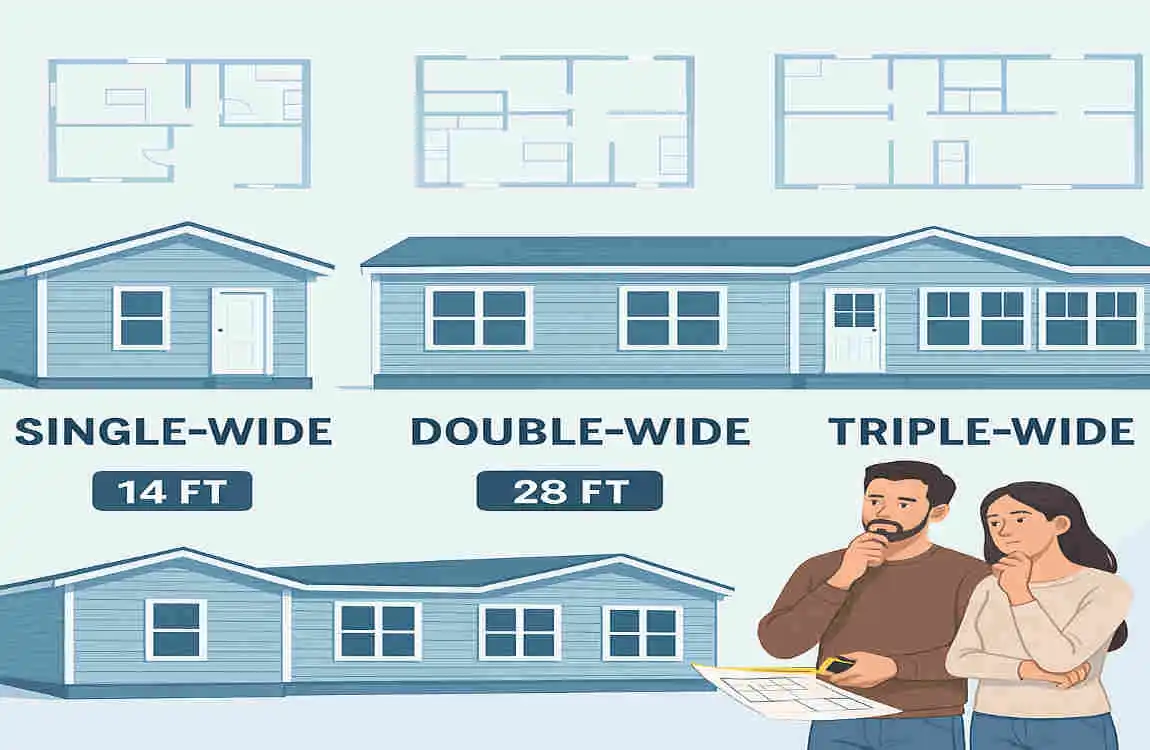
When it comes to mobile home sizes, you’ll often hear the terms “single-wide” and “double-wide.” A single-wide mobile home is typically 12 to 18 feet wide and 40 to 80 feet long. On the other hand, a double-wide mobile home consists of two sections joined together, resulting in a broader, more spacious layout. Double-wide homes can range from 20 to 32 feet wide and 40 to 90 feet long.
Regional and Manufacturer Variations
It’s worth noting that standard mobile home sizes can vary by region and manufacturer. Some areas may have stricter regulations or preferences for particular sizes, while manufacturers may offer unique floor plans and dimensions to cater to different markets. It’s always a good idea to research the standard sizes available in your desired location and from your preferred manufacturers.
Visualizing Standard Size Ranges
To help you better understand the standard mobile home sizes, here’s a chart that visualizes the typical dimensions:
Width (feet)Length (feet)Square Footage
12 40-80 480-960
14 40-80 560-1120
16 40-80 640-1280
18 40-80 720-1440
20 40-80 800-1600
Keep in mind that these are just the standard sizes, and many manufacturers offer custom options that may fall outside of these ranges.
Latest Mobile Home Size Trends in 2025
Influencing Factors
The world of mobile homes is constantly evolving, and 2025 is no exception. Several factors are driving changes in mobile home dimensions and layouts, including:
- Demand for Larger Homes: There’s a growing demand for larger, multi-section mobile homes that offer more space and flexibility. As families grow and lifestyles change, people are looking for homes that can accommodate their needs.
- Urban Living: In urban areas, compact and energy-efficient mobile homes are gaining popularity. These smaller homes are designed to maximize space and minimize environmental impact, making them ideal for city living.
- Customization: Manufacturers are offering more customizable floor plans and flexible size options to cater to individual preferences. This trend allows buyers to create a home that truly fits their needs and style.
- Lifestyle Changes: Modern lifestyle preferences, such as remote work and multi-generational living, are influencing mobile home size trends. Homes are being designed with dedicated office spaces, guest rooms, and open layouts to accommodate these changes.
- Innovations in Materials and Construction: Advances in materials and construction techniques are allowing for new size possibilities. Manufacturers are experimenting with modular designs, lightweight materials, and innovative building methods to create homes that are both spacious and efficient.
Impact on Pricing and Resale Value
As mobile home sizes and layouts evolve, it’s essential to consider how these trends affect pricing and resale value. Generally, larger and more customizable homes are more expensive, but they may also hold their value better in the long run. On the other hand, compact, energy-efficient homes may have lower upfront costs but may appeal to a narrower market when it comes time to sell.
When considering the latest mobile home size trends, it’s crucial to weigh the pros and cons and think about your long-term goals. What works for you today may not be the best fit in the future, so it’s essential to plan ahead and make an informed decision.
How to Choose the Right Mobile Home Size for Your Needs
Factors to Consider
Choosing the right mobile home size is a big decision, and there are several factors you should consider before making a purchase:
- Family Size and Lifestyle Needs: The size of your family and your lifestyle will significantly impact the mobile home size you need. If you have a large family or frequently entertain guests, opt for a larger home with more bedrooms and living space. On the other hand, if you’re a single person or a couple, a smaller home may be more suitable.
- Available Land Size and Park Restrictions: Before buying a mobile home, it’s essential to consider the size of the land you have available and any restrictions imposed by mobile home parks. Some parks may have size limits or specific requirements for the dimensions of the homes they allow.
- Budget Considerations: Your budget will play a significant role in determining the size of the mobile home you can afford. Larger homes with more features and customization options will typically be more expensive, so it’s essential to set a realistic budget and stick to it.
- Future-Proofing: When choosing a mobile home size, consider your future needs. Will your family grow in the coming years? Do you plan to stay in the exact location for a long time, or do you anticipate moving frequently? Considering these factors can help you select a home that will serve you well for years to come.
Measuring and Planning Space Needs
Before making a purchase, take the time to measure your space needs and plan accordingly. Consider the size of the rooms you’ll need, the amount of storage space, and any special features you want, such as a dedicated office or a large kitchen. By carefully planning your space requirements, you can ensure that you choose a mobile home that meets your needs without being too small or too large.
Pros and Cons of Different Sizes
When it comes to mobile home sizes, there are pros and cons to consider for each option:
- Single-Wide Homes: Single-wide homes are typically more affordable and easier to transport and install. However, they may have less living space and fewer customization options compared to larger homes.
- Double-Wide Homes: Double-wide homes offer more space and flexibility, with larger rooms and more customization options. However, they can be more expensive and may require a larger lot size and more extensive installation.
- Compact Homes: Compact mobile homes are ideal for urban living and can be more energy-efficient. However, they may have limited space and fewer amenities compared to larger homes.
By weighing the pros and cons of different sizes, you can make an informed decision that aligns with your needs and priorities.
Transportation and Installation Costs
It’s worth noting that the size of your mobile home can impact transportation and installation costs. Larger homes may require special permits and transport equipment, and the installation process may be more complex and time-consuming. Be sure to factor these costs into your budget and planning when choosing a mobile home size.
Buying Tips for Standard Mobile Homes in 2025
Negotiating with Dealers
When it comes time to buy your mobile home, having a good understanding of standard sizes can give you an advantage in negotiations with dealers. By knowing the typical dimensions and features of the homes you’re interested in, you can confidently discuss pricing and options with the dealer.
Inspecting Size-Related Details
During the purchase process, it’s crucial to carefully review the mobile home’s size-related details. Pay attention to the floor space, ceiling height, and room dimensions to ensure that the home meets your needs and expectations. Don’t hesitate to ask the dealer for detailed measurements and floor plans to help you make an informed decision.
Understanding Zoning Laws and Size Restrictions
Before finalizing your purchase, research the zoning laws and size restrictions in your preferred location. Some areas may have specific regulations governing the size and placement of mobile homes, so it’s essential to ensure that your chosen home complies with these rules.
Financing Considerations
The size of your mobile home can also impact your financing options and costs. Larger homes may require larger loans, and the interest rates and terms may vary depending on the home’s size and value. Be sure to discuss your financing options with lenders and consider how the size of your home will affect your long-term financial plan.
Verifying Advertised Dimensions
When shopping for a mobile home, it’s not uncommon to see advertised dimensions that don’t match the home’s actual size. To avoid surprises, always verify the home’s dimensions before making a purchase. Ask the dealer for detailed measurements and compare them to the advertised size to ensure accuracy.
Warranty and Maintenance Tips
The size of your mobile home can also impact the warranty and maintenance requirements. Larger homes may have more components and systems that require regular maintenance, while smaller homes may have fewer maintenance needs. Be sure to ask the manufacturer and dealer about the warranty and maintenance recommendations for the specific home size you’re considering.
