
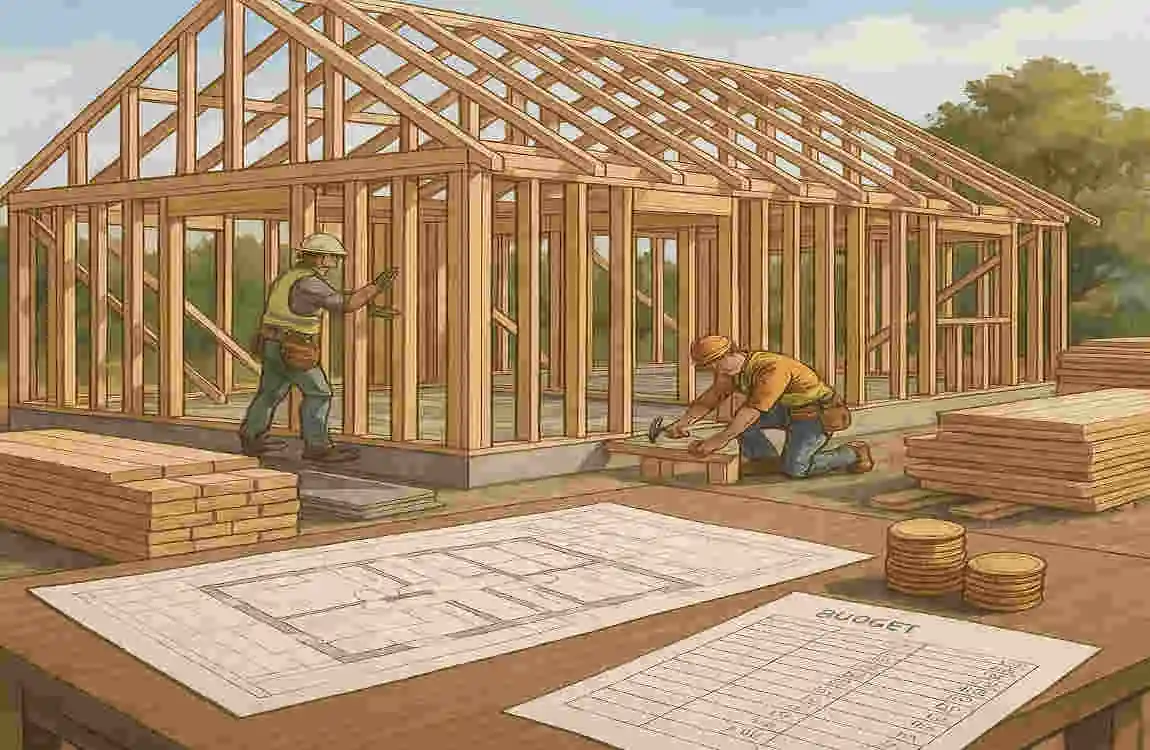
Are you dreaming of building your own frame house? It’s an exciting prospect, but before you dive in, it’s crucial to understand the costs involved.
We’ll start by defining what a frame house is and why it’s essential to have a clear picture of the costs before embarking on your project. Then, we’ll dive into the average costs you can expect, followed by a detailed breakdown of all the factors that contribute to the final price tag.
What Is a Frame House?
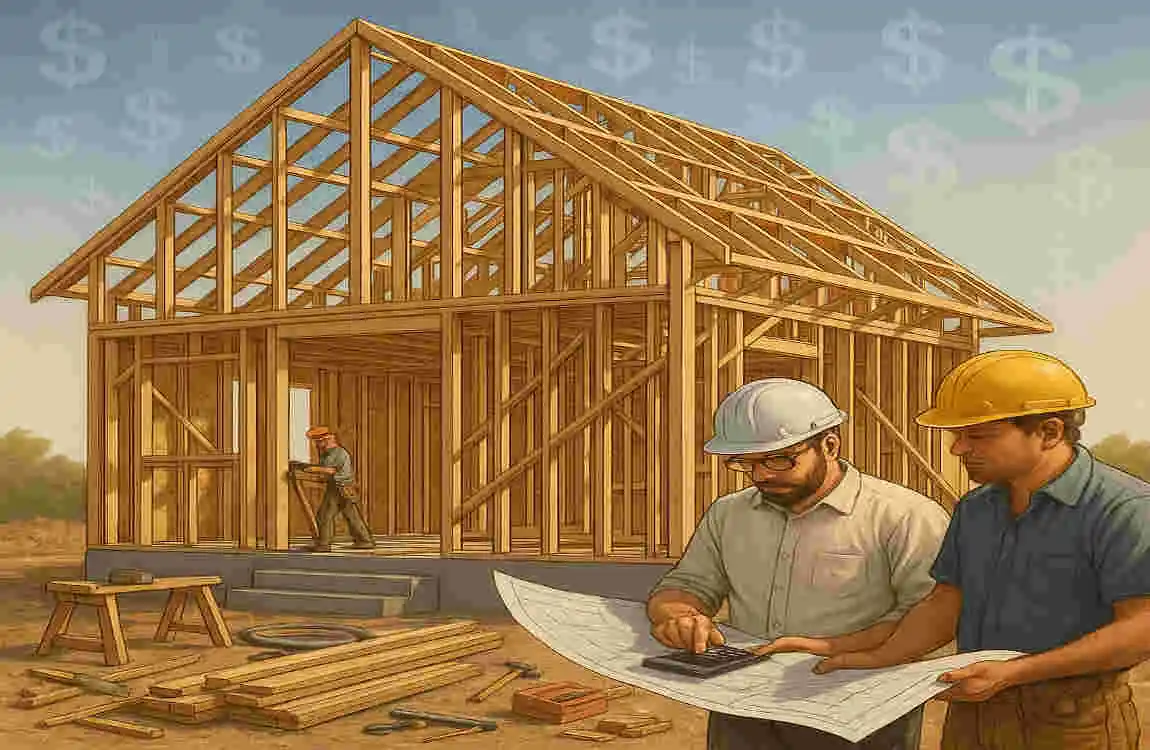
Understanding Frame House Construction
A frame house, also known as a timber frame or wood frame house, is a type of construction where the structural skeleton is made of wood. This skeleton, or frame, supports the entire building, including the walls, floors, and roof.
Different Types of Frame Houses
There are several types of frame houses, each with its own unique characteristics:
- Timber Frame Houses: These use large, heavy timbers joined together with traditional methods like mortise and tenon joints. Timber frame houses often have exposed beams that add to their rustic charm.
- A-Frame Houses: As the name suggests, these houses have a distinctive A-shaped roofline that extends all the way to the ground. A-frame houses are popular for their unique appearance and efficient use of space.
- Post and Beam Houses: Similar to timber frame houses, post and beam construction uses large posts and beams to create an open, spacious interior. This method allows for greater design flexibility and the potential for large windows and high ceilings.
Benefits of Frame Houses
Frame houses offer several advantages that make them a popular choice for homeowners:
- Durability: When properly constructed and maintained, frame houses can last for generations.
- Design Flexibility: The versatility of wood allows for a wide range of architectural styles and custom designs.
- Faster Build Times: Frame houses can often be constructed more quickly than other types of homes, thanks to the efficiency of the framing process.
How the Frame Influences Construction Cost
The frame of a house plays a significant role in determining the overall construction cost. The type of wood used, the complexity of the design, and the size of the house all impact the price tag. In the following sections, we’ll dive deeper into these factors and provide a clear picture of what you can expect to pay for your frame house.
Average Cost to Build a Frame House in 2025
Understanding the Numbers
So, how much does it actually cost to build a frame house in 2025? Let’s break down the numbers.
You may also read (guide to 2025s most popular home architecture styles).
On average, you can expect to pay between $7 and $16 per square foot for the framing alone. However, when you factor in all the other costs associated with building a home, the total cost per square foot can range from $150 to $250.
To put that into perspective, a 1,500 square foot frame house could cost anywhere from $225,000 to $375,000 to build. Of course, these are just rough estimates, and your actual costs may vary based on several factors.
Regional Variations
It’s important to note that construction costs can vary significantly depending on the location. In the United States, for example, costs tend to be higher in urban areas and coastal regions compared to rural areas.
In the UK, the average cost per square meter for a frame house ranges from £1,500 to £2,800. However, these numbers can fluctuate based on factors like location, material costs, and labour rates.
2025 Construction Cost Reports
According to recent construction cost reports from 2025, the average cost of building a frame house has increased by about 5-7% compared to the previous year. This increase is due to rising material costs, labour shortages, and supply chain disruptions.
It’s essential to keep these factors in mind when budgeting for your frame house project. Working with a reputable builder and staying up-to-date on the latest cost trends can help you make more accurate estimates and avoid any unpleasant surprises down the road.
Detailed Cost Breakdown of Building a Frame House
Frame Materials
The type of wood you choose for your frame house can significantly impact the overall cost. Here’s a breakdown of some standard options:
- Traditional Lumber: This is the most affordable option, with prices ranging from $0.50 to $1.50 per linear foot. However, traditional lumber may require more maintenance over time.
- Engineered Wood: Engineered wood products like laminated veneer lumber (LVL) or oriented strand board (OSB) are more expensive, costing $1.50 to $3.00 per linear foot. However, they offer greater strength and stability, which can lead to long-term savings.
Labor Costs
Labour costs can vary widely depending on your location and the complexity of your project. On average, you can expect to pay between $5 and $10 per square foot for framing labour.
- Skilled Framing Contractors: Hiring experienced framing contractors can ensure a high-quality job, but it comes at a higher cost. Expect to pay $7 to $12 per square foot for professional framing services.
- DIY Framing: If you’re handy and willing to put in the time and effort, you can save money by doing the framing yourself. However, keep in mind that any mistakes could end up costing you more in the long run.
Foundation and Groundwork
Before you can start framing your house, you’ll need to prepare the foundation and site. These costs can add up quickly, with an average price tag of $5,000 to $20,000, depending on the size and complexity of your project.
Roof Framing
The cost of roof framing depends on the complexity of your design. A simple gable roof may cost $4 to $6 per square foot, while a more intricate design with multiple angles and valleys could run $8 to $12 per square foot.
Interior Walls Framing
Framing the interior walls of your frame house typically costs between $2 and $4 per square foot. This price can vary based on factors like the number of walls, the height of the ceilings, and the complexity of the layout.
Windows and Doors Installation
Installing windows and doors in your frame house can add $5,000 to $15,000 to your total budget. The cost will depend on the size, Style, and quality of the windows and doors you choose.
Insulation and Sheathing
Proper insulation and sheathing are essential for energy efficiency and protecting your frame house from the elements. Expect to pay $1.50 to $3.50 per square foot for insulation and $1 to $2 per square foot for sheathing.
Additional Costs
Don’t forget to factor in these additional costs when budgeting for your frame house:
- Permits: $500 to $2,000
- Design Fees: $1,000 to $5,000
- Equipment Rental: $500 to $2,000
Here’s a table summarising the average costs for each component of building a frame house:
ComponentAverage Cost
Frame Materials $0.50 – $3.00 per linear foot
Labour costs $5 – $10 per square foot
Foundation and Groundwork $5,000 – $20,000
Roof Framing $4 – $12 per square foot
Interior Walls Framing $2 – $4 per square foot
Windows and Doors Installation $5,000 – $15,000
Insulation and Sheathing $2.50 – $5.50 per square foot
Additional Costs $2,000 – $9,000
Keep in mind that these are just average costs, and your actual expenses may vary based on factors like location, material choices, and the complexity of your project.
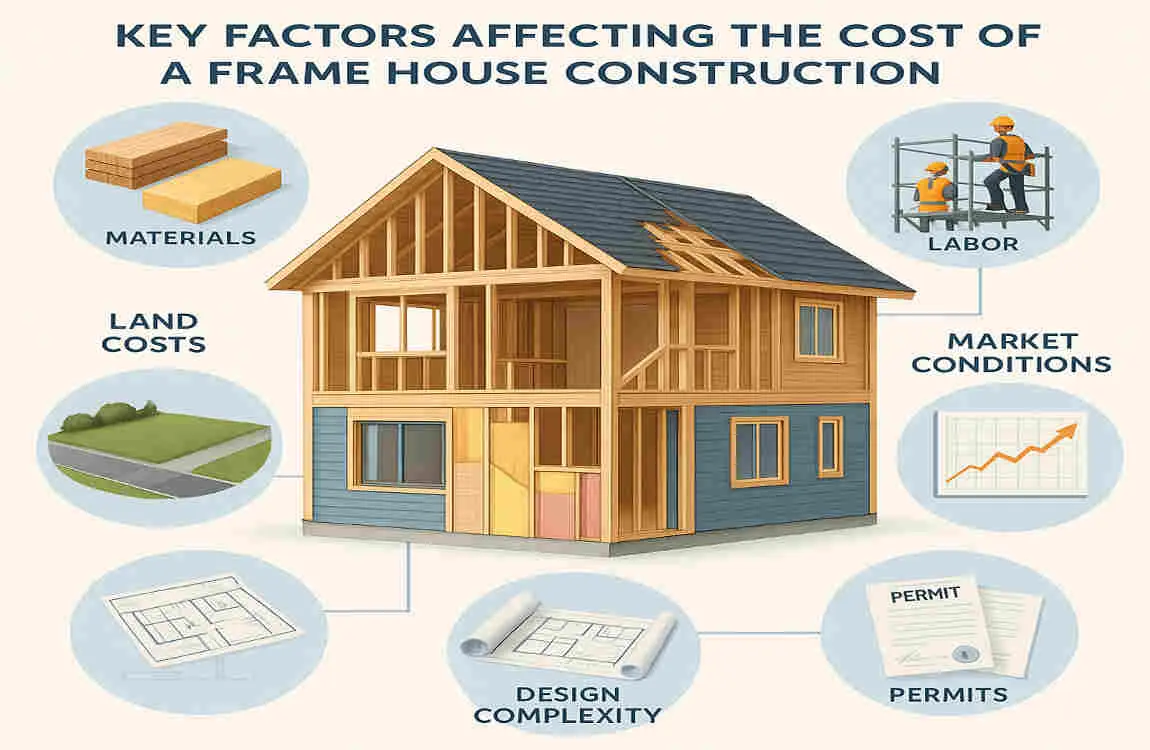
Factors Affecting the Cost of a Frame House
Size and Square Footage
It’s no surprise that the size of your frame house will have a significant impact on the total cost. The more square footage you need, the more materials and labour you’ll require. A larger home will also need a more extensive foundation and roof, which can add to the overall price tag.
Design Complexity
The complexity of your frame house design can also affect the cost. A simple, rectangular frame will be less expensive to build than a custom-designed home with multiple angles and unique features. The more complex the design, the more time and skill it will take to frame, which can drive up labour costs.
Material Quality and Sourcing
The type of wood you choose for your frame house will impact the cost. High-quality, sustainably sourced lumber will be more expensive than lower-grade options. Additionally, if you opt for imported timber instead of locally sourced materials, you may face higher transportation costs.
Labour Market and Construction Season
The cost of labour can vary based on the local market and the time of year you’re building. In areas with a high demand for skilled framing contractors, you may pay more for their services. Additionally, building during peak construction seasons can lead to higher labour rates due to increased demand.
Geographic Location
Where you build your frame house can significantly impact the cost. Construction costs tend to be higher in urban areas and coastal regions compared to rural locations. Additionally, building in areas with challenging terrain or strict building codes may require more time and resources, increasing the cost.
Type of Framing Method
The framing method you choose can also affect the cost of your framed house. Prefab or kit frame houses can be more cost-effective than traditional stick framing, as they often require less on-site labour. However, the initial cost of the prefab components may be higher.
Unexpected Costs and Contingencies
No matter how well you plan, unexpected costs can arise during the construction process. It’s essential to budget for contingencies to cover any unforeseen expenses. A general rule of thumb is to set aside 5-10% of your total budget for unexpected costs.
Comparing Costs: Frame House vs. Other Building Methods
Frame House vs. Concrete Homes
- Cost: Frame houses are generally less expensive to build than concrete homes. The average price per square foot for a frame house is $150 to $250, while concrete homes can range from $200 to $300 per square foot.
- Advantages: Frame houses offer greater design flexibility and faster build times compared to concrete homes. They also tend to be more energy-efficient and easier to modify or expand in the future.
- Disadvantages: Concrete homes are more durable and resistant to fire, pests, and severe weather. They also require less maintenance over time, which can lead to long-term savings.
Frame House vs. Steel Homes
You may also read (mastering math in home architecture a guide).
- Cost: Steel homes can be more expensive to build than frame houses, with an average price per square foot of $200 to $300. However, steel is often cheaper than wood in regions where lumber is scarce or costly.
- Advantages: Steel homes are incredibly durable and resistant to fire, pests, and severe weather. They also require minimal maintenance and can be more energy-efficient than frame houses.
- Disadvantages: Frame houses offer more design flexibility and a warmer, more inviting aesthetic than steel homes. They are also generally quicker to build and easier to modify or expand in the future.
Frame House vs. Modular Homes
- Cost: Modular homes can be more cost-effective than site-built frame houses, with an average cost per square foot of $100 to $200. However, the final price will depend on factors like the size, design, and location of your home.
- Advantages: Modular homes are built in a controlled factory setting, which can lead to faster build times and higher quality control. They also offer the flexibility to choose from a wide range of pre-designed floor plans and customise your home to suit your needs.
- Disadvantages: Frame houses offer more design flexibility and the ability to build on challenging or unique lots. They also allow for more customisation and the opportunity to work with local builders and contractors.
When deciding which building method is right for you, consider your budget, desired design, and long-term goals. Frame houses offer a cost-effective, flexible, and customizable option for many homeowners, but other methods may be better suited to your specific needs and circumstances.
How to Budget and Save Money When Building a Frame House
Selecting Cost-Effective Materials
One of the best ways to save money on your frame house is by choosing cost-effective materials without sacrificing quality. Consider the following tips:
- Opt for locally sourced lumber to reduce transportation costs.
- Choose engineered wood products for structural components to save money on high-grade lumber.
- Look for sales and discounts on building materials, and buy in bulk when possible.
Considering Prefab or Kit Frame Houses
Prefab or kit frame houses can be a cost-effective option for budget-conscious homeowners. These homes are built in a factory setting and then assembled on-site, which can lead to:
- Faster build times and reduced labour costs.
- Higher quality control and fewer on-site mistakes
- The ability to choose from a wide range of pre-designed floor plans
Hiring the Right Contractors
Finding the right contractors can make a big difference in your frame house budget. Consider these tips:
- Get multiple quotes from reputable framing contractors in your area.
- Look for contractors who offer competitive rates and have experience with frame house construction.
- Don’t be afraid to negotiate labour rates, especially if you’re willing to be flexible with your timeline.
Planning and Design Tips
Careful planning and design can help you avoid costly changes during construction. Keep these tips in mind:
- Work with an architect or designer who specialises in frame houses to create a well-thought-out plan.
- Consider your long-term needs and goals when designing your home to avoid expensive renovations down the road.
- Stick to a simple, rectangular design if you’re on a tight budget, as complex shapes and features can drive up costs.
Financing Options
There are several financing options available for frame house construction, including:
- Construction loans: These loans provide funds for the entire building process and can be converted to a traditional mortgage once the home is complete.
- Home equity loans or lines of credit: If you already own property, you may be able to use the equity to finance your frame house project.
- Personal loans or savings: Depending on the size of your project, you may be able to finance it with personal loans or your own savings.
When choosing a financing option, consider the interest rates, repayment terms, and any potential tax benefits to find the best fit for your needs.
Additional Considerations and Hidden Costs
Land Cost and Site Preparation
When budgeting for your frame house, don’t forget to factor in the cost of the land and site preparation. These expenses can add up quickly, with an average price tag of $5,000 to $20,000, depending on the size and complexity of your project.
Permits, Inspections, and Legal Fees
Building a frame house requires various permits, inspections, and legal fees, which can add $2,000 to $5,000 to your total budget. These costs can vary based on your location and the specific requirements of your project.
Cost of Utilities Connections
Connecting your frame house to essential utilities like water, electricity, and sewage can cost anywhere from $2,000 to $10,000, depending on the distance to existing infrastructure and the complexity of the connections.
Potential for Future Maintenance Costs
While frame houses are generally low-maintenance, it’s essential to consider the potential for future costs. Regular upkeep, such as painting, sealing, and pest control, can add $500 to $2,000 per year to your budget.
Importance of Contingency Budget
No matter how well you plan, unexpected costs can arise during the construction process. It’s crucial to set aside a contingency budget of 5-10% of your total project cost to cover any unforeseen expenses.
By keeping these additional considerations and hidden costs in mind, you can create a more accurate and comprehensive budget for your frame house project.
You may also read (mastering house architectural millwork a step by step guide).
