

Picture this familiar scene: you are finishing up a wonderful, chaotic family dinner. You start washing the dishes, humming along to the radio, when suddenly, you feel a cold, damp puddle forming around your toes. You open the cabinet doors and find a miniature flood ruining your cleaning supplies. A leaky kitchen sink can instantly disrupt your evening, threaten your flooring, and send you into an immediate panic.
Once you mop up the mess and put a bucket under the drip, the big, stressful question hits you: how much does it cost to replumb a kitchen sink?
What Is Kitchen Sink Replumbing?
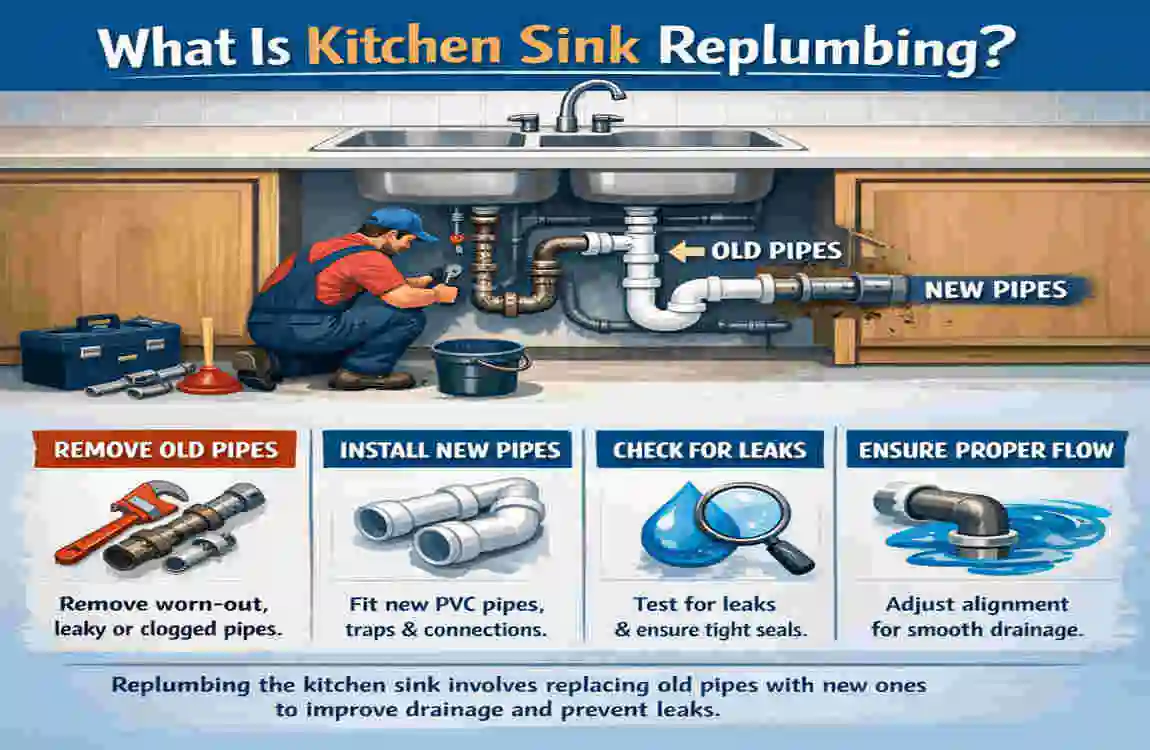
Before we start calculating numbers, we need to understand exactly what we are dealing with. When we talk about replumbing, we are not talking about buying a shiny new stainless steel or farmhouse basin. Instead, we are focusing strictly on the functional “guts” of your water system.
Replacing the Hidden Infrastructure
Kitchen sink replumbing involves removing and replacing the old pipes, water fittings, and drainage systems located under your sink and inside your walls. Think of your home’s plumbing like veins and arteries. Over time, they can get clogged, brittle, or completely wear out.
A thorough replumbing job usually includes updating the hot and cold water supply lines, replacing the shut-off valves (also known as angle stops), and installing a brand-new P-trap. The P-trap is the curved, U-shaped pipe under your sink that holds a small amount of water to prevent smelly sewer gases from entering your kitchen. Depending on your setup, the job might also include hooking up your dishwasher drain line and garbage disposal.
Full Sink Replacement vs. Replumbing
It is incredibly important to differentiate between a plumbing replacement and a cosmetic sink replacement.
- Cosmetic Replacement: You swap out the visible basin and maybe the faucet to make your kitchen look modern.
- Replumbing: You keep your current basin and replace the hidden pipes and valves to ensure your kitchen functions safely.
Why Do You Need a Replumb?
Why would a homeowner willingly tear out their pipes? Most people do not think about their plumbing until it forces them to. Unavoidable problems usually trigger this project. If your home still uses outdated materials like old galvanized steel pipes, you are practically sitting on a ticking time bomb of corrosion.
Because your kitchen sink is heavily tied to your main water lines, ignoring a localized problem under your counter can eventually impact your whole-home water flow and pressure.
Bullet List of Signs You Need a Replumb
How do you know it is time to call a professional? Look out for these undeniable warning signs:
- Constant, unexplained puddles inside your under-sink cabinetry.
- Brown or reddish rust stains are forming around your pipe joints.
- A sudden drop in water pressure when you turn on the kitchen faucet.
- Slow drainage that chemical drain cleaners can no longer fix.
- Foul, persistent odors from the drain indicate a failing P-trap.
- Visible flaking or severe discoloration on the pipes themselves.
Factors Affecting Kitchen Sink Replumbing Costs
If you ask a contractor, “How much does it cost to replumb a kitchen sink?” their first response will likely be, “It depends.” That is because no two kitchens are built the same.
To give you a clear picture, we need to break down the specific variables that influence your final bill. We have created a simple table showing the primary factors and their estimated cost impacts for 2026.
FactorCost ImpactExample Range (2026)
Pipe Material Low to High PEX: $1-2/ft; Copper: $5-10/ft
Sink Access Low to High Open cabinet: $300; Wall removal: +$1,000
Labor Rates Regional Urban: $100/hr; Rural: $75/hr
Home Age/Layout Moderate 1950s house: +20% for asbestos handling
Fixtures Added Variable New faucet: $200; Garbage disposal: $500
The Great Debate: Pipe Materials
The materials you choose will drastically swing your budget. Let’s look at the two heavyweights in the plumbing world: PEX and Copper.
PEX (Cross-linked Polyethylene): This is a flexible, highly durable plastic tubing. Plumbers love it because it bends around corners, requiring fewer fittings and taking much less time to install. For homeowners, it is wonderfully budget-friendly, usually costing around $1 to $2 per linear foot. Check out HomeLight’s guide to replumbing costs for more details on material pricing.
Copper: The traditional gold standard. Copper is naturally antimicrobial, withstands high heat incredibly well, and can last for over 50 years. However, copper is a globally traded commodity, and its price fluctuates wildly. In 2026, you can expect to pay a Premium of $5 to $10 per foot. Plus, installing copper requires a blowtorch to solder the joints, which drives up labor costs.
Accessibility and Location Factors
How easy is it for the plumber to reach your pipes? If your pipes are entirely exposed the moment you open your cabinet doors, the labor goes fast. But if your leak is located deep inside the wall behind the sink, the plumber will have to cut through your drywall and cabinetry. Wall removal and subsequent repair can quickly add $1,000 to your overall project.
Your geographic location also plays a massive role. If you live in a bustling urban center, your costs will be significantly higher than those of someone living in a rural area. For example, homeowners in cities like often face higher project costs due to import fees on Premium plumbing fixtures and brass fittings.
A Quick Warning on DIY vs. Professional Permits
You might be tempted to rip everything out yourself to save cash. We will cover DIY later, but here is a quick warning: modifying pressurized water lines often requires a city permit. If you alter your home’s structural plumbing without a permit, you risk violating building codes, which can void your homeowner’s insurance if a flood occurs.
Average Costs: How Much Does It Cost to Replumb a Kitchen Sink?
Now, let’s get down to the absolute core of your question. We want to answer the focus keyword directly: how much does it cost to replumb a kitchen sink in today’s market?
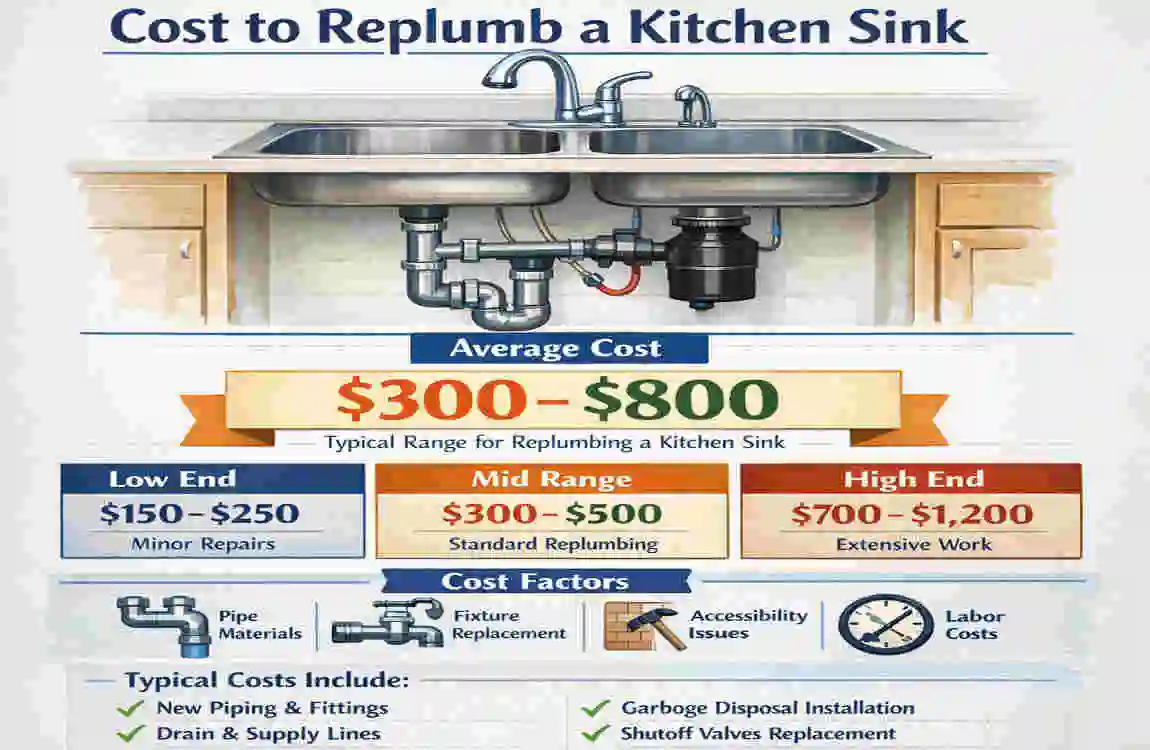
Based on 2026 data, a homeowner will typically spend between $500 and $1,200 for a basic, straightforward replumbing job. However, if you have a complex layout, need to replace pipes deep inside the walls, or choose Premium copper materials, your costs will realistically jump to the $1,500 to $2,500 range. For a broader perspective on whole-house costs, you can review average house replumbing estimates.
The Itemized Breakdown
Where exactly is your money going? When you receive a quote from a contractor, it is rarely just a single number. It is an itemized list. Here is a standard breakdown of how those costs are distributed:
- The Raw Materials (Pipes & Fittings): $200 to $600. This covers the PEX or copper tubing, the brass shut-off valves, the PVC drainage pipes, and the required chemical sealants.
- The Plumber’s Labor: This is the biggest chunk, usually eating up 40% to 60% of your total budget. Professional plumbers charge for their expertise, their licensing, and their time.
- City Permits and Inspections: $50-$150. If the job requires moving pipes inside the wall, the city will want to inspect it to ensure it is safe.
It is also vital to note the regional inflation adjustment. Due to rising costs in global logistics and manufacturing, plumbing materials have seen a roughly 15% inflation adjustment as we move deeply into 2026.
Try Our Step Cost Estimator.
Do you want to run the numbers for your own kitchen? Use this simple, numbered step-by-step estimator tool:
- Step 1: Measure the visible length of your pipe. Grab a tape measure and calculate the distance from your sink drain down to where the pipes disappear into the floor or wall.
- Step 2: Check your access. Can you easily reach the pipes? If yes, keep your labor estimate low. If you have to cut wood or drywall, add $500 to your mental budget.
- Step 3: Price out your materials. Decide right now if you want the affordable flexibility of PEX or the Premium durability of copper.
- Step 4: Factor in local labor. Call three local plumbing companies and ask for their standard hourly rate to find your baseline.
A Real-World Case Study
Let’s look at a realistic example to make this concrete. Consider a homeowner with a standard 1,500-square-foot home built in the 1980s. They noticed a slow leak destroying the base of their cabinet.
They hired a professional who found that the old galvanized pipes had rusted through. The plumber removed the old metal, installed modern PEX supply lines, replaced the PVC P-trap, and swapped out the angle stops. Because they caught it early, no wall demolition was needed. The total out-of-pocket cost for this 1500 sq ft home kitchen replumb was exactly $1,800.
Cost-Saving Strategies for Your Home Upgrade
Spending a thousand dollars or more on pipes you cannot even see is frustrating. Fortunately, you have plenty of power to bring that number down! Here are some incredibly actionable, expert-approved tips to slash your expenses and save on your home upgrade.
Shop Smart and Bundle Your Renovations
Plumbers charge a heavy “trip fee” just to pull their truck into your driveway. If you know you need a kitchen sink pipe replacement, look around your house. Do you have a running toilet upstairs? Is the showerhead leaking in the guest bathroom?
Bundle all these repairs together! Having a plumber fix three things in one visit is substantially cheaper than paying for three separate service calls over the year. Additionally, if you are supplying your own materials, keep an eye out for holiday sales on complete PEX installation kits at your local hardware store.
Compare Multiple Local Quotes
Never accept the very first estimate you receive. The plumbing market is highly competitive. Take the time to request detailed, written quotes from at least three different licensed plumbers in your area. This simple act of comparison can easily save you $300 to $500, as you will quickly spot contractors who are overcharging for basic labor.
Consider a Partial Replumb
Does everything actually need to go in the trash? Have an honest conversation with your contractor. If your hot and cold water supply lines are leaking, but your thick PVC drain pipe is working perfectly fine, ask for a partial replumb. By leaving the functional drainage system untouched, you dramatically reduce material costs and labor time.
Invest in Energy-Efficient Upgrades
While the walls are open, ask your plumber to install low-flow aerators or an energy-efficient hot water recirculation line. While this costs a tiny bit more upfront, many local municipalities and utility companies offer cash rebates for eco-friendly plumbing upgrades, which puts money right back into your wallet.
DIY Prep Tasks to Slash Labor Costs
Remember, you are paying your plumber roughly $100 an hour. You do not want to pay them $100 to clean up your mess! Before they arrive, complete these 5 simple DIY prep tasks:
- Clear the cabinet completely: Remove every single sponge, soap bottle, and trash can from under the sink.
- Locate the main water valve: Find your home’s main water shutoff valve and make sure it turns easily so the plumber doesn’t waste time hunting for it.
- Clean the surrounding area: Sweep and mop the kitchen floor so the contractor has a clean workspace.
- Set up bright lighting: Place a battery-powered LED work light inside the cabinet. Plumbers work faster when they can see clearly!
- Remove the cabinet doors: Grab a screwdriver and take the cabinet doors off their hinges. This gives the plumber wide-open access to your pipes.
DIY vs. Hiring a Professional: Pros, Cons, and When to Choose
With a quick search online, you will find hundreds of videos showing you how to glue pipes together. This leads many ambitious homeowners to wonder: Should I do this myself?
Let’s divide this complex decision into an understandable comparison. Here is a clear look at the DIY route versus hiring a licensed professional.
Aspect: The DIY Route Hiring a Professional
Total Cost $200 – $500 (Materials only) $800+ (Materials & Labor)
Time Required 4 to 8 hours (for a beginner) 1 to 2 days (often faster)
Risk Factor High (Potential for severe leaks and code violations) Low (Insured and guaranteed)
Best Suited For: Simple, exposed pipes and highly handy homeowners. Complex layouts, hidden leaks, and older houses
The DIY Guide Outline
If you are a weekend warrior and your leak is purely isolated to the exposed PVC pipes under the sink, DIY is incredibly tempting.
To succeed, you will need a specific set of tools: a basin wrench, a ratcheting pipe cutter, Teflon thread tape, and PVC cement. Safety must always come first. Before you make a single cut, you absolutely must turn off the main water supply to your house and drain the residual water from the lines. The biggest risk with DIY plumbing is improper sealing. A tiny, slow drip behind your cabinet can rot your floorboards for months, resulting in thousands of dollars in structural damage.
The Perks of Hiring a Pro
When you hire a licensed plumber, you are buying peace of mind. Yes, it costs more upfront, but professional perks are hard to beat.
First, professionals carry liability insurance. If a pipe bursts while they are working, their insurance covers the water damage—not your wallet. Second, reputable plumbing companies offer robust warranties on their work, often guaranteeing their labor for a full year. Finally, professionals understand exactly how to navigate local building codes, ensuring your home remains safe, legal, and ready to pass any future real estate inspections.
Long-Term Value: Boosting Your Home’s Worth
It is easy to view sink pipe costs as a painful expense, but you should reframe your thinking. Upgrading your plumbing is an investment in your home’s equity.
Real Estate ROI
When it comes time to sell your house, savvy buyers always look under the kitchen sink. A cramped, rusty, leaky plumbing setup is a massive red flag that scares buyers away. Conversely, a clean, modern PEX plumbing system with shiny new shut-off valves is a huge selling point. Real estate experts estimate that a comprehensive update to modern plumbing can add 1% to 3% to your home’s total resale value.
Preventing Catastrophic Disasters
The highest value of replumbing is the disaster that doesn’t happen. A failing pipe doesn’t always drip politely; sometimes it catastrophically bursts in the middle of the night.
A burst supply line can pump hundreds of gallons of water into your kitchen in just a few minutes. This destroys hardwood floors, ruins lower cabinetry, and creates hazardous mold inside your drywall. By spending $1,500 on preventive replumbing today, you are preventing a $5,000 to $10,000 water-damage restoration nightmare tomorrow.
The Appeal of Eco-Upgrades
As we embrace 2026, homebuyers are more environmentally conscious than ever. If your replumbing project includes lead-free brass fittings, highly durable leak-proof joints, and integration with a modern, low-flow kitchen faucet, your home becomes vastly more attractive on the open market.
Frequently Asked Questions: How Much Does It Cost to Replumb a Kitchen Sink?
Have you ever opened your kitchen cabinet only to find a mysterious puddle soaking into your cleaning supplies? Dealing with plumbing issues is a universal homeowner headache. When you are staring at rusted pipes or a dripping drain, the first question that naturally pops into your mind is about the price tag.
We know you want clear, straightforward answers. So, let’s divide these complex ideas into understandable segments. In this detailed FAQ guide, we will break down exactly what you can expect to pay for kitchen plumbing repairs in 2026, the factors that influence your final bill, and how you can prepare your budget.
What is the Average Cost to Replumb a Kitchen Sink?
If you are looking for a quick baseline, the cost to replace a kitchen sink setup typically ranges from $400 to $1,100 in total . Looking specifically at 2026 pricing data, the estimated starting cost for a standard kitchen sink replacement sits right between $576 and $696 .
However, real-world scenarios often involve a mix of new parts, pipes, and labor. For example, one homeowner recently reported paying around $1,250 to completely switch out their kitchen sink and pipes. This real-world bill broke down to $700 for the plumber’s labor, $200 for the new plumbing parts, and $350 for the sink basin itself .
To give you a clearer picture, here is a quick breakdown of average plumbing costs you might encounter:
| Type of Plumbing Project | Estimated Cost Range | Average Cost |
|---|---|---|
| Basic Sink Replacement (2026) | $576 – $696 | $636 |
| Replace Sink Drain Pipe Only | $250 – $1,250 | $700 |
| New Sink Basin + Pipe Replumbing | $400 – $1,250 | $825 |
| Full Kitchen Plumbing Remodel | $4,000 – $6,000 | $5,500 |
How Much Does It Cost to Replace Just the Drain Pipe?
Sometimes, you do not need a whole new sink; you just need to fix the drainage. If your primary issue is a leaky or corroded pipe under the basin, you can hire a professional just for that specific task.
Replacing a sink drain pipe costs an average of $700, though the total price generally falls anywhere from $250 to $1,250 depending on how complex the project is . If the plumber only needs to replace a simple PVC P-trap, your costs will sit on the lower end of that scale.
What if I am Doing a Complete Kitchen Remodel?
Are you tearing your kitchen down to the studs to build your dream cooking space? A full remodel changes the math completely.
If you are installing extensive plumbing for a brand-new kitchen layout—which might include two sinks, new faucets, a dishwasher connection, an instant hot water tap, a garbage disposal, and a refrigerator ice maker—the average cost jumps to about $5,500 .
If your plumber needs to run entirely new supply lines through your walls, you will typically spend $0.40 to $2.00 per linear foot depending on the type of pipe material they use . For broader, whole-house piping metrics, contractors often calculate costs at $4.50 to $5.25 per square foot of the home’s area .
What Factors Drive Up Kitchen Plumbing Costs?
You might be wondering why there is such a wide price gap between a $400 job and a $1,200 job. The truth is that no two kitchens are built exactly alike. Sink installation and replumbing costs heavily depend on the specific materials you choose and the labor required .
Here are the top factors that will influence your final plumbing bill:
- Cabinet Access: If your pipes are easy to reach, the labor goes fast. If the plumber has to cut through wood or work in a cramped space, you will pay more for their time .
- Drain Location and Height: Moving a drain line to a new location inside the wall is significantly more expensive than simply hooking up to an existing drain .
- Extra Devices: Adding a new garbage disposal or an under-sink water filter requires more parts and extra labor time .
- Your Location and Timing: Plumbers charge different hourly rates based on the city or town you live in. Furthermore, if you demand an emergency repair on a Sunday night, expect to pay a premium compared to a scheduled Tuesday morning visit .
- Water Shut-off Valves: If your old water shut-off valves (angle stops) are rusted shut, the plumber will have to replace those before they can even begin working on the sink pipes .
Should I Try to Replumb My Sink Myself?
We totally understand the urge to grab a wrench and tackle the problem yourself to save cash. If you simply need to tighten a slip-nut on a PVC drain pipe, doing it yourself is a great idea!
However, if you need to replace pressurized hot and cold water supply lines, we strongly recommend calling a licensed professional. A tiny mistake in a pressurized line can lead to a massive flood, which will cost you thousands of dollars in water damage to your cabinetry and floors. Paying a professional guarantees the job is done safely, is insured, and meets your local building codes.
Are you ready to fix that leak for good? Reach out to a few local, highly-rated plumbers today to compare quotes and get your kitchen back in perfect working order!
