
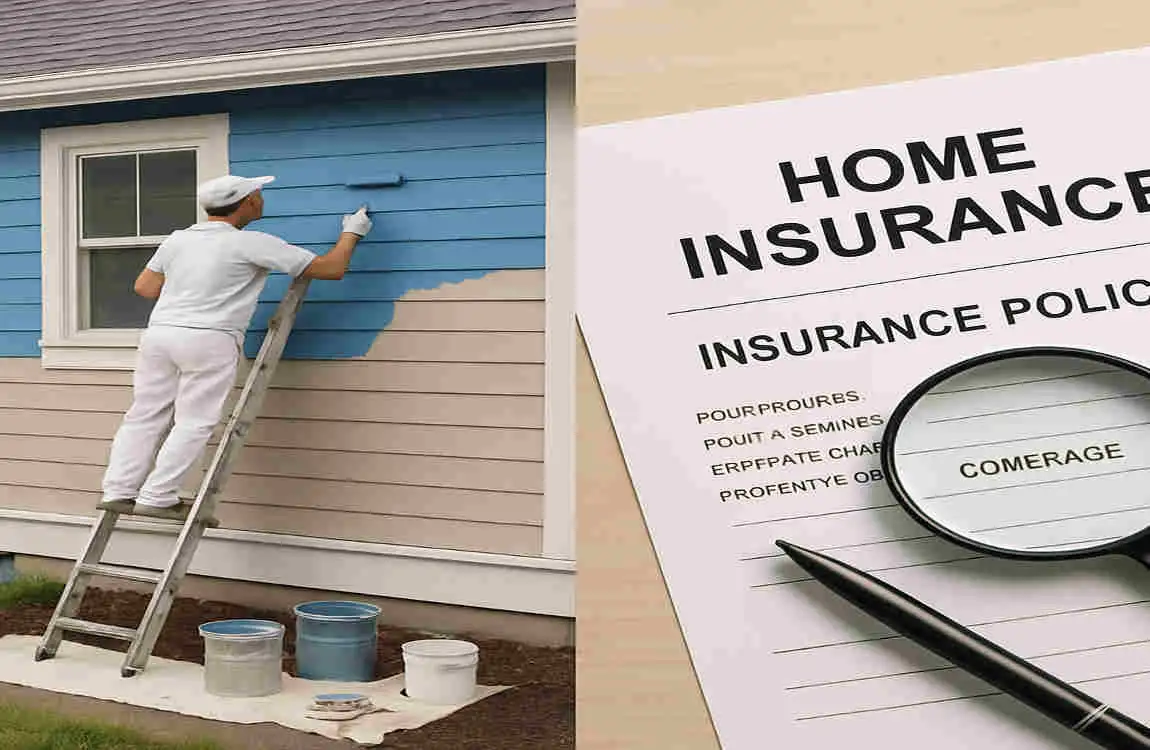
When it comes to protecting your home, having the right insurance coverage is crucial. But what about the exterior of your house? Does home insurance cover exterior painting? This is a question many homeowners often ask, especially when faced with the need for a fresh coat of paint.
We’ll address the pressing question of whether your insurance will cover exterior painting, and we’ll break down the scenarios where filing a claim might be a good idea. By the end of this article, you’ll have a clear understanding of your policy and what to do regarding house exterior painting.
What Home Insurance Typically Covers: A Quick Overview
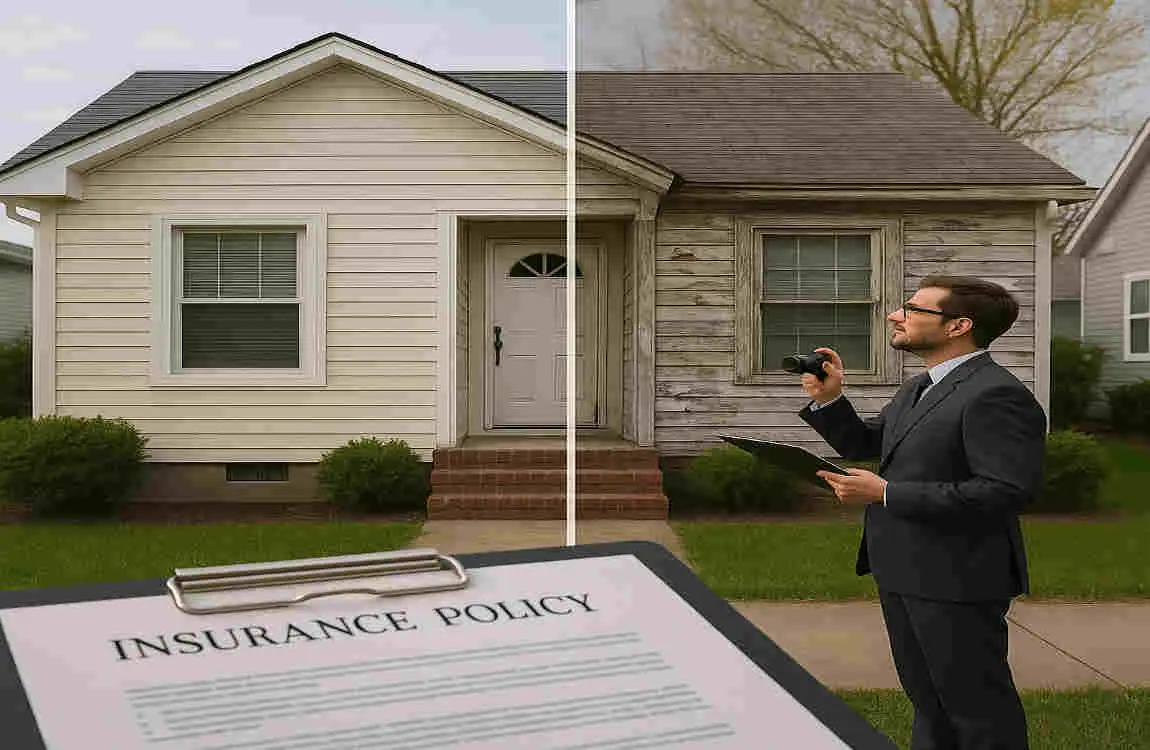
Home insurance is designed to protect your property and belongings from various risks and perils. Most standard policies include three main components:
- Dwelling coverage: This protects the structure of your home, including the walls, roof, and foundation.
- Personal property coverage: This coverage protects your belongings inside the home, including furniture, appliances, and clothing.
- Liability coverage: This protects you if someone is injured on your property or if you accidentally damage someone else’s property.
However, it’s important to understand that insurance coverage is typically focused on sudden, accidental damage rather than routine maintenance or wear and tear. This distinction is crucial when it comes to exterior painting.
Does Home Insurance Cover Exterior Painting? — The Core Question
Now, let’s address the main question: Does home insurance cover exterior painting?
The short answer is no, home insurance generally does not cover exterior painting or routine maintenance. This might come as a surprise to some homeowners, but it’s important to understand why.
Exterior painting is considered routine upkeep, which means it’s not covered by most standard home insurance policies. Insurance companies focus on protecting your home from sudden, accidental damage, not on covering the costs of preventive care or regular maintenance.
When Might Exterior Painting Be Covered?
While exterior painting is not typically covered by home insurance, there are some scenarios in which it may be included as part of a larger claim. Let’s explore these situations:
Damage Caused by Covered Perils
If your home’s exterior is damaged by a covered peril, such as fire, vandalism, or hail, your insurance might cover the cost of repainting as part of the repairs. For example, if a severe hailstorm causes damage to your siding, your policy may cover the cost of repairing and repainting it to match the rest of your home.
Examples of Repainting as Part of an Insurance Claim Settlement
Here are a few examples of situations where repainting might be included in an insurance claim settlement:
- After a fire damages your home’s exterior, your insurance might cover the cost of repainting the affected areas as part of the restoration process.
- If vandals spray paint your home, your policy might cover the cost of removing the graffiti and repainting the affected areas.
- In the case of severe storm damage that requires siding repairs, your insurance might cover the cost of repainting the repaired sections to match the rest of your home.
It’s important to note that in these scenarios, insurance will only cover the cost of repainting if it’s necessary to restore the damage caused by the covered peril. If you want to upgrade to a different color or make cosmetic changes, you’ll need to cover those costs yourself.
Scenarios Where Filing a Claim for Exterior Painting Makes Sense
Now that we’ve covered when exterior painting might be included in an insurance claim, let’s look at some specific scenarios where filing a claim for exterior painting could make sense:
- After storm or hail damage: If a severe storm or hailstorm causes damage to your home’s exterior, requiring siding repairs and repainting, filing a claim might be appropriate.
- Following fire or smoke damage: If your home’s exterior is damaged by fire or smoke, your insurance might cover the cost of repainting as part of the restoration process.
- Vandalism cases: If vandals cause paint damage to your home’s exterior, filing a claim could help cover the cost of repairs and repainting.
If you find yourself in one of these situations, it’s essential to document the damage thoroughly. Take clear photos of the affected areas before and after any repairs, and obtain repair estimates from licensed contractors. This documentation will be crucial when filing your insurance claim.
When Exterior Painting is Not Covered by Insurance
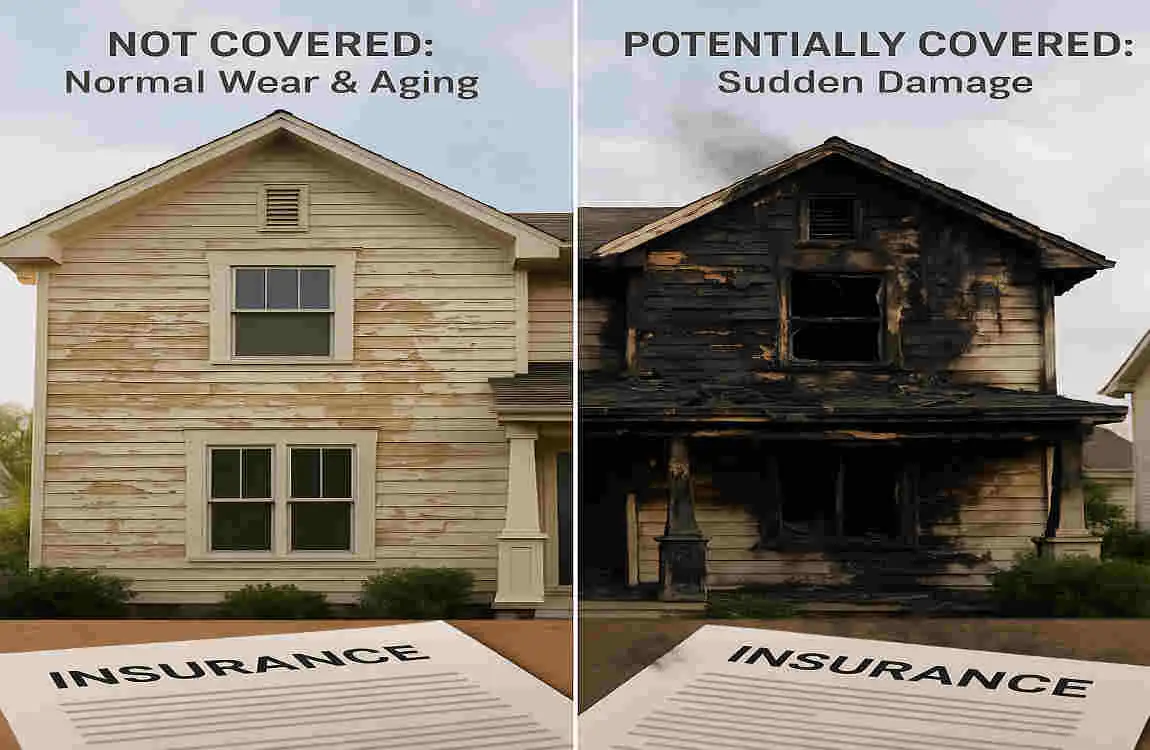
While there are some scenarios where exterior painting might be covered by insurance, there are many situations where it’s not.
- Normal weathering and fading: Over time, exposure to the sun, rain, and other elements can cause your home’s paint to fade or weather. This type of damage is considered normal wear and tear and is not covered by most insurance policies.
- Peeling or cracking paint from aging: As paint ages, it can start to peel or crack. This is typically a result of the paint’s natural aging process or poor initial painting jobs, neither of which is covered by insurance.
- Routine home improvements or color changes: If you decide to repaint your home as part of a routine improvement project or to change the color, you’ll need to cover those costs yourself. Insurance doesn’t cover cosmetic changes or upgrades.
- Damage caused by lack of maintenance or neglect: If you fail to properly maintain your home’s exterior, leading to paint damage, your insurance is unlikely to cover the cost of repairs. Regular maintenance is your responsibility as a homeowner.
Understanding Your Policy: Reading the Fine Print
To fully understand what your home insurance policy covers regarding exterior painting, it’s essential to read the fine print. Here are some tips for reviewing your policy:
- Look for “named perils” vs. “all-risk” or “open perils” policies: Named perils policies only cover specific risks listed in the policy. In contrast, all-risk or open perils policies cover all risks except those specifically excluded. Understanding which type of policy you have can help you determine what’s covered.
- Check for endorsements or riders: Some policies may have endorsements or riders that modify the coverage, including coverage for exterior damage and repainting. Make sure to review any additional coverage options you may have purchased.
- Consult your insurance agent: If you’re unsure about what your policy covers, don’t hesitate to contact your insurance agent for clarification. They can help you understand the specifics of your coverage and answer any questions you may have.
Role of Homeowners Maintenance and Warranty
As a homeowner, regular maintenance is essential for maintaining your home’s good condition and preventing costly repairs. When it comes to exterior painting, proper maintenance can help extend the life of your paint and avoid damage.
It’s important to distinguish between maintenance costs and insurance-covered repairs. Routine maintenance, such as cleaning and touch-ups, is your responsibility as a homeowner. However, if damage occurs due to a covered peril, your insurance may cover the cost of repairs, including repainting.
Warranties from painters or homebuilders can also play a role in covering the costs of exterior painting. These warranties typically cover defects in artistry or materials for a specified period. However, they are separate from your home insurance policy and should not be confused with insurance coverage.
How to File a Claim for Exterior Painting After Damage
If you find yourself in a situation where exterior painting is part of an insurance claim, here’s a step-by-step guide to filing your claim:
- Document the damage: Take clear, detailed photos of the damage before and after any repairs. Obtain repair estimates from licensed contractors.
- Contact your insurance company: Reach out to your insurance company as soon as possible to report the damage and start the claims process.
- Work with adjusters and contractors: An insurance adjuster will assess the damage and determine the scope of the repairs. Work closely with the adjuster and any contractors involved to ensure that repainting is included in the repairs.
- Submit your claim: Provide all necessary documentation, including photos, repair estimates, and any other requested information. Be prepared to answer questions about the damage and the repairs needed.
- Follow up on your claim: Stay in touch with your insurance company throughout the claims process to ensure that your claim is being processed efficiently.
During the claims process, it’s important to be patient and persistent. Keep detailed records of all communication with your insurance company and any contractors involved in the project.
Alternatives to Insurance for Exterior Painting Costs
If your home insurance doesn’t cover the cost of exterior painting, there are other options to consider:
- Home warranties and service contracts: Some home warranties or service contracts may cover the cost of exterior painting as part of their coverage. Review your warranty or contract to see what’s included.
- Painting maintenance and improvement loans or financing options: If you need to finance your exterior painting project, consider taking out a home improvement loan or exploring other financing options.
- DIY painting considerations vs. professional service costs: Depending on the size and complexity of your project, you can save money by painting your home’s exterior yourself. However, keep in mind that professional painters have the skills and experience to ensure a high-quality finish.
Expert Tips to Protect Your Exterior Paint and Avoid Surprises
To keep your home’s exterior paint looking its best and avoid unexpected costs, follow these expert tips:
- Regular inspections and timely spot repairs: Inspect your home’s exterior regularly for signs of paint damage or wear. Address any issues promptly with spot repairs to prevent further damage.
- Choose durable paint and quality contractors: Invest in high-quality, durable paint that’s designed to withstand the elements. Hire experienced, licensed contractors who can ensure a professional finish.
- Keep thorough records of maintenance and improvements: Maintain detailed records of any maintenance or improvements made to your home’s exterior, including painting projects. This documentation can be helpful when it comes time to file an insurance claim or sell your home.
