

Step into a world where comedy meets canvas, where laughter echoes through halls adorned with whimsical artwork, and where the spirit of one of America’s most beloved entertainers lives on. The Jonathan Winters house in Montecito stands as more than just a residence—it’s a testament to the boundless creativity of a man who painted with words and colors alike.
Nestled in the serene hills of California’s artistic haven, this remarkable modern home tells the story of Jonathan Winters, the improvisational genius who transformed comedy into an art form. But beyond the stage lights and television cameras, Winters cultivated another passion that few fully appreciated during his lifetime: his profound love for the visual arts.
| Attribute | Details |
|---|---|
| Full Name | Jonathan Harshman Winters III |
| Birth Date | November 11, 1925 |
| Birth Place | Dayton, Ohio, USA (some sources mention Bellbrook, Ohio) |
| Death Date | April 11, 2013 |
| Death Place | Montecito, California, USA |
| Height | 5′ 10″ (1.78 m) |
| Spouse | Eileen Winters (married 1948 until her death 2009) |
| Children | 2 (Jay Winters and Lucinda Winters) |
| Occupations | Comedian, actor, author, television host, artist |
| Notable Achievements | Won Grammy Award, Primetime Emmy Award |
| Net Worth | $5 million (at time of death) |
| Current Residence | Deceased (last lived in or near Montecito, California) |
This extraordinary dwelling reflects every facet of its owner’s vibrant personality. From the moment you approach the property, you’re greeted by an atmosphere that whispers tales of creativity, spontaneity, and the unique vision of a man who saw the world through a kaleidoscope of humor and artistic expression.
Who Was Jonathan Winters?

The Comedy Legend
Jonathan Winters wasn’t just a comedian—he was a force of nature who revolutionized improvisational comedy. Born in 1925 in Dayton, Ohio, Winters burst onto the entertainment scene in the 1950s with a style that was entirely his own. His ability to create multiple characters on the spot, shift between voices effortlessly, and find humor in the most unexpected places made him a pioneer in his field.
Television audiences fell in love with his unpredictable performances on “The Tonight Show” and his own variety programs. Fellow comedians, including Robin Williams, cited him as their greatest influence. But what many didn’t know was that behind the laughter lived an artist with a serious passion for painting and sculpture.
The Hidden Artist
Winters’ artistic journey began long before his comedy career took flight. As a child, he found solace in drawing, creating fantastical worlds on paper when the real world felt overwhelming. This creative outlet became increasingly important throughout his life, especially during challenging periods.
His artwork reflected the same spontaneity and imagination that characterized his comedy. Bold strokes, vibrant colors, and whimsical subjects populated his canvases. He painted clowns, abstract figures, and dreamlike landscapes that seemed to emerge from the same creative wellspring as his comedy characters.
The Man Behind the Laughter
Understanding Winters means recognizing the complexity beneath the humor. He struggled with mental health challenges throughout his life, and art became his therapy. Jonathan Winters’ house became his sanctuary, where both aspects of his creativity could flourish without boundaries.
His wife, Eileen, often spoke about how their home reflected Jonathan’s need for both stimulation and peace. Every corner of their Montecito residence told a story, displayed a painting, or showcased an object that sparked joy or inspiration.
Location and Overview of the Montecito House
Montecito: California’s Artistic Paradise
You may also read (michael jacksons beverly hills home).
| Aspect | Details |
|---|---|
| House Name | Cor-Ten House (designed by architect John Winter for his own use) |
| Location/Address | Swains Lane, on the fringes of Highgate Cemetery, London, England |
| Specifications | – Approximate size: 2,551 sq ft |
| – 4 to 5 bedrooms | |
| – Includes bathroom, shower room, and utility room | |
| Architectural Design | – Constructed around a steel frame |
| – Large double-glazed picture windows for abundant natural light | |
| – Clad in Cor-Ten steel alloy which weathers to a dark rust color | |
| – Original interior features including kitchen, built-in storage, quarry tiles, electric underfloor heating | |
| – Secluded gardens on three sides with a geodesic dome glasshouse | |
| – Designed on a modular grid based on Cor-Ten sheet dimensions | |
| Worth | Not specifically mentioned |
| History Info | – Designed by John Winter in 1960s or 1970s for personal use |
| – First domestic use of Cor-Ten steel in Britain | |
| – One of Britain’s most important Modern houses, Grade II* listed by English Heritage in 2009 | |
| – Located opposite Waterlow Park and near Hampstead Heath | |
| – Winter lived in this house with his family until his death |
Montecito sits like a jewel on the California coast, just minutes from Santa Barbara. This exclusive enclave has long attracted artists, writers, and creative souls seeking inspiration from its Mediterranean climate and stunning natural beauty. The area’s rolling hills, ancient oak trees, and spectacular ocean views create a landscape that seems to have been painted by nature itself.
For someone like Jonathan Winters, Montecito offered the perfect blend of privacy and community. The town’s artistic heritage dates back decades, with galleries, studios, and cultural events creating a vibrant creative ecosystem. Here, celebrities and artists could live quietly while still engaging with like-minded individuals who understood the creative process.
The Perfect Setting
The Jonathan Winters house occupies a particularly enchanting spot within Montecito’s landscape. Positioned to capture both mountain and ocean views, the property makes the most of the natural beauty that surrounds it. Mature trees provide shade and privacy, while carefully designed gardens create outdoor rooms that extend the living space beyond the walls.
The approach to the house sets the tone for what lies within. A winding driveway leads visitors through a landscape that feels both cultivated and wild, much like Winters’ comedy style. The property spans several acres, providing the comedian-artist with ample space to roam, think, and create without the pressures of the outside world.
Architectural Harmony
From the street, the house presents a welcoming facade that hints at the treasures within. The architecture blends Mediterranean and California ranch styles, creating a home that feels both elegant and approachable. Large windows dominate the design, ensuring that natural light floods every room and that the boundary between indoor and outdoor living remains fluid.
This design philosophy perfectly suited Winters’ personality. He needed spaces that could accommodate his larger-than-life presence while also providing intimate corners for quiet reflection and artistic work.
Architectural Details and Design Elements
A Canvas in Three Dimensions
The Jonathan Winters house stands as an architectural masterpiece that seamlessly blends form and function. The structure itself tells a story of thoughtful design, where every element serves both aesthetic and practical purposes. The main residence features a sprawling single-story layout that encourages easy flow between spaces, perfect for someone who likes to move freely while creating.
The exterior showcases a harmonious blend of materials. Warm stucco walls , painted in earth tones, complement the natural landscape, while exposed wooden beams add a rustic charm. The red-tiled roof, typical of Spanish Colonial Revival architecture, creates a striking contrast against the California sky. These design choices weren’t arbitrary—they reflected Winters’s appreciation for traditional craftsmanship and timeless beauty.
Windows to the Soul
Perhaps the most striking architectural feature is the abundance of windows. Floor-to-ceiling glass panels line the main living areas, creating a constantly changing gallery of natural art. These windows do more than provide views; they transform the interior spaces throughout the day as light shifts and shadows dance across the walls.
The window placement was strategic, designed to capture specific views and create distinct moods in different rooms. The eastern windows welcome morning light into the breakfast area, while western exposures provide dramatic sunset views from the main living spaces. This careful attention to natural light influenced how Winters displayed his artwork throughout the home.
Indoor-Outdoor Living
The architects understood that in Montecito’s ideal climate, the distinction between indoor and outdoor living should be minimal. Multiple French doors open onto terraces, patios, and garden areas, effectively doubling the home’s living space. Covered loggias provide shaded outdoor rooms where Winters could paint en plein air while remaining protected from the elements.
The central courtyard serves as the heart of the home, a private oasis accessible from multiple rooms. This Spanish-inspired feature creates a microclimate within the property, offering a cool retreat during warm days and a protected space for outdoor entertaining. Water features add soothing sounds, while carefully selected plants provide year-round color and texture.
Structural Innovations
Beyond its aesthetic appeal, the house incorporates several innovative structural elements. High ceilings with exposed beams create a sense of grandeur while maintaining the home’s intimate feel. The beam work isn’t merely decorative—it reflects traditional building techniques that ensure the structure’s longevity and stability.
The foundation and framing were designed to withstand California’s seismic activity, incorporating flexible joints and reinforced connections to ensure stability. This attention to safety allowed Winters to display his valuable art collection without worry, knowing that his creative sanctuary was built to withstand the test of time.
Interior Décor and Artistic Touches
A Living Gallery
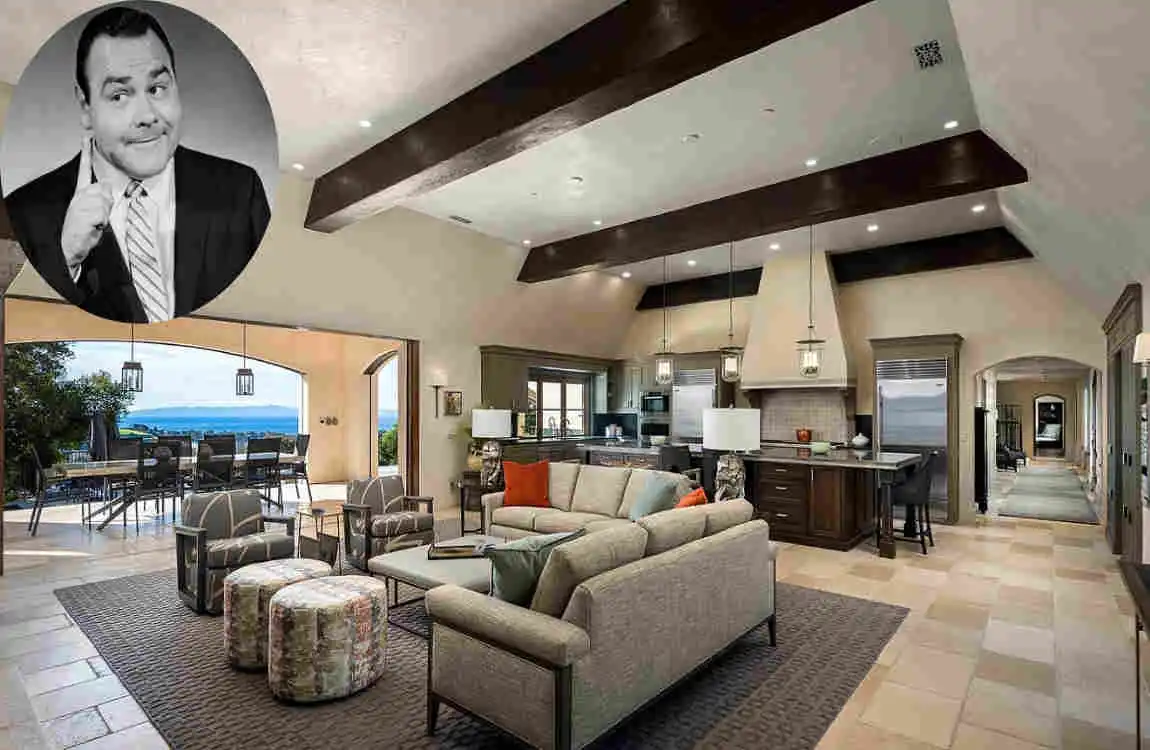
Walking through the Jonathan Winters house feels like entering a private museum where every piece has a personal story. The interior décor reflects Winters’ eclectic taste and his refusal to be confined by conventional design rules. Bold color combinations that might clash in other homes somehow work perfectly here, creating spaces that feel both sophisticated and playfully rebellious.
The main living room serves as the centerpiece of the home’s gallery. Oversized paintings by Winters himself dominate the walls, their vibrant colors and whimsical subjects immediately drawing the eye. These aren’t polite, decorative pieces—they’re bold statements that demand attention and invite conversation. Abstract figures dance alongside more representational works, creating a visual dialogue that mirrors Winters’ stream-of-consciousness comedy style.
Personal Collections
Throughout the house, carefully curated collections reveal different facets of Winters’ personality. Vintage toys and mechanical banks are displayed on custom-built shelves, each piece carefully selected for its ability to spark joy or inspire a character. These weren’t mere decorations but tools of his trade, visual prompts that could launch a thousand improvisations.
The dining room showcases a different side of his collecting passion. Antique circus posters and carnival memorabilia create a festive atmosphere that transforms every meal into a celebration. The dining table itself, a massive wooden piece that could seat twelve, often served as an impromptu stage where Winters would entertain guests with his latest character creations.
Handcrafted Elements
What makes the interior truly special are the handmade touches that appear throughout. Winters didn’t just buy art—he created environments. A bathroom features hand-painted tiles depicting underwater scenes, each fish and sea creature bearing its distinctive style. Door frames sport unexpected painted details, turning functional elements into artistic statements.
The kitchen, often considered the heart of any home, received special attention. Custom cabinetry , painted in unexpected colors, houses aa collection of vintage ceramics and glassware. The backsplash features a mosaic created from broken pottery and tiles, a technique Winters learned and perfected over years of experimentation.
The Studio Sanctuary
Perhaps the most important room in the house was Winters’ personal art studio. This light-filled space combines functionality with inspiration, featuring professional-grade easels, a pottery wheel, and ample storage for a wide range of art supplies. The walls displayed works in progress alongside completed pieces, creating a visual diary of his artistic evolution.
The studio’s design prioritized natural light, with north-facing windows providing consistent, non-glaring illumination perfect for painting. Built-in storage kept supplies organized but accessible, while comfortable seating areas allowed him to step back and contemplate works in progress. This wasn’t just a workspace—it was a retreat where Winters could lose himself in the creative process.
Comfort Meets Creativity
Despite its artistic richness, the Jonathan Winters house never sacrificed comfort for style: plush sofas invited lounging, their fabrics chosen for both beauty and durability. Reading nooks featured perfect lighting and views of the garden, creating spaces for quiet contemplation. Every room balanced its role as a gallery space with its function as a family home.
The bedrooms maintained this balance, featuring more subdued color palettes that promoted rest while still incorporating artistic elements. Hand-painted headboards, custom light fixtures, and carefully chosen textiles created retreats that felt both personal and luxurious.
The House as a Creative Sanctuary
Where Inspiration Bloomed
The Jonathan Winters house served as more than just a residence—it functioned as a creative incubator where ideas could germinate and flourish. Every corner of this Montecito haven was designed to nurture the artistic spirit. Winters often spoke about how the house’s energy fed his creativity, providing both stimulation and serenity in perfect measure.
The property’s gardens played a crucial role in this creative ecosystem. Winters would often wander the meandering paths, sketchbook in hand, finding inspiration in the play of light through leaves or the way shadows danced across stone walls. These outdoor spaces weren’t just for show—they were active participants in his creative process.
Spaces for Every Mood
Understanding the ebb and flow of creativity, the house offered distinct environments for various creative moods. When Winters felt energetic and social, the open-plan living areas provided space to move, gesture, and bring characters to life. When introspection called, smaller alcoves and quiet corners offered refuge for deeper artistic exploration.
The music room deserves special mention. Though primarily known for comedy and visual arts, Winters also loved music. This space, filled with instruments and recording equipment, allowed him to experiment with sound and rhythm. The room’s acoustic design ensured that whether he was playing piano or testing out character voices, the sound quality remained pristine.
Nature’s Influence
The seamless connection between indoor and outdoor spaces meant that nature constantly influenced Winters’ work. Birds visiting the feeders outside his studio window might inspire a new character’s voice. The changing seasons provided an ever-shifting palette that influenced his color choices. This organic connection to the natural world grounded his work in reality even as his imagination soared.
Morning routines often began on the eastern terrace, where Winters would sketch while sipping coffee, capturing the day’s first light. These quiet moments of observation fed into his work, whether he was developing a new comedy routine or planning his next painting.
A Laboratory for Innovation
The house also functioned as a laboratory where Winters could experiment without fear of judgment. Failed paintings could be painted over, unsuccessful pottery could be recycled, and character ideas could be tested on family members before facing public scrutiny. This freedom to fail and try again was essential to his creative process.
Cultural and Historical Significance
A Landmark in Entertainment History
The Jonathan Winters household holds a unique place in American entertainment history. During the 1960s and 1970s, it became a gathering place for creative minds from various disciplines. Comedians, actors, writers, and artists would gather here, drawn by Winters’ magnetic personality and the modern home’s welcoming atmosphere.
These gatherings weren’t formal salons but organic celebrations of creativity. Robin Williams, who considered Winters his comedy mentor, was a frequent visitor. The two would spend hours in the garden, improvising scenes and pushing each other to new creative heights. These sessions, witnessed by the house’s walls, contributed to the evolution of American comedy.
Montecito’s Artistic Heritage
Within Montecito’s artistic community, the Winters’ house became a cultural touchstone. Local artists spoke of being invited to view his latest works, finding inspiration in his fearless approach to color and form. The house hosted informal art shows where Winters would display his paintings alongside works by artist friends, creating a democratic space where art was celebrated regardless of fame or formal training.
The property also played a role in charitable events, with Winters often opening his gardens for fundraisers benefiting arts education and mental health organizations. These events brought together Montecito’s diverse community, from established celebrities to emerging artists, all united by their appreciation for creativity and generosity.
Preserving Creative Legacy
The significance of the Jonathan Winters house extends beyond its famous owner. It represents a particular moment in American cultural history when the boundaries between different art forms were fluid, allowing comedians to be painters and painters to be performers. The house stands as a physical reminder of this creative freedom.
Influence on Future Generations
Young comedians and artists who visited the house often spoke of how the environment itself was educational—seeing how Winters lived—surrounded by art, constantly creating, never separating his professional and personal creative lives—provided a model for integrating artistry into daily existence. The house taught by example that creativity wasn’t something you did but something you lived.
Preservation and Current Status of the House
Maintaining the Legacy
Today, the Jonathan Winters house faces the challenge common to all significant cultural properties: how to preserve its essence while adapting to contemporary needs. The current owners, who purchased the property after Winters’ passing in 2013, have shown remarkable sensitivity to its historical and cultural importance.
Restoration efforts have focused on maintaining the home’s artistic integrity while ensuring its structural soundness. Original architectural features have been carefully preserved, with any necessary updates made using materials and techniques that match the original construction. The goal has been to maintain the house as Winters knew it while ensuring its longevity for future generations.
Private Residence, Public Interest
While the house remains a private residence, its cultural significance has generated considerable public interest. The owners have occasionally allowed documentary filmmakers and researchers to access the property to document its artistic treasures. These limited glimpses have helped preserve the memory of how Winters lived and worked.
Local historical societies have worked to document the house’s significance, creating archives of photographs, interviews, and records that capture its role in Montecito’s cultural history. This documentation ensures that even if the physical property changes hands or undergoes modifications, its historical importance remains recorded.
Future Prospects
Discussions continue about how best to honor Winters’ legacy through the house. Some have suggested establishing an artist-in-residence program that would allow emerging comedians or visual artists to work in the inspiring environment Winters created. Others propose occasional public tours that will enable fans to experience the creative atmosphere firsthand.
Whatever its future holds, the Jonathan Winters house remains a testament to one man’s belief that creativity knows no boundaries and that a home can be both a sanctuary and a canvas for artistic expression.
Where Dose Jonathan Winters Currently Live?
Jonathan Winters passed away on 11 April 2013, in Montecito, California. Therefore, he does not currently live anywhere as he is deceased.
You may also read (george straits house).
